Humanoid Robots Take Center Stage at Electronica Munich: Auto Chip Titans Embrace Robotics Revolution
 07/03 2026
 547
547
Produced by Zhineng Technology
This year’s Electronica Munich showcased cutting-edge advancements in AI, automotive technology, robotics, and consumer electronics. As we explored booths of industry leaders such as Infineon, TE Connectivity, and NXP Semiconductors, we identified three core pillars of robotic implementation: power management, connectivity, and intelligent control.
These automotive chip and component giants are strategically transferring their technological expertise from the automotive sector to robotics. Key questions like "How do robots receive power?", "How are robotic components interconnected?", and "How is robotic intelligence hierarchically structured?" reveal both fundamental and complex challenges for automotive companies transitioning into robotics.
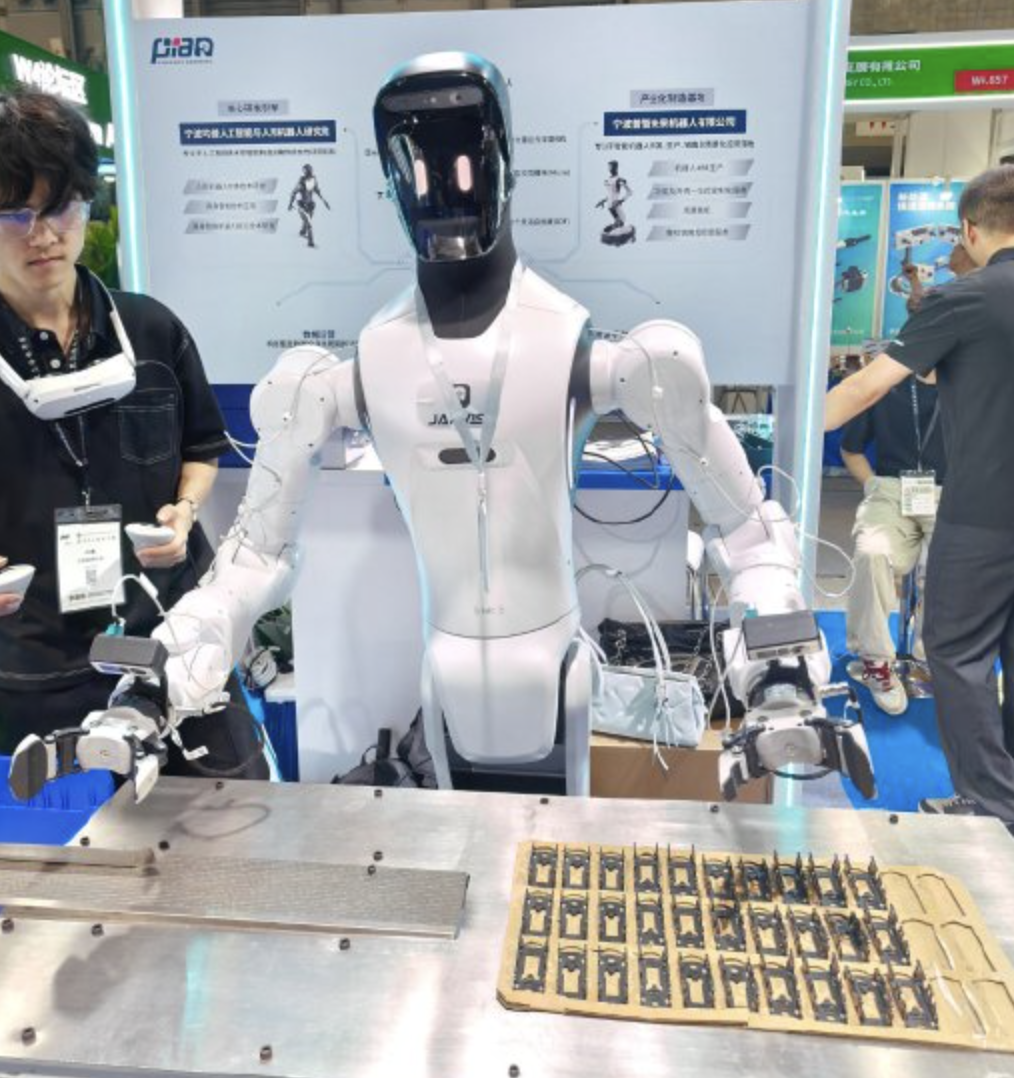
From Automobiles to Robots
● Where Does a Robot's Power Come From?
For power semiconductor companies, the robotics sector's core challenge lies in energy management, as all robotic functions depend on electricity. Humanoid robots, in particular, require efficient battery systems to perform prolonged, high-load tasks while simultaneously powering numerous joint motors.
Infineon demonstrates technical leadership in three key material technologies: silicon, silicon carbide (SiC), and gallium nitride (GaN). SiC excels in high-voltage, high-power applications, while GaN offers superior performance in high-frequency, high-efficiency scenarios.
These materials are being systematically adapted for robotic power systems. The market position and technical expertise accumulated in automotive applications—including powertrains, intelligent driving systems, and sensors—are now being leveraged for emerging fields like flying cars and humanoid robots.
Automakers possess a unique advantage in humanoid robot deployment through direct access to real-world application scenarios, enabling them to validate and refine robotic systems on their own production lines.
● How Are a Robot's 'Nerves' and 'Blood Vessels' Connected?
While Infineon addresses power management, TE Connectivity specializes in the "neural and vascular" connectivity systems that enable robotic functionality.
At Electronica Munich, TE showcased a dedicated humanoid robot connectivity solutions area, featuring product lines for robotic perception, control, power distribution, and joint systems.
Sun Xiaoguang, Vice President of TE's Automotive Business Unit in China, explained that TE is leveraging its automotive-grade connectivity expertise to enter new markets. Automotive-grade solutions—known for their vibration resistance, wide temperature tolerance, and long operational lifespans—are equally critical for industrial robots, with humanoid robots imposing even stricter requirements on connector size and reliability.
One innovative approach involves replacing traditional copper wiring with aluminum alloys, significantly reducing harness weight while maintaining conductivity. In robotics, weight reduction directly translates to lower joint stress and extended battery life.
Another breakthrough is ultrasonic welding technology, which reduces aluminum wire welding time to under one second while maintaining compatibility with existing automated production lines.
TE emphasizes that material innovations alone cannot achieve mass production without corresponding process advancements. The company pursues parallel development of materials and manufacturing processes.
TE also highlighted ecosystem collaboration, displaying joint developments with partners like KOMAX, Jiao Cheng Ultrasonic, and Boway Alloy.
In his presentation, Sun positioned TE as an "ecosystem co-builder," stressing that no single company can independently complete the full innovation chain—from alloy material development to conductor manufacturing, connector design, and high-speed welding processes.
This insight applies particularly to the robotics industry: as robots transition from prototypes to mass deployment, connector standardization and supply chain maturity will become critical bottlenecks. TE's proactive ecosystem-building aims to address these challenges.
● How Are a Robot's 'Brain' and 'Cerebellum' Divided?
The human nervous system operates through three integrated layers:
◎ The brain handles high-level planning, learning, and decision-making (≈9W power consumption, ~300ms reaction time)
◎ The cerebellum manages motor coordination and control (≈2W power consumption, 10-50ms reaction time)
◎ The spinal cord processes reflexes and basic safety mechanisms (≈0.5W power consumption)
This hierarchical system enables complex human movements while consuming under 12W total power daily—a benchmark no current robotic system can match.
NXP Semiconductors aims to replicate this architecture in robots. Their approach features brain-level chips for visual and radar perception, cerebellum-level chips for real-time motor control, and edge-level spinal cord chips for balance and dexterous hand movements.
Demonstrations included a LeRobot and i.MX 95-based robotic arm showcasing closed-loop perception-to-action control, and an I3C bus-enabled dexterous hand solution delivering high-bandwidth, low-latency fine motor control.
Looking ahead, robotic development will likely remain in specialized, closed-loop applications through 2025-2030. Between 2030-2035, robots will begin entering households, facing two critical challenges: functional safety and cybersecurity.
NXP's preparations focus on what Hu Yuhua calls the "non-negotiable elements of physical AI": low power consumption, ultra-low latency, functional safety, and information security.
Hu cited NXP's S32K5 real-time controller as an example, capable of millisecond-level battery monitoring and AI processing—a capability equally vital for robot safety, where even a 10ms delay in arm locking mechanisms could create significant hazards.
Summary
Full-chain power system capabilities enable robotic operation, spanning material technologies from silicon carbide to gallium nitride, and applications from charging systems to joint motors.
High-reliability connectivity solutions integrate robotic perception, control, power, and joint systems into unified platforms, while material and process innovations simultaneously address weight reduction and mass production challenges.
A hierarchical neural architecture resolves real-time performance, safety, and energy efficiency issues in robotic control, supported by localized product development capabilities to meet the specific chip requirements of domestic robotics companies.
A fully functional robot must simultaneously solve three fundamental challenges: power supply, connectivity, and intelligent control.
-
![]()
Hardware is the skeleton, AI is the soul, and data integrates the two
-
![]()
China’s AI Industry: A Unified Pivot Towards Monetization?
-
![]()
New Progress! Infineon Completes Acquisition of ams OSRAM's Non-Optical Sensor Business
-
![]()
35 Million Bet on an Optical Future! Tengjing Technology Makes a Move in AR
-
![]()
Why World Models Get Stuck on Construction Roads in Autonomous Driving Applications
-
Alibaba Initiates Cultural Transformation: Is Jack Ma Making a Strategic Comeback?
-
Tianfeng Heads to Hong Kong for IPO with RMB 3.8 Billion in Funds: Xingyu's Cross-Border Foray into Embodied AI Faces Uncertain Future
-
![]()
Mengshi Auto’s High-End Aspirations Dashed: Huawei Partnership Fails to Revive Sales, New Model’s Entry Price Dips Below 300,000 Yuan