China’s Fourth-Largest Token Factory Accelerates IPO Plans Amid -24% Gross Margin and AI Infrastructure Reduced to a "Traffic Business"
 07/03 2026
 375
375
Another artificial intelligence (AI) company is preparing for a public listing in Hong Kong.
Yesterday, the official website of the Hong Kong Stock Exchange revealed that Wuji Liudong officially submitted its prospectus, aiming to become the "first AI token factory stock" listed in Hong Kong.
As an AI infrastructure company, Wuji Liudong embodies the hottest trends in the current AI wave.
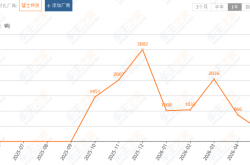
In December 2024, the average daily token consumption on the Wuji Liudong platform was 47.8 billion. By April of this year, the average daily token consumption in the public cloud had surged to 578.5 billion, marking an increase of over tenfold.
In terms of revenue, Wuji Liudong has experienced rapid growth. In 2024, the company's revenue was only RMB 7.346 million, but by 2025, it had soared to RMB 55.33 million, representing a year-on-year increase of 653.2%.
However, behind these impressive figures lies the harsh reality of the AI inference market.
Last year, Wuji Liudong incurred a loss of RMB 187 million, nearly three times its revenue, with a gross margin of only -24%.
Apart from research and development expenses, the losses primarily stemmed from public cloud operations and user subsidies. In 2025, the public cloud business, which accounted for more than half of the company's revenue, had a gross margin of only -119%. This means that for every RMB 1 of revenue generated, the company lost an additional RMB 1.
At the same time, to attract users, Wuji Liudong invested RMB 54.21 million in free computing power last year, effectively subsidizing its entire annual revenue once again.
Even so, in the first four months of this year, this figure was only RMB 1.45 million, equivalent to just a quarter of last year's total. Proportionally, not only was there no growth, but there was also a decline.
An AI infrastructure company that originally thrived on efficiency seems, in the fiercely competitive domestic environment, to have inevitably been dragged into the vortex of traffic acquisition and pricing wars.
/ 01 / China’s Fourth-Largest Token Factory
Yuan Jinhui, the founder of Wuji Liudong, once used a simple analogy to describe their business:
"Computing power is like raw materials such as cabbage and potatoes. They can be sold directly to customers or processed into finished dishes like Kung Pao Chicken and then served to customers. We provide finished models, not raw computing power resources."
In this model, known as the "Token Factory," Wuji Liudong's core capability lies in packaging complex computing power resources and diverse models through a "pipeline" to deliver standardized, affordable, and user-friendly tokens.
The value of this model is mainly reflected in two aspects:
First, it enhances computing power utilization efficiency, especially in adapting to domestic chips.
The biggest feature of China's AI infrastructure is the highly fragmented underlying computing power landscape. The U.S. market almost entirely revolves around NVIDIA's CUDA ecosystem, whereas, in China, besides NVIDIA, there are numerous domestic AI chips from companies like Huawei Ascend, MetaX, Moore Threads, and Biren. The software stacks for these different chips are not unified, requiring significant R&D investment for enterprises to use multiple chips simultaneously.
This is the problem Wuji Liudong aims to solve—addressing the adaptation issues of various domestic chips (such as Ascend, Moore Threads, and MetaX) and enabling them to produce more tokens through high-performance inference engines.
Currently, Wuji Liudong can simultaneously support NVIDIA GPUs and various domestic AI chips, including Ascend, Moore Threads, and MetaX, in large-scale production environments.
The second point is model neutrality.
In today's large model market, most cloud providers offer both infrastructure and their own models and AI applications, acting as both platforms and participants.
Wuji Liudong, however, focuses solely on infrastructure, neither developing models nor creating AI applications. This pure neutrality is highly attractive to top-tier clients (especially in finance, government, and large enterprises) concerned about data security, business dependency, or platform lock-in.
To date, Wuji Liudong has served over 13,000 enterprise clients and supports more than 170 models on its platform.
Based on the annual token throughput in 2025, Wuji Liudong is already China's fourth-largest token supply platform, trailing only behind Volcano Engine, Alibaba Cloud, and Baidu Intelligent Cloud.
For an AI infrastructure company established just three years ago, these achievements are far from insignificant.
/ 02 / Token Sales Have Become a Traffic Business
Compared to the rapid growth in token consumption, Wuji Liudong's commercial performance is rather lackluster.
From a revenue perspective, Wuji Liudong has experienced rapid growth. In 2024, the company's revenue was only RMB 7.346 million, but by 2025, it had surged to RMB 55.33 million, representing a year-on-year increase of 653.2%.
However, similar to large model companies, Wuji Liudong has also incurred significant losses. In 2025, the company's adjusted loss was RMB 187 million, nearly three times its revenue.
Apart from research and development expenses, the losses primarily stemmed from public cloud operations and user subsidies.
In terms of delivery methods, Wuji Liudong mainly operates through two channels: public cloud and on-premises deployment, with revenue roughly split evenly between the two. The public cloud is further divided into serverless token services and dedicated instances, the former being shared computing resources and the latter exclusive computing resources.
However, the gross margin for the public cloud is extremely low. In 2025, the public cloud's gross margin was only -119%. This means that for every RMB 1 of revenue generated, the company lost an additional RMB 1.
At the same time, to attract more users to its public cloud platform, Wuji Liudong spent RMB 54.21 million on computing power promotion costs last year, all of which were used to provide users with free computing power.
The reasoning behind Wuji Liudong's approach is simple: attract more users with very low prices and then encourage them to purchase more exclusive computing power.
The idea is noble, but the reality is harsh.
Last year, the number of users utilizing shared computing resources in the public cloud was 5.45 million. In the first four months of this year, this figure was only 1.45 million, equivalent to just a quarter of last year's total. Proportionally, not only was there no growth, but there was also a decline.
A significant reason for this is the slowdown in registered user growth. In 2025, the public cloud had 9.197 million registered users. As of April 3 this year, this figure was 10.28 million, a growth of only 11.78%.
Although the penetration rate of paying users for shared computing resources in the public cloud increased from 13.13% at the end of last year to 44.18%, as of the first four months of this year, only 20 clients had purchased exclusive computing power, compared to 49 for the entire year last year.
Behind the commercial dilemma of the public cloud lies an even harsher truth: public cloud APIs are irreversibly becoming "traffic wholesale," ultimately relying on extreme economies of scale to survive with minimal profits.
What's even more alarming is that even telecom operators are entering the fray.
In mid-May this year, China Mobile, China Unicom, and China Telecom successively launched token packages for consumer users. Shanghai Mobile, in collaboration with Tencent, introduced a "RMB 1 for 400,000 tokens" package; Beijing Mobile even offered a minimum package for RMB 5.99.
When computing power tokens are packaged into "traffic packages" that ordinary users can purchase, how much room is left for intermediaries like Wuji Liudong?
/ 03 / An Increasingly Competitive AI Infrastructure Market
The public cloud market is fiercely competitive, but on-premises deployment is not faring much better. Over the past two years, although the average customer price for on-premises deployment has increased from RMB 220,000 to RMB 1.303 million, the number of clients has decreased from 28 to 20.
Logically speaking, on-premises deployment places higher demands on AI infrastructure capabilities, and Wuji Liudong's efficiency advantages should be more easily translated into commercial value. However, the problem is that almost all players are targeting this market.
Looking back, in the early stages of the industry, Wuji Liudong's efficiency advantages were indeed very apparent.
By betting earlier on the open-source ecosystem, it became the biggest beneficiary of DeepSeek's rise. For a long time, it was almost the only third-party MaaS platform supporting DeepSeek.
However, as everyone recognized the demand for AI inference computing power and heterogeneous computing infrastructure, the market has become increasingly competitive. Especially when efficiency has become a consensus across the entire Chinese AI industry, Wuji Liudong's advantages are being quickly caught up by various industry players.
On one hand, major companies like Alibaba, Tencent, Baidu, and ByteDance, as well as chip companies like Moore Threads, MetaX, and Biren, are frantically improving their infrastructure computing power technologies and model adaptation capabilities.
At the end of last year, Tencent Cloud even specifically established an AI infrastructure department. ByteDance's AI infrastructure team is estimated to have exceeded 1,000 people.
On the other hand, model vendors and chip companies are beginning to bypass third-party infrastructure platforms and collaborate directly. For example, partnerships between Huawei Ascend and DeepSeek, Moore Threads and Zhipu, and Biren and Jieyue are all shortening the distance between models and chips.
In other words, tasks that originally belonged to AI infrastructure companies are gradually being absorbed by upstream and downstream players.
Zhang Wen, the founder of Biren Technology, also touched on this point last year. He believed that it often takes two years for domestic GPUs to go from design to mass production, while models iterate almost weekly. Therefore, collaboration between model companies and chip companies will only become increasingly tight.
Of course, this does not mean that independent AI infrastructure companies have no opportunities. After all, China's AI infrastructure is not a unified NVIDIA world, and the development of the open-source ecosystem is continuously enhancing the value of MaaS platforms.
The real question is how large this market space can be.
-
![]()
Hardware is the skeleton, AI is the soul, and data integrates the two
-
![]()
China’s AI Industry: A Unified Pivot Towards Monetization?
-
![]()
New Progress! Infineon Completes Acquisition of ams OSRAM's Non-Optical Sensor Business
-
![]()
35 Million Bet on an Optical Future! Tengjing Technology Makes a Move in AR
-
![]()
Why World Models Get Stuck on Construction Roads in Autonomous Driving Applications
-
Alibaba Initiates Cultural Transformation: Is Jack Ma Making a Strategic Comeback?
-
Tianfeng Heads to Hong Kong for IPO with RMB 3.8 Billion in Funds: Xingyu's Cross-Border Foray into Embodied AI Faces Uncertain Future
-
![]()
Mengshi Auto’s High-End Aspirations Dashed: Huawei Partnership Fails to Revive Sales, New Model’s Entry Price Dips Below 300,000 Yuan