WPS: Criticism Warranted, Yet Open to Improvement
 07/07 2026
 478
478
WPS has come under fire in the past two weeks.
The controversy started when users voiced their dissatisfaction with WPS, citing its excessive use of storage space on their computer's C drive. This led to system slowdowns, document losses, and even disruptions in their normal work routines.
As the issue gained momentum, long-held grievances about complex membership fees and restricted features resurfaced, culminating in the trending hashtag #BetrayedByWPS.
However, the heart of these controversies lies in the user experience. Most users understand that software generating cache on the C drive is standard behavior for many Windows applications, which typically store configuration files and cache data on the system drive. WPS is no exception in this regard.
Why are WPS users dissatisfied?
The main reason users feel "betrayed" stems from Kingsoft Office's responses to these issues. The company has often tried to shift blame by citing processes, technology, and technicalities, while neglecting the real-world impact on users' product experience.
In essence, users are looking for solutions to their problems, whereas WPS has repeatedly emphasized disclaimers. This disconnect has widened the trust gap between the vendor and users, ultimately leading to an emotional clash that spiraled out of control.
Initially, Kingsoft Office responded by reiterating established rules in an attempt to placate users. Perhaps underestimating the gravity of the situation, the company merely stated that it had assembled a dedicated team to investigate the issues, provide explanations, and offer specific solutions.
WPS customer service representatives also informed media outlets that ordinary users might misunderstand cache-related issues, asserting that such problems rarely arise during regular use.
This approach was essentially no different from WPS's past responses to similar issues.
In 2024, media reports revealed that users had disputed membership and AI rights, alleging that promotional materials for AI features were displayed during membership purchases, but subsequent AI functionality required upgrades or separate payments. WPS responded by clarifying that AI membership was a separate paid upgrade option that did not affect existing membership benefits.
In reality, users are not inherently opposed to paying for services; what they object to are hidden fees, ambiguous rights, and fragmented experiences. Years of market education have shown that users are willing to pay for high-quality products and services.
What matters more to them is whether platforms will listen and genuinely address product experience issues after payment.
As a mainstream media outlet commented, the outrage over #BetrayedByWPS stemmed from users' long-standing frustration with WPS's problematic operations.
Thus, the initial wave of criticism against WPS was not unfounded. Fortunately, Kingsoft Office eventually heeded the feedback and addressed the problems with pragmatic, sincere actions to restore its reputation.
For example, on June 30, WPS reiterated that writing to the C drive complies with system permission standards and does not intentionally occupy space. It also debunked rumors about "C drive cleanup fees," clarifying that local cache cleanup and storage path modifications are permanently free. Paid cleanup tools target only third-party system junk, eliminating any "create-a-problem-then-sell-a-solution" tactics.
Beyond verbal clarifications, WPS swiftly implemented technical optimizations. Through version updates, it restructured storage logic by separating software installation, file backups, and cloud document caching into three independent paths, completely resolving the default C drive occupation issue.
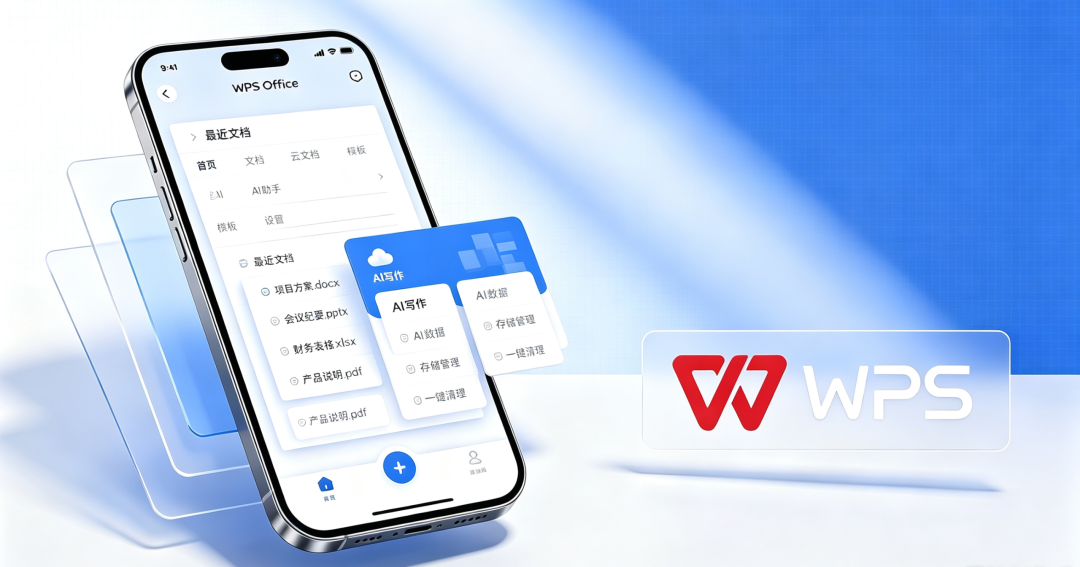
Simultaneously, a new visualized "Storage Management" module was introduced, enabling users to one-click clear redundant cache for free—technically eliminating long-standing complaints about lag and space usage.
On July 6, Kingsoft Office issued another statement refuting false claims about "WPS's excessive fees and betrayal of users." It emphasized that WPS's free basic features continue to expand and will never be converted into paid services.
The official statement outlined three operational principles: free basic features will only increase, never incur charges; membership tiers will be streamlined continuously, with rights and benefits never diminished; and high-cost services like AI agents and third-party integrations will be billed separately without bundling or affecting basic user rights.
Kingsoft Office also pledged to keep accepting user criticism and suggestions for timely improvements while vowing legal action against malicious rumors and defamation.
Kingsoft Office's Growing Challenges
On the surface, this appeared to be a routine crisis management effort. However, it revealed the growing challenges faced by Kingsoft Office—and Chinese software vendors broadly—amid the AI transformation wave. The shockwaves and lessons from this incident are not entirely negative for them.
Retrospectively, Kingsoft Office's "sluggish" response and actions stemmed from its business model.
WPS once served as a cost-effective alternative to Microsoft Office, gaining market share through self-developed, controllable, and free models to rival Microsoft Office and become a leading domestic office software brand.  Photo: WPS 365, taken by Tang Chen
Currently, Kingsoft Office's core products include WPS Office, WPS 365 (a new productivity platform for organizations and enterprises), and WPS AI (an intelligent office assistant).
Financial data shows Kingsoft Office achieved 5.929 billion yuan in revenue in 2025, a 15.78% year-over-year increase. By segment, WPS personal business contributed 3.626 billion yuan (+10.42% YoY), WPS 365 generated 720 million yuan (+64.93% YoY), and WPS software business brought in 1.461 billion yuan (+15.24% YoY).
As of the end of 2025, WPS Office had 678 million monthly active devices globally.
Evidently, personal business remains Kingsoft Office's revenue backbone. The financial report attributed its growth to continuous launches of leading AI-powered office products and services, optimizing user experience, and sustained growth in domestic and international paid users.
This explains why Kingsoft Office persisted with minor fixes despite user backlash—such designs indeed maximized commercial returns.
However, as AI reshapes office software, competitors like DingTalk, Feishu, and WeCom have embedded AI capabilities into their products, upgrading toward intelligent office platforms. Kingsoft Office faces mounting competitive pressure.
Although its management downplayed discussions about "whether AI will render office software obsolete," its traditional SaaS model of "per-user subscriptions and feature-based pricing" appears increasingly ill-suited for the AI era.
Kingsoft Office's 2025 financial report already issued warnings: among its three business segments, personal business revenue growth lagged far behind WPS 365 and even underperformed WPS software business.
Kingsoft Office has not ignored these signals. In recent years, it has focused on the core strategies of "AI, collaboration, and internationalization," actively adjusting its commercialization approach. For example, it gradually reduced ad placements and frequency. In December 2023, WPS announced that its domestic personal version would permanently disable third-party commercial ads.  Photo: Kingsoft Office CEO Zhang Qingyuan, taken by Tang Chen
CEO Zhang Qingyuan unveiled a five-year strategic plan in 2025, stating that Kingsoft Office would moderately relax revenue growth targets for WPS Office to prioritize user experience.
He emphasized that Kingsoft Office would strengthen its advantages in privatization, openness, and trusted computing while transitioning from policy-driven to demand-driven sales, aiming to establish WPS 365 as a top-tier domestic enterprise collaboration brand.
In November 2025, WPS 365 upgraded to a "global one-stop AI collaboration platform." Zhang positioned it as a "knowledge container" and "digital employee carrier," with the vision of helping enterprises build a "corporate brain."
Kingsoft Office's annual report revealed that WPS 365 revenue had grown over 60% year-over-year for four consecutive quarters. Among China's top 500 private enterprises in 2025, over 70% of listed companies chose WPS 365 to enhance efficiency. For instance, at Wilmar's Qingdao Industrial Park, WPS 365 reduced driver registration time from 10 minutes to 3 minutes, saving 700 work hours over three months.
WPS 365 also launched industry-specific versions for vertical scenarios. The education edition covers 75% of "Double First-Class" universities, serving over 20 million students and educators.
These achievements demonstrate that beyond consumer-end potential, Kingsoft Office's AI strategy is rapidly cultivating a second growth engine, with enterprise clients willing to pay for it.
This aligns with the paths taken by Doubao, Canva, and Microsoft 365 Copilot. Doubao's paid model offers valuable insights: its "free basics, paid advanced" logic provides lightweight Q&A functions for free while charging for high-computing, complex professional tasks. This ensures broad access to basic features while precisely monetizing high-value services, minimizing user resentment.
Kingsoft Office's direct competitor, Microsoft 365 Copilot, also faced industry controversy over adding fees to existing subscriptions. However, Microsoft simplified its pricing by selling Copilot as a standalone add-on, enabling users to clearly distinguish between basic and AI-enhanced services—a model gradually gaining acceptance.
In the AI era, competition among Chinese software vendors has shifted from "availability" to "usability and value."
For Kingsoft Office, completing this transformation will take time. More critically, it must demonstrate resolve in clarifying its AI commercialization strategy and aligning with users.
This requires Kingsoft Office to find a sustainable balance among commercialization, user experience, and technological innovation—a balance point that also serves as a trust anchor for users. Once lost, users' C drives may be easy to fix, but their trust could be "formatted" permanently.
The question now is how WPS will seize this opportunity to solidify its core experience, fully unlock AI's value, bridge the trust gap, and overcome its growing challenges.
-
![]()
The Surprisingly Significant Impact Difference Between Quiet and Noisy Cars!
-
![]()
Breaking Through Storage Cycle Barriers: How AI Large Models and Coding Technology Synergize to Drive Transformation in the Security Industry
-
Facilitating the Slimming of Camera Modules! O-film Obtains Utility Model Patent for Periscope-Type Reflective Component
-
![]()
Hikvision Raytine’s Millimeter-Wave Body Imaging Security Inspection Device Achieves ECAC SSc Category A Standard Level 2.1 Certification for European Civil Aviation
-
![]()
Global Market Share for Security Windows Hits 26%! This Optical 'Little Giant' Makes Its Debut on NEEQ
-
![]()
The Evolutionary Path of Agent Engineering: From Prompt to Harness by Zhang Yutao, Co-founder of Moonshot AI
-
![]()
Profits and stock prices are both declining, so why are executives from these auto companies increasing their purchases?
-
![]()
Burning Tens of Billions of Dollars, Yet No Unified Definition for World Models