Stepping Out of the Humanoid Robot Concept: Why is Autonomous Driving the First Large-Scale Implementation Track for Physical AI?
 07/07 2026
 380
380
【Introduction】The AI industry is currently undergoing a profound stratification of capabilities: Large models have addressed information processing and content generation in the digital world, while physical AI, or embodied intelligence, aims to equip artificial intelligence with physical entities that can autonomously perceive, anticipate, and act in the real three-dimensional space. The industry generally believes that a mature physical AI system must establish a complete closed loop of "real-time perception—physical rule deduction—dynamic decision-making," akin to deploying a continuously operating real-time search engine in the physical world. Unlike large models that process static text, it must continuously receive dynamic signals from the real world, comprehend objective physical laws such as distance, inertia, friction, and human-vehicle interactions, deduce environmental changes over the next few seconds within millisecond-level time windows, and respond with safe and precise actions.
Examining all potential physical AI carriers—humanoid robots, industrial robotic arms, household service robots—most remain confined to laboratory simulation environments or small-scale demonstration projects for extended periods, struggling to establish normalized and sustainable commercial operation networks. In stark contrast, autonomous driving has become the only physical AI track globally to achieve large-scale commercial operation, leveraging complete open-road implementation scenarios, a highly standardized hardware ecosystem, and a dual-cycle business model of "data + revenue."
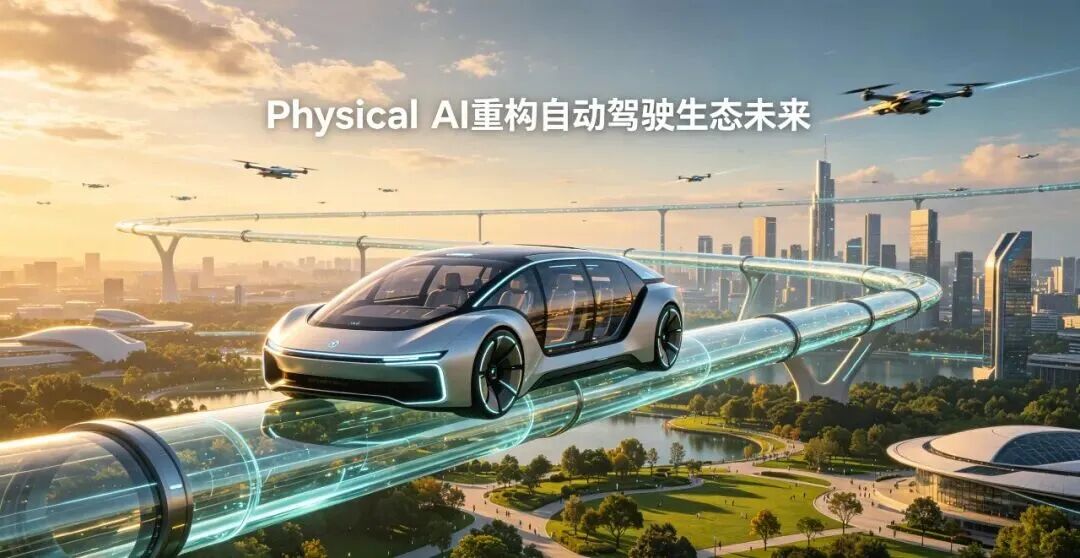
Among the numerous segments of autonomous driving, market attention has long been drawn to high-profile areas such as Robotaxi and mainline heavy trucks. However, when measured by three core dimensions—long-term industrial self-sufficiency, the true value of technological iteration, and global policy alignment—the two open-road tracks closer to urban fabric truly support the sustained evolution of physical AI: fully autonomous delivery logistics and urban public autonomous shuttle buses. These are not low-speed experimental vehicles confined to park interiors but have already entered urban arterials, cultural tourism loops, and even cross-border transit networks, conducting all-weather, normalized commercial operations.
Three Hard Thresholds for Physical AI Implementation Fully Met by Autonomous Driving A commercially viable physical AI system extends far beyond mere algorithm models superposition (stacked) with hardware devices. To truly escape laboratories and achieve large-scale mass production, three rigid thresholds must be crossed simultaneously: a standardized hardware ecosystem enabling batch replication, continuous data supply from the real world, and a sustainable business model capable of self-sufficiency. These three thresholds represent the fundamental reasons why other embodied intelligence tracks struggle to catch up with autonomous driving in the short term. Standardized Mass-Production Hardware Ecosystem Supports Rapid Deployment of Fully Autonomous Terminals
Any physical carrier with autonomous mobility requires a complete hardware chain spanning perception, computation, and chassis control. Currently, the humanoid robot sector remains in a highly fragmented hardware development phase, with manufacturers independently developing drive units, sensor modules, and motion control components, lacking unified supply chain standards. Consequently, unit costs remain prohibitively high, precluding large-scale deployment. Industrial robotic arms, meanwhile, are only suitable for fixed static workstations, with perception systems incapable of handling dynamic obstacles in open-road environments.
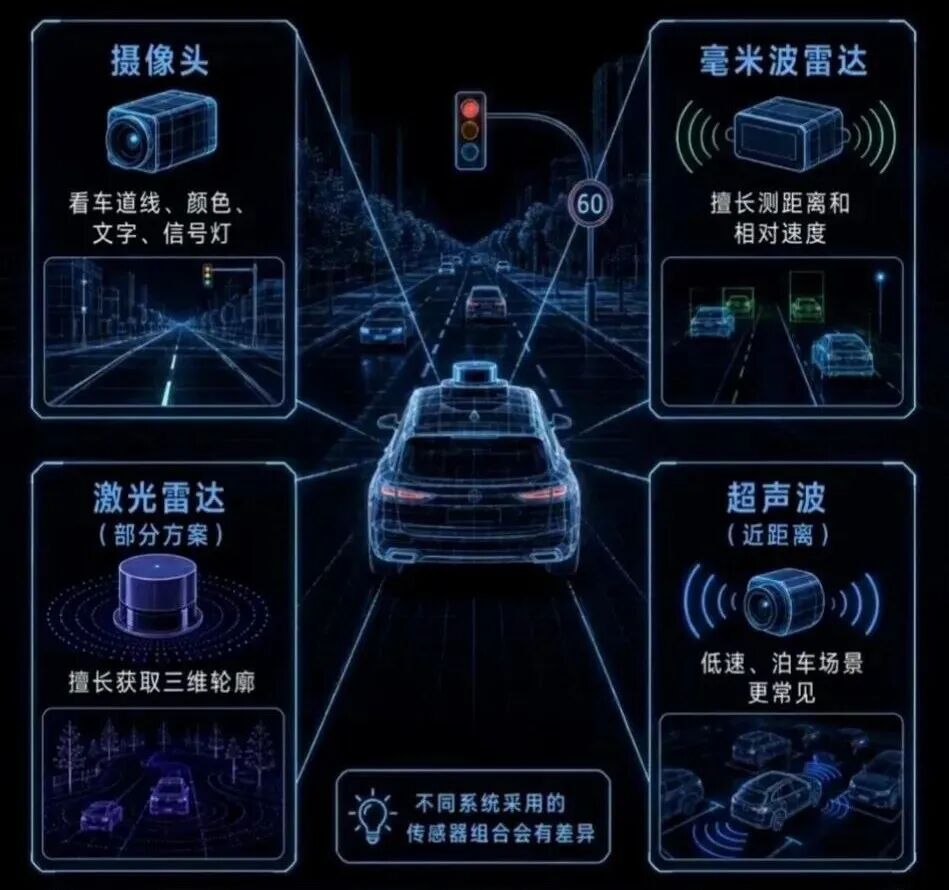
After over a decade of industrial maturation, autonomous driving has established a highly sophisticated general supply chain ecosystem: vision cameras, millimeter-wave radars, vehicular LiDAR, automotive-grade domain controllers, and pure electric mass-production chassis have all achieved standardized bulk procurement. Whether for freight-oriented fully autonomous delivery vehicles or passenger-carrying autonomous buses, their underlying perception architectures and computing platforms exhibit extremely high reusability. This enables enterprises to rapidly assemble large-scale fleets of hundreds or even thousands of units, constructing citywide mobile perception networks. This low-cost replicable hardware foundation represents a prerequisite for large-scale physical AI deployment.
Bidirectional Data + Business Closed Loops Address the Most Critical Pain Point in Physical AI Iteration
The physical world abounds with endless long-tail scenarios—suddenly darting pedestrians, abrupt deceleration of leading vehicles, changes in braking distance on slippery roads, temporary construction barriers—models trained solely on simulated datasets inevitably face a severe "reality gap." Only through continuous operation on real roads and capturing these dynamic interactions can AI gradually refine its reasoning logic for physical causal relationships such as motion trajectories, collision boundaries, and spatial distances.
Most embodied intelligence tracks currently rely solely on simulated training scenarios, lacking commercial fleets to continuously generate native real-world data, and depend on external capital infusions to sustain R&D. In contrast, the autonomous driving industry has formed a unique virtuous cycle: delivery vans and bus fleets traversing urban road networks collect diversified real-world traffic data 24/7, which is then transmitted to the cloud for continuous iteration of physical reasoning models. Simultaneously, fleet operations themselves generate stable cash flows—delivery services charge B-end logistics fees, while buses rely on ticket revenues and public transit subsidies for sustained profitability, gradually covering operational costs such as maintenance, data annotation, and model training. This dual-closed-loop system—supplying real-world scenario data for physical AI evolution while autonomously generating revenues to fund R&D—currently exists only in the autonomous driving sector.
Tiered Global Regulatory Frameworks Provide Gradual Safety Validation Windows
General-purpose humanoid robots still lack a complete regulatory framework for outdoor operation, with nearly blank slates in safety liability definition, accident compensation mechanisms, and market access thresholds, posing extremely high compliance risks for large-scale deployment. In contrast, major global economies have established clear tiered implementation rules for autonomous driving, implementing stratified controls based on road hierarchy, passenger-carrying attributes, and operational scope, creating gradual trial spaces for physical AI models.
Enterprises can first complete basic safety validations on scenic loops with controlled passenger flows before gradually expanding to urban secondary arterials, core arterials, and ultimately high-density international urban transit networks, completing full-scenario safety verifications for physical AI systems in stages. This gradual implementation path perfectly matches the current maturity level of physical AI technologies, significantly reducing marginal costs for new technology trial-and-error while providing institutional guarantees for the industry to continuously accumulate large-scale open-road operational experience.
Considering these three foundational conditions, it becomes evident that autonomous driving represents an irreplaceable pioneering vehicle for physical AI implementation, serving as a natural real-world testing ground for the entire embodied intelligence industry.
Dissecting the Two Core Commercialization Tracks: Fully Autonomous Delivery and Urban Autonomous Buses
The autonomous driving sector branches into numerous segments, but those capable of long-term stable profitability, continuously providing diverse scenario samples for physical AI's underlying models, and aligning with global urban infrastructure systems are highly concentrated in two open-road tracks: fully autonomous delivery logistics and urban public autonomous shuttle buses. Both vehicle types can fully operate on urban arterials, rural trunk lines, and even cross-border transit networks, unconstrained by low-speed scenarios in enclosed parks, and capable of providing long-term, highly complex real-world data on human-vehicle interactions.
(I) Fully Autonomous Delivery Logistics: A Large-Scale Physical AI Testing Ground for Urban Material Flow
A common misconception in the industry is that autonomous delivery merely refers to short-distance shuttles within residential areas or parks. In reality, mainstream mass-produced delivery models now possess qualifications for all-weather operation on public roads, with operational scenarios covering warehouse-to-store trunk lines, two-way rural logistics, pharmaceutical logistics, supermarket instant replenishment, and other diversified formats. Scaled fleets conducting normalized operations have already been deployed in numerous cities across China.
Domestic players Neolix and 9D Robotics exemplify this sector. Both have launched L4-level fully autonomous models adapted for all road conditions, with deployments covering hundreds of cities domestically. Neolix adopts a transportation service model, providing 24/7 unmanned delivery capabilities to retail, express delivery, and pharmaceutical industries, with normalized projects implemented on urban arterials in Qingdao, Shenzhen, and other cities. A single route processes thousands of daily delivery orders, effectively reducing labor costs for short-haul freight. 9D Robotics reduces reliance on high-definition maps, enabling its models to adapt to complex road conditions such as urban streets and mountainous rural roads, with operational deployments in two-way rural logistics scenarios, filling end (last-mile) delivery gaps between county seats and rural stations.
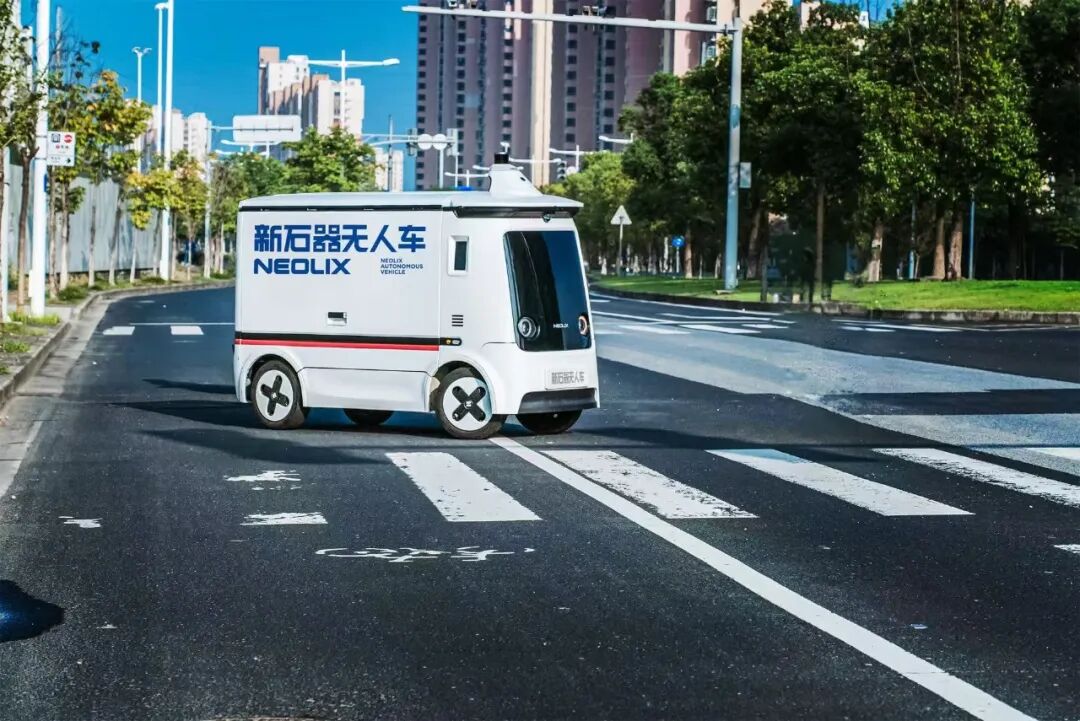
From the perspective of physical AI technological evolution, fully autonomous delivery fleets regularly encounter scenarios rarely seen in passenger vehicles, such as heavy-load transportation, narrow-road passing, and rural non-standardized roads. These provide the system with special physical reasoning samples like heavy-load inertia, steep-slope braking, and erratic non-motorized vehicle movements, significantly broadening the scenario generalization boundaries of world models. Commercially, the delivery sector leverages rigid B-end logistics demand, avoiding the high personal injury compensation risks associated with passenger scenarios. After scaled deployment, it can rapidly achieve positive gross margins, continuously providing stable capital reflux for physical AI R&D.
(II) Autonomous Shuttle Buses: The Intelligent Foundation of Urban Public Transit
Autonomous buses are positioned as valuable supplements to urban public transit, with models adapted for scenic loops, urban arterials, and cross-border core transit networks, while also accommodating passenger transport and small-item incidental freight to enhance vehicle asset utilization efficiency across all time periods. Currently, mature implementation cases exist in domestic cultural tourism scenarios and overseas international cities.
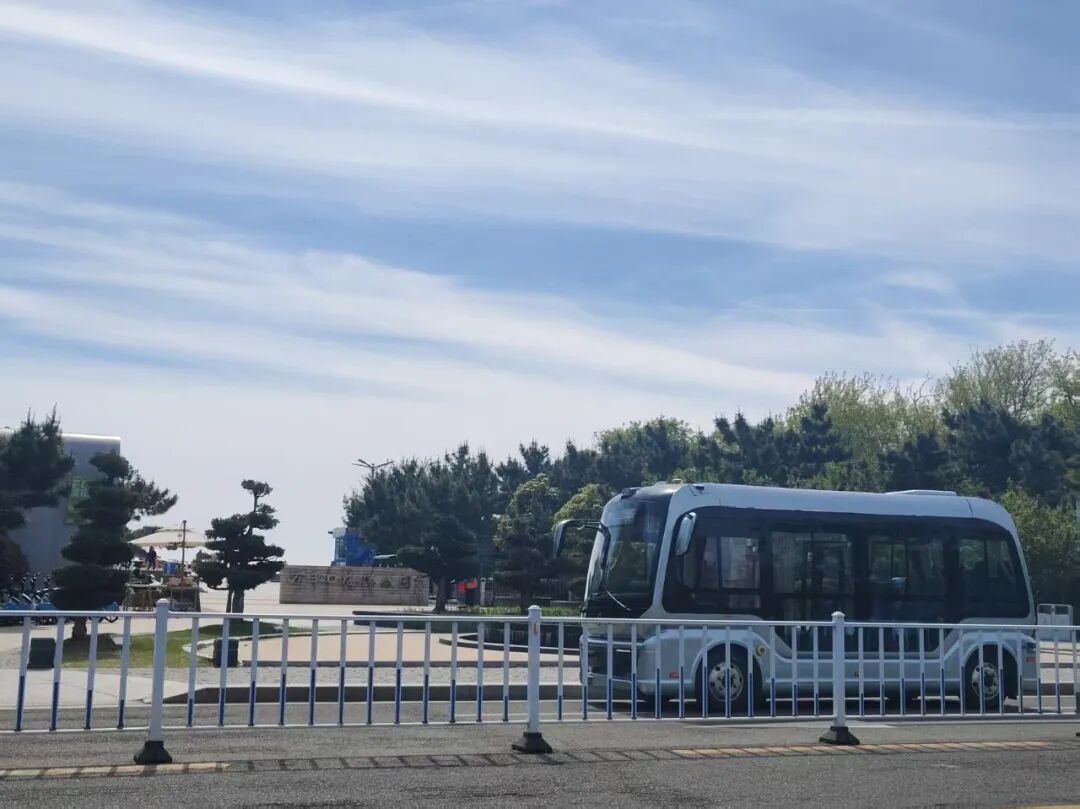
In China, the Rizhao Wanpingkou coastal tourism route represents a typical example of autonomous bus implementation on public roads. Spanning scenic area arterials and facing high-density tidal passenger flows during holidays, the vehicles operate stably in continuous human-vehicle mixed environments, accumulating valuable data on slow-moving pedestrian traffic scenarios while achieving commercial model viability through cultural tourism passenger flows and supporting subsidies.
Even more industry-landmark is Singapore's integration of autonomous buses into its official regular transit network. The global benchmark value of this project manifests in three dimensions:
First, extremely high technical entry standards. Singapore possesses the world's most stringent smart transportation certification and safety control standards, combined with a rainy climate, left-hand driving rules, and high-density urban road networks, creating exceptionally high testing thresholds. Achieving normalized bus operations there fully demonstrates that open-road autonomous driving solutions have reached international commercial-grade maturity.
Second, groundbreaking operational models. Unlike most countries that only conduct pilots in parks or scenic areas, Singapore directly incorporates autonomous buses into urban public transit mainlines, with unified scheduling and ticketing management alongside traditional buses, proving that autonomous buses can operate as legitimate public transit infrastructure with long-term stability.
Third, cross-border data applicability. High-density international commuter networks and pedestrian behaviors shaped by diverse cultural backgrounds supply valuable cross-border generalizable scenario samples for physical AI models, forming an implementation paradigm directly replicable in Southeast Asian, European, and American cities. The open-road public transit operational experience accumulated by Mushroom Autonomous Driving in multiple Chinese cities, including complex intersection navigation and mixed traffic flow interactions, also provided critical technical references for scenario adaptation in the Singapore project, further validating the migratability of autonomous bus solutions across different traffic ecosystems.
Commercially, autonomous buses can secure baseline revenues through urban public transit subsidies, supplemented by value-added services like small-item logistics along routes, extending daily operational hours to construct an anti-cyclical, sustainable profit model.
Delivery and Bus Tracks Carry the Entire Physical AI Industry's Incubation Function
Combining global real-vehicle operational data with academic research conclusions, the industry has formed a clear technological progression chain: These two open-road autonomous driving tracks sit at the forefront of physical AI technological incubation, continuously accumulating general-purpose embodied intelligence capabilities for the entire industry.
Step 1: Large-scale fleets of fully autonomous delivery vehicles and autonomous buses operate normally, continuously collecting real-world data in diverse open scenarios such as cities, towns, scenic areas, and international arterials. They iteratively refine core capabilities like perception fusion, physical causal reasoning, and multi-vehicle coordinated scheduling, completing low-cost, large-scale real-world engineering validations.
Step 2: The physically reasoned models, multi-sensor fusion hardware architectures, and cloud-based scheduling systems refined over millions of kilometers of real-world driving possess bidirectional migratory capabilities: Upward, they can empower higher-order autonomous driving scenarios like Robotaxi and long-haul trunk heavy trucks; downward, they can adapt to intelligent equipment in enclosed scenarios like ports and parks, forming a complete industrial technology spillover effect.
Step 3: The long-accumulated dynamic interaction reasoning capabilities in open roads can reversely feed the R&D processes of sectors like humanoid robots and industrial general-purpose embodied devices, effectively alleviating the core challenges of simulation-reality disconnection and severe shortage of real-world scenario samples prevalent in other physical AI fields.
In essence, fully autonomous delivery and urban autonomous buses represent not only core profit-generating tracks within the autonomous driving industry itself but also universal testing carriers for the entire physical AI industry. All intelligent hardware requiring autonomous operation in the real world can rely on these two tracks to complete technological trial-and-error, data accumulation, and commercial validation before extending to higher-difficulty, more diversified physical AI products.
From an objective perspective at the 2026 industry node, humanoid robots and conceptualized global Robotaxi remain more akin to long-term technological visions, struggling to form industrial-scale self-sufficiency in the short term. Autonomous driving represents the most realistic and mature path for physical AI implementation, with fully autonomous delivery and urban public autonomous shuttle buses serving as the core main storyline (main threads) determining whether the entire embodied intelligence industry can navigate capital cycles and achieve global sustainable development.
The ultimate implementation vehicle for real-time physical world reasoning has never been single robot prototypes demonstrated in laboratories but open-road autonomous driving fleets operating continuously, self-sufficiently, and globally across urban road networks.

-
![]()
The Surprisingly Significant Impact Difference Between Quiet and Noisy Cars!
-
![]()
Breaking Through Storage Cycle Barriers: How AI Large Models and Coding Technology Synergize to Drive Transformation in the Security Industry
-
Facilitating the Slimming of Camera Modules! O-film Obtains Utility Model Patent for Periscope-Type Reflective Component
-
![]()
Hikvision Raytine’s Millimeter-Wave Body Imaging Security Inspection Device Achieves ECAC SSc Category A Standard Level 2.1 Certification for European Civil Aviation
-
![]()
Global Market Share for Security Windows Hits 26%! This Optical 'Little Giant' Makes Its Debut on NEEQ
-
![]()
The Evolutionary Path of Agent Engineering: From Prompt to Harness by Zhang Yutao, Co-founder of Moonshot AI
-
![]()
Profits and stock prices are both declining, so why are executives from these auto companies increasing their purchases?
-
![]()
Burning Tens of Billions of Dollars, Yet No Unified Definition for World Models