The Voice in AI Hardware Industry is Quietly Shifting Amid Brain Drain
 07/14 2026
 547
547
Paul Meade to Leave Apple for OpenAI
As the head of hardware engineering for Apple's Vision Pro, he has worked at Apple for 15 years. He is also leading a project—screenless smart glasses set for release in 2027, positioning Apple against Meta's Ray-Ban as its next strategic hardware play after the lukewarm reception of Vision Pro.
He is not the first. Over the past year, OpenAI has poached more than 40 engineers and executives from Apple's hardware team, spanning camera engineering, iPhone hardware, Mac hardware, chips, industrial design, manufacturing, audio, smartwatches, and Vision Pro—covering nearly all critical roles. Adding to the exodus are Jony Ive, Tang Tan, Evans Hankey, and Scott Cannon, who left earlier and now work for OpenAI. The commanders who defined Apple's hardware over the past decade have all switched employers.
The hardware capability chain that Apple spent 30 years building is being bought out piece by piece by OpenAI with money.
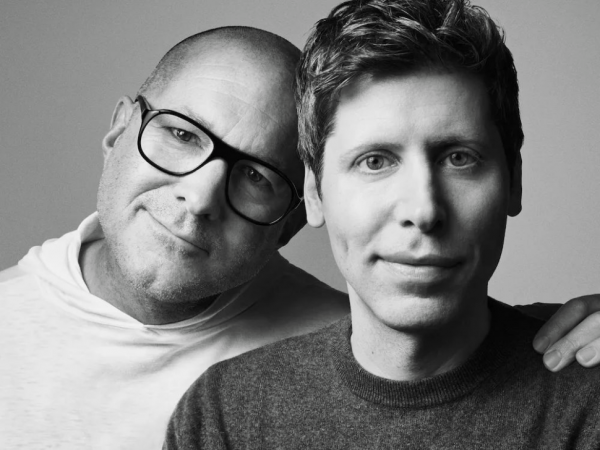
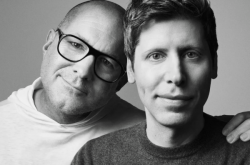
Photo of Apple's Former Chief Design Officer Jony Ive & OpenAI's Altman
I. What Apple Has Lost
Paul Meade has worked at Apple for 15 years.
He joined as an iPad project manager in 2010, took over iPhone project management in 2012, moved to the Vision Products Group in 2017, and assumed full responsibility for Vision Pro hardware engineering in 2019.
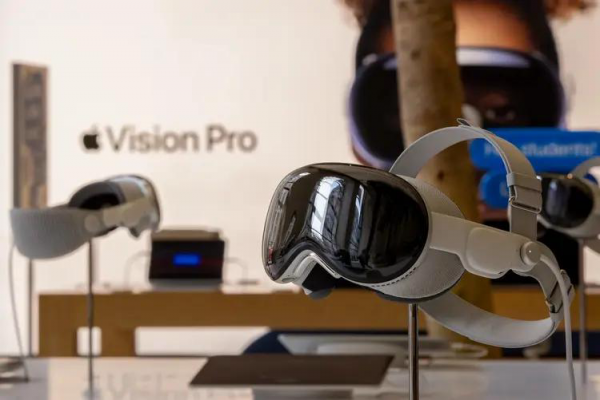
Over seven years, he built Vision Pro from scratch—the most engineering-intensive consumer electronics product in Apple's history, featuring miniature OLEDs, optics, custom chips, thermal management, and spatial awareness, all unproven technologies at scale.
Vision Pro's sales fell short. Yet, Apple didn’t retreat but entrusted him with its next strategic product: screenless smart glasses releasing in 2027, a core weapon to counter Meta's Ray-Ban. He built the team from scratch, tackling the toughest AR glasses challenges: diffractive waveguides, power consumption, display fidelity, and social acceptability.
Now, he’s leaving to join OpenAI's hardware division.
His deputy, Fletcher Rothkopf, will take over. But the supply chain relationships, technical battles with optical glass manufacturers, and precision manufacturing tolerances accumulated over seven years cannot be passed down through handover documents. Apple’s most critical hardware roadmap project has lost its engineering brain at a pivotal moment.
And Meade is just the latest departure. His new colleagues at OpenAI include Jony Ive, his former design boss; Tang Tan, his former iPhone project colleague; and Evans Hankey, his former industrial design lead. Together, these four represent the command center of Apple's hardware design and engineering teams over the past decade.
Looking further back, Apple’s bleeding extends beyond hardware talent or just to OpenAI. In October 2025, Ke Yang, responsible for Apple Intelligence, left for Meta; in December, Alan Dye, VP of Human Interface Design, also joined Meta. Within six months, three VP-level departures—more than Apple had seen in a decade.
Forty engineers plus four VPs. This isn’t individual choice; it’s a fracture in Apple’s appeal to top hardware talent.
II. Why Apple Can’t Retain Talent
Paul Meade’s departure was no accident—it was engineered by Apple itself.
On April 20, Apple announced Tim Cook would step down as CEO on September 1, with John Ternus, SVP of Hardware Engineering, succeeding him. This marks Apple’s first CEO transition since Steve Jobs’ handover in 2011. After Ternus’s promotion, Johny Srouji, head of chip business, took over Ternus’s former hardware engineering portfolio as Chief Hardware Officer.
Srouji’s first move was to reassign several hardware VPs who previously reported directly to Ternus to now report to a newly created middle manager, Tom Marieb.
This reshuffle downgraded a batch of VPs from reporting to the “future CEO” to a peer colleague. Titles remained unchanged, but real power diminished. Paul Meade was among them. Bloomberg reported that Ternus’s reorganization prompted Meade’s decision to leave, with OpenAI merely catching someone already set to go.
Apple isn’t standing idle. To block OpenAI’s poaching, Apple offered iPhone product design teams retention bonuses of up to $400,000 in restricted stock. But offering such sums admits the poaching has hit a nerve.
Structural issues are superficial; deeper lies Apple’s sense of direction in the AI era. When Jony Ive left in 2019, he cited starting his design firm, LoveFrom, but industry insiders believed he disagreed with Apple’s hesitancy on AI. The issues Ive saw were later validated by the exodus of others. When a company is perceived as “unclear in new races,” the first to leave are the most visionary, shaking the resolve of those remaining.
OpenAI isn’t just poaching Apple’s present—it’s taking the people Apple intended to define its future. Apple loosened the soil of its future first; OpenAI simply picked up the seeds.
III. What OpenAI Is Building
Poaching is the surface move; beneath lies a hardware company being built from scratch.
It began in May 2025. OpenAI announced a $6.5 billion all-stock acquisition of Jony Ive’s AI hardware startup, io—OpenAI’s largest acquisition to date. Io’s 55 hardware engineers, software developers, and manufacturing experts joined OpenAI en masse. Ive himself won’t join the staff but his design firm, LoveFrom, will oversee all OpenAI product designs.
Io’s 55, plus over 40 engineers poached from Apple in the past year, plus VP-level executives like Meade, have expanded OpenAI’s hardware division to nearly 100 people, with resumes covering every consumer electronics link: industrial design, hardware engineering, chips, manufacturing, audio, cameras, and spatial computing experience from Vision Pro.
Next came chips. On June 24, OpenAI and Broadcom unveiled Jalapeño, their first custom AI inference processor. Designed for data centers to run ChatGPT, Codex, and other cloud services—not for Ive’s AI device—its strategic significance lies in OpenAI’s nine-month journey from concept to tape-out, building the “model company” and “hardware company” link: silicon.
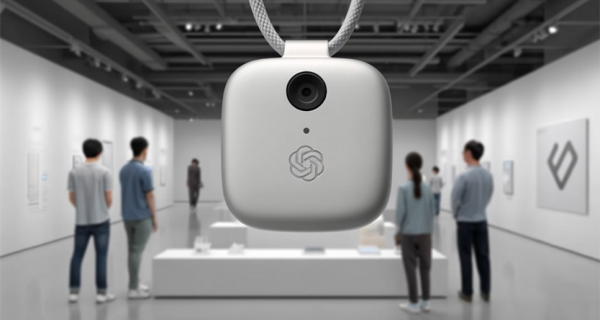
Then came devices. Ive and Altman’s first AI-native device, originally planned for late 2026, is now delayed to early 2027. Not a phone but a camera-equipped smart speaker priced at $200–300, focusing on “beyond-screen” ambient interaction. Altman described it to employees as “the coolest tech product the world has never seen.” Analyst Ming-Chi Kuo’s April supply chain report also mentioned OpenAI’s concurrent development of an “AI agent phone,” projected to ship 30 million units in 2027–2028.
Models, chips, devices. In 18 months, OpenAI has assembled all key components needed for a hardware company. What was industry speculation a year ago is now public strategy.
OpenAI doesn’t want to remain an app running on others’ devices. It wants to be the device itself.
IV. The Battle for AI Hardware Definition Power
The true weight of this isn’t in how many people OpenAI poaches or whether its first device succeeds—it’s that the defining power of AI hardware is shifting from hardware companies to model companies.
For 30 years, consumer electronics definition power rested with hardware firms. Apple defined smartphones’ form, apps, and user interaction; software was merely a function running on hardware. AI, too, was just another module, becoming Apple Intelligence when integrated into iPhones.
Generative AI changes this equation.
AI is no longer a device feature—it is the device’s raison d’être.
When a product’s core value is determined by “which models it runs, what data it accesses, what inferences it makes,” the power to define it shifts from hardware makers to model owners. OpenAI isn’t building a phone to compete with iPhones—it’s building a device designed from the ground up for large models, with hardware built around AI, not AI fitted into hardware.
Apple has 30 years of hardware experience but lacks AI prowess; OpenAI has three years of AI leadership but no hardware capabilities. Now, OpenAI is buying Apple’s hardware expertise to fill its gaps. Once complete, it will control every layer of the “AI-native hardware” category: models, chips, devices, OS, and user data.
Apple’s counteroptions are limited. It could bolster its AI to rival OpenAI directly—but it’s already two years behind. Or it could rely on hardware barriers to keep OpenAI’s devices niche—but OpenAI is dismantling these barriers one hire at a time.
The form of next-gen computing devices remains undecided. But only those controlling both models and hardware can define it.
Epilogue
Apple remains the world’s most valuable company. Cook leaves behind cash, supply chains, and brand strength that no rival can match shortly. iPhones will release as usual next year, Apple Watches will sell, AirPods will profit—Apple’s present is secure.
But as its best hardware talent departs one by one for OpenAI, the question lingers: Does Apple still hold the defining power for next-gen devices?
The answer won’t emerge in Ternus’s September inaugural speech—it will arrive in 2027, when OpenAI unveils its first device.
Follow Zhihe Pro to understand AI earlier.
-
![]()
From a 706% Surge to a $340 Billion Market Cap Plummet: Has MiniMax's Moment Passed?
-
![]()
High Demand, Low Stock Price: Can the Emotional Companion Robot Ease UBTECH’s Worries?
-
![]()
Why Does Yin Qi, Who 'Doesn't Listen to Advice,' Insist on Making AI Agent Smartphones? | Interview with Jieyue Xingchen
-
![]()
AI-Generated Code Reveals Surprise That Thrills China
-
More Than Selling GPUs: NVIDIA Launches Computing Power Loan, Creating a New Model of Revenue-Sharing Computing Power Cooperation
-
The answer lies in the performance of the production line by the end of 2026
-
![]()
The Voice in AI Hardware Industry is Quietly Shifting Amid Brain Drain
-
![]()
AI Enters Second Half: Buy the 'Cloud,' Not the 'Chip'?