Zhihu Shines at WAIC, Emphasizing 'The Last Mile of AI' and Unveiling a Vibrant AI Ecosystem
 07/20 2026
 555
555
On July 17th, the 9th World Artificial Intelligence Conference (WAIC) commenced at the Shanghai World Expo Center. As a premier annual event in the AI realm, this year's conference once again convened leading large model firms, AI application developers, hardware producers, and robotics companies from across the globe. Leikeji (ID: leitech), via its AI-centric new media platform 'Leikeji AGI (leikejiagi),' dispatched a reporting team to Shanghai for comprehensive on-site coverage.
Zhihu also actively participated in the exhibition, establishing booths in both the Pudong and Xuhui exhibition halls. Moreover, it organized the second Tech Club offline forum, centered on the theme 'When Will AI Reach Its Final Mile?', inviting scholars, creators, and everyday developers to delve into the myriad challenges encountered in AI deployment. Leikeji was also privileged to be part of this event.
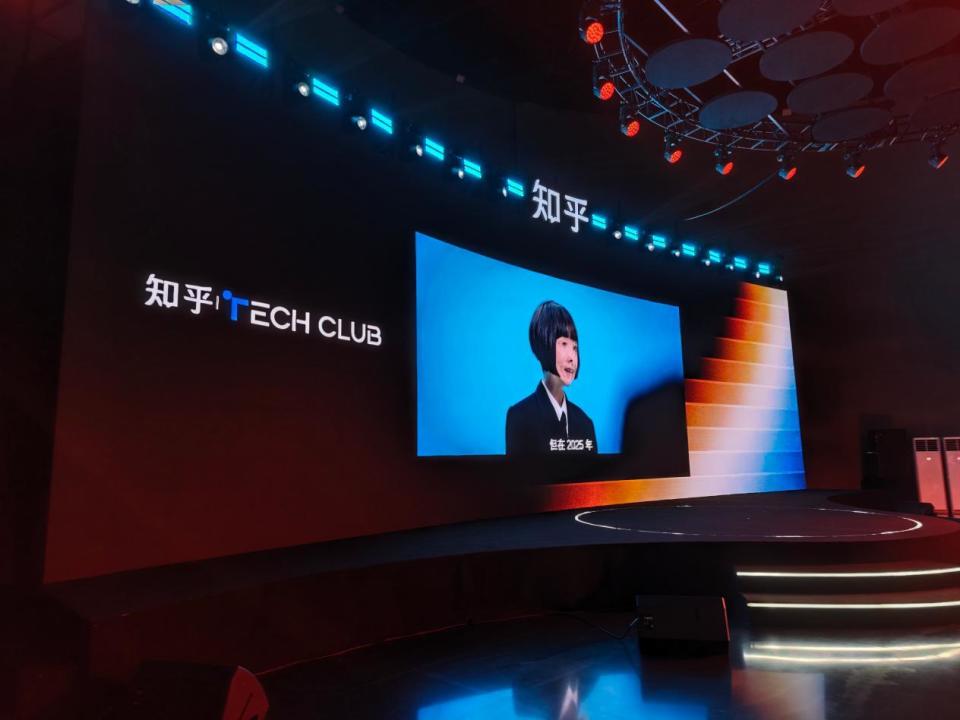 Image source: Leikeji
Cutting through the chatter, various industries engage in genuine AI discussions. Throughout the forum, speakers from diverse backgrounds shared their insights and underscored the real bottlenecks in AI implementation. Professor Li Xinke from City University of Hong Kong demonstrated through experiments that, despite vast data volumes, current large models struggle to adapt to ever-evolving real-world scenarios. Dynamic real-world generation and autonomous environmental adaptation remain formidable challenges for AI. Yi Peng, a hardware product creator, observed a notable shift: an increasing number of individuals are utilizing AI beyond their mobile devices, with large-screen interactions becoming commonplace. While AI can aid in information gathering and repetitive tasks, it cannot supplant human decision-making and deep thinking.
Science fiction author Chen Qiufan tackled the contentious issue of AI-generated content: although anyone can now produce content using AI, resistance to AI creation stems from a lack of recognition for the labor value of human creators and a trust deficit between humans and AI. The so-called 'last mile' of AI implementation essentially revolves around redefining the boundaries between humans and machines.
Ma Kai (Qingjiang), an 18-year-old high school developer preparing for the college entrance exam while crafting AI applications, remarked that AI has significantly lowered the entry barrier, but for a product to mature, it necessitates aesthetics, trade-offs, and judgment—cognitive abilities beyond AI's purview. Another developer, Haiming Dev, discussed solo entrepreneurship, noting that while AI tools facilitate low-cost trial and error, all operational and decision-making pressures rest on the individual. Tools reduce development complexity but amplify the decision-making burden on humans.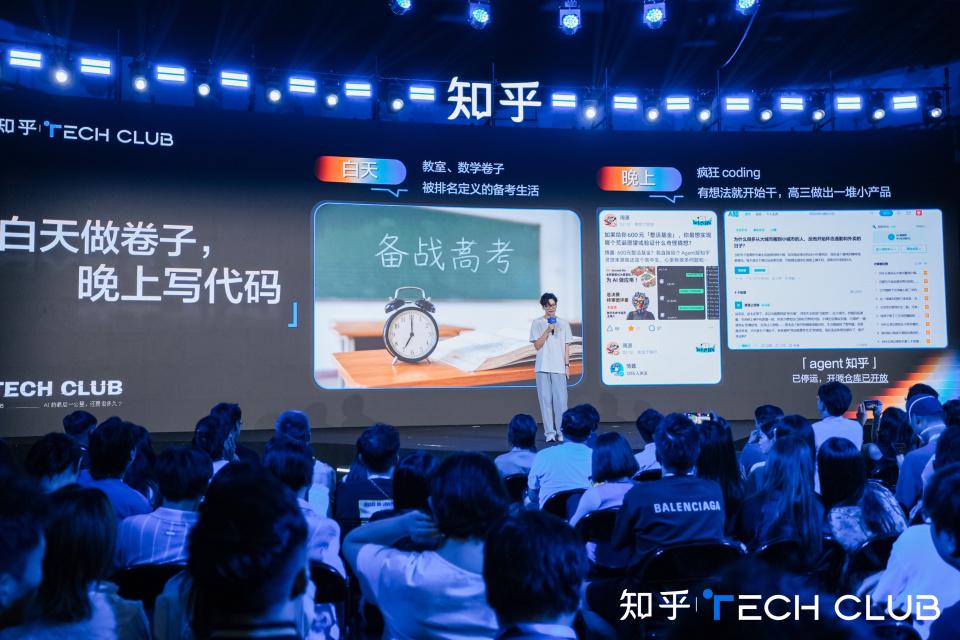
A psychological perspective offered distinct insights. Jian Lili, the founder of Simple Psychology, emphasized that the core of psychological counseling lies in the inclusive and accepting relationship between individuals. AI, with its 'flawless memory' that retains every detail, cannot replicate the warmth and imperfections of human counselors. Emotional healing remains beyond the reach of machines.
Zhihu respondent Liu Aiqi highlighted a concerning trend: over 60% of students use AI for homework. AI safety cannot hinge solely on corporate self-regulation; a comprehensive protective system must be proactively established. The forum also featured a lively debate competition, where 12 senior Zhihu respondents were divided into two teams to debate two pertinent topics: 'Should one focus on deepening professional expertise or broadening cross-disciplinary knowledge in the workplace?' and 'Is it more crucial to identify problems or discern answers in the AI era?' The on-site exchange of viewpoints was intense.
Everyone as a creator: Zhihu community's AI ecosystem achievements take center stage. Zhihu set up booths in two exhibition halls with distinct focuses, offering unique exhibition experiences. The Pudong Expo Hall exhibition area, themed 'AI for Everyone,' featured the AI Builder booth, interactive games like the Creator Map and personalized ID badges, along with the IP character Liu Kanshan, drawing numerous visitors for photo opportunities. Zhihu also unveiled a new feature, 'AI Kanshan,' which has been progressively integrated into the App to enhance community smart interaction experiences. Additionally, Zhihu organized a team of 30 senior respondents from various fields to form an exploration squad, shuttling between booths to elucidate AI products in layman's terms. The concurrently opened 'AI Academic Bar' provided a platform for young developers to freely exchange ideas and discuss how to effectively leverage AI to foster independent creative thinking.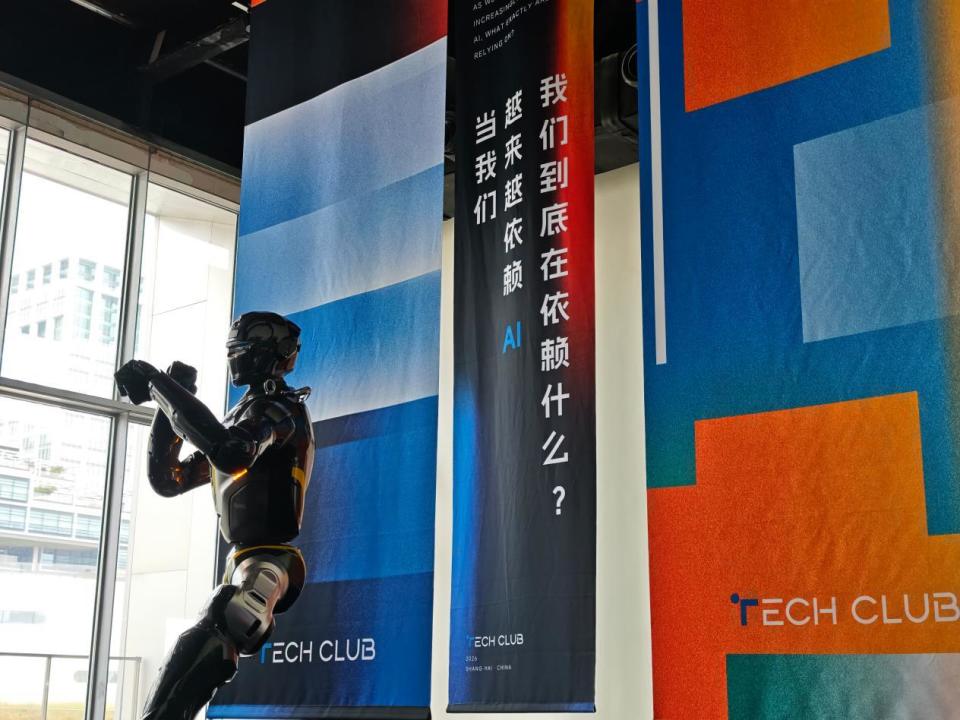 Image source: Leikeji
The Xuhui West Bund Pavilion was transformed into an 'AI Implementation Quality Inspection Station,' showcasing various lightweight applications developed by everyday developers on the Zhihu platform: the e-ink desktop digital pet Cyber Liu Kanshan, the AI smart outfit recommendation tool Colore, and a check-in mini-program to alleviate emotional stress—all these daily-life-oriented tools were on display.
Furthermore, Zhihu's self-developed data training tool SoTALab and the social platform SmallWOD for entrepreneurs were also exhibited. Partner brands like Nubia showcased supporting AI hardware, comprehensively displaying Zhihu's entire AI ecosystem from underlying data to terminal applications. Image source: Zhihu
This year, Zhihu has been consistently enhancing its underlying tools for developers, launching a dedicated data open platform. Leveraging over a decade of accumulated professional Q&A content and integrating various authoritative information sources, the platform provides developers with standardized and reliable training corpora, addressing the data scarcity and lack of exposure channels faced by many independent developers. It establishes a seamless pipeline from data acquisition to product development and public display.
Based on this platform, Zhihu hosted its inaugural hackathon, with over 200 development teams participating and generating more than 100 AI innovation projects. An accompanying AI Works project plaza was launched to provide everyday developers with a channel to showcase and gain exposure for their works, enabling individual creators to implement their AI ideas without relying on major corporations.
Fostering a hub for ordinary people to discuss and practice AI. Currently, Zhihu has amassed over 20 million AI enthusiasts and practitioners, with over 50 million AI-related discussions on the platform and nearly 100 billion views of related content. Here, whether they are industry leaders, students, or ordinary workers, everyone can share their authentic experiences in using and developing AI. From online daily discussions to in-depth offline forum exchanges, and finally to the implementation of physical products at exhibitions, Zhihu has been focused on the same question: How can AI be genuinely integrated into real life?
The platform has consistently maintained that AI is not a tool to replace humans but rather to assist in eliminating repetitive labor, enabling people to concentrate on thinking, aesthetics, and original creation. In the future, Zhihu will persist in refining developer support tools and creating industry exchange scenarios, ensuring that AI does not remain confined to exhibitions and laboratories but truly permeates everyone's daily lives, completing the 'last mile' of AI implementation.
-
![]()
AI Memory Race Unveils a Stunning Dark Horse: RedBear AI Raises 6 Rounds of Funding in 15 Months, Valuation Soars Close to RMB 3 Billion
-
![]()
WAIC Concludes: The Three-Year Competition for Large Model Parameters Ends, AI Fully Enters the Industrialization and Implementation Phase for Intelligent Agents
-
DRAM, A Disruptive Technological Breakthrough!
-
Robot Army Mobilizes for Action
-
![]()
Electric Vehicle Penetration Soars Past 60%, Yet Seven of Top Ten Brands Hail from Traditional Fuel Vehicle Sector, Casting Doubt on Their Longevity
-
![]()
Conant Optics Clinches R&D and Procurement Framework Deals with Top Tech Firms!
-
![]()
Over 87% Surge in Net Profit for H1 Anticipated! Dongtian Micro Leads in AI Optical Communication
-
![]()
Tech Titans Offload AI Ventures, Tencent Shifts Stakes to Capitalize on Artificial Intelligence Surge