WAIC Concludes: The Three-Year Competition for Large Model Parameters Ends, AI Fully Enters the Industrialization and Implementation Phase for Intelligent Agents
 07/21 2026
 484
484
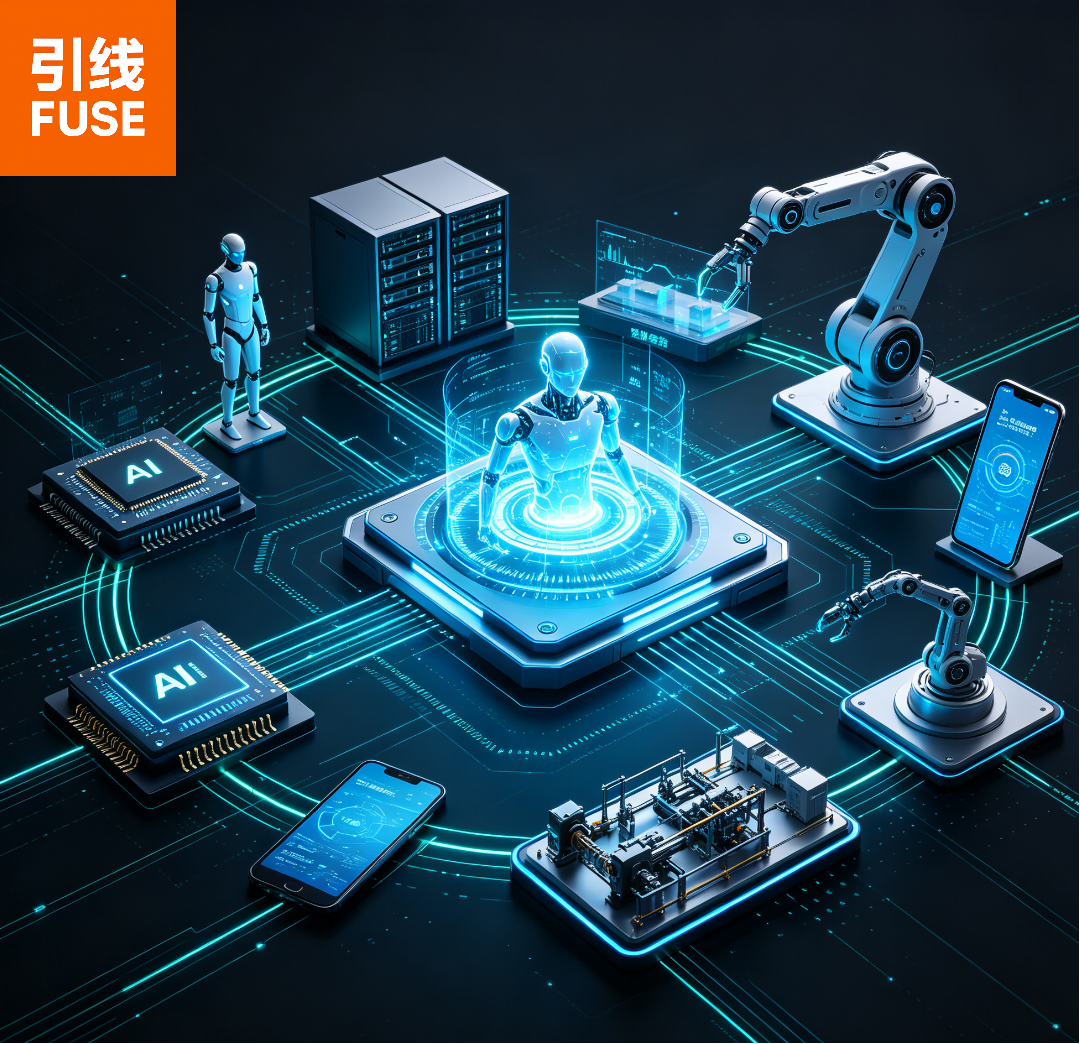
On July 20, the four-day 2026 World Artificial Intelligence Conference officially concluded across three locations and four venues in Shanghai. This year's event brought together over 1,100 enterprises, showcased more than 300 technological exhibits, and featured over 300 global premieres, reaching a record-breaking scale. The most significant transformative signal from the industry emerged: the three-year arms race in large model parameters has completely ended, and the AI industry has officially bid farewell to conceptual hype, entering a new phase of industrialization and implementation for intelligent agents.
Over the past three years, the industry has been mired in an internal competition of 'comparing model parameters and benchmark rankings,' with major vendors continuously stacking ultra-large parameter models while lacking scalable commercialization scenarios. At this year's WAIC exhibition, various parameter comparison display boards have completely disappeared, replaced by AI agents capable of autonomously executing tasks, mass-produced humanoid robots, fully localized computing power clusters, and standardized implementation solutions across industries. 'Implementability, efficiency improvement, and clear return on investment' have become the core criteria for evaluating AI value.
I. Localization of Underlying Computing Power Iterates, Laying a Solid Foundation for Large-Scale Agent Deployment
Computing power is the foundation for large-scale deployment of intelligent agents. The competitive logic in the computing power sector at this year's exhibition has undergone a complete transformation: from comparing single-chip performance to competing in the delivery capabilities of integrated solutions featuring 10,000-card-scale super nodes, high-speed interconnection, and liquid cooling. Huawei and Dawning Information Industry showcased 100,000-card-scale fully localized intelligent computing clusters, with chips, servers, switches, and cooling systems all relying on domestic supply chains, enabling horizontal scalability to support massive concurrent reasoning by intelligent agents. Alibaba unveiled a new generation of super node servers paired with self-developed 3D near-memory computing chips, reducing reliance on advanced manufacturing processes through architectural innovation and significantly lowering deployment costs for edge and endpoint intelligent agents. Policy support combined with industrial demand has accelerated the localization of computing power, with standardized cluster solutions being delivered in bulk, addressing the three core bottlenecks of computing power supply, energy consumption, and cost for large-scale commercialization of intelligent agents.
II. AI Agents Become the Core Focus of the Industry, Covering Full Scenarios from Consumer Endpoints to Industrial Production
Agent intelligent agents were the absolute protagonists at this year's WAIC. The industry has completed a capability leap from 'question-answering and chatting' to 'autonomous planning, cross-device execution, and full-process delivery,' enabling industrial-scale deployment. On the consumer side, multiple mass-produced AI agent smartphones made their debut, leveraging domestically certified on-device large models. Users can issue natural language instructions to enable devices to automatically complete complex tasks such as document organization, itinerary planning, and data aggregation across multiple apps. Automotive agents have also been implemented, integrating cabin control, navigation, and vehicle maintenance into a seamless experience, becoming standard features in next-generation intelligent vehicles. In the industrial and enterprise services sectors, Siemens unveiled an industrial-specific engineering intelligent agent capable of independently performing PLC programming, equipment debugging, and production line design, improving engineering efficiency by 2 to 5 times. Tencent and Ant Group launched enterprise-grade intelligent agent factories preloaded with hundreds of office and production templates, reducing the AI implementation cycle for enterprises from weeks to 48 hours and significantly lowering the barrier for small and medium-sized enterprises to adopt AI. Biomedical intelligent agents can autonomously complete protein design and simulation verification, shortening research and development cycles from years to months.
III. The First Year of Embodied Intelligence Implementation: Bridging the Gap from the Digital World to Physical Production Lines
The embodied intelligence sector, comprising humanoid robots and industrial inspection equipment, has moved beyond stage demonstrations and entered real-world factory production line operations, addressing the physical execution shortcomings of intelligent agents. Leading manufacturers such as Zhiyuan and Unitree showcased mass-produced humanoid robots on a scale of 10,000 units, replicating complete processes of automotive assembly and logistics sorting on-site, with the proportion of localized components exceeding 85%. Universal world models have been implemented, enabling robots to complete millions of scenario pre-training sessions in virtual environments, significantly reducing real-machine debugging costs. The deep integration of agent software with humanoid hardware has formed a complete chain of 'large model brain + agent orchestration + physical robot execution,' allowing AI to extend beyond online digital scenarios and truly intervene in the production processes of manufacturing, retail, and warehousing Real economy sectors.
IV. Industrial Cycle Transition: Deflating Hype, Focusing on Practical Work, with Existing Constraints Yet to Be Overcome
The end of the parameter competition marks the AI industry's entry into a rational phase of deflating hype and emphasizing commercialization. However, the exhibition also exposed three medium- to long-term constraints. First, the homogenization of intelligent agents is prominent, with most products concentrated in basic office and consumer service scenarios, while deeply customized solutions for vertical industries remain scarce. Second, the payback period for humanoid robots is relatively long, limiting procurement willingness among small and medium-sized manufacturing enterprises, with scaled orders concentrated in leading factories. Third, unified regulatory standards for cross-device intelligent agent data interoperability and permission invocation remain incomplete, continuously raising compliance costs for enterprises.
The medium- to long-term growth logic is clear: the 15th Five-Year Plan lists on-device AI, humanoid robots, and localized computing power as key development directions, with policies continuously releasing industrial support dividends. The triple demand resonance of industrial cost reduction, consumer electronics innovation, and scientific research efficiency improvement continues to expand the market space for intelligent agents.
Conclusion
This year's WAIC marks a symbolic milestone in the paradigm shift of the AI industry. The industry has completely abandoned the old narrative of 'stacking parameters' and formed a complete industrial closed loop of localized computing power base + general-purpose intelligent agents + embodied hardware + implementation across thousands of industries. In the future, the core of industry competition will no longer be technical parameters but rather scaled delivery, scenario adaptation, and commercial realization capabilities. Enterprises that can balance technological innovation, compliance risk control, and real economy value will lead the new round of industrial cycles in AI industrialization and implementation.
Source: Investor Network
-
![]()
Personnel Shuffle: Independent Director Mi Xuming Steps Down from OFILM
-
![]()
Net Profit Anticipated to Skyrocket by 103%: What Gives This Optical Company a Competitive Edge?
-
In Just One Year, China Unveils Unicorns Valued at 10 Trillion Yuan!
-
![]()
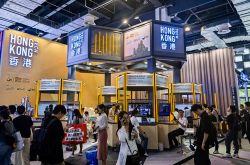
6 Park Companies Shine at WAIC: How Hong Kong Science Park Bridges AI from Research to Industry
-
![]()
Wang Wenjing’s Third Act: Can Yonyou Reinvent Itself in the AI Era?
-
![]()
Performance Coupe Entry Threshold Reduced to 170,000 Yuan: Assessing the 2027 Exeed ES's Prospects
-
![]()
Battery "Crisis" for 4 Million New Energy Commercial Vehicles
-
【Focus】Fluorinated Photosensitive Polyimide (FPSPI): A High-End Subdivision of PSPI with Great Potential in High-Tech Industries