WAIC Large Model Observation: Beyond Parameter Size, AI Advances into the Physical Realm
 07/20 2026
 361
361
On July 17, 2026, the World Artificial Intelligence Conference (WAIC) commenced at the Shanghai Expo Center. As an annual gathering in the AI sector, WAIC serves as a litmus test for the industry, attracting model developers, chipmakers, terminal brands, and robotics firms to showcase their flagship products and technologies in Shanghai.

Image Source: Leikeji
To capture the latest trends in AI, Leikeji (ID: Leikeji) dispatched a team to Shanghai to provide firsthand insights from the event.
As in previous years, large models remained the focal point at WAIC 2026: Kimi unveiled its K3 model boasting 3T parameters prior to the conference; Minimax's MiniCPM continued to be integrated into cutting-edge devices, bringing intelligence to edge computing; and manufacturers such as Jueyuexingchen, Doubao, and Honor embedded models into mobile phone systems, transforming AI from a standalone feature into a system-level assistant capable of managing apps and tasks.
However, from Leikeji's perspective, the emphasis at this year's WAIC has shifted compared to previous editions:
At the Zhiyuan booth, the GO-2 embodied base model powered robots for loading, unloading, and packaging on assembly lines; Magic Atom's Magic-VLA K02 handled tasks such as stacking boxes, sealing them with glue, and organizing clothes on-site. Even guided tours at WAIC were managed by over 60 Zhiyuan robots... Increasingly, large models are transcending the digital realm and venturing into the physical world, marking the rise of embodied AI.
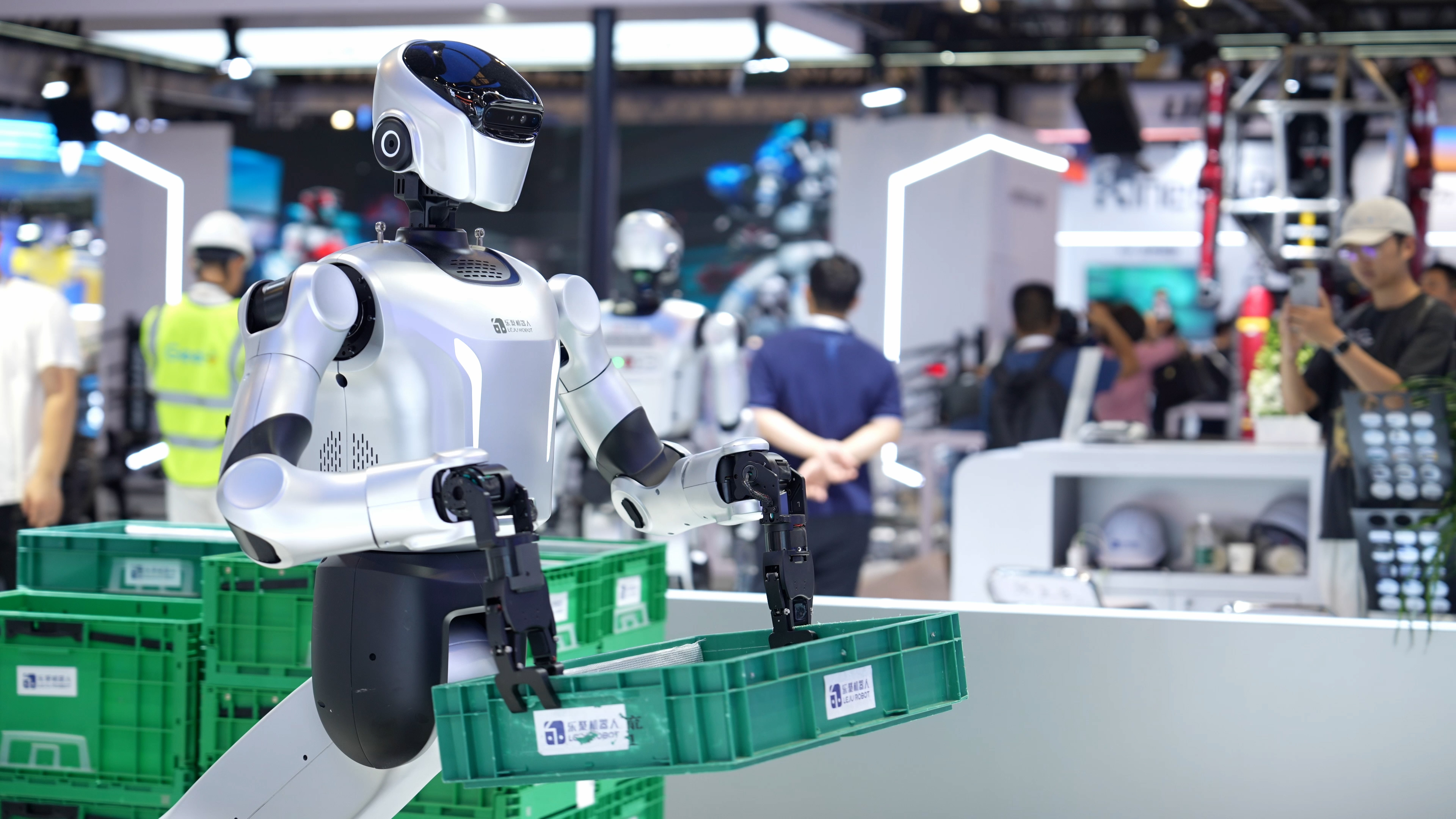
Image Source: RoboTech
It's worth noting that when large model technology first emerged in 2023, the AI industry was primarily focused on model size and format support; by 2025, the competition had shifted to contextual understanding and reasoning capabilities. However, seemingly overnight, large models that were once confined to apps and APIs have broken free from dialog boxes and entered the physical world; even their nomenclature has evolved from "large model bases" to "base models."
From Leikeji's vantage point, the transition from the "digital world" to the "real world" is the most significant development at WAIC 2026.
This shift first alters our perception of large models.
For instance, when a new model is released, the focus used to be on parameter scale, context length, and benchmark scores; when Minimax showcased MiniCPM at WAIC, they also highlighted its performance relative to similarly sized products.
Yet, for consumers, parameters are abstract and do not directly translate into user experience. After all, users won't change their habits of booking tickets, checking the weather, or creating spreadsheets simply because a model has a longer context; a phone with numerous AI features is not truly an AI device if users still have to switch between maps, payments, chat, documents, and browsers. It can only be deemed a "phone with AI apps."
This is where the concept of AI Agents comes into play. Users only need to articulate their intentions, and the model can not only comprehend the request but also autonomously invoke the corresponding services to complete the task. This is precisely what the intelligent agent phones showcased at this year's WAIC represent:
Jueyuexingchen integrated its personal agent Amoo into the STEPX Neo phone system at a foundational level, while Doubao and Nubia continued to advance GUI Agents, enabling models to complete cross-application tasks by understanding the screen and simulating operations... Beyond mobile phones, this trend towards industry-wide Agent adoption is even more pronounced.

Image Source: Jueyuexingchen
Consider the example of former AIoT hardware: many so-called AI hardware devices in the past were merely Android phones with customized systems, like the Rabbit R1. However, the AI devices Leikeji experienced this year already possess Agent capabilities.
Some may question why AI Agents are being discussed in the era of embodied intelligence. The underlying relationship is straightforward:
If we categorize the evolution of large models' capabilities over the past few years, the first stage focused on model understanding and content generation, the second stage on Agent capabilities. Embodied intelligence and world models represent the aspirations of large models in the third stage.
In the era of embodied intelligence, base models must not only comprehend user commands but also possess real-world understanding and "autonomous response" capabilities, such as VLA. Fortunately, at WAIC 2026, we have already witnessed the implementation of embodied intelligence and world models:
AI companies like Zhiyuan, Magic Atom, and RoboTech showcased the applications of embodied intelligence products on factory assembly lines at WAIC; Qiyuan took it a step further by directly using robots for guided tours at the event. Admittedly, these "assembly line" tasks may not be as visually striking as robots dancing or boxing, but from an industry perspective, these mundane tasks better demonstrate the value of embodied intelligence and world models compared to performative demonstrations.
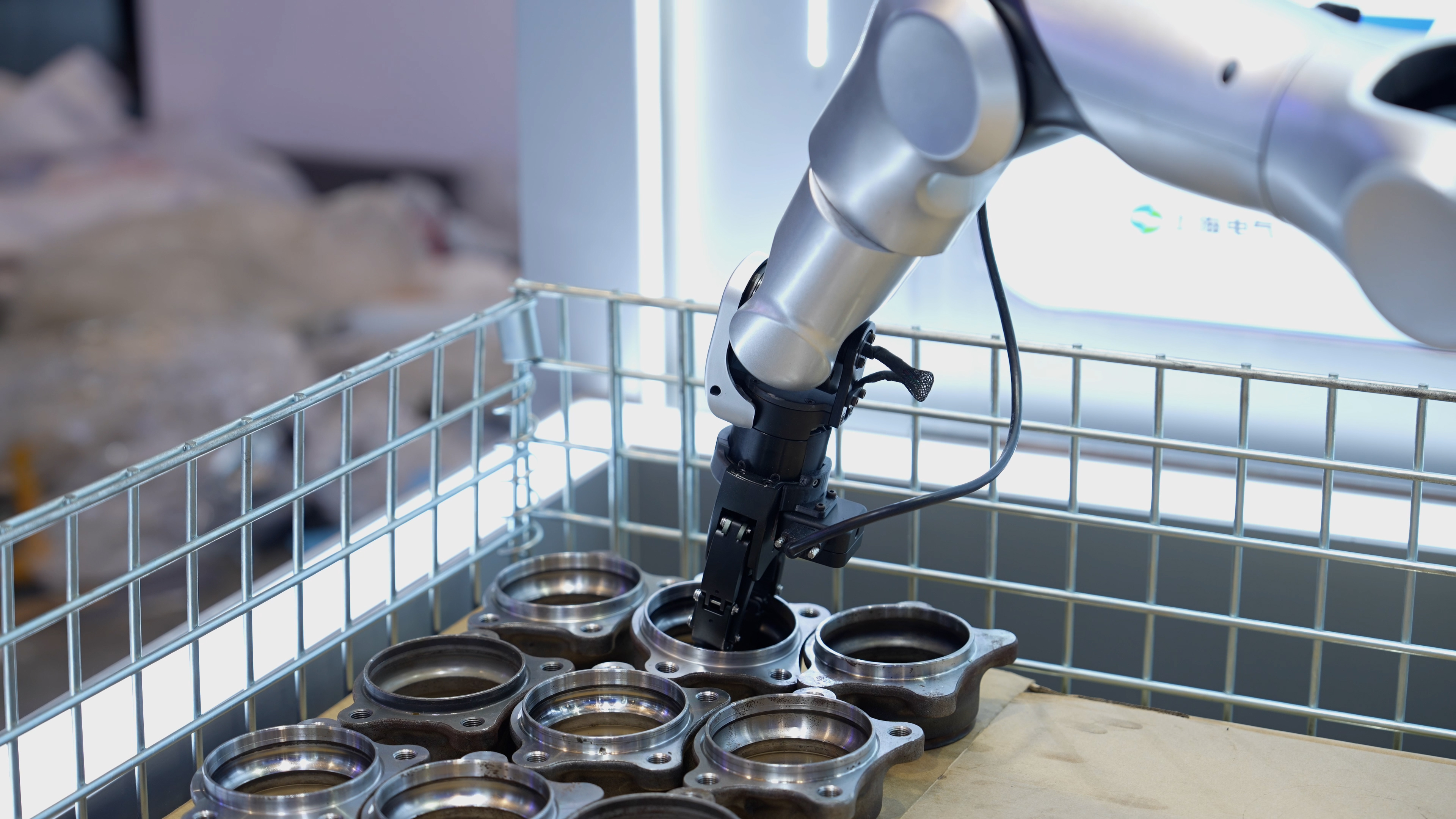
Image Source: RoboTech
Moreover, these mundane "assembly lines" actually align more closely with the current development status of embodied intelligence: compared to home scenarios, factory tasks are relatively fixed, and the assembly line model means workflows can be infinitely broken down, with clear criteria for task completion.
More importantly, such scenarios can provide real data for large models in a relatively controlled environment: robots first work in scenarios with relatively clear rules, companies identify issues and accumulate data from actual operations, then use this data to continue training the models, and finally expand their capabilities to more complex tasks.
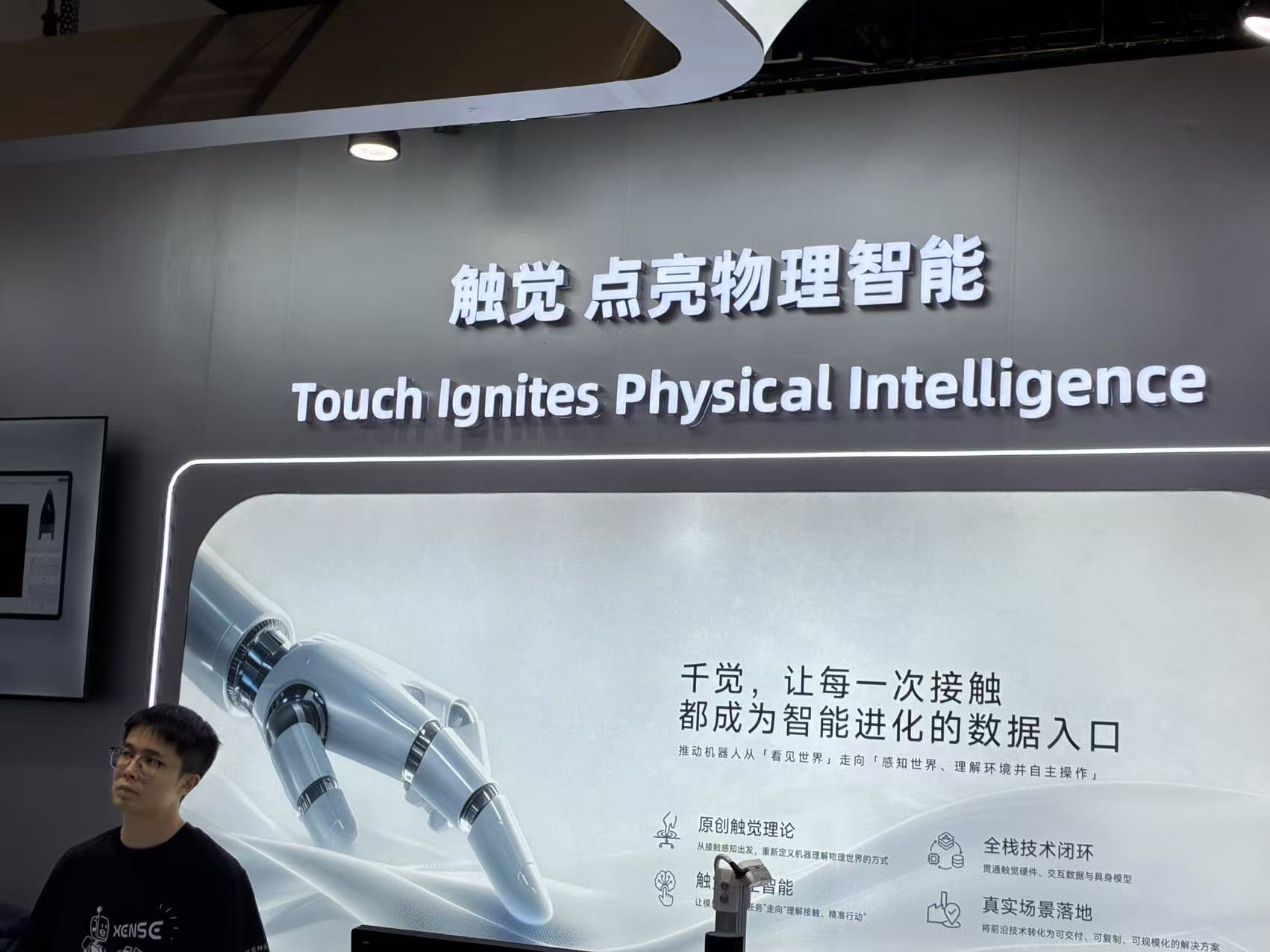
Image Source: Leikeji
As a result, more and more mainstream AI large model companies are discussing embodied intelligence and world models at this year's WAIC, emphasizing that their products are about to be deployed on a scale of millions of units. From Leikeji's perspective, "stepping out of the screen and into reality" has become a consensus in the AI industry for 2026.
Of course, the entry of embodied intelligence into the real world also imposes new demands on the capabilities of large models.
Take response speed as an example: in scenarios like chatting or image generation, a few extra seconds of waiting for users usually do not have serious consequences. However, in real-world scenarios represented by embodied intelligence, every second of delay in large models can have severe repercussions:
On factory assembly lines, the impact of every second of delay can be amplified, affecting final production efficiency; in intelligent driving scenarios, response speed directly relates to user safety.
Therefore, at this year's WAIC, we can also see more and more model companies revisiting the concept of "edge intelligence," leveraging the advantages of localized edge model deployment to reduce response times for embodied intelligence models.
Take Minimax, the only large model company among the "New AI Six Tigers" specializing in edge intelligence, as an example. As early as 2024, Minimax proved with MiniCPM that small edge models could also possess "significant capabilities." Unlike edge models from other companies, thanks to its edge AGI architecture, Minimax's edge models are not simplified versions distilled from a "complete cloud version" but independent, native edge models.
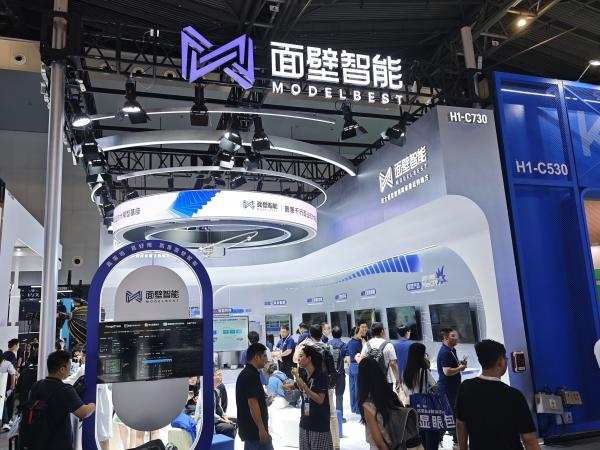
Image Source: Leikeji
This native edge characteristic allows Minimax's edge models to possess fast response times and true reasoning capabilities without relying on the network. Because of this, while other companies are still researching how to compress model response times to enable models to enter the real world, Minimax has already taken the lead in completing the mass production and delivery of edge agents in the automotive industry.
However, just like that "mental arithmetic joke," besides response speed, a model that can truly step into the real world must also learn to understand changes in the real world.
World models and VLA have become popular directions in the field of embodied intelligence precisely because they integrate perception, understanding, reasoning, and execution.
When a user says, "Move this box to the shelf," the model must first understand the command, then use cameras to confirm the positions of the box and the shelf, and finally control the robotic arm to complete the grasping and placement. This entire process requires the collaboration of language models, visual models, and robotic control systems; any "disconnection" in any link will affect the model's final performance.
This interconnected working mode also makes "full-stack models" a shortcut for large models to step into the real world: VLA connects vision, language, and actions, world models predict the potential outcomes of actions, and edge models handle rapid on-site responses. The Xuri S600 chip showcased by Digu Robot at WAIC is the best embodiment of the "full-stack" mindset at the hardware level.
From models to terminals to robots, after exploring this year's WAIC, Xiaolei observed that the industry's competitive focus has begun to shift.
While parameters, context, and reasoning capabilities are undoubtedly important, they primarily determine the upper limits of a model's capabilities; what determines the "lower limits" of a model are edge deployment capabilities, world model capabilities, and full-stack capabilities, which are more valued by customers in the era of embodied intelligence.
From this perspective, the change in theme for WAIC 2026 this year is only natural: large model companies discuss edge deployment and world models, robotics companies focus on technical implementation, and chip companies also adjust their product directions around robotics; these previously relatively independent technological routes have now been integrated by the era of embodied intelligence.

Image Source: Leikeji
It is certain that the AI industry has reached a higher stage.
Leikeji believes that at this stage, large models will move beyond serving only consumer-grade applications and land in more serious industry applications. Faced with new requirements for higher efficiency, stability, and security, the large model that can first complete this identity transformation will likely take the lead in defining the industry and gain a more proactive position in the next phase of AI industry competition.
Judging by the performance of various companies at WAIC 2026, China's AI industry is already well-prepared.
The 2026 WAIC, themed "Intelligent Partners · Creating the Future Together," is in full swing!
The AI narrative has shifted from stacking model parameters to implementing Agent productivity; heterogeneous collaboration and photonic computing continue to push computational limits; embodied intelligence accelerates applications, with robots entering homes and factories to make physical AI a reality.
The Leikeji WAIC Exploration Team has arrived in Shanghai to witness the annual peak moment of AI industrialization. Stay tuned!
-
![]()
AI Memory Race Unveils a Stunning Dark Horse: RedBear AI Raises 6 Rounds of Funding in 15 Months, Valuation Soars Close to RMB 3 Billion
-
![]()
WAIC Concludes: The Three-Year Competition for Large Model Parameters Ends, AI Fully Enters the Industrialization and Implementation Phase for Intelligent Agents
-
DRAM, A Disruptive Technological Breakthrough!
-
Robot Army Mobilizes for Action
-
![]()
Electric Vehicle Penetration Soars Past 60%, Yet Seven of Top Ten Brands Hail from Traditional Fuel Vehicle Sector, Casting Doubt on Their Longevity
-
![]()
Conant Optics Clinches R&D and Procurement Framework Deals with Top Tech Firms!
-
![]()
Over 87% Surge in Net Profit for H1 Anticipated! Dongtian Micro Leads in AI Optical Communication
-
![]()
Tech Titans Offload AI Ventures, Tencent Shifts Stakes to Capitalize on Artificial Intelligence Surge