The Debut of the First AI Large Model Share!
 12/29 2025
 570
570
On December 17, Beijing Zhipu Huazhang Technology Co., Ltd. (Zhipu) and Shanghai Xiyu Technology (MiniMax) both successfully cleared the listing hearing stage at the Hong Kong Stock Exchange, giving rise to the buzzworthy concept of the "world's first AI large model share."
Regardless of which of these two firms ultimately goes public, it will claim the title of the "first AI large model share."
For the majority of individuals who are not deeply involved in AI, Zhipu and Minimax may be relatively unfamiliar names. Presently, aside from well-known foreign models like ChatGPT and Gemini, the prominent large models in China include DeepSeek, Qianwen, and Kimi.
Comparatively speaking, Zhipu Qingyan enjoys greater recognition than Minimax.
However, the reality is that both Zhipu and Minimax have attained SOAT (State-of-the-Art, denoting the highest level of achievement) in their respective specialized fields. Their capabilities are on par with those of foreign closed-source large models.
Originally known as ChatGLM, Zhipu made its appearance on Stanford's large model ranking list alongside early iterations of ChatGPT during the pre-ChatGPT popularity era. It even ranked among the top ten AI large models globally at one point.
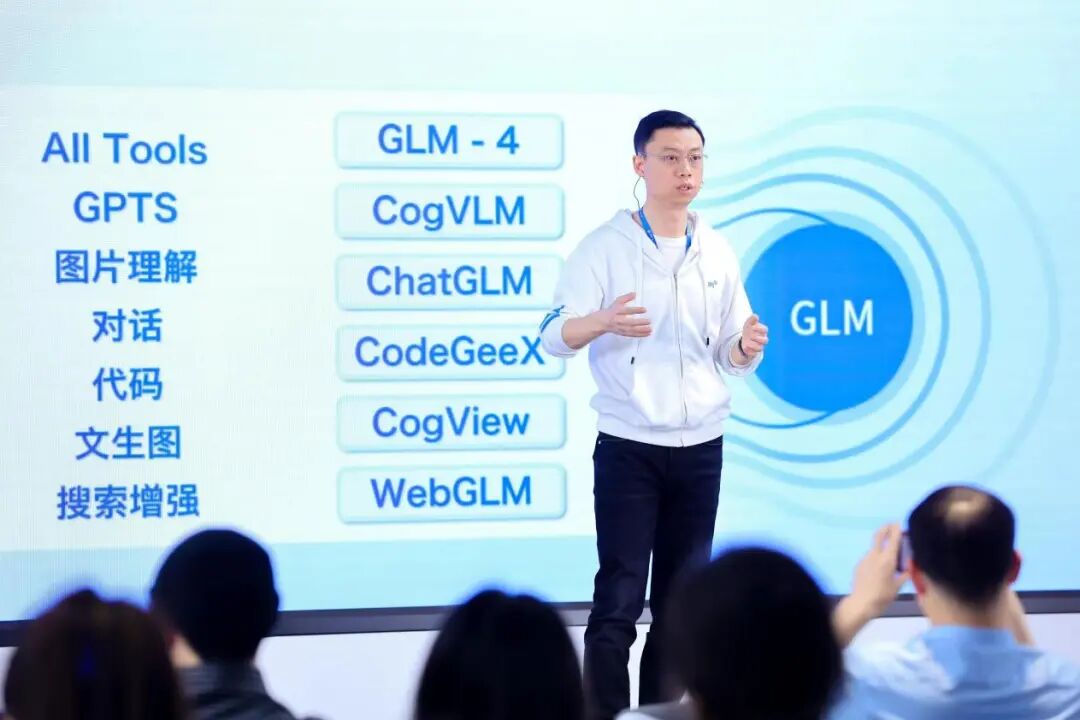
Nevertheless, after ChatGPT secured funding, it embarked on a path of massive investment, burning through billions of dollars worth of graphics cards. Ultimately, in November 2022, it unveiled the globally acclaimed ChatGPT3.5.
ChatGLM did not fade into obscurity. It seized the first opportunity to go open-source. Xingkongjun once ran an early version on a 12G 3060, witnessing answers being generated word by word and experiencing the thrill of creating a new world.
Zhipu has strong ties to Tsinghua University, with both its chairman and chief scientist hailing from the Knowledge Engineering Laboratory of the Computer Science Department at Tsinghua. Interestingly, this year, Zhipu secured 1 billion yuan in investment from Hangzhou and subsequently relocated its headquarters there.
Minimax initially appeared to gain rapid traction. However, when one considers that its founder was formerly the vice president of SenseTime, its success becomes more understandable.

In a certain sense, Minimax embodies the genetic makeup of SenseTime.
In a way, Minimax's strategy resembles that of DeepSeek. The MoE (Mixture of Experts) system developed by Yan Junjie's team achieves 95% of the performance of its competitors while utilizing only one-tenth of the computational power.
Amidst the constant emergence of AI large models, Xingkongjun has only subscribed to three:
1. DeepSeek's API;
2. Kuake from the Alibaba ecosystem;
3. Minimax.
DeepSeek's API is highly versatile. Xingkongjun has integrated it into the ComfyUI workflow to automatically generate prompts, morning and evening greetings, image evaluation articles, and more.
Kuake serves as Xingkongjun's primary browser and cloud storage tool for daily use. After subscription, it can be utilized for in-depth financial report analysis, data organization, and PPT creation.
Minimax offers a potent combination of intelligent agents that can genuinely boost productivity. For instance, it can decompress research reports, analyze and extract data sequentially, and then provide summaries.
Of course, the decision not to subscribe to Zhipu is not due to its lack of utility, but rather because its free version is already quite powerful.
Nonetheless, large model companies are still struggling to turn a profit.
Xingkongjun once predicted that in the future, OpenAI would either go bankrupt or be acquired.
As Google's Gemini continues to grow in strength, OpenAI is inching closer to bankruptcy. The likelihood of OpenAI being acquired is diminishing, given that most large models from China are open-source.
Many people disagree with Xingkongjun's perspective and offer numerous counterexamples.
In fact, a glance at the data reveals the truth: OpenAI's estimated revenue for 2025 is a mere 13.5 billion US dollars.
As the leading enterprise of Stargate, can it sustain NVIDIA's 4 trillion US dollar market value with just 13.5 billion US dollars in revenue?
It seems far-fetched.
The capabilities of large models have inherent upper limits, and the gaps between various models are narrowing. Huang Piyi stated that the gap between Chinese large models and top US large models is only 3-5 months.
When Google begins to compete with OpenAI using bundled packages (for enterprise customers: cloud computing + AI services; for individual customers: cloud storage + email + AI + various services), the latter will be unable to mount an effective counterattack.
Zhipu and Minimax also face similar challenges, with even more meager revenues. Zhipu's revenue stands at a mere 300 million yuan. Minimax possesses a profit point that Zhipu lacks: Conch AI Video.
However, Alibaba's open-source large models are incredibly powerful and also implement an internal competition mechanism where multiple teams work on similar large models, with each team achieving world-class standards.
As the largest cloud computing provider in China, when dealing with B-end enterprises, Alibaba offers a comprehensive package of large models, and enterprises are naturally inclined to use cloud-native components.
Why did Xingkongjun subscribe to Kuake? Because, in addition to AI, it also provides services like cloud storage. And enterprise users are even more reliant on Alibaba Cloud.
What should Zhipu and Minimax do?
They are destined to face the same fate as OpenAI, either going bankrupt or being acquired. The current subscription-based business model for large models offers no path to profitability.
Zhipu has secured several large B-end orders to customize intelligent agent platforms for some conglomerates, but such customers are notoriously unstable. The list of top five customers has undergone nearly complete turnover in just a few years. For example, the top two customers in 2022 (F, G) generated no revenue in 2023 and beyond; most of the top four customers in 2023 also vanished in 2024.
-
![]()
Li Shufu's Lesson in 'Abstract' Thinking: With Speed Dividends Peaking, What Will Drive China's Auto Industry Through the Next Two Decades?
-
![]()
World’s Pioneering! Automated Production Line for Million-Scale Volume Holographic Waveguides Launched in Tianjin
-
![]()
Cars Can't Be Made with the 'Quick Buck' Mentality: Li Shufu's Candid yet Impactful Remarks
-
![]()
Can You Snag a Complete Trio of Digital Gadgets for 10,000 Yuan? AI Recommendation Showdown: How Trustworthy Are Doubao, DS, Qianwen, Kimi, and Yuanbao?
-
![]()
DingTalk Undergoes Leadership Overhaul Amid Alibaba’s AI Strategy Unveiling
-
![]()
Revealing the Myth of the '10 Billion Subsidy': Pinduoduo Faces Heightened Scrutiny with Its '100 Billion Initiative'
-
![]()
Yousu's '70,000-Character Long Essay' Resonates with Alibaba Executives' 'Cultural Awareness'
-
Analysis | SpaceX is about to land on Nasdaq. Where is the breakthrough point for China's commercial aerospace?