Establish a Technical Committee: Alibaba's Ambition to Ascend as a Global Tech Powerhouse!
 04/09 2026
 544
544
Alibaba's AI Strategy Undergoes Another Strategic Shift
Editor | Lu Xucheng
Following the announcement on March 16 regarding the formation of the ATH (Alibaba Token Hub) business unit, Alibaba Group's CEO, Wu Yongming, sent an internal memo on April 8, unveiling yet another reorganization within the AI division.
According to the memo, Alibaba is set to establish a technical committee, helmed by Wu Yongming himself. The committee's members include Zhou Jingren, Wu Zeming, and Li Feifei. Zhou Jingren will assume the role of Chief AI Architect, Li Feifei will oversee the technology and AI cloud infrastructure at Alibaba Cloud, and Wu Zeming will be responsible for the group's business technology platform and AI inference platform.
The Tongyi Laboratory has been elevated to the Tongyi Large Model Business Unit, with Zhou Jingren at the helm. Wu Zeming has relinquished his position as CEO of Taobao Flash Sale (to be succeeded by Lei Yanqun) to focus solely on his role as CTO of Alibaba Group. Li Feifei has been appointed as the CTO of Alibaba Cloud.
In a previous article by Lansha Finance and Economics titled 'Alibaba's Major AI Strategy Adjustment: The Rise and Fall of Zhou Jingren, Wu Jia, and Wu Zhao?', it was noted that following Lin Junyang's departure in March, Zhou Jingren took over as the interim head of the Qwen model. Wu Yongming also enlisted Fan Yu (Wu Zeming), Chairman of Ele.me (and former CEO of Taobao Flash Sale), to oversee the situation. The arrangement of these three Alibaba partners 'crowded' within the Tongyi Laboratory (to manage the crisis) was clearly not a long-term solution.
This reorganization solidifies Zhou Jingren's position, reflecting Wu Yongming's (affectionately known as 'Aunt Wu') confidence in him. After all, Zhou Jingren has played a pivotal role in Alibaba's ascent as a global leader in the AI open-source large model market, leading to his promotion to Alibaba Partner in December 2025.
Wu Zeming, born in 1980 and a 22-year veteran of Alibaba, has risen from a frontline technical staff member at Taobao to become Alibaba's youngest partner (serving as Group CTO since 2022), wielding even greater influence. His primary responsibility lies in the group's business technology platform—essentially introducing a business technology leader above DingTalk, Taobao & Tmall, and Amap—more likely acting as a coordinator to align Alibaba Group's technical resources in supporting and investing in key Alibaba businesses, such as Token.
Of course, this reorganization comes as no surprise, given Wu Zeming's previous experience as CTO of Taobao & Tmall Group and other business CTO roles.
Wu Zeming will also oversee the development of the AI inference platform, a move that demands significant attention. As previously mentioned by Lansha, Alibaba aims to become a full-stack AI technology company that creates Tokens (Tongyi Large Model Business Unit), stores and delivers Tokens (Alibaba Cloud), applies Tokens (Qwen and Wukong Business Units), and sells Tokens (MaaS Business Unit). The Qwen and Wukong Business Units are led by Alibaba Vice President Wu Jia and DingTalk founder Wu Zhao, respectively, while the head of the MaaS Business Unit is yet to be determined.

Wu Zeming
MaaS, which stands for 'Model as a Service,' offers services centered around models.
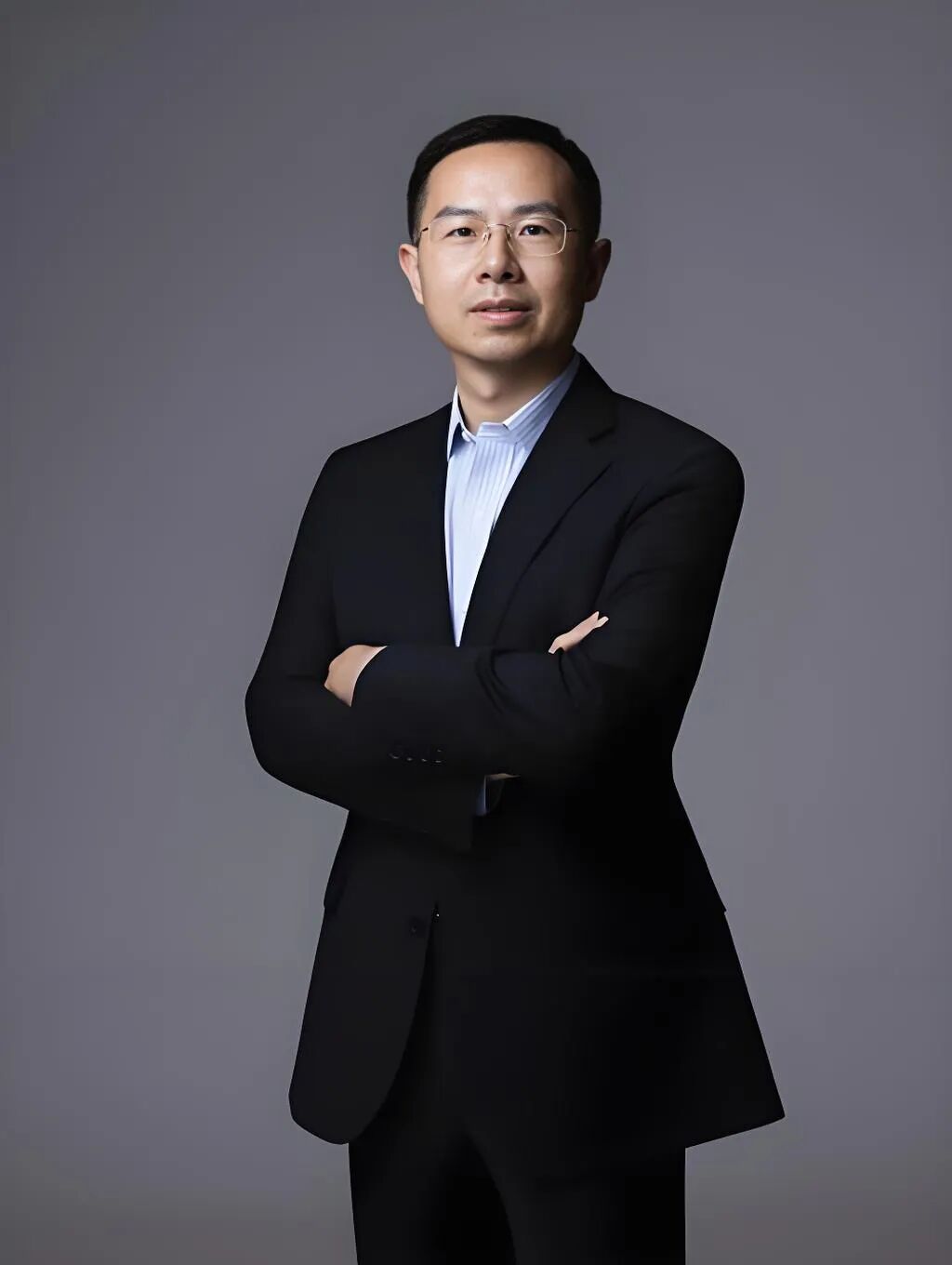
Zhou Jingren is a staunch advocate and pioneer of the MaaS business. He first introduced the term at the Alibaba Cloud Summit in November 2022. As early as 2021, Zhou Jingren, then Vice President of DAMO Academy, mentioned the MaaS concept internally, which is not surprising for someone who spent a decade as a research partner at Microsoft. During the software era, SaaS (Software as a Service) was immensely popular.
Zhou Jingren
In 2022, driven by Zhou Jingren, Alibaba DAMO Academy and the Open Source Development Committee of the China Computer Federation (CCF) jointly launched ModelScope, China's first AI model open-source community, providing over 300 models to AI researchers and teams in China, covering natural language processing, vision, speech, multimodal, and other models. With the evolution of large models, Amazon Web Services and ByteDance have also embraced this development path.
To deliver high-performance services, MaaS must rely on a robust inference platform as its underlying engine. For instance, PD separation (Prefill-Decode Disaggregation) technology can significantly enhance throughput efficiency and has been natively integrated into some MaaS platforms. Another example is KV Cache management and cache reuse, which are crucial for reducing inference costs.
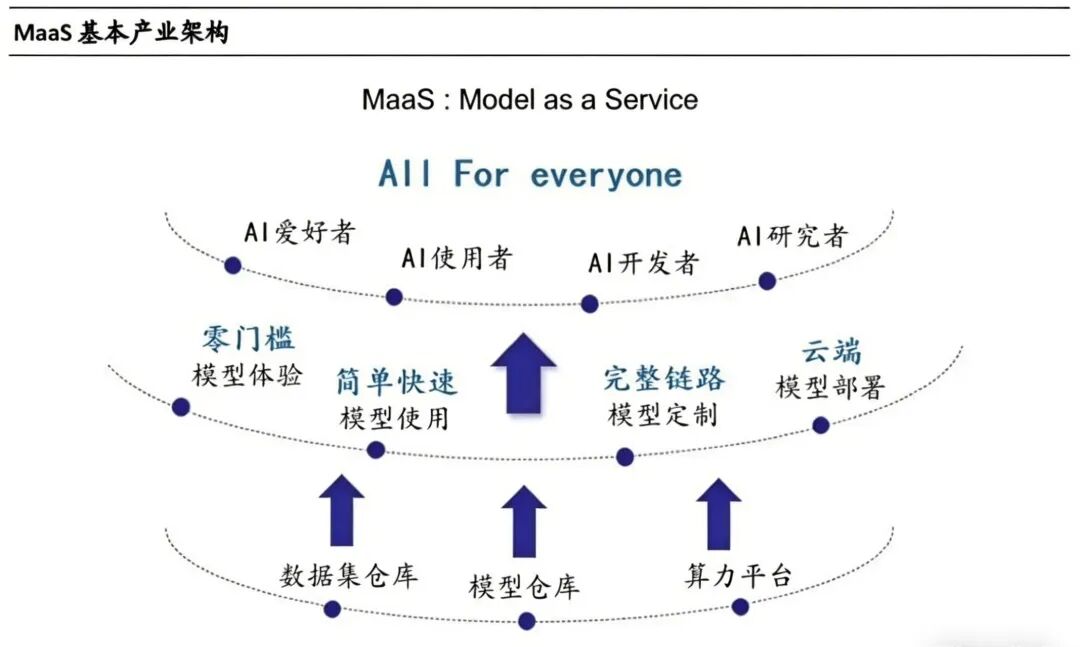
Wu Zeming's critical mission is to fortify the underlying engine of the MaaS business—the AI inference platform—to enable Alibaba's Token business to operate more swiftly and cost-effectively. The better the MaaS business, which constructs service platforms and technical systems based on Alibaba's Tongyi Large Model, performs, the faster all enterprises, developers, and individuals can leverage it, thereby expanding Alibaba's AI ecosystem. Lansha speculates that even if a head of the MaaS Business Unit is appointed in the future, Wu Zeming will likely oversee it as well.
Li Feifei, who succeeded Zhou Jingren as CTO of Alibaba Cloud, studied at Tsinghua University, Nanyang Technological University, and Boston University, earning a Ph.D. in Computer Science. He previously taught at Florida State University and the University of Utah, achieving tenure as a full professor. In 2018, Li joined Alibaba as Vice President and later became President of the Database Product Business Division of Alibaba Cloud Intelligence Group and Head of the DAMO Academy Database and Storage Laboratory. Li Feifei is a highly accomplished academic who has also made significant contributions to Alibaba's comprehensive cloud adoption, making him a well-deserved leader for Alibaba Cloud.
Alibaba's two waves of reorganizations aim to position the company as a global tech powerhouse (on par with Google and others).
Alibaba Group's AI strategy revolves around 'Tongyunge' (Tongyi Large Model + Alibaba Cloud + Pingtouge). The Tongyi Large Model has been upgraded to ATH (which can be understood as the Token Business Unit, also starting with 'T'), but its value has significantly increased. Alibaba Cloud remains the cornerstone of Alibaba's AI technology, with Wu Yongming stating that its revenue should rise from the current 100 billion yuan per year to 100 billion USD per year in five years, necessitating stability (which Li Feifei provides). Qwen aims to become the most user-friendly AI assistant (capable of performing tasks such as ordering milk tea and hailing rides). The Wukong Business Unit launched a 2B intelligent agent—an enterprise-level AI-native work platform called Wukong—on March 17, completely reshaping the original DingTalk business with AI.
For Qwen and Wukong to accelerate their growth, they need to integrate with all Alibaba businesses, such as Taobao Flash Sale and Amap, as swiftly as possible. This requires Wu Zeming to provide technical coordination and support at the group level while also enhancing the capabilities of the Tongyi Large Model—exploring the upper limits of large models (hence Zhou Jingren's role as Chief AI Architect).
Currently, the MaaS commercialization services remain under Alibaba Cloud, while underlying resources and technical support are unified under ATH. With Wu Yongming serving as both CEO of Alibaba Cloud and head of ATH, it indeed facilitates the integration of Alibaba's AI resources and capabilities, enabling Qwen, Wukong, and other AI businesses to operate more efficiently. However, under Wu Yongming's leadership, the question of who will ultimately head the MaaS Business Unit and AI Innovation Business Unit remains unanswered.
-
![]()
AI Giants Start Borrowing to Fuel Computing Power Race
-
ByteDance Initiates Largest B2B Structural Adjustment, This Time It's Truly Different
-
![]()
Let's Talk About Kingsoft Office's Mid-Year Outlook and the True Strength of Its AI-Powered Office Solutions
-
Despite 150 Million Users, Struggles Persist: AIShige Faces Tough Competition from Seedance and Kling in AI Video Monetization
-
![]()
Ensuring Safe Gear Shifting in the Automotive Industry: Transitioning from 'Product Oversight' to 'Full-Chain Governance'
-
![]()
Net Profit Soars to $133.7 Billion! Azure Revenue Tops $100 Billion, with AI Fueling Microsoft's Growth
-
![]()
Before 6G Hits the Market, the U.S. Forges a 'Rules Alliance': What Challenges Await Chinese IoT Enterprises?
-
![]()
Intelligent Driving's 'Little Blue Light' Faces Ban: Night Glare and Cut-in Risks Prompt Official Action