Ensuring Safe Gear Shifting in the Automotive Industry: Transitioning from 'Product Oversight' to 'Full-Chain Governance'
 07/30 2026
 446
446
According to the website of the Ministry of Industry and Information Technology (MIIT), the Department of Equipment Industry under the MIIT recently convened a symposium with key automotive manufacturers. The meeting outlined critical tasks, including further standardizing the competitive landscape within the automotive industry, enhancing production consistency and quality safety standards for automotive products, and conducting comprehensive risk assessments and inspections for automotive product safety. Industry insiders widely perceive this meeting as a signal of a systemic upgrade in automotive safety oversight, with regulatory focus expanding from finished vehicle products to encompass the entire supply chain. One week following the meeting, the Department of Equipment Industry conducted production consistency inspections at GAC Aion and XPENG Motors in Zhaoqing, randomly selecting sample vehicles and power batteries for rigorous testing.
To grasp the significance of this regulatory evolution, it is essential to first examine the current state of the automotive industry. In the first half of 2026, the profit margin of China's automotive industry stood at a mere 3.8%, significantly lower than the 6.5% average for downstream industrial enterprises. Taking a longer-term view, the trend becomes even more apparent: in 2017, the annual profit margin of the automotive manufacturing industry was 7.8%, but by 2025, it had dropped to 4.1%, and further declined to 3.4% from January to May 2026. In essence, in less than a decade, the industry's profit margin has more than halved. While profits have dwindled, costs have surged. In the first five months of this year, automotive industry revenue increased by approximately 1% year-on-year, but costs rose by about 2%, and total profits decreased by about 20%.
▍From 'Product Inspections' to 'System Inspections'
The persistent decline in profit margins is underpinned by a price war that has raged for several years. In 2024, over 200 domestic car models experienced price reductions, with more than 60 models reducing prices in the first four months of 2025, and the number surpassing 100 by May. Entering 2026, the intensity of price reductions has escalated further. Data from the China Passenger Car Association reveals that from January to May, the average selling price of new energy vehicle models experiencing price reductions was RMB 249,000, with an average price reduction of approximately RMB 31,000, representing a 12.5% decrease. Industry insiders note that in this competitive atmosphere of 'trading price for volume,' the risks associated with compressing testing and validation cycles, reducing supply chain costs, and chasing traffic are becoming increasingly evident.
Against this backdrop, the MIIT's symposium provided a timely response. The meeting's requirements can be categorized into three distinct levels.
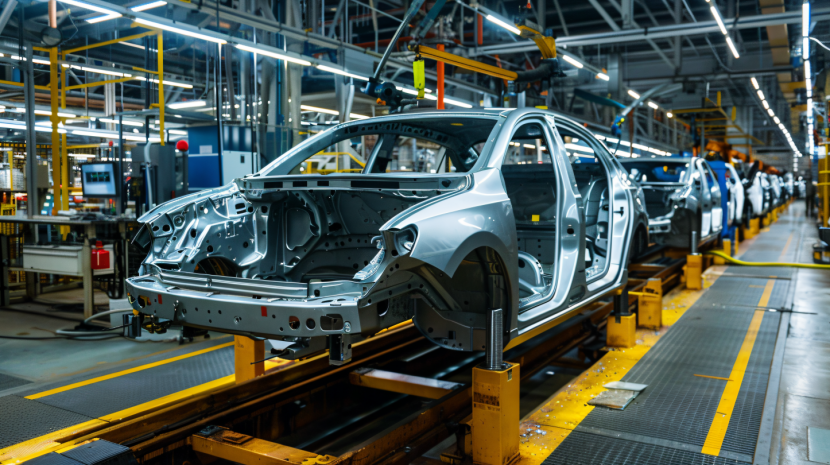
The first level mandates enterprises to conduct thorough risk assessments for product safety. This represents a departure from the previous approach of merely inspecting submitted sample vehicles. The meeting explicitly required enterprises to 'systematically identify issues in production consistency, reliability, durability, and new technology testing and validation within their own operations and those of key component suppliers.'
Historically, regulatory focus has primarily centered on finished vehicle manufacturers. However, from a full-chain governance perspective, if issues arise at the supplier level, even rigorous oversight by vehicle manufacturers cannot prevent all oversights. This shift signifies that automotive safety is no longer the sole responsibility of individual enterprises but a shared responsibility of the entire industrial ecosystem.
The second level necessitates enterprises to strengthen testing and validation of product innovation designs, prudently promote the application of new technologies in vehicles, and refrain from exaggerated or false advertising. This addresses various irregularities in the promotion of intelligent driving functions in recent years, highlighting challenges such as ambiguous perception boundaries in assisted driving and risks to data security and user privacy protection. When advancing intelligent driving technologies, enterprises must ensure robust hardware and software redundancy designs while strictly prohibiting exaggerated functional claims in marketing to ensure users clearly understand technological limitations.
The third level requires enterprises to enhance safety assessments for combined driving assistance and autonomous driving functions, further strengthening capabilities in functional safety, expected functional safety, cybersecurity, data security, and software upgrades. This signifies that as intelligent driving functions are rapidly integrated into vehicles, software safety issues are being elevated to a position of equal importance as hardware safety.
When these three levels of requirements are viewed collectively, a clear path of regulatory upgrade emerges. The first path is from 'product oversight' to 'system oversight.' Previous production consistency inspections focused on whether submitted sample vehicles met standards. However, the signal from this meeting is that merely examining products is insufficient; it is also necessary to assess whether enterprises have the capability to consistently produce qualified products. Compliance thresholds have extended from 'product qualification' to 'system reliability.'
The second path is from 'complete vehicle management' to 'full-chain governance.' The video conference on strengthening new energy vehicle safety management held on May 14 proposed that 'vehicle manufacturers and power battery producers should consciously assume primary responsibility for product quality and safety.' The July 17 meeting advanced this requirement further—complete vehicle enterprises must not only manage themselves but also oversee key component suppliers. Automotive safety is no longer the responsibility of a single enterprise but a common baseline for the entire supply chain.
The third path is the expansion from hardware safety to software safety. Previous automotive safety regulations primarily focused on tangible hardware such as collisions and batteries. However, with the rapid increase in penetration rates of combined driving assistance and autonomous driving functions—expected to exceed 50% for L2 and above in 2026—risk exposures in areas such as functional safety, expected functional safety, and cybersecurity are simultaneously expanding. In July 2026, the mandatory national standard 'Safety Requirements for Combined Driving Assistance Systems in Intelligent Connected Vehicles' (GB 47955-2026) was officially released and will take effect on January 1, 2027. Software safety has transitioned from industry consensus to legal enforcement.
▍Industry Impact of Regulatory Upgrades Amid Cost Pressures
Another notable backdrop to this symposium is that 2026 is a year of concentrated upgrades in automotive safety standards. On July 1, multiple mandatory national standards for automobiles took effect simultaneously, including 'Safety Requirements for Electric Vehicles,' 'Occupant Protection in Side Collisions of Automobiles,' 'Rear Collision Safety Requirements for Passenger Vehicles,' and 'Safety Requirements for Power Batteries Used in Electric Vehicles.' A total of 82 national standards for automobiles are set to be implemented throughout the year, with 26 being mandatory testing standards. Covering aspects from door handles to power batteries and from combined driving assistance to information security, the breadth and stringency of these standards have been described by the industry as the 'strictest ever.'
The intensive rollout of industry standards and sustained regulatory escalation are having tangible impacts across the entire automotive supply chain, with compliance pressures being progressively transmitted upstream from finished vehicle manufacturing. For finished vehicle enterprises, the most immediate impact is rising compliance costs. Comprehensive self-inspections and product rectifications require significant increases in R&D and testing investments; once problematic products are identified, recall expenses and warranty reserve accruals will directly erode profits. For second- and third-tier automakers already under pressure from low gross profit margins, the marginal impact of rising compliance costs is even more pronounced.
This pressure does not remain confined to the vehicle manufacturing stage but continues to transmit upstream along the supply chain, placing considerable operational pressure on component suppliers. Recently, GAC Aion issued an apology announcement regarding battery reliability issues, announcing an extension of the battery warranty period from 8 years/150,000 km to 8 years/300,000 km. This case aligns with the regulatory requirement for 'enterprises to investigate supplier product reliability issues.' For upstream suppliers, such warranty escalations and quality traceability demands from vehicle manufacturers may not only bring pressure to share warranty costs but also require simultaneous efforts to repair customer trust.
However, for the industry as a whole, as the space for 'corner-cutting' diminishes, enterprises with genuine technological capabilities and quality systems gain a fairer competitive environment. The shift from 'price competition' to 'value competition' and from 'competing on low prices' to 'competing on value' is precisely the direction regulatory authorities hope to see.
The meeting also clarified the next steps: the MIIT will collaborate with relevant departments to deeply implement actions for enhancing production consistency and quality of road motor vehicle products, address prominent issues through concentrated efforts, and further strengthen access review and testing validation for innovative automotive product designs. Enterprises and testing institutions found to have issues will be dealt with seriously in accordance with laws and regulations. The MIIT has already conducted production consistency and safety assurance capability inspections at GAC Aion and XPENG Motors, randomly selecting sample vehicles and power batteries for on-site testing—actions that have already begun.
From 'product oversight' to 'system oversight,' from 'complete vehicle management' to 'full-chain governance,' and from hardware safety to software safety, this regulatory upgrade is not intended to brake the industry but to facilitate a gear shift. Amid persistently low profit margins, ongoing price wars, and rapid iteration of intelligent technologies, maintaining safety baselines is more critical than pursuing speed.
Layout 丨 Yang Shuo Image Source: Qianku Network
-
![]()
AI Giants Start Borrowing to Fuel Computing Power Race
-
ByteDance Initiates Largest B2B Structural Adjustment, This Time It's Truly Different
-
![]()
Let's Talk About Kingsoft Office's Mid-Year Outlook and the True Strength of Its AI-Powered Office Solutions
-
Despite 150 Million Users, Struggles Persist: AIShige Faces Tough Competition from Seedance and Kling in AI Video Monetization
-
![]()
Ensuring Safe Gear Shifting in the Automotive Industry: Transitioning from 'Product Oversight' to 'Full-Chain Governance'
-
![]()
Net Profit Soars to $133.7 Billion! Azure Revenue Tops $100 Billion, with AI Fueling Microsoft's Growth
-
![]()
Before 6G Hits the Market, the U.S. Forges a 'Rules Alliance': What Challenges Await Chinese IoT Enterprises?
-
![]()
Intelligent Driving's 'Little Blue Light' Faces Ban: Night Glare and Cut-in Risks Prompt Official Action