Qwen: A Driving Force Behind Alibaba Cloud’s Evolution
 05/27 2026
 638
638

On May 26, Alibaba Cloud announced a series of product updates in Singapore aimed at international markets. These included the new AI product portal Qwen Cloud, the Agent product MuleRun, the intelligent agent programming platform Qoder, and the general desktop agent QoderWork. At the same time, Alibaba Cloud also enhanced its cloud infrastructure to better support Agent applications.
This event builds upon Alibaba Cloud’s summit held a few days prior. During that summit, Alibaba Cloud unveiled the AI product portal 'Qwen Cloud' for the domestic market, signaling the dawn of the Agent era.
Analyzing both launches together reveals a clear strategic focus. Alibaba Cloud is positioning Qwen as a central element, tasking it with serving as a model brand, a product gateway, and a commercialization platform.
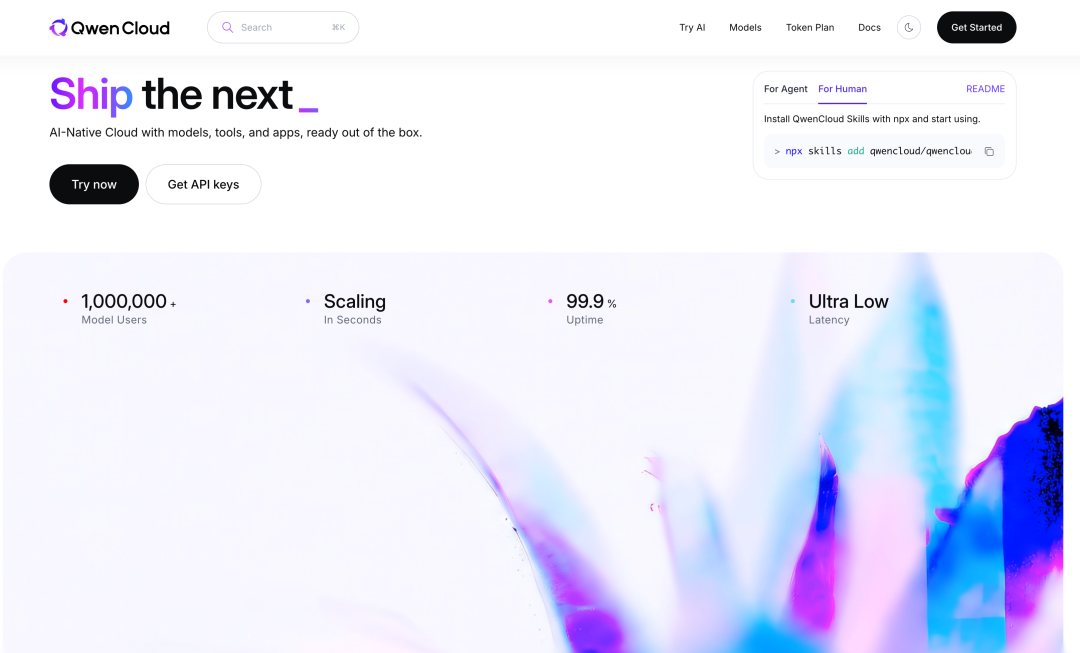
Previously, Alibaba Cloud’s typical entry points included its cloud portal, console, and a variety of foundational cloud products. Now, model invocation, Token Plans, Skills, CLI, and Agent tools are all consolidated under Qwen Cloud. The user base for cloud services is also evolving, expanding beyond human developers to include Agents capable of autonomously invoking tools and models. One might even say that silicon-based entities are taking the lead, with carbon-based ones playing a supporting role.
Why is Qwen Cloud being thrust into the spotlight?
A notable difference emerges when comparing the domestic and international launches.
Domestically, Qwen Cloud was introduced at the Alibaba Cloud Summit, framed within the context of Alibaba Cloud launching new products and highlighting the upgrade of its model service platform. Internationally, the event was branded as the Qwen Conference, with Qwen taking center stage. This shift indicates that Qwen has acquired independent promotional value overseas.
This is tied to the recognition Qwen has gained among developers through its open-source efforts over the past few years. For international developers, Qwen represents a specific model brand frequently encountered on platforms like Hugging Face, GitHub, developer communities, and Agent frameworks.
Compared to traditional cloud provider brands, Qwen’s technological identity is more direct and community-oriented. By choosing the Qwen Conference to launch Qwen Cloud, Alibaba Cloud is leveraging the model's reputation in the open-source community as an entry point for its international cloud services.
On its website, Qwen Cloud is positioned as an MaaS (Model as a Service) platform. However, based on its official description and product offerings, its scope appears broader.
It integrates model APIs, Token Plans, Skills, CLI, Qwen3.7-Max, and various Agent-related tools and applications, aiming to streamline model selection, authentication configuration, usage queries, command-line invocation, and Agent-readable instructions.
This sets Qwen Cloud apart from Bailian. While Bailian aligns more closely with Alibaba Cloud’s established large model development and application platform, favoring production backends and capability platforms, Qwen Cloud leans toward being a front-end gateway and brand portal. It packages model service capabilities, supporting tools, and related products into forms more accessible to developers and Agents.
Qwen Cloud marks the first independent product portal launched by Alibaba Cloud outside its main website in its 17-year history.
It seems Qwen is becoming a driving force behind Alibaba Cloud. This observation isn't new but has grown stronger over time. What is Qwen? It encompasses both consumer-facing products and foundational models, effectively unifying all AI businesses within Alibaba under one concept. It serves as the cornerstone of Alibaba's ATH business group.
The notion of Qwen driving Alibaba Cloud stems from a shift in Alibaba's growth strategy.
Investment banks predict that Alibaba Cloud’s AI-related revenue will surge from RMB 24 billion in FY2026 to RMB 585.5 billion in FY2031, growing at a 90% CAGR. By then, its share of total cloud revenue will jump from 15% to 70%.
MaaS revenue, in particular, is expected to skyrocket at a 235% CAGR, from approximately RMB 1 billion in FY2026 to RMB 438.6 billion (around USD 62.6 billion) in FY2031, accounting for 53% of Alibaba Cloud’s total revenue.
Given that a single business is projected to grow from zero to over half of the total in just a few years, it's understandable to create a distinct Qwen Cloud brand for this segment.
The Model Fulcrum
The keyword behind this transformation is Agent.
Traditionally, cloud services were designed with human users in mind. People accessed consoles, read documentation, compared parameters, copied code, and debugged APIs. Agents, however, operate differently, requiring parsable, executable, and composable capability interfaces.
Qwen Cloud encapsulates model selection, invocation, authentication configuration, and usage queries into Skills and CLI, enabling Agents to invoke model services like tools. The more complex tasks Agents accomplish, the more frequent model and tool invocations become, potentially making Tokens the new unit of cloud measurement.
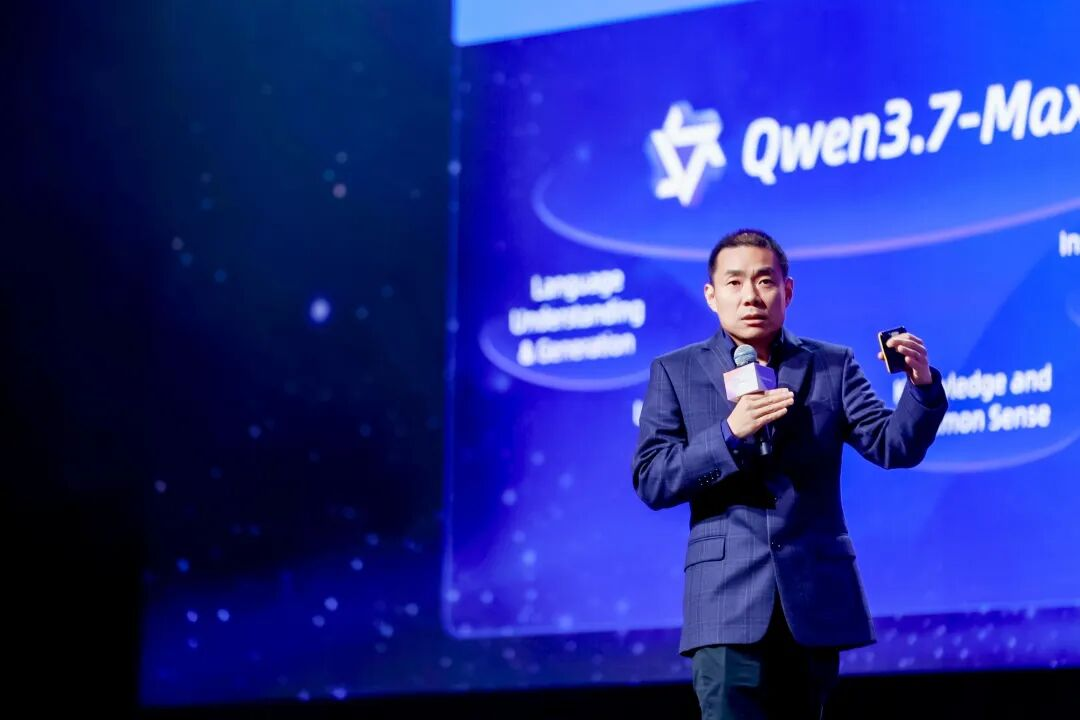
For Qwen Cloud to succeed, model capabilities must be robust. Without stable and competitive models, Skills, CLI, Token Plans, and front-end gateways would struggle to sustain usage. Thus, the newly released Qwen3.7-Max warrants close observation.
According to official statements, Qwen3.7-Max is a new flagship model designed for Agent scenarios, with enhanced programming, reasoning, and tool invocation capabilities. It seamlessly integrates with mainstream Agent frameworks like Claude Code, OpenClaw, and Hermes Agent.
The model reportedly can independently deliver complex projects end-to-end, supporting 35-hour continuous operation and complex long-duration tasks involving over 1,000 tool invocations. On the latest Code Arena programming rankings by LMArena, Alibaba's newest flagship model, Qwen3.7-Max, scored 1,541, ranking second globally among large model vendors.
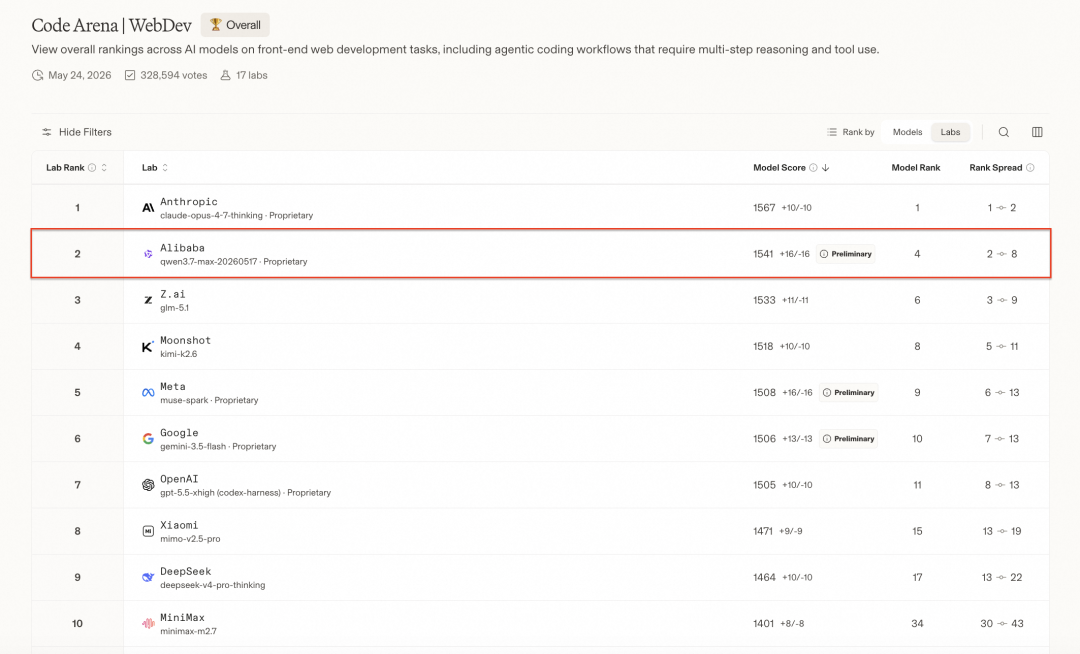
The relationship between Qwen3.7-Max and Qwen Cloud can be seen as a synergy between capability and entry layers. Qwen Cloud addresses how developers and Agents access model services, while Qwen3.7-Max provides the model capabilities Alibaba Cloud aims to promote. For Alibaba Cloud, placing its latest flagship model in Qwen Cloud helps align the model brand, cloud entry point, and MaaS commercialization.
Of course, the capabilities described at a model's launch are just the starting point. Agent scenarios particularly rely on real-world usage feedback. Factors like long-duration task performance, API cost and stability, tool invocation success rates, and code generation quality will influence whether developers continue to use the model.
Can MaaS Expansion Unlock New Growth for Alibaba Cloud?
Alibaba Cloud holds a significant share of the global cloud market and has a long-standing presence in the Asia-Pacific region. However, in the traditional overseas cloud market, it faces stiff competition. AWS, Azure, and Google Cloud established their global footprints earlier, integrating into multinational enterprises' IT systems, developer ecosystems, SaaS partner networks, and system integrator channels.
Cloud computing is a business with strong first-mover advantages. Once companies choose a cloud provider, they tend to stick with it for databases, networking, security, operations, talent training, and procurement processes.
Alibaba Cloud entered overseas markets later than these international giants and is also affected by factors like compliance, trust, channels, and ecosystems. Traditional cloud expansion overseas typically requires lengthy customer education and organizational penetration cycles. Selling tokens, however, is a much simpler business model than traditional cloud computing services.
The decision-making process for adopting model APIs is usually shorter than migrating core infrastructure. As long as model capabilities keep pace, switching APIs can be transparent to upper-layer applications.
Customers can start by integrating model services into scenarios like AI programming, customer service, marketing content, data analysis, cross-language communication, and Agent-based office work. If the results are satisfactory and Token consumption increases, it can gradually drive more cloud resource and toolchain spending.
This is especially crucial for latecomers.
The entry point for traditional clouds is migration, while for MaaS, it's invocation. Migration implies changing the underlying architecture, whereas invocation can start with an API Key, an Agent workflow, or a programming task.
If Alibaba Cloud can leverage Qwen's developer recognition to first bring overseas users into model invocation and then transition them to Qwen Cloud and related cloud services, it may bypass some of the resistance faced by traditional IaaS expansion overseas.
However, this path also comes with practical pressures. Price competition in the model API market will persist, with open-source models and local deployments diverting demand. Overseas enterprises will also impose stricter data security and compliance requirements.
Singapore's selection as the launch site for Qwen Cloud's overseas debut is no coincidence. Alibaba Cloud established data centers and international business capabilities in Singapore early on, and the city serves as its Southeast Asia regional headquarters.
The Southeast Asian digital economy continues to grow, with cross-border e-commerce, fintech, content industries, and multilingual customer service presenting potential testbeds for AI tools. Alibaba also has an e-commerce and local ecosystem foundation in Southeast Asia. These factors combined make Singapore an ideal window for Alibaba Cloud to test its AI cloud expansion strategy.
Qwen Cloud and Qwen provide Alibaba Cloud with a new narrative: making Agents new users of cloud services, Tokens a new variable in cloud revenue, and Qwen a new brand in the overseas developer market.
This direction is clear and aligns with AI cloud development trends. The more critical question now is whether Alibaba can maintain leadership in model capabilities and cost efficiency.
-
![]()
AI Giants Start Borrowing to Fuel Computing Power Race
-
ByteDance Initiates Largest B2B Structural Adjustment, This Time It's Truly Different
-
![]()
Let's Talk About Kingsoft Office's Mid-Year Outlook and the True Strength of Its AI-Powered Office Solutions
-
Despite 150 Million Users, Struggles Persist: AIShige Faces Tough Competition from Seedance and Kling in AI Video Monetization
-
![]()
Ensuring Safe Gear Shifting in the Automotive Industry: Transitioning from 'Product Oversight' to 'Full-Chain Governance'
-
![]()
Net Profit Soars to $133.7 Billion! Azure Revenue Tops $100 Billion, with AI Fueling Microsoft's Growth
-
![]()
Before 6G Hits the Market, the U.S. Forges a 'Rules Alliance': What Challenges Await Chinese IoT Enterprises?
-
![]()
Intelligent Driving's 'Little Blue Light' Faces Ban: Night Glare and Cut-in Risks Prompt Official Action