Duan Yongping Understands Jack Ma, But Not Alibaba Cloud Under 'Uncle Wu'", "Duan Yongping, Alibaba Cloud, AI, Investment Decisions, Feifei Li", "Duan Yongping liquidates positions in Alibaba, ASML, a
 06/02 2026
 682
682
Regarding Alibaba, Duan Yongping has openly stated he 'doesn’t understand it well enough to invest heavily.'
Last year, a Snowball user asked Duan Yongping why he repurchased Alibaba shares—whether he believed its e-commerce value was underestimated or saw potential in Alibaba Cloud's business. Duan’s response was intriguing: 'Alibaba at 70-something dollars is indeed cheap.'
He chose option C between A and B.
Duan Yongping once said he 'can’t see through' e-commerce: 'I always feel I can’t grasp e-commerce’s moat or predict which players will thrive in 10 years. For example, I don’t understand why Alibaba can’t replicate or learn from Pinduoduo’s strengths.'
He has not directly evaluated Alibaba Cloud but his investment decisions this year suggest that Alibaba’s decade-long hard tech narrative for Alibaba Cloud failed to convince him to double down.
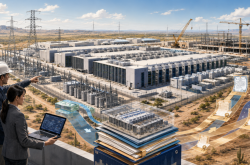
CoreWeave, which Duan liquidated alongside Alibaba, is an AI computing cloud service provider requiring continuous massive investment in GPUs and data center construction. The focus isn’t on AI itself but on the 'heaviness' of the asset. In Duan’s investment framework, 'heavy' AI computing cloud services may not be ideal targets due to high capital expenditure, thin profit margins, and less stable moats compared to upstream key technology suppliers.
Over the past decade, Alibaba Cloud has been central to Alibaba’s transformation from an e-commerce company to a tech company.
In Wu Yongming’s current AI strategy, all operations revolve around tokens, but Alibaba Cloud remains pivotal in Alibaba Group’s token strategy—supporting both Qianwen’s large model training and Taobao & Tmall’s Agent inference.
This capital-intensive, continuous investment path falls into the quadrant Duan Yongping chooses to avoid.
I. Alibaba Cloud’s Offensive
At the Alibaba Cloud Summit, Feifei Li, making her first public appearance as Alibaba Cloud CTO, opened a new chapter for the company.
Bigger changes occurred earlier in April.
At that time, Wu Yongming announced a series of organizational adjustments in an all-staff letter: upgrading the Tongyi Lab into the Tongyi Large Model Business Unit led by Zhou Jingren; Feifei Li succeeding Zhou as Alibaba Cloud CTO; establishing the Group Technology Committee chaired by Wu Yongming himself, with Zhou Jingren, Wu Zeming, and Feifei Li as members.
Zhou oversees models, Feifei Li manages the cloud infrastructure, and Wu Zeming handles platform implementation—three clear divisions of labor.
This marked Alibaba’s second major AI-related organizational restructuring in less than a month. The previous one in March established the ATH Business Group, integrating five business lines: Tongyi, Qianwen, MaaS, Wukong, and AI Innovation. The April adjustment further clarified roles within the ATH framework, separating model development, infrastructure, and implementation.
These adjustments serve Alibaba’s current token strategy.
In the chain of 'producing tokens, delivering tokens, applying tokens,' Alibaba Cloud sits at the core 'token delivery' position, crucial for the efficiency of the entire token-based business model.
Thus, Alibaba Cloud’s role is quietly evolving.
A clear signal came in late 2024 when Alibaba Cloud spun off its Tongyi large model’s consumer team—including product managers and engineering teams for consumer-facing products—to Alibaba’s Intelligent Information Business Group. The Tongyi App remains operational but no longer competes directly with Doubao or Kimi as an independent consumer product; instead, it becomes part of the model capabilities supplied via the cloud.
In Wu Yongming’s AI strategy, Alibaba Cloud has strategically stepped back. It now serves as the 'middleware' between Qianwen and Taobao & Tmall, efficiently delivering tokens from Qianwen to Taobao & Tmall’s application endpoints.
This transformation occurred gradually.
Over the past three years, Alibaba Cloud has made repeated AI moves: launching the Tongyi large model family in 2023, slashing Qianwen API prices by 97% in 2024 to join the price war, and announcing in 2025 that its AI infrastructure investment plan would rise to RMB 380 billion over three years.
But at this Alibaba Cloud Summit, the company made its most decisive move yet: reconstructing everything from chips to upper-layer applications for Agent-centric operations. More importantly, Alibaba Cloud launched 'Qianwen Cloud'—its first new product portal in 17 years.
Positioned as 'a new service model born for AI Agents,' Qianwen Cloud essentially separates Alibaba Cloud’s most cutting-edge MaaS business into a dedicated brand closer to Qianwen, while Alibaba Cloud itself retreats to a more conceal (hidden) position beneath MaaS, bearing the costs and efficiency of upper-layer operations including model training and Taobao & Tmall’s inference tasks.
This transition will inevitably bring growing pains to Alibaba Cloud, dictated by the starkly different load characteristics of e-commerce and AI.
E-commerce features 'tidal loads.' Taobao’s Double 11 traffic spikes reach several times or even dozens of times daily levels, but these high loads are predictable, planned, and temporary, manageable through elastic scaling.
AI loads, however, involve continuous, high-intensity computing consumption. Whether training Qianwen’s models or real-time Agent inference calls in Taobao & Tmall operations, the demand is 24/7 and dense.
The resource scheduling logics differ fundamentally. A deep training task might occupy thousands of GPUs for weeks, clashing with e-commerce’s need to release resources quickly after promotions.
More critically, Agent loads’ computing consumption is growing exponentially. The pre-training data volume for Tongyi’s flagship model Qwen3-Max has reached 36T tokens with over a trillion parameters, and future models will expand further. Meanwhile, inference calls in Taobao & Tmall’s AI operations are surging.
Wu Yongming’s observation on an earnings call is telling: 'Theoretically, as long as AI helps employees complete tasks that create more value than token costs within the enterprise, demand for API tokens will be unlimited.'
But between theory and reality lies a massive infrastructure reconstruction project. Alibaba Cloud must satisfy two 'unlimited demands' with one infrastructure: Qianwen training needs unlimited computing power, while Taobao & Tmall inference needs unlimited throughput. Both squeeze the same resource pool almost simultaneously.
For Alibaba Cloud today, 'balancing' may be paramount. This explains why Wu Yongming placed 'Flying Dagger' Li Feifei as Alibaba Cloud CTO.
Li Feifei’s resume screams 'efficiency.' He joined Alibaba in 2018 as head of the database team and chief database scientist at DAMO Academy, leading development of Alibaba Cloud’s enterprise-grade cloud-native database systems, including core products like the cloud-native relational database PolarDB and cloud-native data warehouse AnalyticDB.
These products share keywords: cloud-native, large-scale, high-performance. Previously, he specialized in database query processing, data security, and large-scale data management, serving as a tenured professor at the University of Utah for years. His core expertise lies in 'making computing faster and cheaper.'
This appointment signals a shift: efficiency may now prioritize scale in Alibaba Cloud’s business development.
This level of transformation carries profound implications for Alibaba Cloud today.
II. Alibaba Cloud’s Retreat
Rewind to 2009: Alibaba Cloud descended like a 'rainbow-clouded savior' into Alibaba.
China’s IT infrastructure at the time was extremely passive. The internet’s foundational architecture was monopolized by IBM minicomputers, Oracle database software, and EMC storage devices—the 'IOE' trio.
In 2008, Wang Jian left his role as deputy dean of Microsoft Research Asia to join Alibaba as chief architect. His pragmatic assessment: at Alibaba’s growth pace, IT hardware expansion costs would bankrupt the company. Each Double 11 traffic refresh meant millions in new IOE purchases.
Alibaba Cloud was born under these circumstances.
In 2009, on Alibaba’s 10th anniversary, Alibaba Cloud took the stage with Wang Jian as president. Eliminating IOE and building Alibaba Cloud were two sides of the same coin.
Internal confusion and question (doubts) poured in. Wang, trained in engineering psychology, was a mysterious 'empty-drop' executive, and cloud computing itself was poorly understood within Alibaba.
At the 2012 company year-end party, the 50-year-old Wang Jian took the stage in tears: 'The abuse I’ve taken these two years exceeds what I’ve faced in a lifetime.'
2013 marked a turning point. That year, Alibaba Group’s last IBM minicomputer went offline at Alipay. From the 2008 strategic proposal to the final minicomputer’s retirement, eliminating IOE took five years.
Also in 2013, Alibaba Cloud completed the 'Feitian 5K' project and went live. Over the following year, Alibaba and Ant Group migrated all data.
From then on, Alibaba Cloud became Alibaba’s poster child for transforming from an e-commerce company to a tech company, shouldering nearly all of Alibaba’s tech narrative in the cloud era.
In 2014, Jack Ma personally met provincial leaders to secure Alibaba Cloud partnerships. Sun Zhengyi publicly remarked: 'Alibaba Cloud’s future is boundless; it’s the future of the internet.'
Gradually, Alibaba Cloud became the group’s second growth engine beyond e-commerce.
From initially lagging in performance and facing repeated layoff rumors to breaking RMB 10 billion in single-quarter revenue in FY2020, Alibaba Cloud became China’s first cloud service provider to achieve this milestone.
Later, growth slowed in 2021 amid market share pressures, but by FY2026, annual revenue reached RMB 158.1 billion, up 34% YoY. AI-related product revenue exceeded RMB 35.8 billion on an annualized basis in Q1 2026, marking triple-digit YoY growth for multiple quarters. The growth curve has been dramatic.
Alibaba Cloud’s status within the group is also evident from its leaders’ authority. Since Wang Jian, Alibaba Cloud’s heads have often held core decision-making roles at the group level.
At its peak in 2023, Alibaba Cloud stood at the doorstep of the public markets under Daniel Zhang.
In early 2023, Zhang launched the '1+6+N' restructuring, stating 'each business will go public when ready,' with Alibaba Cloud first in line. CITIC Securities valued Alibaba Cloud at ~RMB 200 billion by comparing it to global giants like Amazon; Goldman Sachs had once valued it at over RMB 800 billion in 2020.
The good times didn’t last. In December 2023, Alibaba announced it would no longer pursue a standalone IPO for Alibaba Cloud.
Zhang stepped down, and Wu Yongming took the stage.
Alibaba’s business structure rapidly shifted from Zhang’s extreme decentralization back to centralization. From 2024–2025, the '1+6+N' model tightened; by August 2025, the official website restructured Alibaba Cloud into four business segments, fully focusing on 'e-commerce' and 'cloud + AI' as twin cores.
Alibaba Cloud’s story has always carried heroic undertones. From Wang Jian’s technical vision to becoming 'China’s IOE elimination pioneer' and 'China’s first public cloud,' it even served as the group’s second growth engine when e-commerce slowed.
But today, these halos are being actively shed.
While Alibaba Cloud remains a cash cow, in Wu Yongming’s AI strategy, it no longer needs to stand in the spotlight—instead retreating behind the scenes to efficiently and cost-effectively deliver tokens from Qianwen to Taobao & Tmall, existing as one link in the 'produce-deliver-apply tokens' chain.
III. Li Feifei in the Crossfire
At this moment, Alibaba’s all-in AI commitment places Alibaba Cloud’s future within a 'triangular relationship.'
'Produce tokens—deliver tokens—apply tokens' corresponds to the 'Qianwen—Alibaba Cloud—Taobao & Tmall' business lines and their leaders: Zhou Jingren, Li Feifei, and Wu Zeming. While their roles are clear, their differing career trajectories within Alibaba introduce uncertainties in maintaining stability.
Zhou Jingren joined Alibaba from Microsoft in 2015 with the most 'diverse' background.
He joined as Alibaba Cloud’s chief scientist in 2015, later rotating through multiple roles: leading iDST (Institute of Data Science and Technologies, precursor to DAMO Academy), then overseeing e-commerce search, recommendation, and advertising systems, transferring to Ant Group in late 2020 before returning to Alibaba Cloud as CTO and DAMO Academy vice president a year later.
His Alibaba career spans infrastructure to business applications, giving him the broadest understanding of Alibaba’s 'full picture' among the three, not to mention leading Tongyi Lab’s development amid the AI wave.
In 2025, Zhou became an Alibaba Partner, entering the group’s highest decision-making tier. Reports attribute this to Tongyi Lab’s success in maintaining Qwen’s leading position, earning high praise from Alibaba management for 'achieving this against all odds.'""Wu Zeming is the most business-oriented and senior of the three.
He joined Taobao in 2004, rising through frontline technical roles to lead e-commerce technical architecture. Elected an Alibaba Partner in 2017 as one of the few post-80s members, Wu Zeming relinquished his role as Taobao Flash Sale CEO in April 2025 to focus on AI inference platform development as group CTO. Among the three, he is closest to revenue, tasked with converting Qianwen’s model capabilities and Alibaba Cloud’s computing infrastructure into tangible GMV for Taobao & Tmall.
In contrast, 'Flying Dagger' Li Feifei has the 'purest' background among the three and has not yet joined the Alibaba Partners.
In 1997, Li Feifei was recommended to Tsinghua University’s Electrical Engineering Department, later earning a PhD in Computer Science from Boston University and serving as a tenured professor at the University of Utah. Since joining Alibaba in 2018, he has focused on databases and big data systems, leading teams to develop core products like PolarDB and AnalyticDB while being elected an ACM Fellow and IEEE Fellow in 2021.
He has consistently delved deep into the proposition of 'efficient management of large-scale data.' Data is precisely the most fundamental component in the token delivery pipeline of the AI era, which may also be the core reason why Li Feifei can serve as the CTO of Alibaba Cloud.
The varying levels of experience, business affiliations, technical directions, and hierarchical differences among the three individuals create a subtle and complex tension, with the focal point of convergence being Alibaba Cloud.
Alibaba Cloud now has a dual identity: it is both the sole computational foundation for QianWen's training and the internal technology supplier for Taobao and Tmall's AI-driven transformation. Balancing cost reduction and efficiency gains for these two lines is the core issue Li Feifei will need to address next.
During the earnings call in November 2025, Wu Yongming highlighted the key points for Li Feifei, clarifying the priority of infrastructure usage—the top priority is to ensure the training of the foundational model, followed by inference services on BaiLian, as well as various internal AI inference services and external customers' inference needs.
For external customers, if they use a comprehensive range of Alibaba Cloud's services (including storage, big data, and CPU resources), they will be given higher priority; if they only rent GPUs for simple inference, their priority will be relatively lower.
The 'top priority' also means that Alibaba Cloud (the delivery end) must tilt [Note: kept as is for it's a proper noun, if it means 'lean towards' the translation would be 'tend to'] its computational resource allocation towards meeting QianWen's training needs, which will inevitably encroach upon the resources available for AI inference in Taobao and Tmall's businesses.
However, since last year, Taobao and Tmall, as the cornerstone of Alibaba's business, have also begun to make significant strides.
Jiang Fan's marketing investments in the instant retail battle have forcibly drawn public attention back to Taobao and Tmall. However, this type of marketing war seems inconsistent with Alibaba's image as a technology company. Consequently, Taobao, Tmall, and the QianWen App have become more closely integrated this year, with comprehensive interconnections.
Yet, the narrative of AI-driven e-commerce has not yet materialized, and Wu Yongming has once again designated instant retail as the core strategy for Taobao and Tmall's future development in his shareholder letter. He also ambiguously mentioned the subtle relationship between 'AI and instant retail.'
The orderly advancement of all these aspects ultimately rests on Alibaba Cloud as the infrastructure.
Years ago, Wang Jian, the founder of Alibaba Cloud, repeatedly expressed his expectations for the platform. He believed that the essence of cloud computing is a public service, akin to water and electricity, and should become a social infrastructure.
Over the years, Alibaba Cloud's development seems to have gradually 'deviated' from this path, becoming China's first public cloud and the group's second growth engine, nearly achieving an independent listing. However, today's Alibaba Cloud is almost at the moment closest to Wang Jian's expectations.
Driven by Wu Yongming, Alibaba Cloud has begun to resemble the 'public service' Wang Jian envisioned, with discussions shifting from technology to economic issues centered around tokens.
However, the 'public service' Wang Jian had in mind might refer to a universally accessible computational capability, whereas in Wu Yongming's current strategy, this 'public service' represents a cost optimization chain tightly intertwined between QianWen and Taobao, Tmall.
Currently, Alibaba Cloud's task list is unprecedentedly clear, heavy, and urgent.
According to the Q4 fiscal year 2026 earnings report, the group's operating cash flow shrank to 9.410 billion yuan, with the deterioration primarily stemming from a significant increase in capital expenditures, which reached 26.887 billion yuan that quarter, mainly allocated to areas such as cloud infrastructure.
Li Feifei must leverage her decade-plus of expertise to make Alibaba Cloud faster, cheaper, and more stable. Otherwise, if any link in the 'production-delivery-application' chain breaks, Alibaba will have no backup options.
-
![]()
AI Giants Start Borrowing to Fuel Computing Power Race
-
ByteDance Initiates Largest B2B Structural Adjustment, This Time It's Truly Different
-
![]()
Let's Talk About Kingsoft Office's Mid-Year Outlook and the True Strength of Its AI-Powered Office Solutions
-
Despite 150 Million Users, Struggles Persist: AIShige Faces Tough Competition from Seedance and Kling in AI Video Monetization
-
![]()
Ensuring Safe Gear Shifting in the Automotive Industry: Transitioning from 'Product Oversight' to 'Full-Chain Governance'
-
![]()
Net Profit Soars to $133.7 Billion! Azure Revenue Tops $100 Billion, with AI Fueling Microsoft's Growth
-
![]()
Before 6G Hits the Market, the U.S. Forges a 'Rules Alliance': What Challenges Await Chinese IoT Enterprises?
-
![]()
Intelligent Driving's 'Little Blue Light' Faces Ban: Night Glare and Cut-in Risks Prompt Official Action