Computex 2026 | Qualcomm’s Visionary Outlook: In the Age of Agents, Devices Take Center Stage in Computing
 06/03 2026
 554
554
By Zhinen Zhixin
For the past two decades, Qualcomm has been primarily recognized as a 'mobile phone chip company.'
At Computex 2026, CEO Cristiano Amon made a bold declaration: 'The Year of Agents'—AI agents are set to become the focal point of the digital realm, with devices acting as the hardware platforms for these agents.
Qualcomm is poised to develop a comprehensive computing platform that spans from 2-milliwatt earbuds to AI-driven vehicles.
Part 1: What Implications Does a 40-Fold Increase in Token Usage Hold?
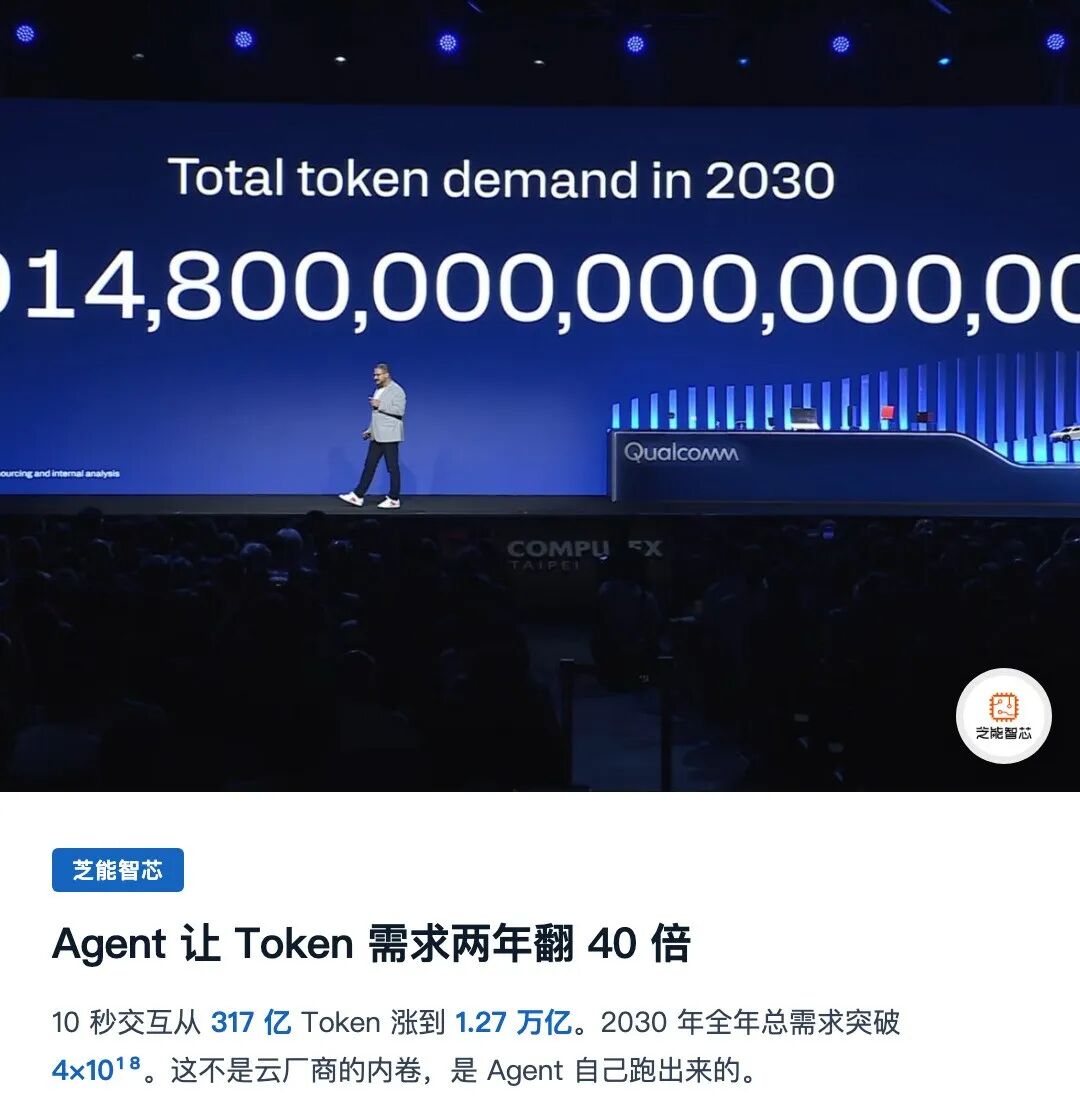
By 2030, the global consumption of tokens is projected to surge 40-fold. Processing all these tokens in the cloud would lead to skyrocketing inference costs.
Qualcomm introduces the Hybrid Orchestrator—a strategy that enables devices to handle tasks locally whenever possible, with the cloud stepping in only for essential processing. This approach offloads 30%-60% of tokens to the edge, cutting costs by four times. If edge computing can manage 70% of inferences, the cloud's revenue would be reduced to just 30% of its original figure.
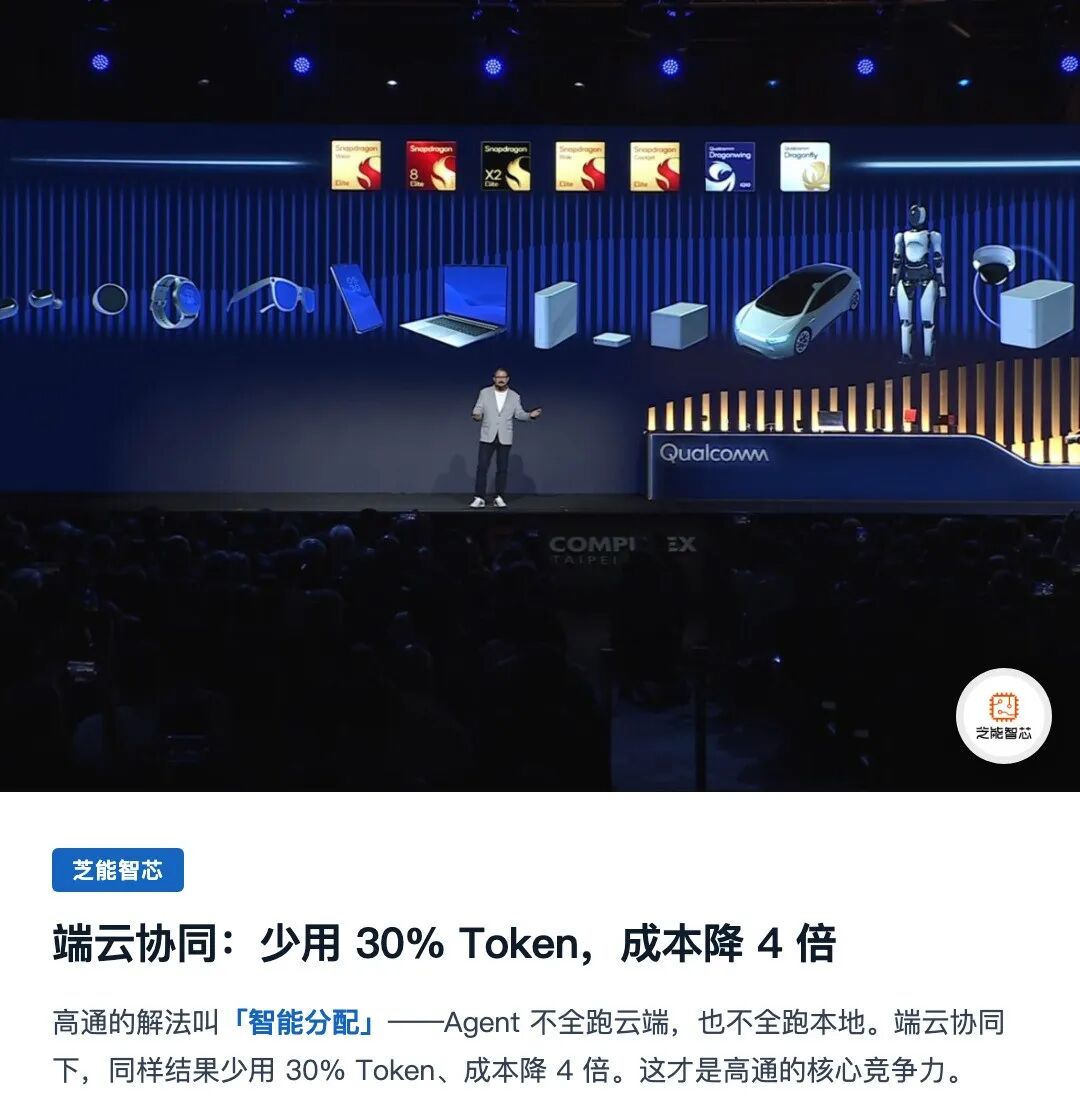
During his keynote, Amon highlighted that as AI transitions from simple conversational interactions to Agentic AI (capable of autonomous multi-step, multi-tool, and multi-service operations), token consumption per task will skyrocket from 10,000 to 1 million tokens—a 100-fold increase.
Consider a typical programming task. Running a full Code Agent task entirely in the cloud could consume 1.4 million tokens, incurring costs in the tens of dollars.
However, with Qualcomm's 'distributed Agentic AI' approach, 30% of inference can be completed on the device, with the remaining 70% handled by the cloud, resulting in a 60% reduction in overall costs.
This encapsulates Amon's statement: 'We're not just selling chips; we're redefining the economics of AI.'
The traditional cloud computing model is predicated on the assumption that all AI workloads will occur in the cloud. When edge devices can autonomously complete most inference tasks, cloud server utilization will drastically decline. Even if NVIDIA continues to sell GPUs, its customers' cloud expenditures will be significantly curtailed.
This is why Amon remarked in his speech, 'Cloud providers need to rethink their business models'—not as a threat, but as an impending reality.
Part 2: Dragonfly: The Initial Challenge
Dragonfly—Qualcomm's new brand for data center processing products. This marks Qualcomm's formal foray into the data center market, in partnership with global hyperscale cloud providers.
After the setbacks with Cloud AI 100, we're returning with a refreshed strategy.
◎ AI inference workloads are becoming the norm: Training is largely complete; the focus now shifts to inference. Qualcomm's low-power advantage is pivotal in inference scenarios.
◎ Demand for edge computing coordination is rising: With hundreds of millions of devices performing local inferences, the cloud requires an efficient coordination layer. Server-grade Dragonfly fills this void.
◎ TSMC's cutting-edge process technology: 3nm/4nm processes propel server energy efficiency to unprecedented levels.
This time, we only require 30% in the cloud; the rest can be managed by the devices themselves.'
From 2-milliwatt earbuds to AI-powered vehicles, no other company can cover this spectrum. With 6 billion smartphones, 2 billion wearables, 2 billion PCs, and 500 million cars, we're looking at an unparalleled edge computing network.
Digital twins are merely the surface; beneath them, every device on this network runs local inferences. Qualcomm aspires to be the computing foundation for this system.
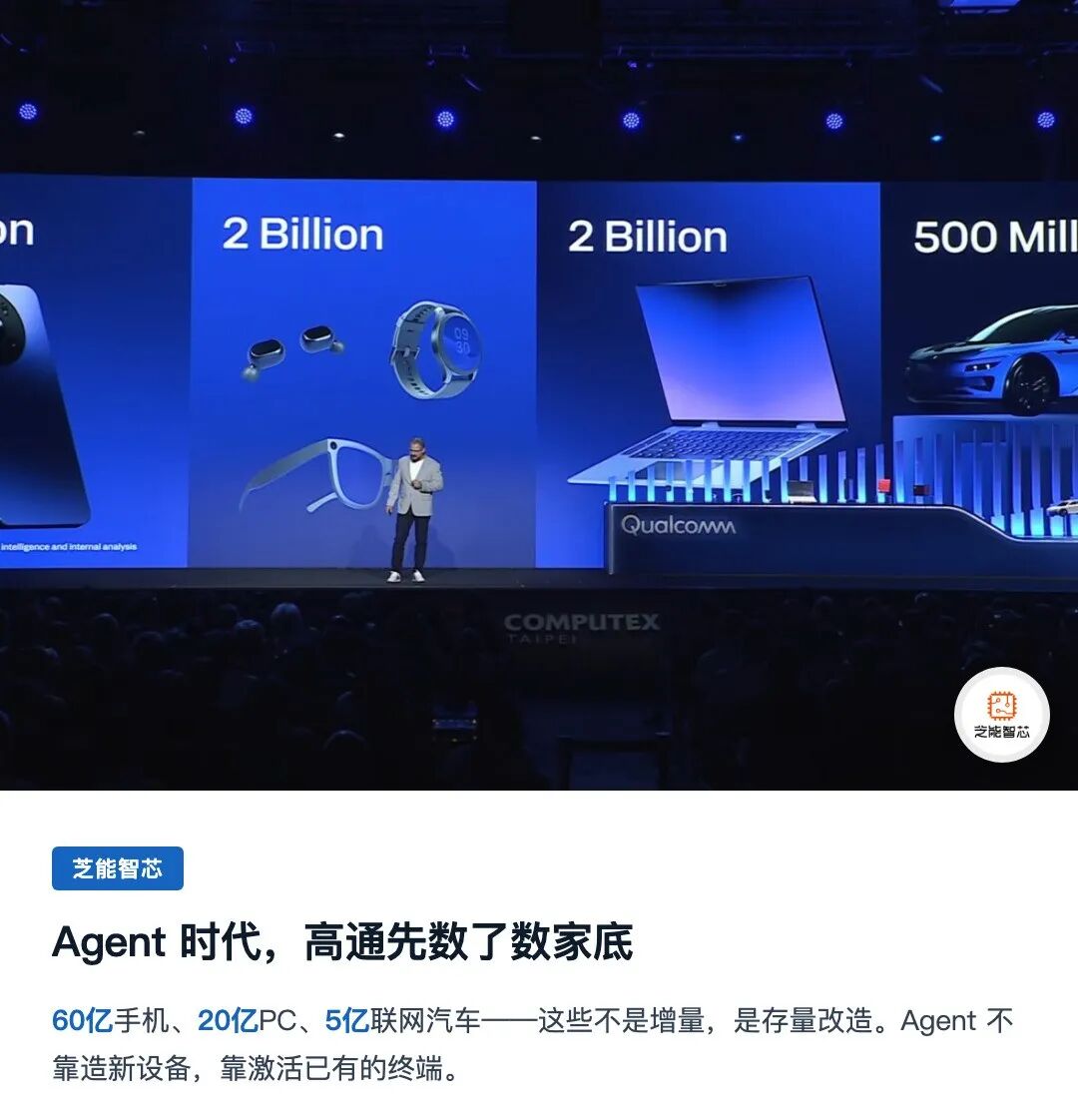
Qualcomm CEO Amon believes: 'We're not just developing chips for phones; we're crafting chips for every device that can connect to an AI agent.'
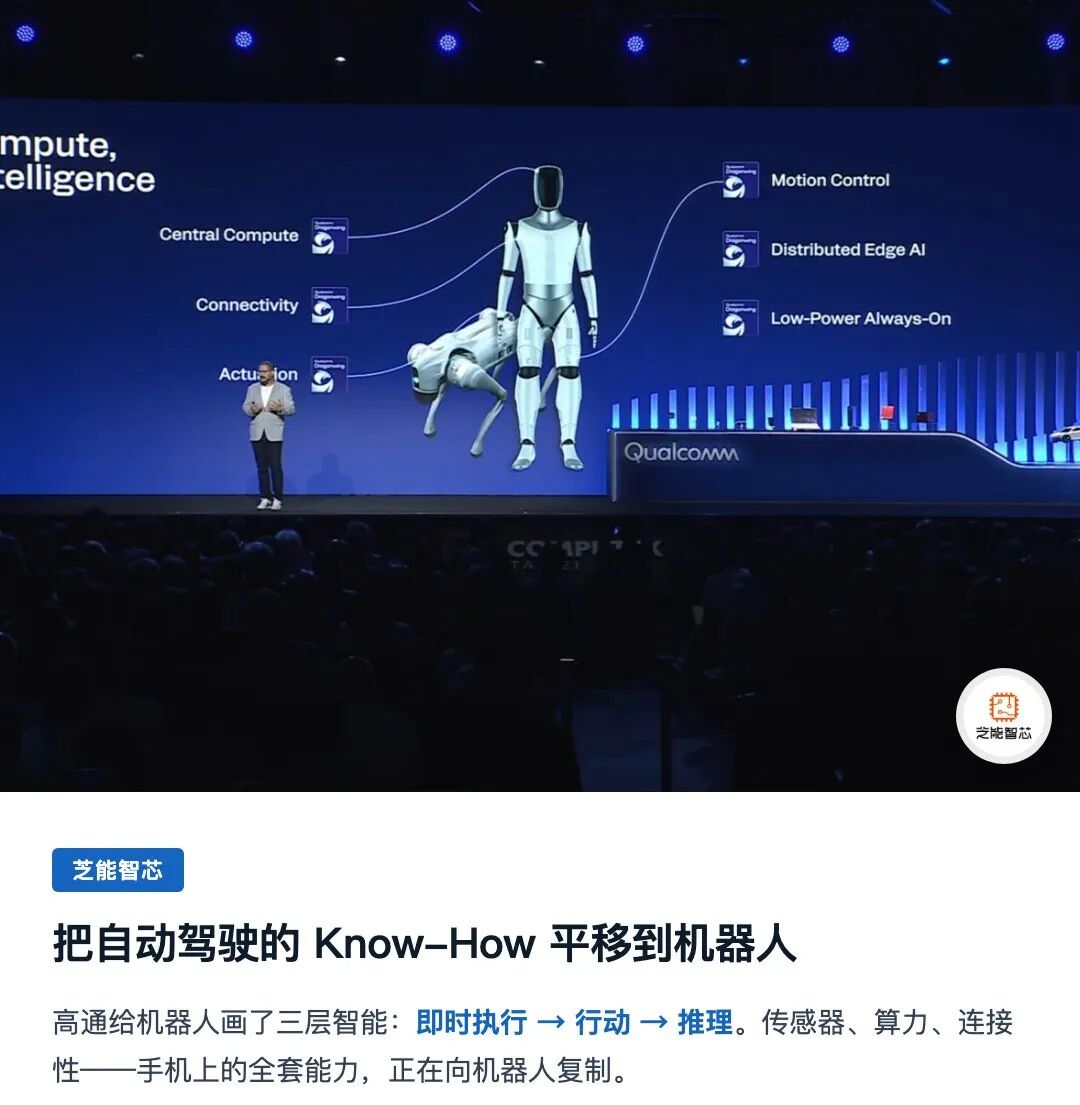
In this era of ubiquitous AI, Qualcomm aims to secure every endpoint. Another often-overlooked aspect is Dragonwing, Qualcomm's IoT, embedded, and robotics computing product line.
The Dragonwing IQ10 series, unveiled at CES 2026, boasts an 18-core CPU and a comprehensive robotics stack, already utilized by partners like Figure to power general-purpose humanoid robots.
Your phone is no longer the hub of your digital life—it's a digital touchpoint for your agent. Consumers will have their own AI agents to manage emails, schedule appointments, and filter information. The phone's role evolves from 'object of operation' to 'operation interface.'
Hardware value hasn't vanished, but the value chain is shifting—from the device itself to the AI agent capabilities it harbors.
Last Year vs. This Year: A Comparative Analysis of Two Keynotes
Computex 2025
Computex 2026
Theme: AI PC
Theme: The Year of Agents
Positioning: PC as the AI Hub
Positioning: Agents as the Hub, Devices as Touchpoints
Slogan: The Heartbeat of the PC
Slogan: The Vessel for Agents
Current smartphone battery life is already under strain. If users run agents 24/7 on their phones, power management will become the paramount engineering challenge. Agents will seamlessly switch between device and cloud. Low-priority tasks are handled locally; high-priority tasks are escalated to the cloud.
When continuous inference is required, the device enters a low-power mode, maintaining only basic sensing capabilities—a complete redesign of the AI operation architecture.
Summary
A new agent-centric computing architecture is emerging. The cloud is no longer the protagonist; devices are. For the past two decades, Qualcomm has dominated the mobile phone chip market. For the next two decades, Qualcomm aims to become the cornerstone of AI full-stack computing.
From DSPs in 2-milliwatt earbuds to Dragonfly in data centers; from earbud assistants answering calls to robots learning to walk—Qualcomm is committed to covering every connection 'from cloud to edge.'
-
![]()
AI Giants Start Borrowing to Fuel Computing Power Race
-
ByteDance Initiates Largest B2B Structural Adjustment, This Time It's Truly Different
-
![]()
Let's Talk About Kingsoft Office's Mid-Year Outlook and the True Strength of Its AI-Powered Office Solutions
-
Despite 150 Million Users, Struggles Persist: AIShige Faces Tough Competition from Seedance and Kling in AI Video Monetization
-
![]()
Ensuring Safe Gear Shifting in the Automotive Industry: Transitioning from 'Product Oversight' to 'Full-Chain Governance'
-
![]()
Net Profit Soars to $133.7 Billion! Azure Revenue Tops $100 Billion, with AI Fueling Microsoft's Growth
-
![]()
Before 6G Hits the Market, the U.S. Forges a 'Rules Alliance': What Challenges Await Chinese IoT Enterprises?
-
![]()
Intelligent Driving's 'Little Blue Light' Faces Ban: Night Glare and Cut-in Risks Prompt Official Action