NVIDIA Unveils Innovative 'Computing Power Loan' Initiative, Revolutionizing AI Industry Financing with GPU Access via Revenue Sharing
 07/10 2026
 356
356
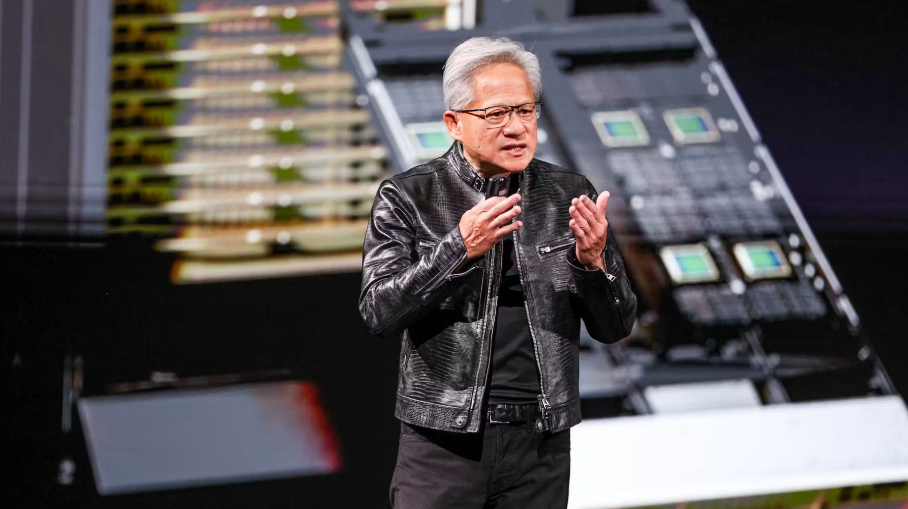
'Computing Power Loan' and 'Token Factory': A New Era
Produced by Jixin
In the age of rapid generative AI development, computing power has emerged as a more valuable resource than oil. Yet, the exorbitant cost of H100 GPU clusters, often running into the hundreds of millions, poses a significant barrier for most entrepreneurs. Faced with the dual challenges of 'computing power scarcity' and 'capital constraints,' NVIDIA has stepped in, not merely as a hardware vendor, but as a groundbreaking financial powerhouse. Its new 'Computing Power Loan' model offers GPU access in exchange for revenue sharing, fundamentally altering the financial landscape of the AI industry. Leading the charge in this transformation are innovative companies dubbed 'Token Factories.' 01 From 'Selling Shovels' to 'Establishing a Financial Institution' Traditionally, NVIDIA has been known as a 'shovel seller,' supplying high-value GPUs to cloud providers and tech giants. However, as competition in large-scale AI models intensifies, chip delivery times for models like the H100 and B200 have stretched beyond six months, with secondary market prices doubling. For AI firms eager to commercialize their models, purchasing computing power outright is not only financially burdensome but also a formidable entry barrier. Conventional financing methods, such as equity financing or bank loans, prove inefficient for asset-light, high-risk AI startups. Thus, NVIDIA has drawn inspiration from the mature 'revenue-based financing' model prevalent in the SaaS industry, introducing the 'Computing Power Loan.' The essence of this model is simple: rather than letting GPUs languish in the supply chain awaiting buyers, NVIDIA proactively leverages them as credit assets, directly deploying them to the most promising AI application endpoints. This marks a significant transformation in NVIDIA's role. It has evolved from a mere hardware supplier to a 'computing power bank,' wielding control over core production resources while possessing risk assessment and capital recovery capabilities. This strategic shift elevates NVIDIA's business model from one-time transactions to a continuous revenue stream based on long-term cash flow across the entire AI ecosystem, with its valuation now tied to the total lifecycle value of the ecosystem rather than mere hardware shipments.
02 Cash Flow Optimization for Token Factories
The 'Computing Power Loan' model works like a cash flow enchantment for 'Token Factory'-style companies. These firms specialize in providing large model inference API services, charging customers based on the volume of tokens generated. Their business model is straightforward: input computing power, output tokens, and profit from the difference between token consumption and computing power costs.
Under the new Computing Power Loan scheme, Token Factories are not required to pledge any fixed assets. Instead, they must demonstrate their API call volume, customer contracts, and projected growth trajectory to NVIDIA or its designated financial partners. Upon approval, they gain immediate access to a substantial GPU cluster computing power quota. In return, they commit to regularly paying NVIDIA a fixed percentage (ranging from 5% to 15%) of their token sales revenue over a specified period until the total repayment reaches a predetermined cap (ranging from 1.3 to 1.8 times the initial hardware value).
This ingenious design addresses the timing mismatch between computing power consumption and cash flow for startups. The revenue-sharing model directly converts their largest fixed cost into a variable cost that fluctuates with revenue. When a factory's business booms and token generation per second soars, its shared revenue increases proportionally; conversely, if business slows, its cost pressure naturally eases. This flexibility significantly enhances the survival rate and trial-and-error space for AI startups, transforming heavy computing power liabilities into flexibly paid 'computing power subscriptions + profit sharing.'
03 The Subtle Shifts in Industrial Finance

In fact, the trend towards computing power financialization has been quietly unfolding. NVIDIA-backed GPU cloud service provider CoreWeave pioneered the use of its stockpiled H100 chips as collateral to secure billions of dollars in debt financing from Wall Street. This demonstrated that top-tier GPUs possess creditworthiness akin to real estate. The 'Computing Power Loan' takes this a step further by deepening the credit basis from 'owning GPU ownership' to 'possessing the ability to generate cash flow with GPUs.'
This directly reshapes the valuation system of the AI industry. Token Factories are no longer just tech companies; they have evolved into financial entities with predictable, auditable cash flows. Their core assets, in addition to algorithm teams, now include stable token production capabilities secured by NVIDIA's Computing Power Loan. When evaluating such companies in the future, investment institutions may shift their focus from user numbers to 'computing power sharing coverage' and 'token gross margin.' A financial revolution centered around computing power credit has already commenced, with computing power becoming true capital and token output data serving as the most reliable credit voucher.
04 NVIDIA's Grand Vision as a Computing Power Bank
NVIDIA's push for the 'Computing Power Loan' is part of a broader ecological strategy. Through financial means, it tightly integrates the final destination of GPUs into the most growth-oriented application layers, ensuring efficient utilization of its high-end chip production capacity while deeply binding the next generation of potential unicorns. Under this model, even if future competitors match NVIDIA in hardware performance, they will struggle to dislodge customer loyalty forged through financial contracts and long-term sharing agreements.
However, this model also carries significant risks. By assuming the role of a bank, NVIDIA exposes itself to credit default risks. If the AI application bubble bursts and many Token Factories fail to meet revenue expectations, default risks could surge, in turn impacting NVIDIA's own financial stability. A more profound implication is that this ultra-low-barrier computing power supply may further intensify market reliance on NVIDIA's ecosystem, forming a closed system absolutely dominated by it, with startups' fates deeply entwined with its own. The advent of the 'Computing Power Loan' signifies the AI industry's formal entry into a new era of deep financial capital binding. Computing power, the lifeblood of the digital world, is undergoing a paradigm shift from commodity to capital asset. For new-generation players like Token Factories, the Computing Power Loan is a bold gamble, trading future gains for present access and serving as an excellent springboard for leveraging small resources for big gains. What Jensen Huang is offering is no longer just chips but the financial operating system of the AI era.
-
![]()
MiniMax Shares Unlock: Cornerstone Shareholders Show Long-Term Optimism, Yet Stock Plummets Nearly 30% in Two Days; Zhipu Also Sees Nearly 20% Drop Today
-
![]()
Single-Day Plunge of 40%: The 'First AGI Stock' Faces More Than Just Share Price Concerns
-
![]()
Ricoh and Fuji Hike Prices on Legacy Edge; Insta360 Poised to Disrupt Mirrorless Camera Market
-
![]()
Ricoh and Fujifilm Raise Prices in Tandem, Relying on Established Reputations; Insta360 Poised to Disrupt Mirrorless Camera Market
-
![]()
Strategic Shift in Photoelectric Sensing: Maxvision Secures Controlling Stake in CAS Optotech
-
![]()
Optical Communication and Robot Vision: OFILM’s Bold Transformation Amid a 460 Million Yuan Loss
-
![]()
From 100,000-GPU Computing Might to Industrial Efficiency: The Logic Behind AI4S-Driven Intelligence
-
![]()
OpenAI, Grok, and Meta Release Three Major Models: Who is the King of Cost-Effectiveness?