Why is Kimi in a hurry to go public after K3?
 07/27 2026
 563
563

Author | Bishan
Source | Bowang Finance
From 2.8 trillion parameters to $300 million in ARR, this 300-person company completed a precise capital narrative in five days—K3 is the technical leverage, API revenue is the commercial confidence, and the Hong Kong IPO is the final rivet locking the story into the capital market.
In the early hours of July 16, Moonshot AI dropped a technical bombshell.
Kimi K3—2.8 trillion parameters, the world's largest open-source model—was released without any prior announcement. On the programming leaderboard Code Arena, it topped the charts with a score of 1,679, surpassing Anthropic's Claude Fable 5 (1,631) and OpenAI's GPT-5.6 Sol (1,618). Across seven categories, including front-end development, algorithms, and data structures, K3 secured six first-place finishes. 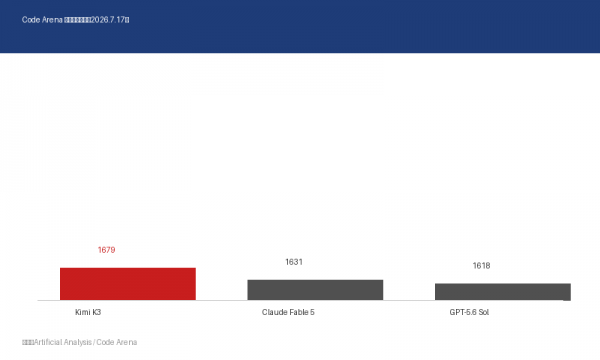
Source: Artificial Analysis / Code Arena
The market was stunned. Within 72 hours of K3's release, the U.S. AI sector lost approximately $470 billion in market value, while the Philadelphia Semiconductor Index plummeted 12.5% in a week, sliding into a technical bear market. The Hong Kong market also saw bloodshed—Zhipu (02513.HK) plunged 28.49% in a single day, and MiniMax fell 15.62%. Elon Musk posted just one word on X: “Impressive.” Kimi's official account responded bluntly: “Welcome to the 2 trillion+ club.”
The show had just begun.
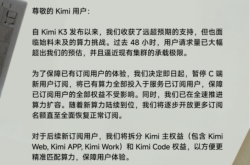
Three days later, in the dead of night on July 19, Moonshot AI announced a suspension of new user registrations—its computing power had been overwhelmed by the surge in demand from K3. On the same day, according to reports from the Science and Technology Innovation Board Daily and National Business Daily, the company sent an IPO proposal to investors, expecting to complete a Hong Kong listing within six months at the earliest. On July 21, co-founder Huang Zhenxin held a media briefing, comprehensively addressing K3 and commercialization plans for the first time.
Three events, crammed into five days. This was no coincidence.
K3 is Yang Zhilin's ace in the hole, the $300 million ARR is the company's confidence, and the rush to go public is because—on the path to proving that “Chinese large models can make money through APIs,” Kimi has succeeded, and an IPO is the only way to lock this story into the capital market.
Cumulative financing has exceeded 37 billion yuan (approximately $5 billion), backed by top-tier institutions including Sequoia China, Xiaohongshu, Alibaba, and Tencent. This capital gives Moonshot AI the confidence to develop K3 but also means—investor exit channels must open. No matter how much money is in the primary market, it must eventually flow back. Going public is not an option; it’s a necessity.
01
What makes K3 strong? Pricing power matters more than parameters
Let’s talk about parameters first. 2.8 trillion—the world's largest open-source model—is a striking number in itself.
But what Moonshot AI really wants to say isn’t just “we’re big.” K3’s architectural combination is its trump card: KDA hybrid linear attention mechanism + attention residuals, an 896-expert MoE architecture activating only 16 experts per inference. This combination is clearly aimed at minimizing costs through extreme sparsity while maintaining performance. The 1 million-token context window isn’t just for show—enterprise clients processing long documents, codebases, and financial reports desperately need it.
Programming prowess is K3’s scalpel. Topping Code Arena with 1,679 points, surpassing Fable 5 and GPT-5.6 Sol, and securing six first-place finishes across seven categories isn’t just about bragging rights. OpenAI’s strategic head, Dean W. Ball, put it pointedly: “K3’s performance cannot be achieved through distillation.” The subtext: This wasn’t copied; it was built from scratch.
But K3’s greatest strength isn’t its benchmark scores—it’s pricing.
$3 per million tokens for input, $15 per million tokens for output—identical to Anthropic’s Sonnet 5. Kimi is no longer competing on “cost-effectiveness”; it’s claiming “pricing power.” What does this mean? It means K3’s cost structure supports this price, and the market accepts it.
Moonshot AI calculated in its technical documentation: K3’s API costs are less than one-third of comparable U.S. models. Daring to match Sonnet 5’s price implies healthy gross margins. This isn’t a price war; it’s a profit war.
Of course, K3 isn’t without weaknesses. On Artificial Analysis’s Composite Intelligence Index, K3 scores 57, ranking third globally behind Fable 5 (60) and GPT-5.6 Sol (59). In general reasoning and multimodal understanding, K3 still lags. Huang Zhenxin didn’t shy away from this at the July 21 briefing: “We’re strong in programming, but general capabilities are still catching up.” This honesty is itself a form of confidence.
On July 27, K3’s full weights will be open-sourced. This will further amplify its ecosystem influence and exert greater pricing pressure on closed-source competitors.
02
Suspending new users: The sweet pain behind computing power “circuit breakers”
K3’s computing power was overwhelmed within 48 hours of launch. On the night of July 19, Moonshot AI made a counterintuitive decision: suspend new user registrations.
“We’d rather forgo new revenue than compromise the experience of paying customers,” Huang Zhenxin said. Slamming the brakes during peak commercialization is rare in the large model industry. Most companies would scale up capacity, add servers, or even sacrifice service quality to sustain growth. Moonshot AI did the opposite.
This decision sends two signals.
The first is product philosophy. Huang repeatedly emphasized “values” at the briefing—prioritizing paying customers’ experience over free user growth. This sounds abstract, but in the large model industry, free C-side users are the easiest growth metric to inflate with marketing, while API-paying customers represent real revenue. Moonshot AI chose the latter, showing clarity about its core base.
The second is the reality of computing power constraints. A 300-person team managing a 2.8 trillion-parameter model while supporting API calls from over 200 countries is an extreme ratio globally. With overseas paying users growing 400% and API revenue up ~400%, demand outpaced supply capacity too sharply.
Suspending registrations acts as a “circuit breaker,” protecting paying customers from service quality fluctuations. But this sweet pain exposes a deeper question: If computing power remains a bottleneck, where is the ceiling for growth?
For large model companies, computing power isn’t a cost issue—it’s a strategic one. Training requires chips; inference requires even more. K3’s sparse architecture reduces some inference costs, but when user scales grow exponentially, those savings are quickly consumed. Moonshot AI must resolve this before going public; otherwise, quarterly financials won’t look pretty.
03
$300M ARR: The inflection point for Chinese large model commercialization
If K3 is the technical story, ARR is the commercial one. And the latter is what the capital market truly wants to hear.
Moonshot AI’s ARR growth curve is stunning even by global AI standards: surpassing $100 million in March 2026, $200 million in May, and $300 million by mid-June. Tripling in three months isn’t linear growth—it’s an inflection point. 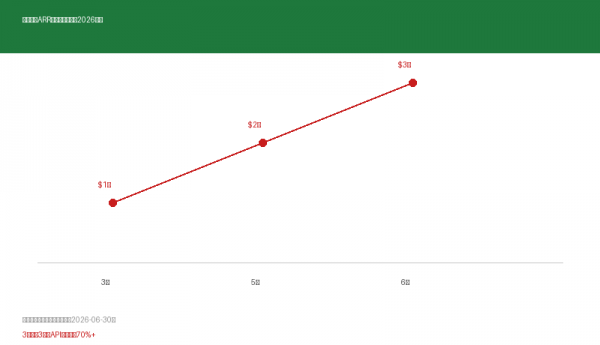
Source: Shanghai Securities News, Wall Street See (2026-06-30)
More critical is the structure. API revenue accounts for over 70%. What does this mean? It means Kimi isn’t relying on C-side burn-rate tactics to acquire users—enterprise clients are voting with their wallets. Developers, startups, and large corporations integrate Kimi’s API into their products and services, generating real usage and payment willingness.
Overseas data is even more noteworthy. Overseas paying users grew 400%, API revenue up ~400%, covering over 200 countries. Within 20 days of K2.5’s release, revenue exceeded all of 2025. Moonshot AI is transitioning from a Chinese company to a global one, driven not by marketing but by product—developers know if an API works.
This path mirrors Anthropic’s. Claude bet early on APIs and enterprise clients, holding back on C-side products. The result: Anthropic hit ~$1 billion ARR by late 2024, valued at ~$18 billion. Moonshot AI’s current ARR is about one-third of Anthropic’s at the same stage, but its valuation has reached $31.5 billion—1.75x Anthropic’s then-valuation.
The capital market is giving Moonshot AI a premium. The underlying logic: If Kimi can prove that an “API-first” approach works in China, it’s not just an Anthropic follower but a parallel leader.
K3’s pricing strategy reinforces this. Matching Sonnet 5’s prices signals Kimi’s target is global developers, not just China. It’s vying for Anthropic’s and OpenAI’s market, not engaging in price wars with domestic rivals.
The shift from “financing-driven” to “product-driven” is profound for a Chinese large model company. Previously, all Chinese AI startups essentially told the same story: “We can build China’s version of ChatGPT.” Now Kimi tells a different one: “We can build APIs global developers will pay for.” These stories have entirely different valuation models.
A telling detail: K3’s API pricing matches Sonnet 5’s, but its costs are less than one-third of Anthropic’s. This means Moonshot AI holds massive pricing flexibility—if competition intensifies, it can cut prices to gain share while maintaining healthy margins. If it holds prices, every additional API call boosts profits. This pricing power is the moat capital markets prize most.
04
Rushing to go public: Timing, valuation, and concerns
So why now?
Three windows opened simultaneously, and they may not align again. First is the ARR inflection point—$300 million ARR is a psychological threshold, signaling to capital markets that the business model is validated. Second is K3’s release—2.8 trillion parameters + Code Arena dominance give Moonshot AI its strongest technical narrative in a year. Third is competitor benchmarks—Zhipu listed on the Hong Kong Stock Exchange in January 2026, MiniMax followed, and Hong Kong’s 18C Chapter provides a fast track for tech companies, setting a precedent.
According to reports from the Science and Technology Innovation Board Daily and National Business Daily, Moonshot AI sent an IPO proposal to investors on July 19, expecting to complete a Hong Kong listing within six months. The company is dismantling its VIE and red-chip structures and has been in close communication with CICC, Goldman Sachs, and other underwriters. Moonshot AI declined to comment—standard pre-IPO silence.
The valuation curve offers another perspective: $4.3 billion in late 2025, $10 billion in February 2026, $20 billion in May, and $31.5 billion in July—a sixfold increase in six months. Capital is voting with its wallet, and the primary market has limited capacity. After $31.5 billion, who will fund the next round? Instead of spinning more stories in the primary market, it’s better to take the story public in Hong Kong.
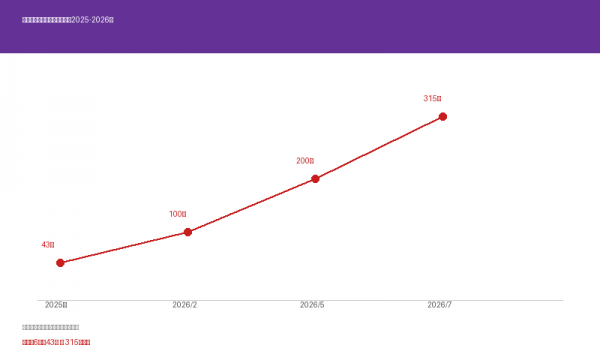
Source: Science and Technology Innovation Board Daily, National Business Daily
Hong Kong’s 18C Chapter is a tailored pathway. Introduced in 2023, it allows unprofitable tech companies to list with lower thresholds, specifically greenlighting “hard tech” firms. Zhipu has already navigated this path, and MiniMax followed. Moonshot AI doesn’t need to blaze a trail—just follow.
But what comes after listing? Several concerns loom.
A 300-person team. This size is lean for an AI startup, but facing post-IPO quarterly earnings pressure, compliance demands, and investor relations, is 300 enough? Anthropic had over 1,000 employees at the same stage; OpenAI has over 5,000. Moonshot AI achieved nearly half of Anthropic’s ARR with one-third the headcount—an efficiency advantage but also a management risk.
The computing power bottleneck is already constraining growth. Suspending new user registrations is a symptom; the root cause is supply lagging demand. Post-IPO, every quarter’s revenue growth will be scrutinized. If computing capacity expansion lags, the stock price will react immediately.
The double-edged sword of open-source. K3’s full weights going open-source benefits ecosystem expansion but challenges commercialization. If enterprises can download the model and deploy it in-house, why buy the API? Moonshot AI must balance “open ecosystem” and “commercial monetization” sustainably.
Another less flattering reference: Zhipu’s stock price plummeted from a high of HK$2,980 after its Hong Kong listing. Market enthusiasm for AI stocks is finite; if earnings miss expectations, valuations crash swiftly.
The competitive landscape is also shifting. Anthropic’s latest valuation is $965 billion; OpenAI targets $2–3 trillion—U.S. leaders have pushed the ceiling to trillion-dollar levels. Moonshot AI’s $31.5 billion valuation is a midpoint globally. To climb higher, it must prove it’s not just “China’s Anthropic” but has a differentiated path.
Listing in Hong Kong also introduces geopolitical variables. U.S.-China tensions create a valuation discount for Chinese tech stocks. Zhipu’s post-listing volatility largely reflected this discount. Choosing Hong Kong over the U.S. is a pragmatic concession to geopolitical pressure—18C Chapter offers speed but likely caps valuation below U.S. levels.
Conversely, if Kimi can build a global API revenue story within Hong Kong’s framework, it proves that Chinese large model companies don’t need the U.S. market for international capital recognition. That itself is a stronger narrative.
05
From 'In No Hurry' to 'When the Time Is Right'
Yang Zhilin's change in attitude is the most intriguing hidden thread in this story.
By the end of 2025, he was still saying, 'There's no hurry to go public.' Seven months later, in July 2026, the IPO proposal was already in investors' hands. What changed? It wasn't his attitude, but the facts on the ground—ARR surged from under 100 million to 300 million, K3 advanced from the lab to become the world's best, and valuation soared from 4.3 billion to 31.5 billion.
This founder, born in 1992, has a resume steeped in legend. Top of his undergraduate class at Tsinghua, earned a six-year PhD degree from CMU in four years, first author of Transformer-XL and XLNet, with over 22,000 paper citations, and co-authored papers with Turing Award winners Yoshua Bengio and Yann LeCun. In March 2023, he founded Kimi, and in just two and a half years, he brought the company to the brink of an IPO.
He once said, 'We share these precious processes of approaching the truth and believe this simple joy can carry us through the noise across cycles.'
Now, the cycle has arrived—just not the one he imagined. Capital cycles are shorter and more ruthless than technological ones. Venture capital can wait five years; public markets wait only a quarter. The urgency to go public after K3 wasn't because Yang Zhilin changed, but because he knew: the window wouldn't stay open forever. The 300 million ARR is the current figure; when the IPO happens in six months, the capital markets will be looking at the numbers six months into the future.
Going public isn't the finish line; it's the start of a new gamble. The 31.5 billion valuation from the capital markets is both a check and an IOU—every dollar must be repaid with growth.
Can Kimi continue this story after the IPO? The answer isn't in the prospectus; it's in the next quarterly financial report.
(Technical data sources for this article: Kimi official, Artificial Analysis, Caixin; Business data sources: Shanghai Securities News, Wall Street See, Sci-Tech Innovation Board Daily, National Business Daily; IPO information sources: Sci-Tech Innovation Board Daily, Bloomberg.)
-
![]()
Half-Year Revenue Outstrips Last Year’s Total! Zhongrun Optics Forecasts 80.2% H1 Revenue Growth
-
![]()
Why Does AI Competition Start with Computing Power?
-
![]()
Apple AI Finally Makes Its Debut in China, Yet iPhone's 'AI Autonomy' Faces Uncertainty
-
![]()
Apple AI and QianWen Make Up Lessons: Alibaba Has Its Own 'Doubao Phone'
-
![]()
QianWen Joins Apple, Signal for Large Models to ‘Fade into the Background’
-
![]()
The ‘Anchor’ Strategy of Google Hidden Behind the Bleeding Financial Report
-
![]()
DeepSeek v4’s Official Release is Still Pending, but Kimi k3 is Already Giving Open AI a Run for Its Money
-
![]()
Why is Kimi in a hurry to go public after K3?