Field Test of 'Doubao Work': Hiring a Diligent AI Worker for Just 68 Yuan
 08/26 2026
 477
477
Author | Hao Xin, Gao Xiaoyang
Editor | Hao Xin
On August 25, Doubao launched its new Agent office product, 'Doubao Work.'
As ByteDance's unified product and brand for AI office scenarios, Doubao Work features a new logo and an independent entry point. We noticed that Doubao Work's slogan is 'A New Work Habit: Let Doubao Do It First,' reminiscent of Feishu's previous tagline, 'Advanced Teams Use Feishu First.'
The new brand, Doubao Work, seems to distinguish itself from the original Doubao AI assistant. The new logo, resembling a Möbius strip, is also closer in design to Feishu. Doubao's reputation for providing 'emotional value' is deeply ingrained. To avoid repeating past mistakes, it is evident that Doubao Work emphasizes professionalism and office functionality in its overall tone.

Just the day before, ByteDance completed the integration of its office AI products: the TRAE and Coze teams were fully incorporated into the Doubao system, integrating their product capabilities with Doubao's offerings in work scenarios. TRAE IDE and CLI will continue to develop as programming product lines under the Doubao brand.
Doubao Work officials stated that it is deeply integrated with Feishu, allowing Agents to complete tasks more accurately based on enterprise context. It has launched both personal and enterprise versions. In addition to higher usage quotas, the paid version allows users to access the latest video and image models.
Sources close to major AI office players told us, 'When an AI product is launched, it has only one month to make an impact. If it doesn't act within that month, it will never get another chance.'
Three Moves in One Month: How ByteDance is Rebuilding Its Office Entry Point
From the results, both Google's integration of Gemini into its office suite, Google Workspace, and Microsoft's construction of a 'Office + AI' product matrix centered around Copilot have faced challenges.
Experts told us that to determine if a product is a true AI-native product, one must see if it still holds value when the AI features are removed.
In the past, adding or removing AI features to existing products in China followed this logic. However, the industry is gradually recognizing that the logic of true AI products should be that AI is the sole reason for their existence, and their value would diminish to zero without it.
Recently, the shift is evidenced by products like Workbuddy, Qianwen Office, Baidu Kuku AI, and Doubao Work. Their core approach is consistent: no longer treating AI as an optional 'plugin,' but as the foundation and sole entry point of the entire product.
The aforementioned expert stated that collaborative platforms like DingTalk and Feishu provide the 'context layer.' The key to AI's adoption in large enterprises lies in whether it can digest this intermediate layer.
ByteDance's first step in adjustment was precisely here. In late July, ByteDance completed the organizational restructuring that integrated the Feishu product team into Doubao. Feishu's positioning shifted from an independent office SaaS to a carrier for Doubao's enterprise-level AI office scenarios. With company knowledge precipitate (stored) in Feishu, Doubao Work can access meeting conclusions, summarize group chats, formulate plans, and generate weekly reports after integration.
The second step was to enhance execution and ecosystem capabilities. By integrating the TRAE team, Doubao strengthened its 'hands-on ability' for AI to operate computers and perform cross-software tasks. By integrating the Coze team, it gained 'ecosystem connectivity' with over 200 skills and connectors. Ultimately, it upgraded office capabilities from a mode within the Doubao App to an independent brand, 'Doubao Work,' competing with a unified AI-native entry point.
With three moves in one month, a strategic synergy was formed: Volcano Engine provides models, computing power, and data platforms; Feishu provides scenarios, context, and permission systems; and Doubao provides AI interaction and a unified entry point.
Based on digesting context, Doubao Work positions itself as an intelligent executor capable of autonomously breaking down tasks, invoking tools, and continuously advancing complex workflows.
Specific features include content generation and editing, supporting the creation of documents, spreadsheets, PPTs, images, videos, web pages, and even applications. Its 'point-and-edit' collaborative editing capability allows users to directly select and modify generated content without starting over. Cross-software operations and remote execution enable it to directly operate browsers and computers after authorization, completing tasks like data processing and information collection across software. For time-consuming tasks, it can invoke cloud computers for continuous execution, with users even able to remotely view and control progress via their phones. Multi-Agent collaboration allows users to invoke over 200 skills and connectors or form a 'work team' composed of multiple specialized Agents for division of labor.
Shortly after Doubao Work's launch, Guangzi Xingqiu conducted a firsthand evaluation. Overall, Doubao Work's responses were pragmatic, achieving visibility, controllability, and reversibility. When a product meets all three elements simultaneously, 'delegating work to AI' can transition from a slogan to an executable option.
From Understanding Cloud Disks to Point-and-Edit
Based on the functional demonstrations provided by Doubao Work, we designed five rounds of differentiated tests against similar products like WorkBuddy and Qianwen Office.
The first test was cloud disk interoperability. We asked Doubao Work to read all articles from the cloud disk over the past three months, analyze writing themes and styles, and create a creative portfolio webpage.
It read all 116 articles without missing any. Each article's generated card included a title, a one-sentence summary, and theme tags. After spot-checking, we found zero instances where the summaries and tags Clearly not matching (clearly did not match) the original text.
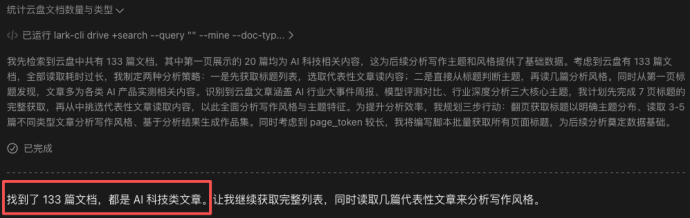
The finished webpage was satisfactory, with a conservative design style that avoided the stereotypical 'AI template' look. The responsive adaptation was well-done, with normal layout, links, and interactions when opened in a local browser.

This test verified the official claim of 'deep integration between Doubao Work and Feishu.' The entire chain from cloud disk reading to webpage generation was smooth, and content understanding did not fail. For content creators, this is a directly usable scenario where accumulated article materials can be transformed into a shareable portfolio page with a single statement.
The second test was 'point-and-edit.' We used the portfolio webpage generated in the first test as the editing object, asking it to change the author introduction on the homepage to specified copy, replace the tags on the third article card with 'In-Depth Field Test,' and keep other content unchanged.
Currently, most AI tools for PPTs and documents regenerate the entire document during editing. If a user wants to change one sentence, the AI rewrites the whole document, potentially altering satisfactory parts.
However, Doubao Work operates differently. As soon as the cursor moves over a page element, it automatically prompts the element's type, and only the selected element is modified, down to specific HTML tags.
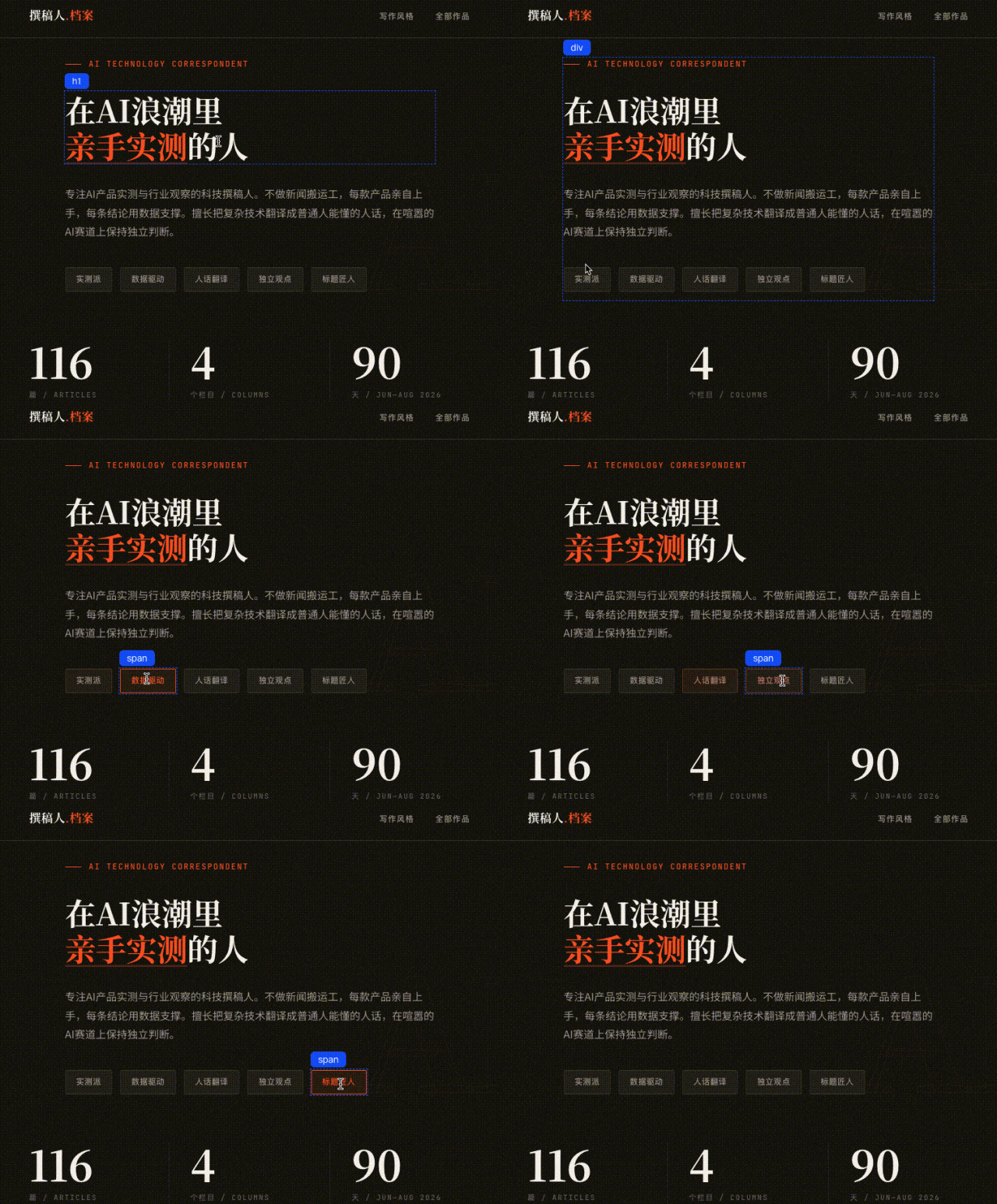
The final result fully met our expectations. The two specified changes were made as requested, and no unintended modifications were found in the unselected areas after screen-by-screen comparison. The re-edited webpage opened normally, with the layout still intact.
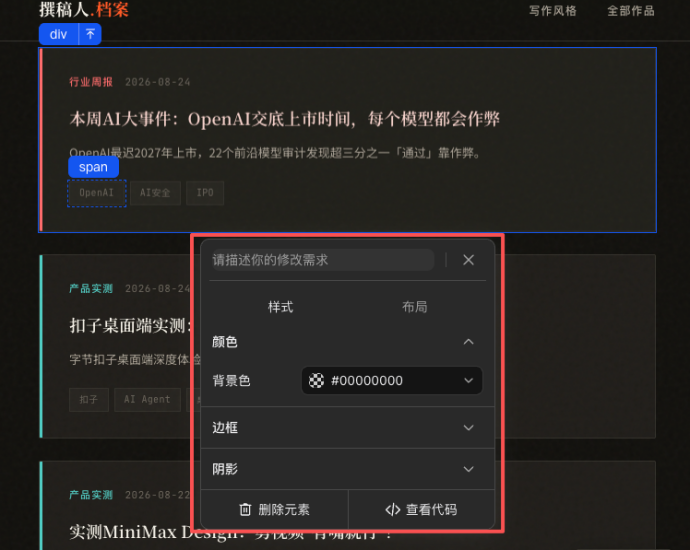
For those with front-end development or website operation experience, the value of this capability needs no explanation. The biggest cost of AI-generated content lies not in generation but in starting over from scratch each time. Doubao Work's element-level precise editing makes 'generate once and refine repeatedly' possible, earning the highest praise among the five tests.
It Operates Your Computer, With or Without You
The third test was virtual desktop. We asked it to open the web version of Ctrip, search for second-class high-speed rail seats from Beijing to Shanghai on September 5, compile train numbers, durations, and ticket prices into an Excel sheet between 9 AM and 12 PM, and save it to the desktop.
The entire process was completed in an independent browser launched within the app. During task execution, we simultaneously used the local browser and other software without any interference. This was entirely different from Manus's cloud virtual machine experience, where the task occurred on the computer in front of you without affecting normal use.
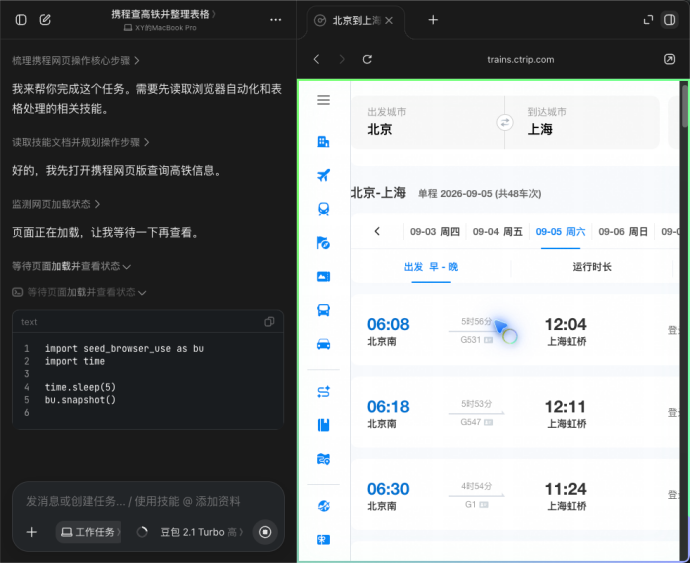
In the final delivered Excel sheet, train numbers, durations, and ticket prices matched the actual data on the Ctrip page without errors or omissions.
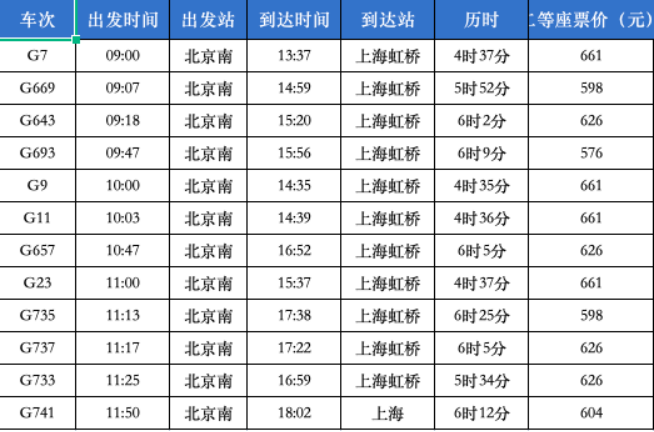
Full visibility and Take over at any time ( Can be taken over at any time , immediate takeover capability) address the core mental barrier of Agent products: trust. Whether you dare to let it operate your computer depends on whether you can see what it's doing and immediately take over if issues arise. Doubao Work performed well on both counts.
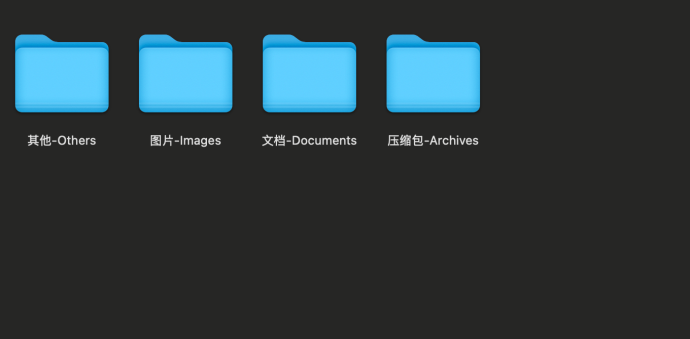
The fourth test was mobile remote task assignment. With the computer locked and set aside, we sent an instruction via the Doubao App on our phone to categorize files in the downloads folder into images, documents, and compressed packages, and provide a list afterward.
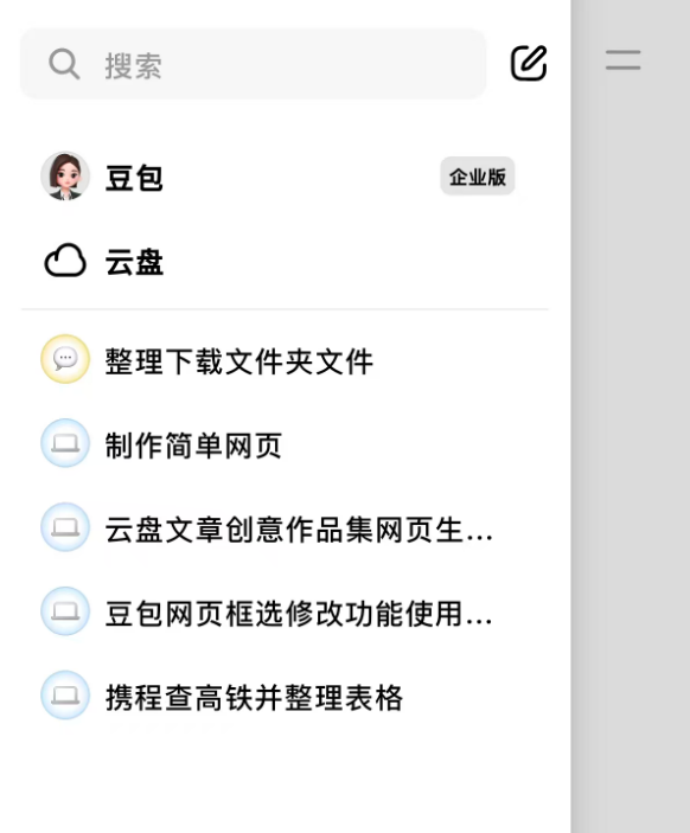
The locked state did not affect execution, and the task completed as usual. Upon returning to the computer, we found zero file categorization errors, and the list was synchronously pushed back.
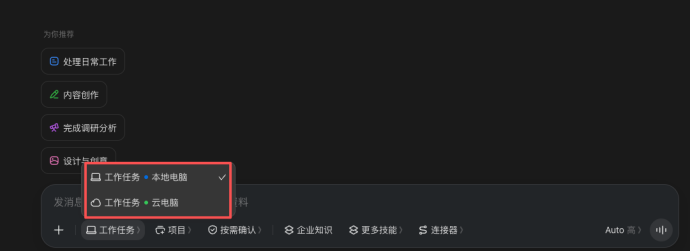
To our surprise, we discovered an additional advantage during this test: the 'cloud computer' feature in Doubao Work is more practical than remotely controlling a computer via phone. When faced with tasks requiring continuous operation but inconvenient to perform on a computer, they can be directly assigned to the cloud computer. Mobile remote access serves more as an emergency entry point, while the cloud computer is the true solution for 'work continues when you're away.'
The fifth test was work partners. Currently, Doubao Work's Partner Market offers 13 types of professional Agents. We selected three suitable partners to form a work team and issued a complete request: 'Research the dynamics of mainstream AI office tools over the past month, organize evaluation dimensions, and finally output a public account topic outline.'
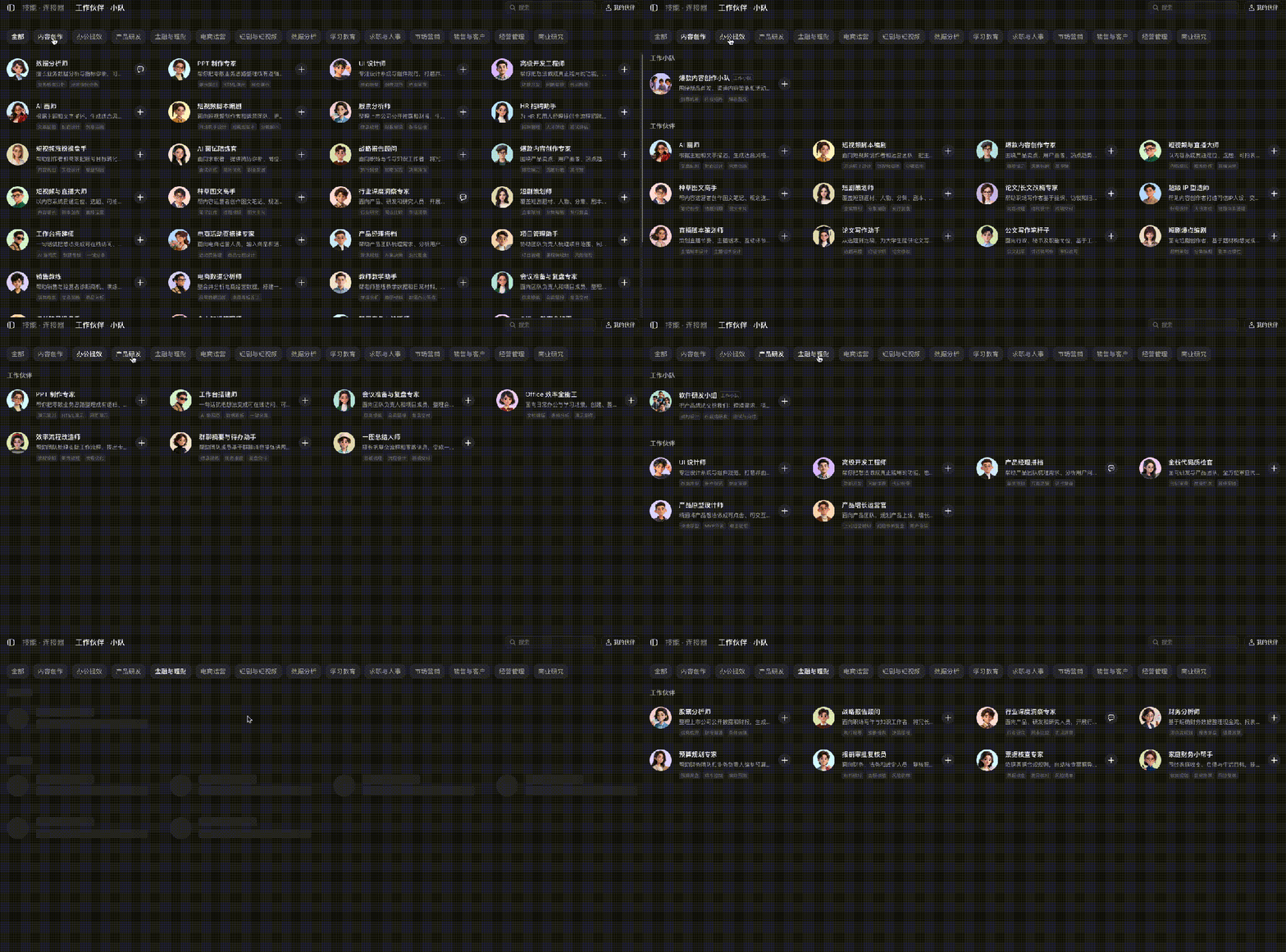
After receiving the request, the team leader first analyzed the task, then assigned subtasks to team members. The handoff process between roles was fully visible in the interface, making it clear who was doing what.

We verified the final delivered topic outline item by item and found no fabricated content in the industry dynamics and cited links.
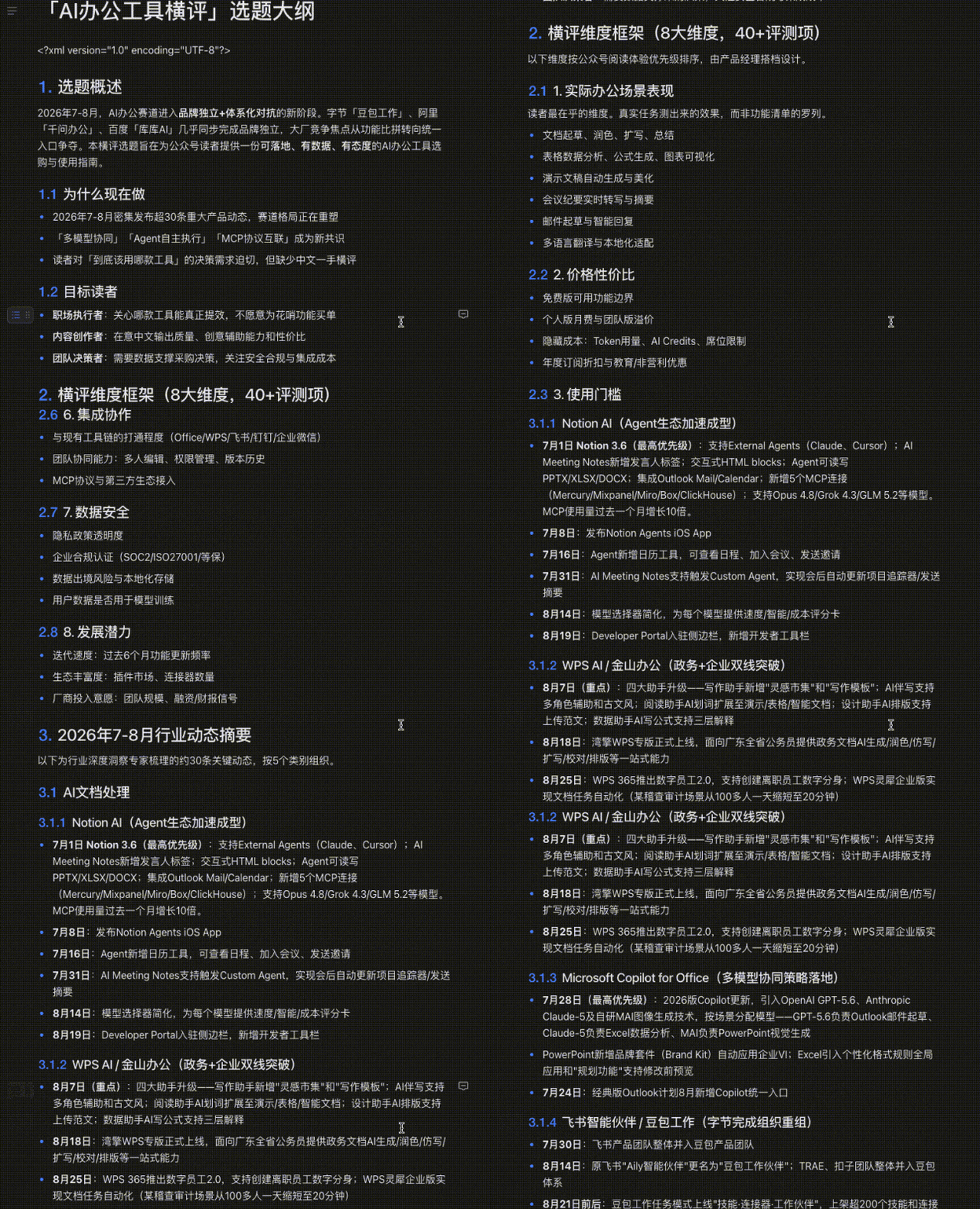
There were minor bugs, such as the three Agents in the team not being able to work simultaneously; one had to finish before the next could start. The purpose of multi-Agent teaming includes parallel efficiency improvements, but the current form resembles splitting one person's work into three sequential parts. While the value of division of labor is present, the efficiency gains are not fully realized, making this the only clear area for improvement among the five tests.
Competing for the Time Window
The statement 'you only have one month to act' is not an exaggeration but is determined by the particularity (particularity) of the AI office track (sector).
The essence of AI office tools is to change user habits. Once users become accustomed to the interaction style, context binding, and operational paths of a particular AI workstation, the cost of migration is extremely high. Therefore, the first product to get users and enterprises to entrust their actual work holds a significant first-mover advantage.
Take Doubao Work as an example. In our tests, it read and fully understood all 116 articles without any errors or omissions. It ensured virtual desktop isolation, full visibility, anytime takeover, and flawless data handling. For web editing, it achieved element-level precision, allowing targeted modifications without affecting other parts—a capability currently unmatched by similar products.
Meanwhile, AI-powered office tools operate in a resource-intensive field, requiring multi-faceted collaboration across models, computing power, scenarios, data, and channels. The time window is extremely short, demanding players to complete organizational, product, and brand integration within a very limited period. Both ByteDance and Alibaba made their adjustments within a month.
Some say, 'This is a victory for ecosystem gateways.' By this logic, users of DingTalk should switch to QianWen for office work, and users of Feishu should switch to Doubao Work. But reality clearly shows otherwise. Every major company holds more than one gateway—DingTalk, Feishu, and WeCom from the previous era, and Doubao, QianWen, and Yuanbao in the AI era.
Gateways only determine whether users are willing to click; whether they stay is another matter entirely—trust. The core obstacle to letting agents deeply integrate into users' real work environments has never been capability but the courage to do so.

-
![]()
The Dazzling Yet Impractical Internet-Famous Smart Driving Features
-
![]()
The Prequel of AI's Entry into Factories: Why Did the Previous Generation of Industrial Internet Platforms Falter?
-
![]()
Field Test of 'Doubao Work': Hiring a Diligent AI Worker for Just 68 Yuan
-
![]()
Why Did the Doubao Mobile Phone Face a Ban Shortly After Its Release?
-
[In-Depth] Breaking Overseas Technological Monopoly: Horizontally Opposed Engine Ushers in Era of Independent Chinese Mass Production
-
![]()
Mercedes-Benz GLE Now Boasts a 'Full-Power' Six-Cylinder Engine! Netizens Wonder: What Took Them So Long?
-
![]()
Global and Chinese Market Research Report on Autonomous Logistics Delivery Vehicles
-
![]()
Qianwen App Faces Financial Struggles Amidst Competition with Qianwen Office—Wu Jia Under Increasing Pressure