The Dazzling Yet Impractical Internet-Famous Smart Driving Features
 08/26 2026
 405
405
In recent years, new energy vehicle companies have fiercely competed around in-car scenarios, leveraging unconventional functional innovations as key selling points. The utilization of in-car space has been greatly expanded, as if the more novel the function, the closer it aligns with the vision of future travel.
However, the automotive industry has recently witnessed a surge of regulatory measures concerning smart driving features.
In early July this year, the Ministry of Industry and Information Technology introduced new requirements for new vehicle model approvals. Passenger vehicles originally equipped with external blue driving assistance indicator lights will no longer pass product approval reviews. Simultaneously, mandatory safety regulations for zero-gravity seats have entered a public consultation phase, imposing strict limitations on the adjustable angles and usage postures of seats while the vehicle is in motion. Furthermore, a new national standard for single-pedal mode has been officially issued, stipulating that starting in 2027, vehicles must not come to a complete stop solely through energy recovery when the driver releases the accelerator pedal in default driving modes.
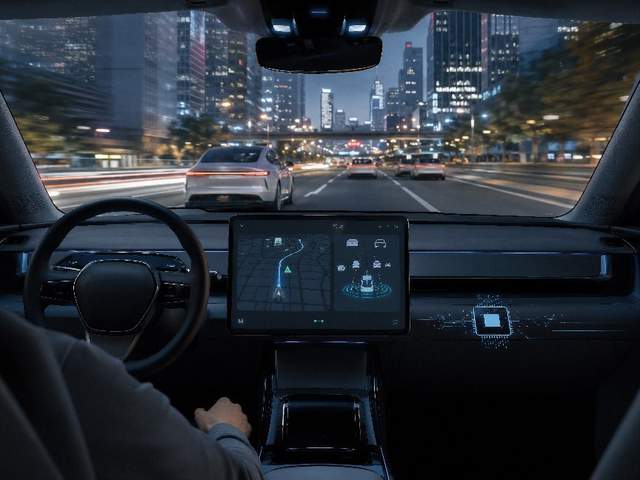
From those little blue lights and zero-gravity seats to eye-catching in-car showers and concept cars without B-pillars, regulatory authorities are progressively addressing these once-glamorous 'internet-famous features.'
How many of these innovations, which have been elevated to almost mythical status, truly enhance the driving experience? Why are automakers focusing on these flashy features instead of core capabilities like intelligent driving algorithms and three-electric systems?
The Carnival of Internet-Famous Gimmicks
The story dates back a few years. Breakthroughs in core areas such as the three-electric systems, chassis tuning, and safety architectures are challenging, costly, and slow to yield results. In contrast, a cleverly conceived scenario-based feature, requiring minimal investment, can attract millions of views on short-video platforms.
Since mechanical qualities couldn't compete, the focus shifted to creating a sense of intelligence, technology, and imagination—exploring how many tricks could be performed inside the car. Consequently, whether one could cook hotpot, play mahjong, or enjoy a spa during traffic jams became central highlights of product launches.
An arms race around features quietly deviated from its intended course. The issue is that many of these features have little to do with intelligent driving and can even pose safety risks.
Take in-car showers, for example. A flagship SUV from a certain brand introduced a luxurious outdoor package that transforms the trunk into a simple shower stall, supplying water from a 10-liter tank with a heating module capable of raising water temperature to 45°C within 10 minutes. However, a standard showerhead outputs about 8 to 10 liters per minute, meaning this system can only support a one-minute rinse at best. Risks such as electrical safety during parking, scalding from hot water, and slipping on wet floors are often overlooked in promotional materials, which focus on terms like wild luxury and freedom.

The situation with in-car kitchens is similar. Some models offer integrated camping kitchens with sinks, induction cooktops, and cutting boards. But questions arise regarding wastewater disposal, ventilation for cooking smoke, securing items while driving, and maintaining hygiene—issues that remain unanswered during product launches.
Public opinion generally holds that such features are full of hype but severely lacking in practicality and durability, reducing them to useless designs detached from real life. Of course, if in-car kitchens and showers are merely 'useless,' some features directly cross safety red lines.
The B-pillar is a crucial component that withstands impacts exceeding 1.5 tons during side collisions, ensuring the integrity of the passenger cabin. Without a B-pillar, even with repeated reinforcement using ultra-high-strength steel at significant costs, achieving traditional safety standards becomes difficult.
Yet in recent years, B-pillar-free suicide doors have become synonymous with high-end and futuristic designs. A luxury brand's flagship SUV released in August 2026 made global headlines with its first-ever B-pillar-free suicide door design, paired with front seats that rotate 180 degrees to create a mobile living room. The automaker claims safety compliance through a high-strength steel crossbeam, but engineering circles remain skeptical. Suicide doors are difficult to open simultaneously in tight parking spaces, making it impractical to sacrifice all-weather side impact protection for elegant entry and exit a few times a year.

Even more laughable are specially designed cutlery storage slots in vehicles. In a metal shell moving at 100 km/h, reserving space for sharp metal utensils risks severe safety hazards during sudden braking or collisions, as these items could become dangerous projectiles.
This brings us to intelligent driving features already targeted by regulators.
The little blue light—a blue indicator installed on rooftops, rearview mirrors, or rear ends—was originally meant to signal 'this vehicle is using driving assistance' but quickly became a status symbol. Inconsistent brightness levels easily distract drivers.
Similar to the little blue light, zero-gravity seats recline at steep angles, claiming to simulate spaceflight postures. However, when seats recline beyond 120 degrees, shoulder belts slip off, and lap belts may shift to the abdomen, causing internal injuries during collisions. Single-pedal mode, where releasing the accelerator equals braking, leads to abrupt deceleration when drivers instinctively lift their foot in emergencies, potentially causing rear-end collisions.
None of these features represent genuine intelligent driving technology but rather peripheral innovations around the concept of intelligence. Eating hotpot in cars, raising fish in front trunks, removing B-pillars—promotions of scenario-based features for intelligent driving vehicles have become increasingly absurd.
But are all intelligent driving features unworthy? Are there any standout options?
The Hard Currency of Intelligent Driving Features
Stripping away the gimmicks, truly worthwhile intelligent features are neither flashy nor extravagant. They don't pursue visual impact for short videos but silently reduce driver burden during every commute, parking maneuver, and nighttime drive.
Judging whether a feature is truly useful is simple: Do you use it daily? Does it make things more convenient and safer?
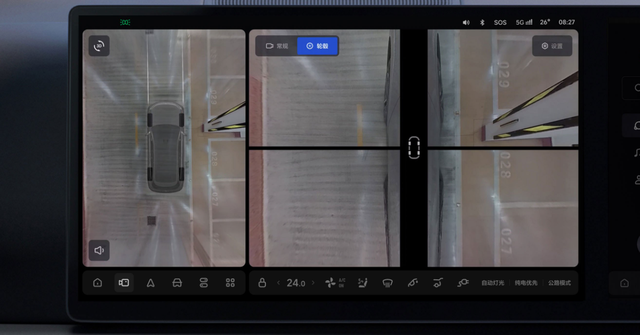
360-degree panoramic imaging with a transparent chassis is one such feature. It stitches together footage from multiple cameras around the vehicle to provide a bird's-eye view, allowing drivers to see obstacles around the vehicle and road conditions beneath the chassis on the central display. For wide-bodied SUVs and MPVs, this reduces scrapes and bottoming out during narrow road encounters, roadside parking, and traversing potholes.
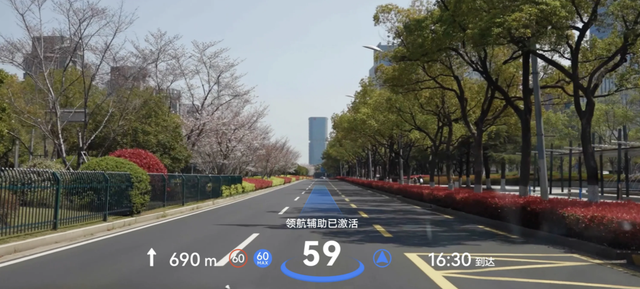
Equally underestimated is HUD (Head-Up Display) technology. It projects critical information like speed, navigation, and driving assistance status onto the windshield, allowing drivers to access data without taking their eyes off the road. During highway cruising, there's no need to frequently glance at the dashboard; at complex intersections, navigation arrows appear directly in the line of sight. A good HUD can also display lane markings, following distance, and lane change alerts.
Beyond visual safety, streamed media rearview mirrors and DMS (Driver Monitoring Systems) address observational limitations and human risks, respectively.
Traditional rearview mirrors often have restricted views due to rear headrests, passenger heads, and rear window fog or rain. Streamed media rearview mirrors transmit real-time footage from a high-definition rear camera, offering wider, unobstructed views with far superior clarity in rain or at night compared to traditional mirrors. DMS monitors the driver's facial state through a camera above the steering wheel, detecting dangerous behaviors like fatigue, distraction, or eye closure and issuing timely alerts. With driving assistance becoming increasingly prevalent, drivers may develop overreliance, making DMS the last line of defense.
If the above features focus on driving safety, then Vehicle-to-Load (V2L) external power discharge expands the boundaries of vehicle usage with practical applications. It converts the vehicle battery's electrical energy into 220V AC power, supplying devices like induction cooktops, projectors, and power drills outdoors. Unlike the approach of cramming a kitchen into the car, V2L serves as an open platform.
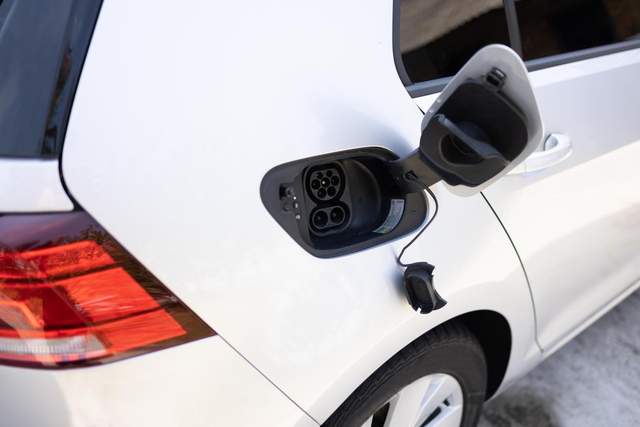
Users can connect devices based on their needs rather than being confined to preset sinks and cutting boards by automakers. Applications range from camping hotpot cooking and emergency power supply during outages to connecting power tools at construction sites. V2L's usage scenarios are far more diverse than in-car kitchens, with lower costs, no space consumption, and no hygiene concerns. This approach of providing capabilities rather than defining scenarios represents what true intelligence should be.
Examining these practical features that genuinely enhance driving scenarios reveals that the core of automotive intelligence should always be serving users, simplifying vehicle usage, and improving experiences. However, the current intelligent feature landscape is rife with chaos, as countless flashy, redundant internet-famous features flood the market, creating a stark contrast with pragmatic core features. This polarized state has prompted both industry and consumers to reflect: Once marketing filters are removed, where should intelligent driving features head?
Where Should Intelligent Driving Features Go?
Public debate over internet-famous features reflects, on the surface, consumers' aesthetic preferences between practicality and flashiness. Deeper down, it reveals phase-specific confusion in China's automotive industry during its electric and intelligent transformation. The electrification wave has completely disrupted traditional automotive industry technical barriers, swiftly erasing century-old mechanical core advantages like engines and transmissions. The entry of internet thinking has further reconstructed automotive product definitions and competitive logic, pushing all automakers onto a competition track with entirely new rules and unfamiliar terrain.
Traditional mechanical qualities are no longer the sole competitive dimension, but what is the new one?
Many automakers answer: features. They use as many novel features as possible to create differentiation, attract attention, and prove themselves 'more intelligent.'
The flaw in this approach is equating intelligence with feature quantity. However, true intelligence isn't about stacking functions but elevating experiences. A vehicle infotainment system that understands user intent and proactively provides services is far more intelligent than ten flashy scenario-based features. A driving assistance system that operates stably in complex conditions is far more convincing than a flashing little blue light. When automakers invest energy and resources into attention-grabbing features, they neglect the core experiences that truly require refinement.
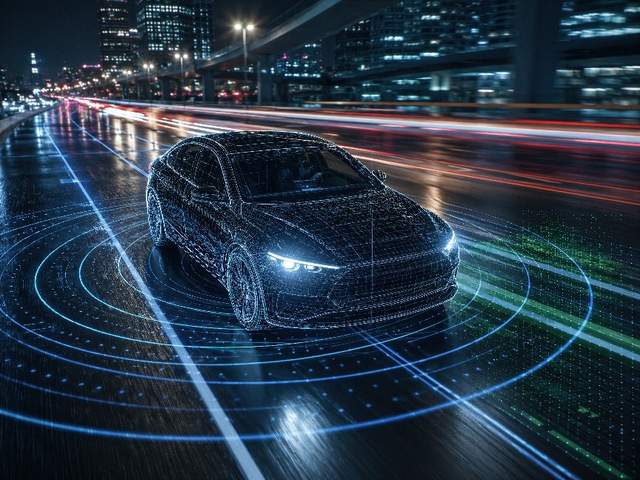
First, what is the essence of an automobile? A car is primarily a transportation tool, with safety and efficiency as its first principles. When feature pile-ups begin eroding driving safety and diverting resources from core R&D, innovation crosses boundaries. Today's automakers piling on internet-famous features resemble early smartphone makers piling on camera megapixels—parameters look better, but experiences don't improve fundamentally.
Second, who pays for these features? R&D and manufacturing costs ultimately pass onto vehicle prices, yet consumers spend real money on features like infrequently used showers and banned little blue lights. Moreover, each added feature increases vehicle weight and reduces range.
Third, has marketing logic hijacked product logic? In the era of traffic, a trending feature drives short-term sales more effectively than quiet technical improvements. 'Can it go viral?' replaces 'Is it useful?' as the primary criterion for feature decisions. This inversion of priorities is the root cause of the chaos.
Regulatory actions throughout 2026 signify the industry's transition from wild growth to standardized development. The ban on little blue lights, mandatory norms for zero-gravity seats, constraints on single-pedal mode, and approval of mandatory national standards for L3 autonomous driving—these policy measures collectively indicate that innovation cannot come at the expense of safety, and feature designs must not breach regulatory bottom lines.
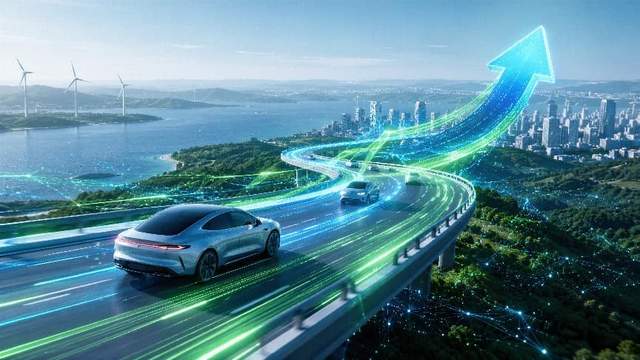
Looking ahead, intelligent driving features will likely exhibit three trends.
The first notable change is the transition from comparing vehicle configurations to comparing user experiences. Consumers are becoming increasingly discerning, as evidenced by McKinsey reports indicating a substantial downward revision in industry expectations for the widespread adoption of autonomous driving. Rather than being swayed by grandiose promises, users now prioritize real-world functionality: Does the system enhance the daily commute? Does it perform reliably in adverse weather conditions or at night? Practical experiences that deliver immediate benefits and offer safety assurances will become the primary benchmarks for assessing intelligent driving capabilities.
The second trend is the shift from hardware accumulation to the refinement of internal capabilities. Visible specifications, such as the number of LiDAR sensors, screen dimensions, and seat adjustability, will eventually reach their limits. The true competitive edge will lie in algorithms, data processing, and computational power. Future advancements will likely involve leveraging large AI models as the foundation, prioritizing visual perception as the core, and achieving deep integration of multi-source information.
The third trend involves moving away from the pursuit of all-encompassing autonomous driving scenarios to focusing on in-depth development in specific contexts. Highway navigation has already reached a high level of maturity, and urban navigation is becoming increasingly common, yet fully autonomous driving in complex urban environments remains a distant goal. A pragmatic strategy involves perfecting well-established scenarios and ensuring breakthrough scenarios are dependable, rather than relying on broad claims about universal applicability to conceal deficiencies.
A truly excellent intelligent vehicle does not require extravagant features like showers in the trunk, aquariums in the front compartment, or a blue light to signify its intelligence. Instead, it should make drivers feel more at ease, passengers safer, and journeys smoother with every trip.
From this vantage point, the phasing out of gimmicky blue lights, restrictions on zero-gravity seats, and regulations on single-pedal driving modes—while sparking public debate—also serve as indirect confirmation of the industry's inevitable progression toward maturity. Each controversy surrounding these features represents the industry's retrospective self-correction. Their removal signals the industry's transition from the conceptual stage to a clearer differentiation between marketing hype and genuine practicality.
-
![]()
The Dazzling Yet Impractical Internet-Famous Smart Driving Features
-
![]()
The Prequel of AI's Entry into Factories: Why Did the Previous Generation of Industrial Internet Platforms Falter?
-
![]()
Field Test of 'Doubao Work': Hiring a Diligent AI Worker for Just 68 Yuan
-
![]()
Why Did the Doubao Mobile Phone Face a Ban Shortly After Its Release?
-
[In-Depth] Breaking Overseas Technological Monopoly: Horizontally Opposed Engine Ushers in Era of Independent Chinese Mass Production
-
![]()
Mercedes-Benz GLE Now Boasts a 'Full-Power' Six-Cylinder Engine! Netizens Wonder: What Took Them So Long?
-
![]()
Global and Chinese Market Research Report on Autonomous Logistics Delivery Vehicles
-
![]()
Qianwen App Faces Financial Struggles Amidst Competition with Qianwen Office—Wu Jia Under Increasing Pressure