Can Doubao Revolutionize Mobile Phones with AI?
 12/04 2025
 678
678
By: Leon
Edited by: Sun Congying cc
The speed at which leading internet companies are entering the AI terminal market is both faster and more aggressive than previously expected.
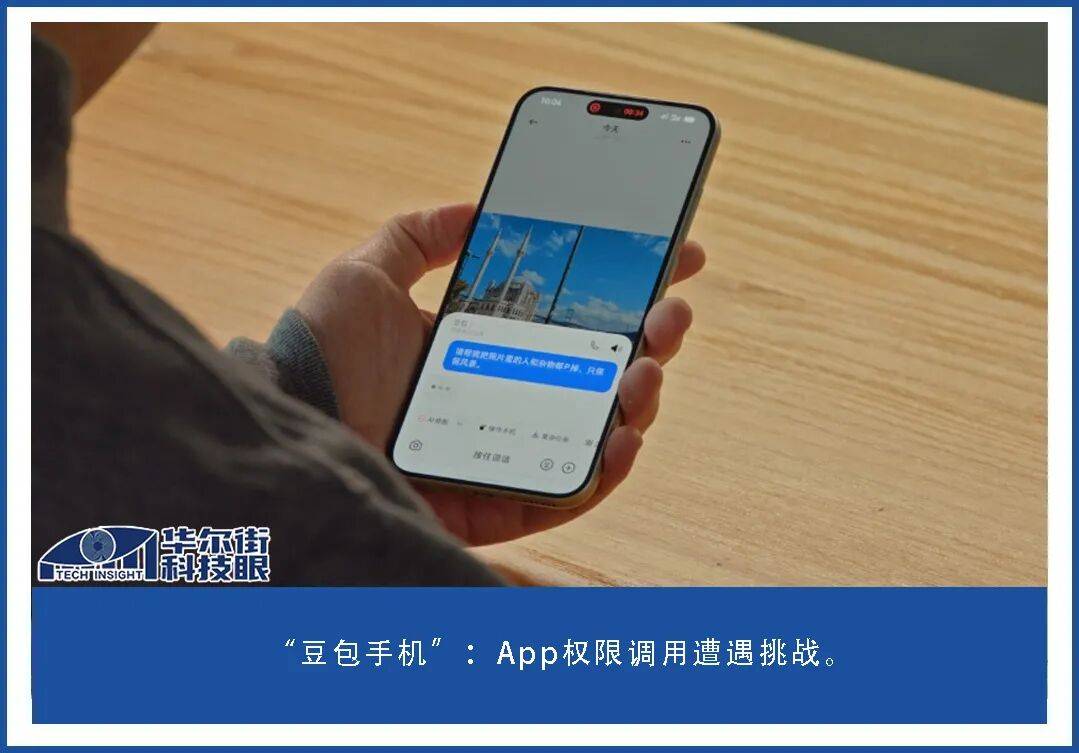
After Alibaba launched its Quark AI Glasses, ByteDance recently unveiled the 'Doubao Mobile Assistant Technical Preview,' with the first batch of engineering prototypes co-developed with ZTE. The Nubia M153 model, priced at 3,499 yuan, has already sold out on the official website. (Extended reading: Quark Glasses Launch: AI Glasses Finally Look Stylish!)
Following the announcement, ZTE's A-shares (000063.SZ) soared to their daily limit, while its Hong Kong shares rose by over 10%. Meanwhile, due to the limited availability of engineering prototypes, the device has seen price increases ranging from 700 to 1,500 yuan on second-hand trading platforms.
In an era where almost all smartphones are marketed as 'AI-enabled,' manufacturers typically adopt a technical approach that involves integrating large model APIs with self-developed edge models, offering AIGC applications such as AI photo editing and writing.
More aggressive players like Honor simulate clicks by utilizing Android's 'Accessibility Mode,' enabling AI to perform certain app operations on behalf of users, such as ordering coffee.
In contrast, ByteDance and ZTE have engaged in deep collaboration by integrating Doubao's large model and Agent into the operating system, enabling the 'takeover' of mobile phones and automated operations in specific scenarios. This 'leading large model + mobile hardware' binding model is a first in the market, drawing significant attention from both the industry and consumers.
AI Takes Deep Control of Mobile Phones
Mobile voice assistants first appeared in the early days of smartphones, with Apple's Siri being a prominent example, introduced as a new feature of the iPhone 4s in 2011. Given the nascent state of AI technology at the time, voice assistants were limited to simple tasks like checking the weather, setting alarms, or opening apps, failing to fundamentally transform the mobile experience.
With the advent of GPT in 2022, AIGC technology has gradually become widespread. Powered by multimodal large models, mobile assistants are transitioning from 'App' to 'Agent' forms, essentially capable of operating mobile phones and executing complex instructions on behalf of users. The Doubao Mobile Assistant is a product of this evolution.
In a demonstration video, staff showcased various ways to use the Doubao Mobile Assistant for 'taking over' the phone, such as fully automated shopping price comparisons, order placements, and payments. Except for sensitive steps like payment, which require manual user intervention, other operations can be achieved through GUI Agent (simulated clicks).
In the more advanced 'Pro Mode for Operating Mobile Phones,' Doubao can not only simulate clicks but also invoke multiple tools while supporting contextual memory. This reduces the frequency of user queries and significantly enhances fluency.
Staff demonstrated a highly complex operation: For a trip to Paris next month, mark Parisian restaurants saved on social media on a map, check which museum has an exhibition on the second day after arrival, book a 10 AM ticket on a travel platform, and organize relevant information into a memo.
During the task, the Doubao Mobile Assistant successively opened multiple apps, including Xiaohongshu, WeChat, Dianping, and Maps, reading relevant data and completing map annotations. Subsequently, by invoking the 'PersonalContext_Search' tool, it analyzed the user's preferred museum types, queried exhibition dates, and completed ticket bookings on the travel platform, all within 8 minutes and 4 seconds. User intervention was only required for confirming key information and payment details, with all other steps automated for convenience.
Additionally, some users who purchased the phone shared their experiences on social media, including autonomous photo editing, food delivery orders, and price comparison shopping, all of which the Doubao Mobile Assistant handled relatively smoothly. However, being in the testing phase, some tasks may take longer or require multiple user interventions, with expectations for continuous optimization through software updates.
Doubao stated that it would maintain an update frequency of approximately every two weeks (excluding holidays) from launch until the first quarter of 2026.
Login Anomalies on WeChat Within Three Days of Launch
Unlike traditional voice assistants, AI assistants require extensive reading and invocation of user and third-party app data to better understand contextual meanings, making data security and compliance crucial and often controversial.
On December 3, the third day after the Doubao Mobile Assistant's launch, some users experienced WeChat logouts. According to a report by Yicai Global, users received a message stating, 'Your WeChat login environment is abnormal. For account security, please change devices and log in again.' After attempting to switch WeChat accounts, the user encountered passive logouts again.
Furthermore, if users tried to operate WeChat via the Doubao Mobile Assistant, they would see a message stating, 'Doubao's mobile operation is a lab feature and does not currently support WeChat operations.'
A WeChat spokesperson responded, 'There has been no particular action taken; it might have triggered existing security risk control measures.' According to the Tencent WeChat Software License and Service Agreement, it explicitly prohibits 'logging in or using this software and services, or performing automated operations, or creating, publishing, or disseminating the aforementioned tools, methods, etc., through non-Tencent developed or authorized third-party software, plugins, cheats, or systems.' Violations may result in Tencent restricting account functions or even banning accounts.
After the incident escalated, the Doubao Mobile Assistant issued a statement on the evening of the 3rd, announcing that the banned WeChat accounts were being gradually unblocked. It emphasized that the Doubao Mobile Assistant does not engage in any hacking behavior, requiring user authorization to obtain the INJECT_EVENTS permission (an Android system-level permission), and that the cloud does not store any screen user content, nor does it enter the model training process.
Li Liang, Vice President of Douyin Group, commented on Weibo, 'I believe that as long as there is user consent, there is no privacy infringement. The Doubao Mobile Assistant can only complete mobile operation tasks with user authorization. All permission usages are clearly disclosed in the official privacy and security white paper, and there are no behaviors such as 'intrusion' or 'unauthorized access' as claimed in some rumors.'
Regarding whether the Doubao Mobile Assistant needs authorization from corresponding app operators when reading and processing relevant app data, and what norms and principles govern data collection and usage, ZTE had not responded to an interview request from Wall Street Tech Eye as of press time.
The 'Doubao Mobile Assistant White Paper' displayed on its official website introduces information security capabilities and technical measures in four chapters, committing to limited collection and reasonable use of cloud and edge-side data, and implementing security encryption, desensitization, isolation, and other protective measures for sensitive data. However, it does not explicitly list which third-party apps have granted specific authorizations.
This incident exposed the current dilemma AI assistants face in invoking third-party apps. Industry insiders pointed out that although regulations like the 'Network Data Security Management Regulations' provide norms for automated tools and AIGC-generated data, the numerous entities involved in AI mobile (assistant) data flows make it difficult to define responsibility at each stage. From the perspective of third-party app vendors, merely obtaining user authorization does not mean AI mobile (assistants) can manage their apps or invoke data, especially when it involves trade secrets.
On a positive note, the industry is actively promoting the establishment of relevant standards. On December 2, the Cloud Computing Standards and Open Source Promotion Committee, along with the China Academy of Information and Communications Technology, released the 'Dual Authorization Security Guidelines for End-Cloud Collaborative Agent Interaction,' explicitly stating that agents must obtain both application and user authorizations to legally access third-party applications.
AI Giants' Stepping Stone, New Opportunities for Mobile Phone Manufacturers
Although the Doubao Mobile Assistant is still in the technical preview stage, it has clearly garnered significant attention while increasing ZTE's mobile phone exposure, achieving a win-win situation. The collaboration was undoubtedly driven by ByteDance's and mobile phone manufacturers' respective market expansion aspirations.
For ByteDance, hardware represents a strategic gap. In recent years, through acquisitions of assets like Pico, Smartisan Mobile, and Oladance, ByteDance has gained hardware design capabilities for mobile phones, earphones, and VR headsets but has yet to form a product layout of 'flagship app + self-developed hardware.' With Doubao's monthly active users exceeding 150 million, AI-native applications have clearly become a breakthrough point.
At this stage, Doubao explicitly states 'no plans for self-developed mobile phones; discussions are underway with multiple vendors for Doubao Mobile Assistant collaborations.' However, another Doubao hardware product on its official website, the Ola Friend earphones, is self-developed under its acquired Oladance brand, indicating that ByteDance remains focused on the AI hardware market but adopts a relatively cautious development approach.
In fact, during the early days of smartphones, internet giants like Facebook, Alibaba, and Tencent ventured into custom OS (or UI) development, launching mobile hardware through collaborations with manufacturers. However, due to insufficient competitiveness, they failed to enter the mainstream market, exemplified by Alibaba Cloud Phone and HiQQ Phone.
The hardware aspirations of internet giants stem from the logic of 'software-hardware integration.' The late Apple founder Steve Jobs once said, 'Apple is a software company,' with its core competitiveness derived from the combination of self-developed OS and hardware. Products like the Mac and iPhone were born under this logic, bringing tremendous success to Apple.
If OS was the dominant force in the old era, then AI represents hope in the new era. Alibaba CEO Wu Yongming boldly predicted in a speech that large models will be the next-generation operating systems, and AI Cloud will be the next-generation computer. This explains why internet giants are flocking to the AI hardware market, whether through self-development or collaboration.
Additionally, amid the declining mobile phone market year after year, AI has emerged as a new growth driver, drawing attention from mobile phone manufacturers. Training large models requires heavy asset investment, which not all companies can afford. For second-tier brands like ZTE, collaborating with leading large model providers is undoubtedly the most cost-effective approach.
However, whether the 'Doubao Model' can become mainstream in the market remains to be seen. On one hand, major mobile phone players like Apple and Huawei are relatively cautious in collaborating with large model vendors and, under their proprietary OS product architectures, are unlikely to grant core permissions to third-party large models.
Regarding the Android camp, domestic mobile phone manufacturers maintain a relatively open attitude. According to current information, OPPO, Vivo, Honor, and other vendors do not have plans to integrate the Doubao Mobile Assistant but do not rule out future collaborations. Media reports cited an internal source from a mobile phone manufacturer stating that Doubao is expected to release a technical solution next month, with an internal wait-and-see attitude and no current collaboration plans but not excluding the possibility. 'It depends on the match between Doubao's solution and our intended AI functionalities,' the source emphasized.
-
![]()
Hardware is the skeleton, AI is the soul, and data integrates the two
-
![]()
China’s AI Industry: A Unified Pivot Towards Monetization?
-
![]()
New Progress! Infineon Completes Acquisition of ams OSRAM's Non-Optical Sensor Business
-
![]()
35 Million Bet on an Optical Future! Tengjing Technology Makes a Move in AR
-
![]()
Why World Models Get Stuck on Construction Roads in Autonomous Driving Applications
-
Alibaba Initiates Cultural Transformation: Is Jack Ma Making a Strategic Comeback?
-
Tianfeng Heads to Hong Kong for IPO with RMB 3.8 Billion in Funds: Xingyu's Cross-Border Foray into Embodied AI Faces Uncertain Future
-
![]()
Mengshi Auto’s High-End Aspirations Dashed: Huawei Partnership Fails to Revive Sales, New Model’s Entry Price Dips Below 300,000 Yuan