QLC has come a long way! Colorful YinXing P16 Pro Laptop Review: The Strongest Consumer-Grade QLC SSD Paired with a Cost-Effective Gaming Laptop
 01/30 2026
 740
740
I. Introduction: QLC Has Come a Long Way
When mainstream storage transitioned from MLC to TLC, it drew a wave of criticism from users. Today, even top-tier PCIe 5.0 SSDs utilize TLC flash memory, with no gamers questioning this choice.
With high-speed flash memory and high-performance controllers, TLC SSDs now surpass the performance and longevity of MLC SSDs from years past.
QLC SSDs have followed a similar trajectory!
In November 2025, YMTC unveiled its new PCIe 4.0 QLC consumer SSD—the PC42Q.
This marks the first QLC product featuring YMTC's Xtacking 4.0 architecture. With a flash interface speed of 3600MT/s, the PC42Q achieves performance comparable to high-end TLC SSDs.
Regarding durability, the PCIe 4.0 QLC 1TB model offers a write endurance of 300TBW, equivalent to that of a 512GB TLC SSD. When used as a system drive and writing 50GB daily, it can last 16 years!
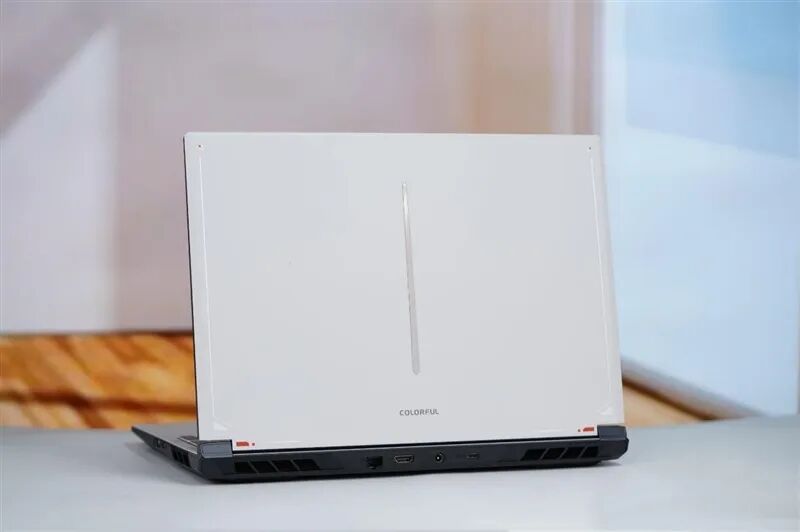
Recently, we received the Colorful YinXing P16 Pro laptop, which comes equipped with the YMTC PC42Q SSD. This provides an excellent opportunity to test the SSD's performance and temperature within a laptop.
In addition to the PC42Q, the YinXing P16 Pro laptop features a Core i7-14650HX processor, 16GB of DDR5 5600MHz memory, an RTX 5070 Laptop GPU, and a total system performance release of 150W.
II. Appearance and Disassembly of the Colorful YinXing P16 Pro
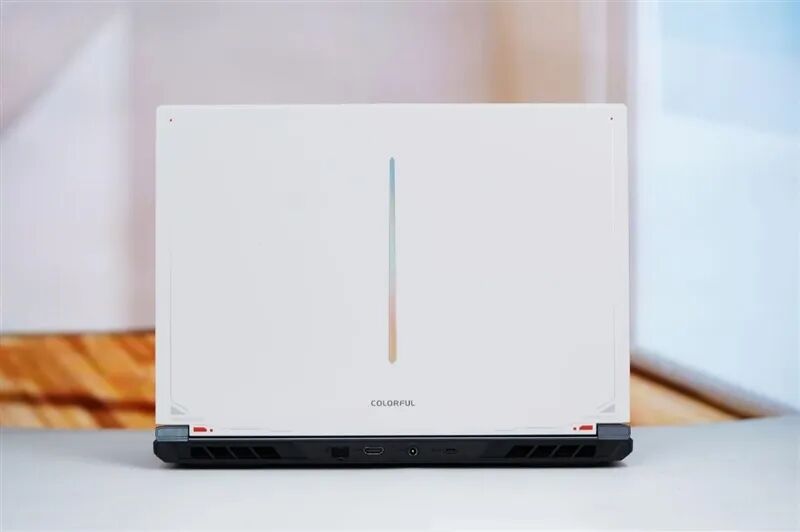
The YinXing P16 Pro adopts a futuristic sci-fi design, featuring a white matte finish on the front. A colorful coating runs along the central axis, reflecting different hues from various angles, reminiscent of RGB lighting.
The laptop measures 361*259*25.4mm and weighs 2.5kg, classifying it as a lightweight gaming laptop.
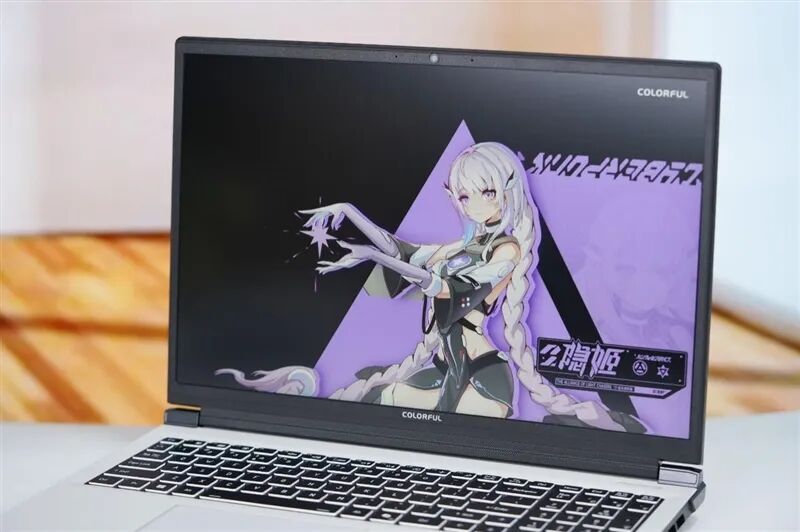
It sports a 16-inch IPS display with a 16:10 aspect ratio, a resolution of 2560*1600, a refresh rate of 180Hz, 100% sRGB color coverage, and a maximum brightness of 300nit.
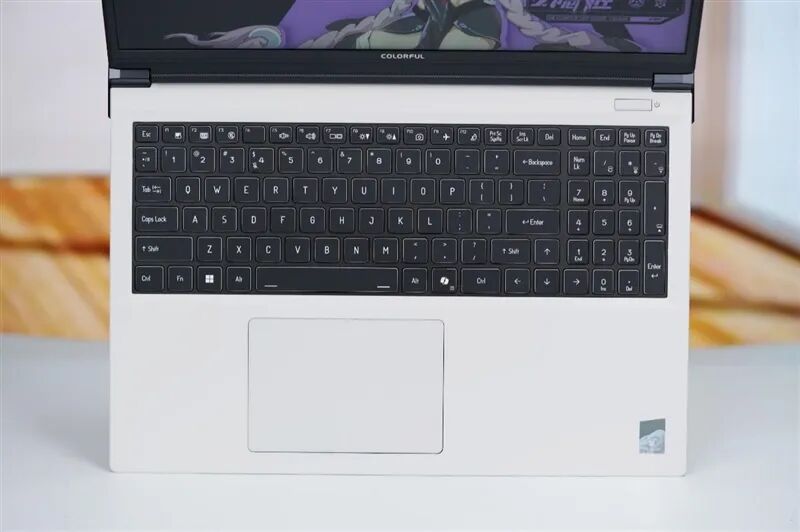
A full-size ARGB keyboard with a numeric keypad is included.
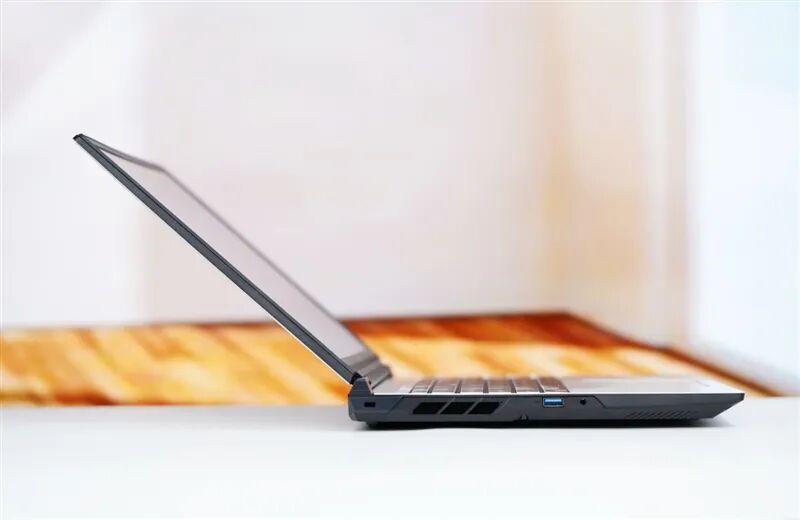
On the left side of the chassis, there is a 5Gbps USB 3.2 Gen1 port and a 3.5mm combo audio jack.
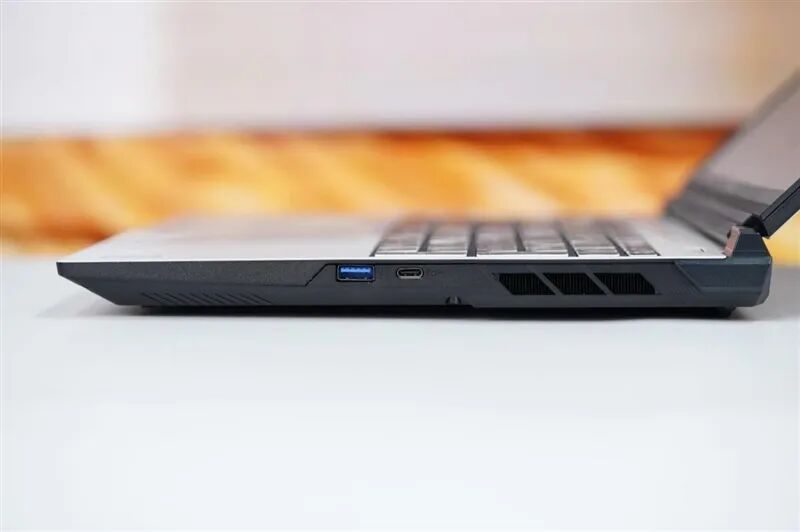
On the right side, there is a 10Gbps USB 3.2 Gen2 port and a Type-C port supporting PD fast charging and video output.
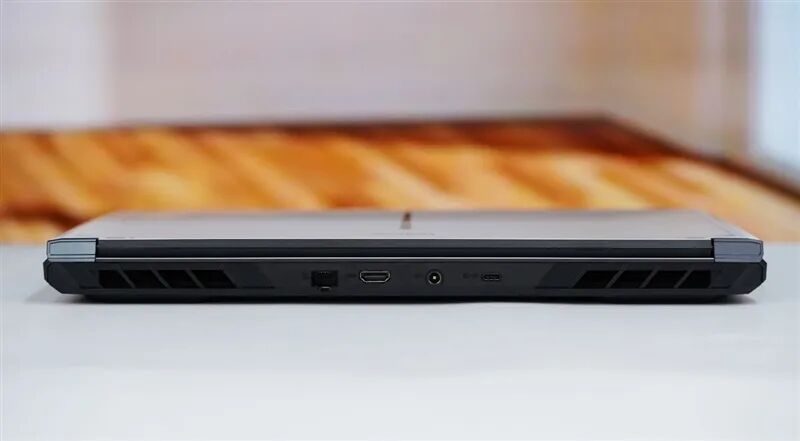
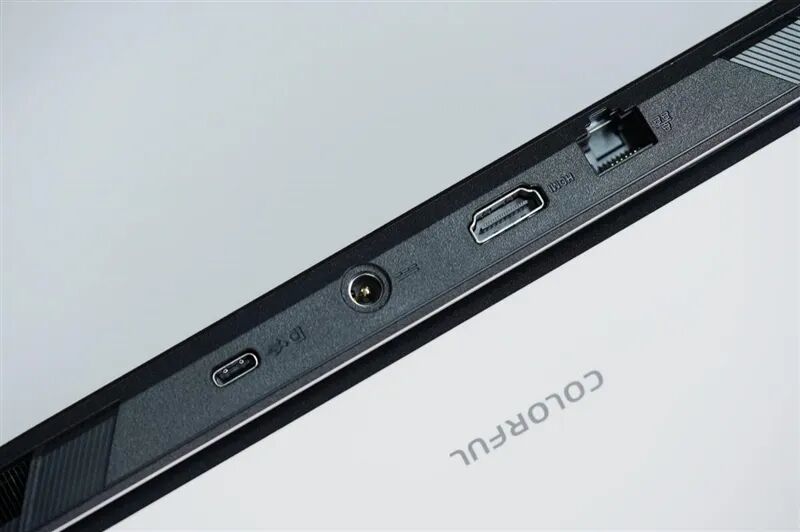
The main ports are located on the top of the chassis, featuring from left to right: 1x USB 3.2 Gen2 Type-C port, a power jack, 1x HDMI2.1 port, and a Gigabit Ethernet port.
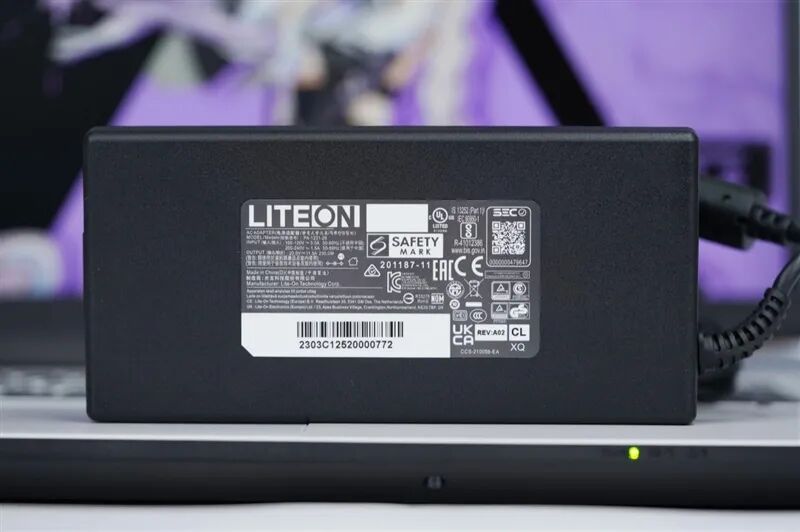
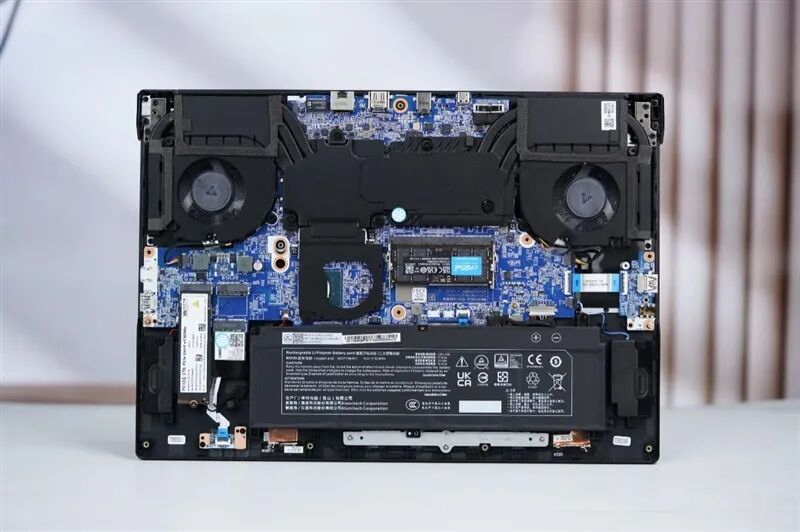
The cooling system consists of dual fans, three heat pipes, and four exhaust vents, capable of supporting a total system performance release of 150W.
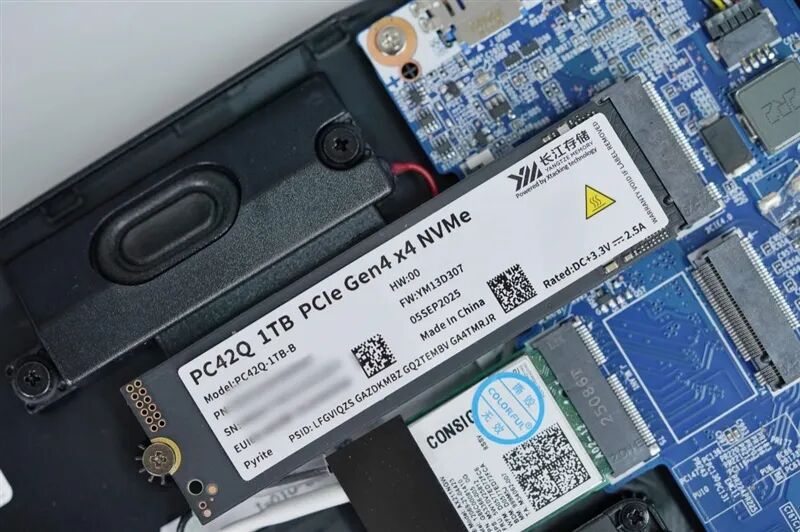
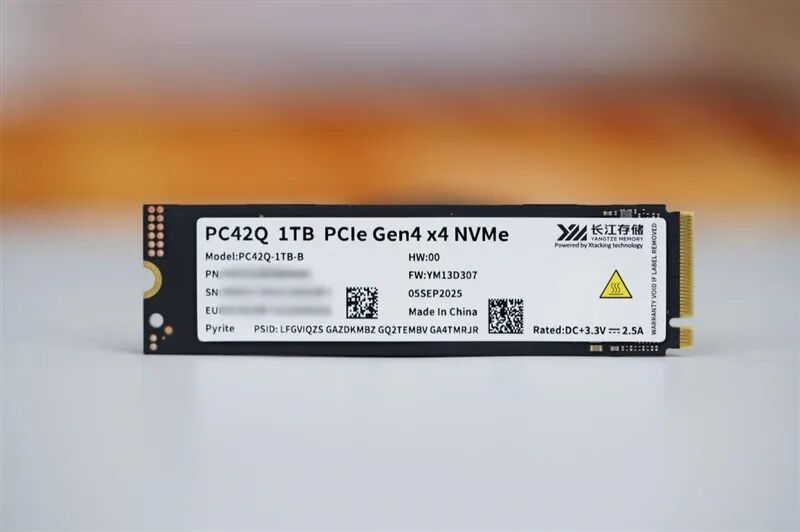
YMTC PC42Q 1TB SSD.
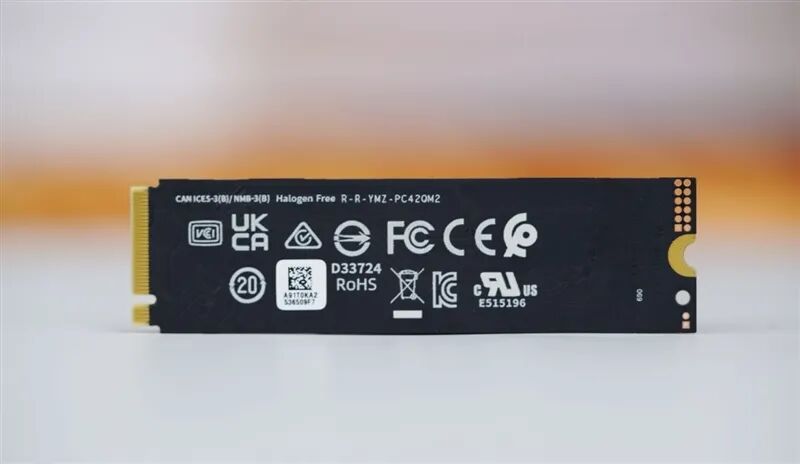
Back of the SSD.
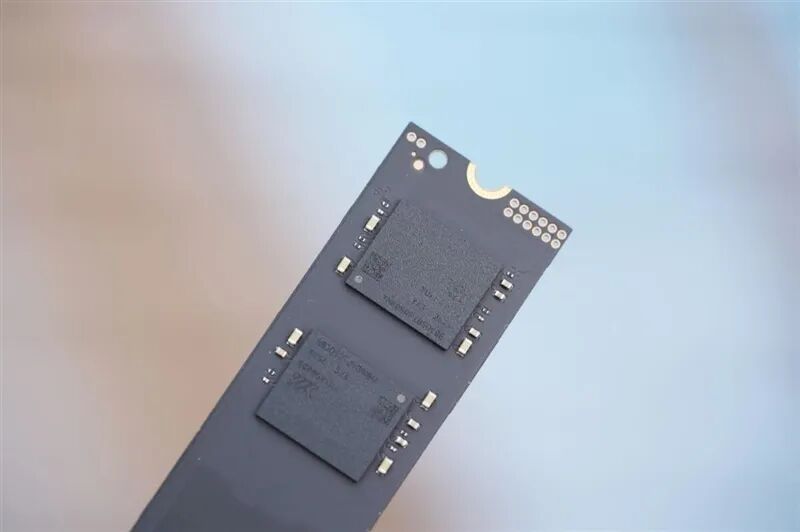
YMTC's original 3D QLC NAND, based on YMTC's Xtacking 4.0 architecture, boasts an I/O speed of 3.6GT/s.
III. YMTC PC42Q 1TB Testing: Sequential Read/Write Speeds Exceed 6600MB/s
1. CrystalDiskMark
CrystalDiskMark is currently one of the most commonly used SSD testing tools. It measures random read/write speeds, sequential read/write speeds, and tests random 512KB, 2KB, and 4KB read/write speeds to assess disk performance and quality.
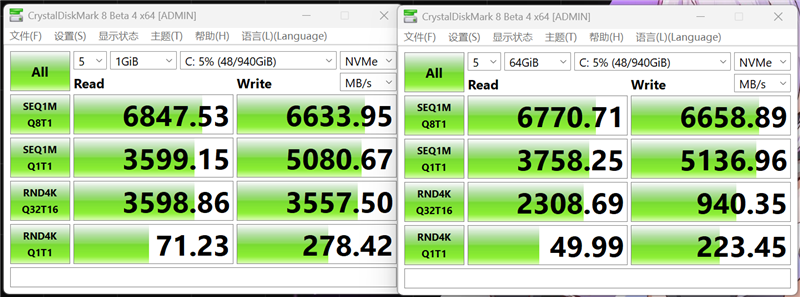
In CrystalDiskMark testing, the PC42Q 1TB achieved sequential read speeds of 6847MB/s and write speeds of 6633MB/s. Its 4K read/write speeds exceeded 71MB/s and 278MB/s, respectively.
For the 64GB test, sequential read speeds reached 6770MB/s, write speeds 6658MB/s, 4K random read speeds 49MB/s, and write speeds 223MB/s.
2. AS SSD Benchmark
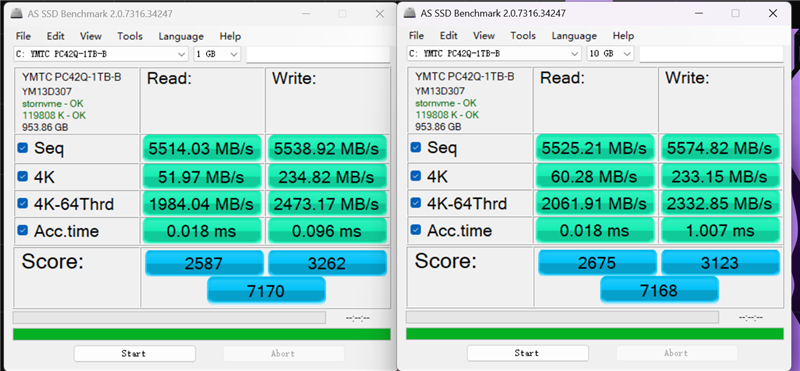
The 1GB capacity test in AS SSD Benchmark yielded a score of 7170 for the PC42Q 1TB. Sequential read/write speeds were 5514MB/s and 5538MB/s, respectively, while 4K read/write speeds were 51MB/s and 234MB/s.
The 10GB test results showed minimal variation from the 1GB test.
3. ATTO Disk Benchmark
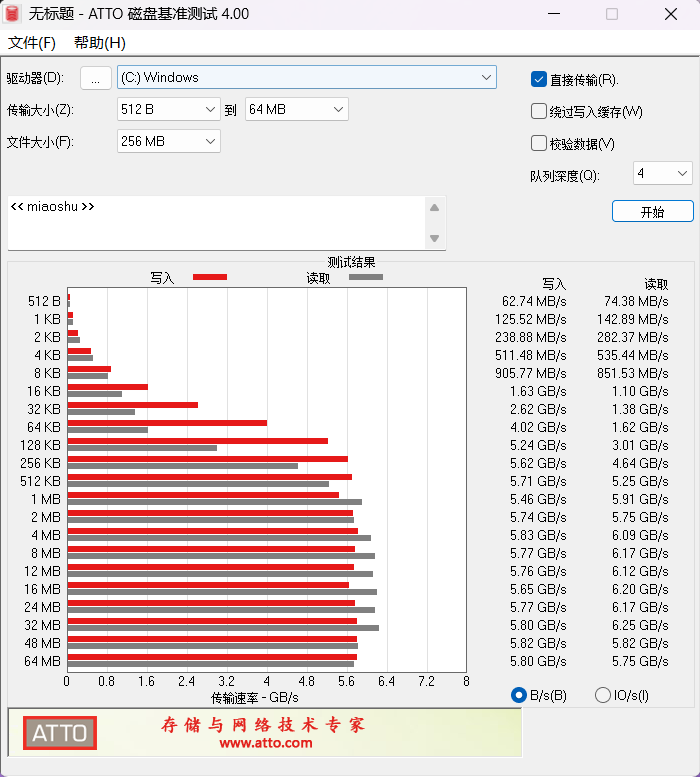
According to ATTO Disk Benchmarks, the PC42Q 1TB achieved write speeds of 62MB/s and read speeds of 74MB/s for 0.5KB small files.
At 32K, write speeds reached 2.62GB/s, and read speeds were 1.38GB/s. From 512KB onwards, write speeds stabilized around 5.71GB/s, and read speeds exceeded 5.25GB/s.
4. 3DMark
3DMark's storage benchmark measures real-world gaming performance by recording the operation traces of popular games and gaming-related activities. Specific test items include loading Battlefield V to the main menu, loading Call of Duty: Black Ops 4 to the main menu, and recording 1080p 60Hz gameplay of Overwatch using OBS.
This test visually demonstrates the SSD's gaming load performance.
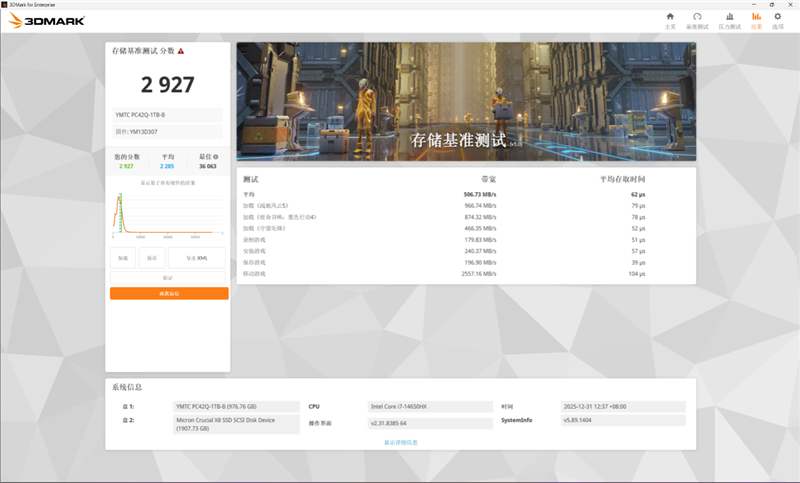
The 3DMark storage test primarily evaluates gaming read/write performance. The PC42Q 1TB scored 2927 points with a latency of 62 microseconds and a mobile gaming bandwidth of 2557MB/s.
5. PCMark
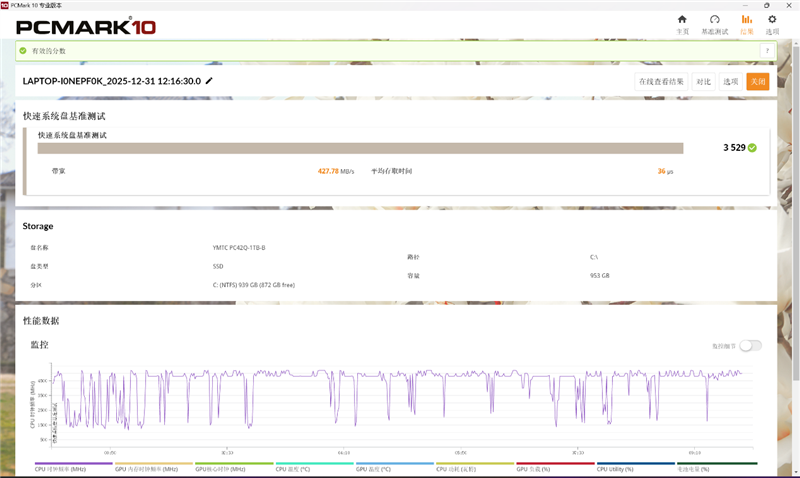
The PCMark 10 Fast System Disk Benchmark yielded a score of 3529 points, with a bandwidth of 427MB/s and an average access time of 36 microseconds.
6. Temperature Testing
The temperature performance of SSDs is crucial for laptops.
Due to limited internal space in laptops, adding heat sinks to hard drives is challenging. For instance, we previously tested a laptop brand where its PCIe 4.0 SSD easily exceeded 80 degrees Celsius under high load, resulting in a performance drop of around 20%.
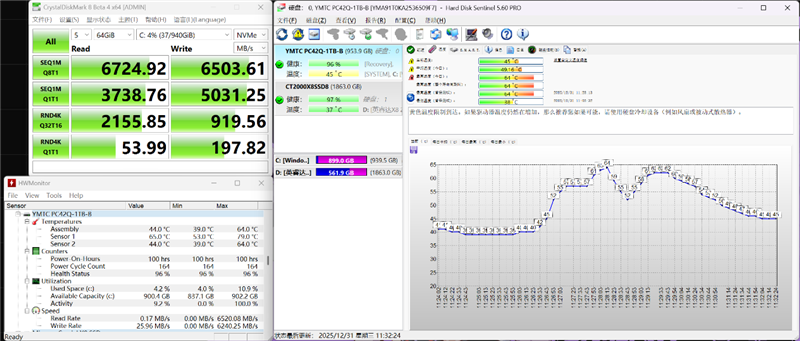
In actual testing, the controller (Sensor1) reached 53 degrees Celsius, and the NAND (Sensor2) reached 39 degrees Celsius in standby mode.
During prolonged high-load read/write operations, the controller (Sensor1) peaked at 79 degrees Celsius, and the NAND (Sensor2) peaked at 64 degrees Celsius.
IV. Core i7-14650HX Performance Testing
1. CPU-Z
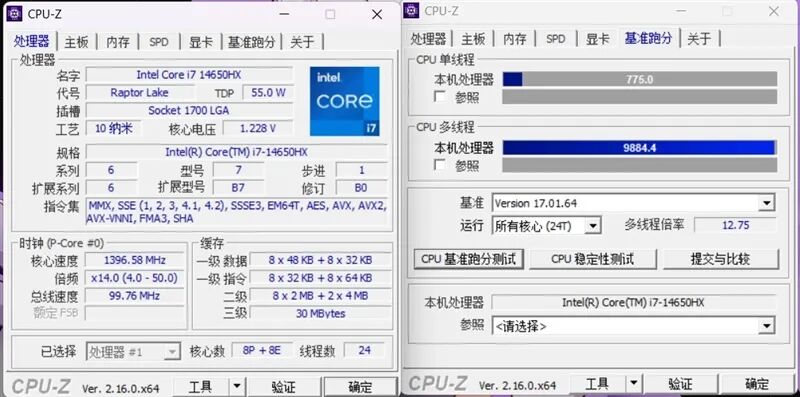
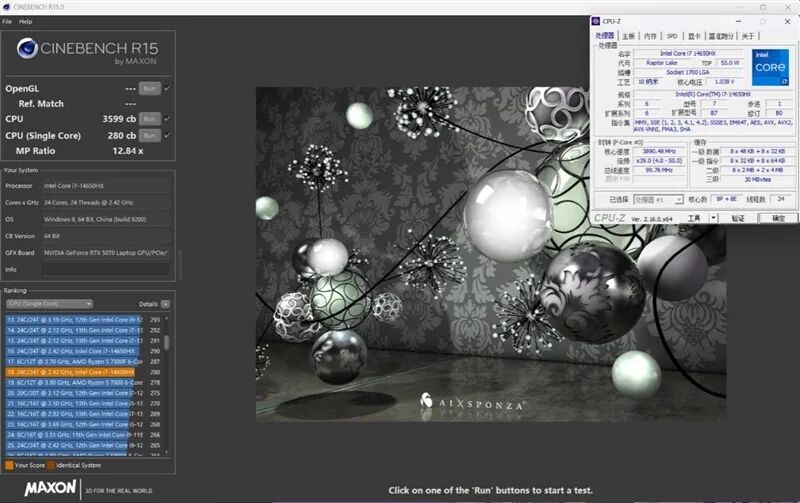
2. CineBench R15
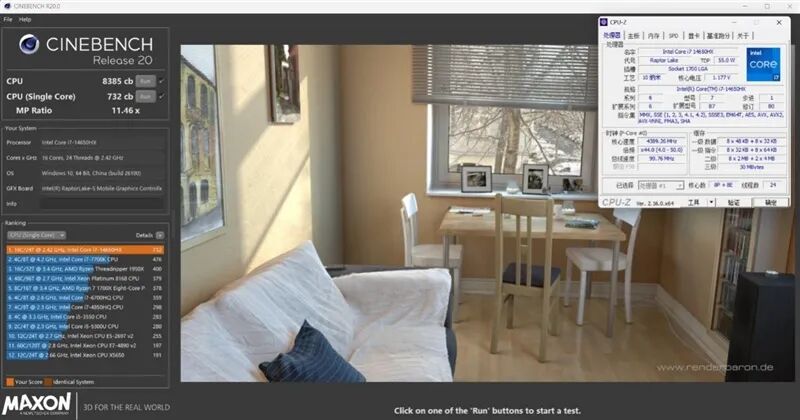
3、CineBench R20
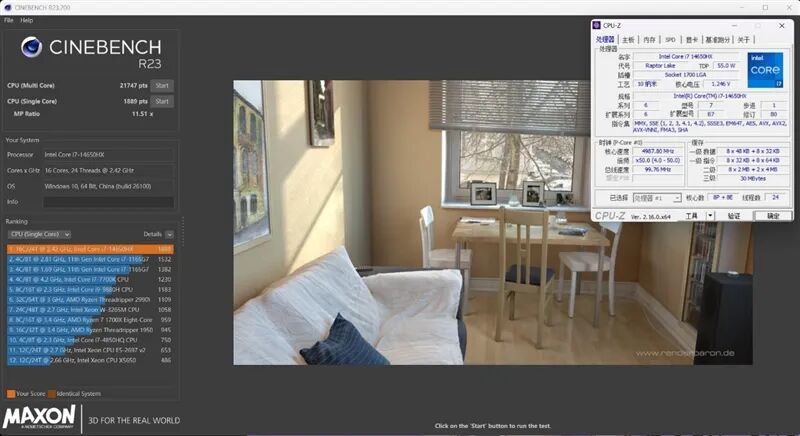
4、CineBench R23 10-Minute Multi-Round Test
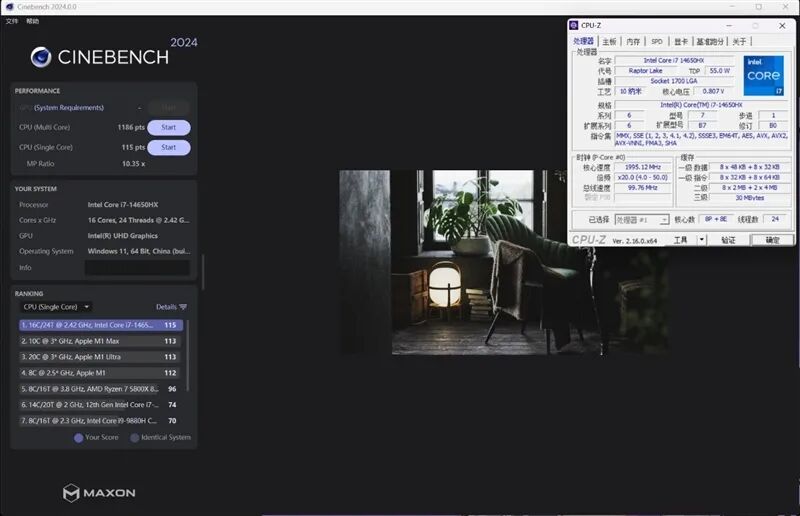
5、CineBench 2024 Multi-Round Test
6、POV-Ray
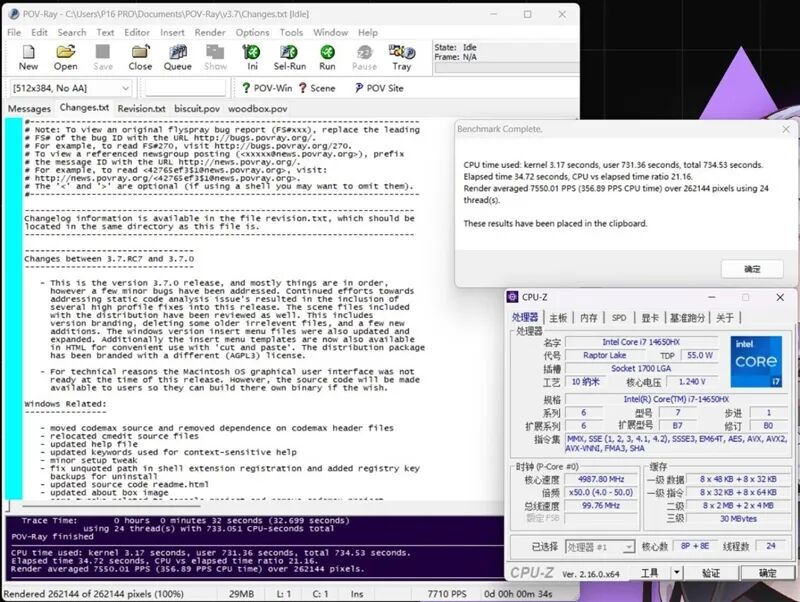
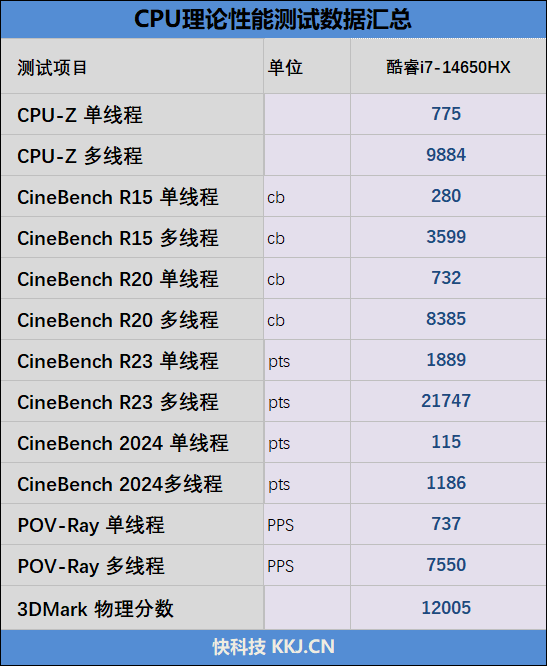
The test data is summarized as follows:
V. RTX 5070 Laptop Gaming Test
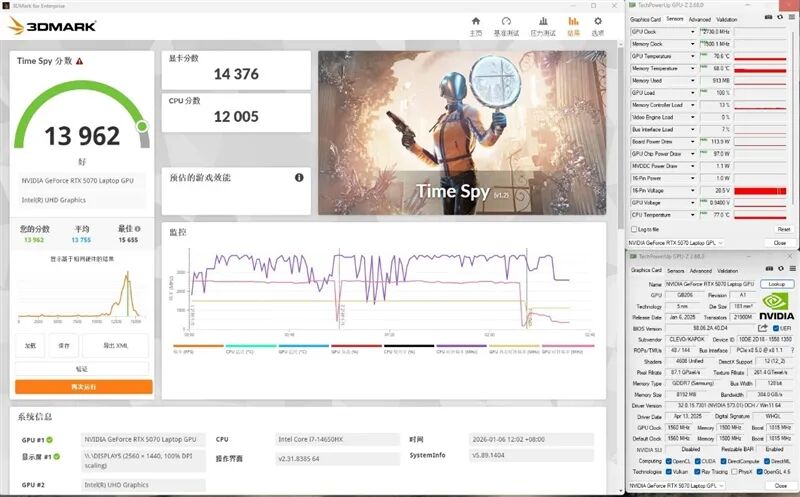
1、3DMark
2、Assassin's Creed: Valhalla
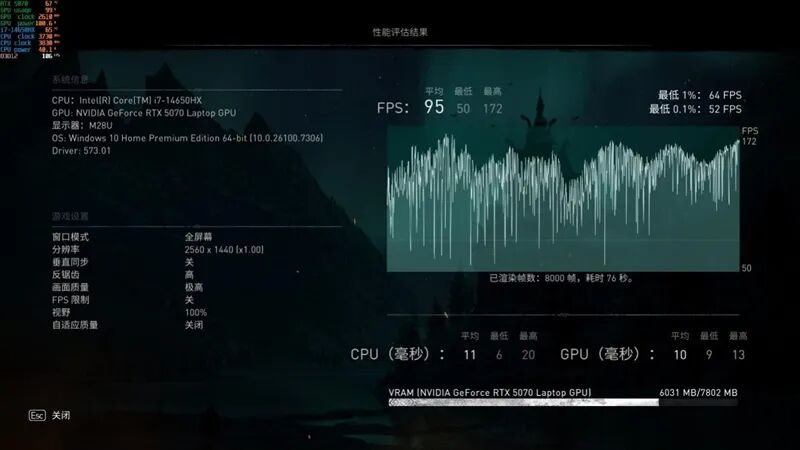
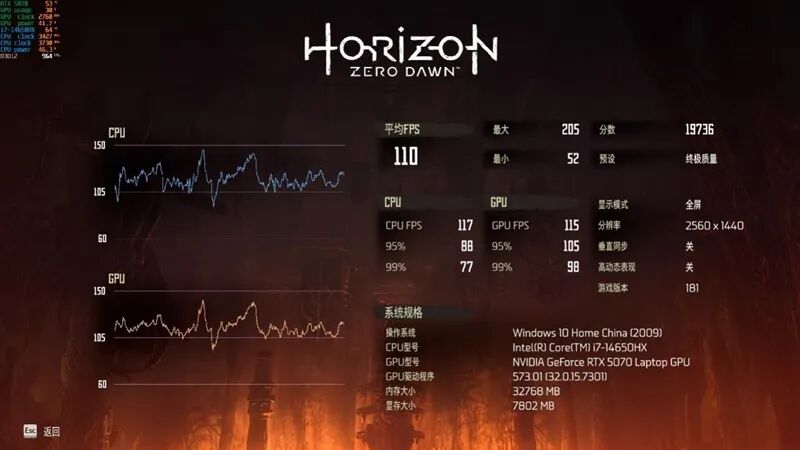
3、Horizon Zero Dawn
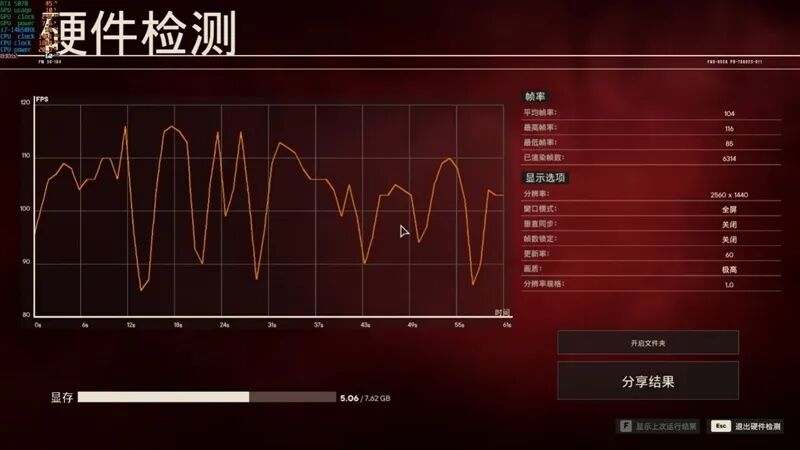
4、Far Cry 6
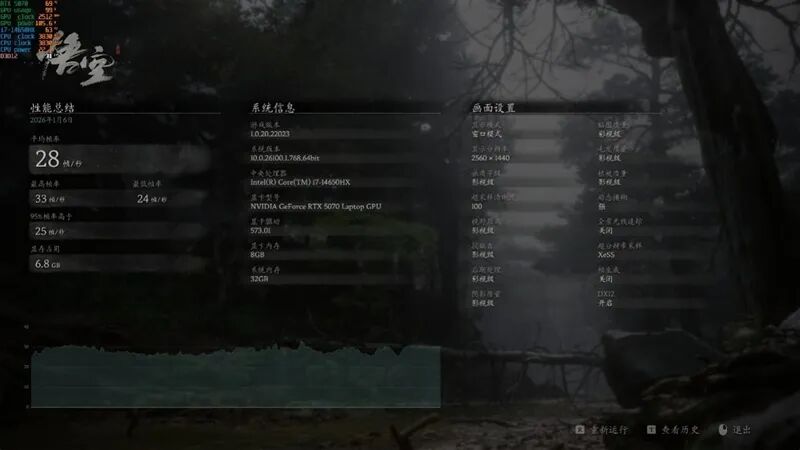
5、Black Myth: Wukong
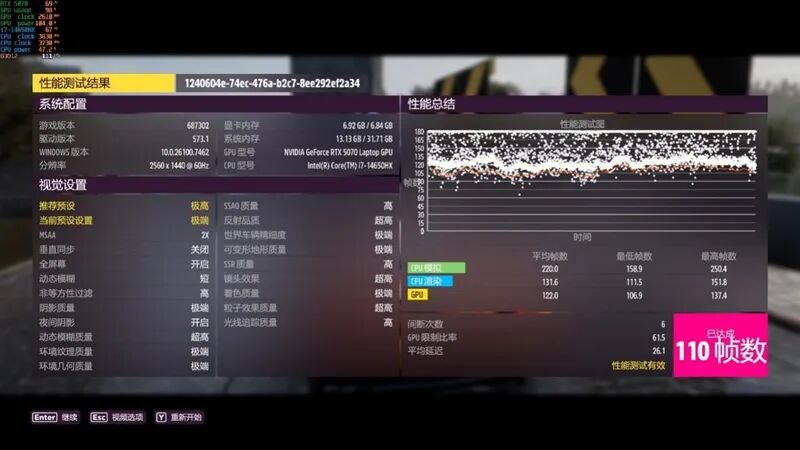
6、Forza Horizon 5
7、Cyberpunk 2077
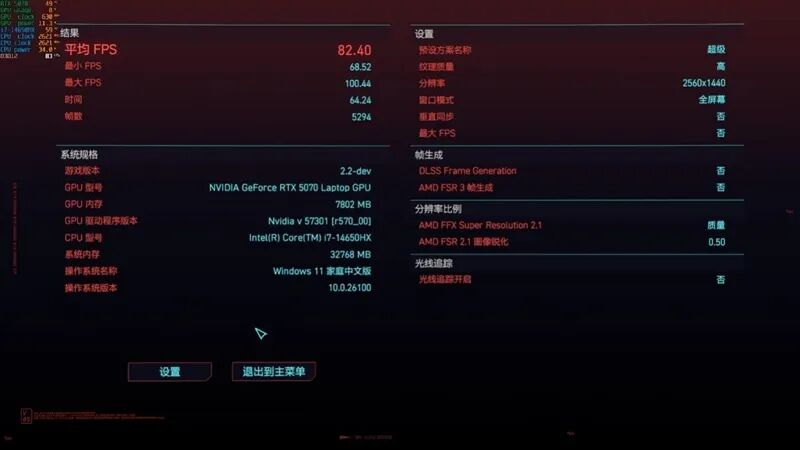
7、Delta Force

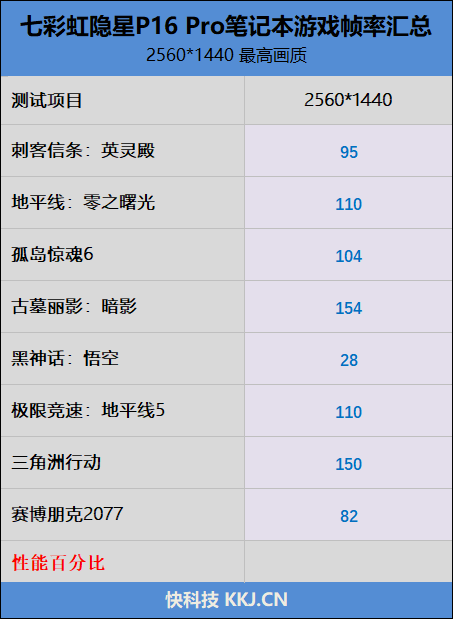
Except for Black Myth: Wukong, the frame rates of the CUK YX P16 Pro exceeded 80FPS in all other games, with the mainstream e-sports game Delta Force exceeding 150FPS.
For Black Myth: Wukong, to improve the frame rate, consider enabling DLSS 4 multi-frame generation, which can easily achieve over 100FPS at 2K resolution with the highest graphics settings.
VI. Burn-In and Battery Life Test: Total System Performance Release of 150W
1、CPU Burn-In
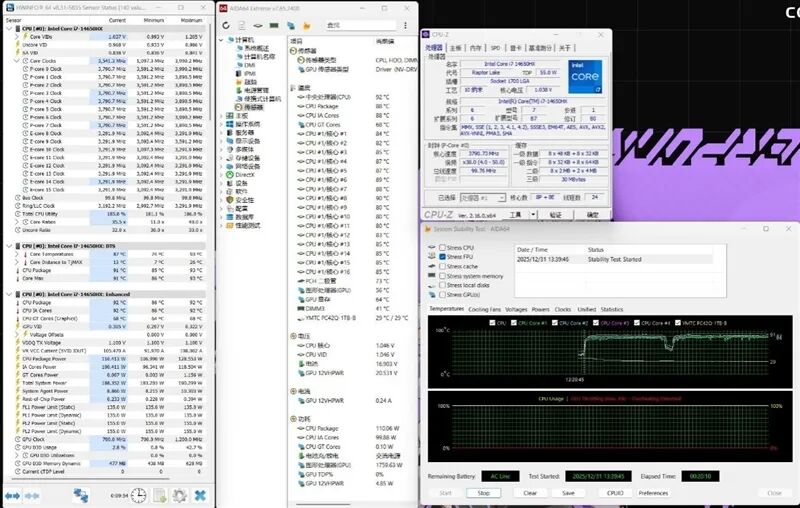
Using AIDA64 FPU for burn-in, the i7-14650HX initially consumed 128W of power, which then dropped to and remained stable at 110W. The P-core all-core frequency was 3.8GHz, with a temperature of 92 degrees Celsius.
2、GPU Burn-In
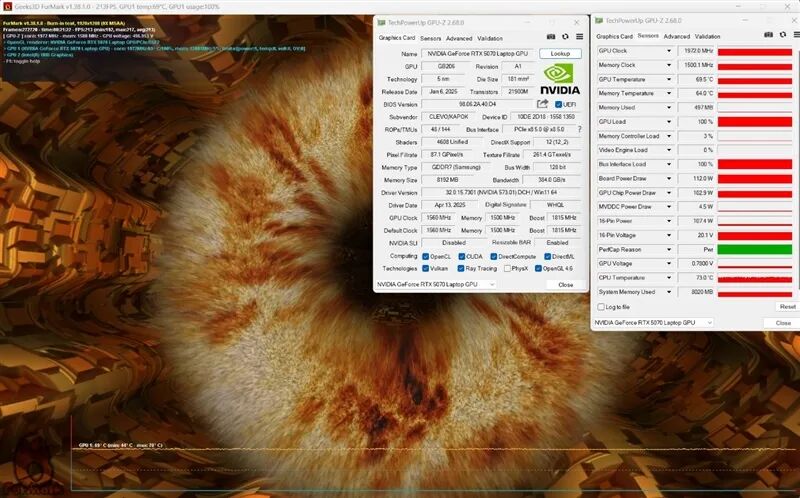
Set Furmark parameters to 1920*1200 resolution and 0AA.
After running for 11 minutes, the graphics card temperature stabilized around 69 degrees Celsius, with GPU power consumption stable at 112W and a core frequency of 1972MHz during burn-in.
3、Dual Burn-In
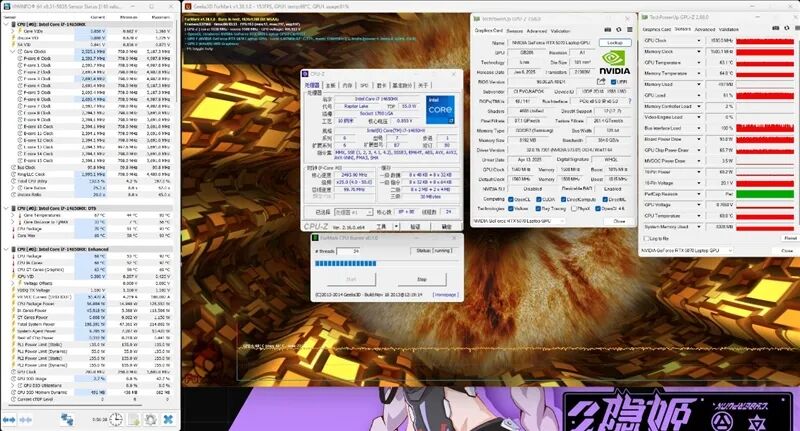
Using FurMark to simultaneously load both the CPU and GPU, power competition occurs. The CPU power consumption is around 57W, while the GPU power consumption is around 93W, with the total power consumption maintained at 150W.
During dual burn-in, the CPU temperature was 70 degrees Celsius, and the GPU temperature was 63 degrees Celsius.
4、Battery Life
The CUK YX 16 Pro is equipped with a 53.5Wh lithium-ion battery. We used PCMark 10 to test the laptop's battery life.
The test scenario was PCMark 10's Modern Office, with the power mode set to 'Battery Saver,' all other processes closed, and the screen brightness adjusted to 50%.
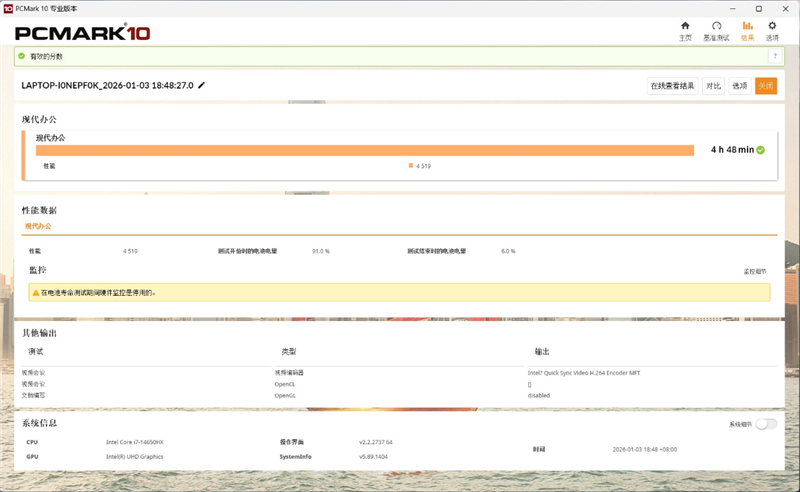
The battery life test result in the PCMark 10 Modern Office scenario reached 4 hours and 48 minutes, which is acceptable for a gaming laptop.
VII. Conclusion: The Strongest Consumer-Grade QLC SSD Paired with a Cost-Effective Gaming Laptop
In this test, the excellent temperature performance of the Yangtze Memory PC42Q left a deep impression on us.
We know that QLC flash memory can store 4 bits of data per CELL unit, with 16 voltage variations, making the algorithmic difficulty far exceed that of MLC and TLC. Therefore, achieving both high performance and low power consumption for a PCIe 4.0 QLC SSD is extremely challenging.
The Yangtze Memory PC42Q maintained a maximum NAND temperature of only 64 degrees Celsius during prolonged high-load read and write operations, despite being in a bare-die state without any heat sinks.
For SSDs, temperatures below 70 degrees Celsius are considered safe operating temperatures, meaning the PC42Q is fully capable of operating in environments without M.2 heat sinks, such as laptops and mini-PCs.
In terms of performance, the YMTC PC42Q 1TB also meets the standards expected of a high-end QLC SSD.
From the test results, the PC42Q 1TB can achieve sequential read speeds of up to 6800MB/s and sequential write speeds exceeding 6600MB/s, with 4K random read speeds also exceeding 70MB/s.
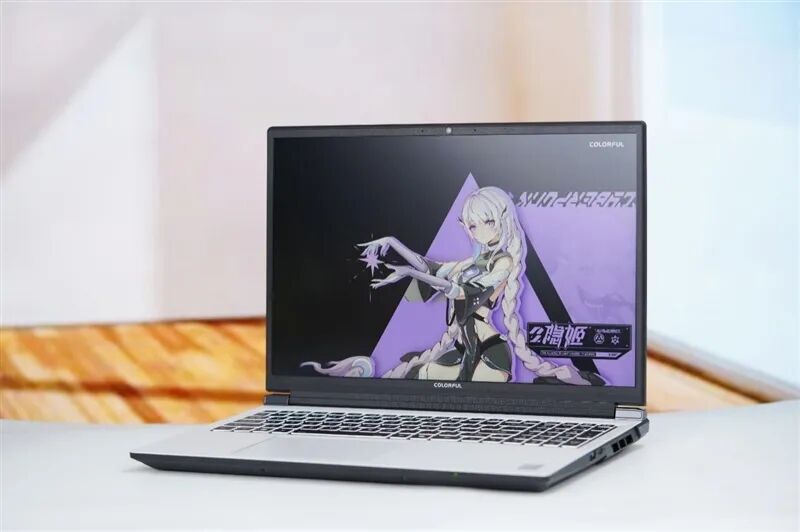
Finally, let's discuss the Colorful CUK YX 16 Pro laptop.
Equipped with an i7-14650HX processor, RTX 5070 Laptop GPU, and a 165Hz 2K high-color-gamut screen, this laptop has no shortcomings in terms of configuration. In actual testing, it maintained smooth frame rates above 60FPS in mainstream AAA games at 2K resolution with the highest graphics settings. For e-sports games like Delta Force, the frame rate remained stable above 140FPS, and could even exceed 300% with DLSS Super Resolution and multi-frame generation enabled.
In terms of performance release, the i7-14650HX maintained a stable power consumption of 110W during single CPU burn-in, while the RTX 5070 maintained 110W during single GPU burn-in. During prolonged dual burn-in, the CPU power consumption was 57W and the GPU power consumption was 93W, with the total system performance release around 150W.
The Colorful CUK YX 16 Pro laptop is priced at 8,799 yuan, with a final price of 6,713 yuan after subsidies. For a gaming laptop equipped with a Core i7-14650HX + RTX 5070 Laptop, this is a highly attractive price point.
-
![]()
Hardware is the skeleton, AI is the soul, and data integrates the two
-
![]()
China’s AI Industry: A Unified Pivot Towards Monetization?
-
![]()
New Progress! Infineon Completes Acquisition of ams OSRAM's Non-Optical Sensor Business
-
![]()
35 Million Bet on an Optical Future! Tengjing Technology Makes a Move in AR
-
![]()
Why World Models Get Stuck on Construction Roads in Autonomous Driving Applications
-
Alibaba Initiates Cultural Transformation: Is Jack Ma Making a Strategic Comeback?
-
Tianfeng Heads to Hong Kong for IPO with RMB 3.8 Billion in Funds: Xingyu's Cross-Border Foray into Embodied AI Faces Uncertain Future
-
![]()
Mengshi Auto’s High-End Aspirations Dashed: Huawei Partnership Fails to Revive Sales, New Model’s Entry Price Dips Below 300,000 Yuan