Starting at 9999 Yuan! OPPO Find N6 Unveiled: The Long-Standing Challenge of Foldable Phones Finally Overcome!
 03/18 2026
 579
579
Over time, the evolution of foldable phones has tackled numerous challenges. Their weight is now reasonable, battery life is no longer a significant drawback, and core features like performance, imaging, and fast charging are on par with top-tier non-foldable smartphones.
In recent years, foldable phone manufacturers have made substantial progress in addressing these limitations, transforming these devices from mere novelty items into reliable everyday companions.
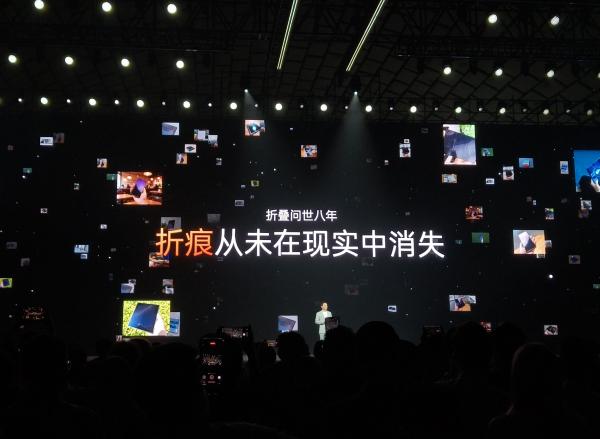
However, one persistent challenge remains—the crease.
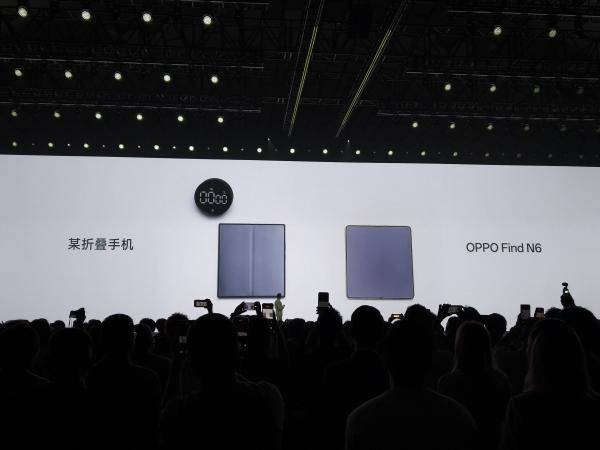
Image source: Leitech
On March 17, OPPO not only launched the Watch X3 (for details, follow the Leitech WeChat public account for the latest OPPO Watch X3 review) but also unveiled its latest flagship foldable phone, the Find N6. Designed specifically to tackle the crease issue, one of its key selling points is:
A crease-free display that remains flat even after prolonged use.
Leitech was invited to the launch event and provides an exclusive, in-depth report from the scene.
OPPO tackles the persistent crease problem in foldable screens
Let's delve into the crease issue. Whether it's Samsung, Huawei, or other manufacturers' large foldable phones, nearly all exhibit a noticeable and tactile crease in the center of the screen. While it doesn't hinder normal use, it serves as a constant reminder:
This screen has been folded.
Liu Zuohu speaking, image source: Leitech
Before the OPPO Find N6, foldable phone manufacturers had explored various technical solutions to minimize creases, such as more sophisticated waterdrop hinges, larger bend radii, and softer UTG glass. Despite variations in approaches among manufacturers, the underlying philosophy remained the same:
Ensure the screen bends more naturally to reduce stress concentration at the fold.
The Find N6 takes this a step further. During an earlier technical briefing, OPPO revealed the industry's first bionic symmetric four-axis structure for the Find N6's new titanium alloy Sky Hinge, reducing hinge surface irregularities from 0.18mm to 0.1mm, enhancing flatness while optimizing the opening and closing experience.
For the remaining 0.1mm, OPPO utilized ultra-high-precision spectral confocal scanning to detect minute irregularities in the screen's folded area, then smoothed them out using polymer 3D printing technology. The result is that the height difference in the folded screen area is minimized to:
Approximately 0.05 mm.
From normal viewing angles, the crease is virtually imperceptible to the naked eye or fingertips.
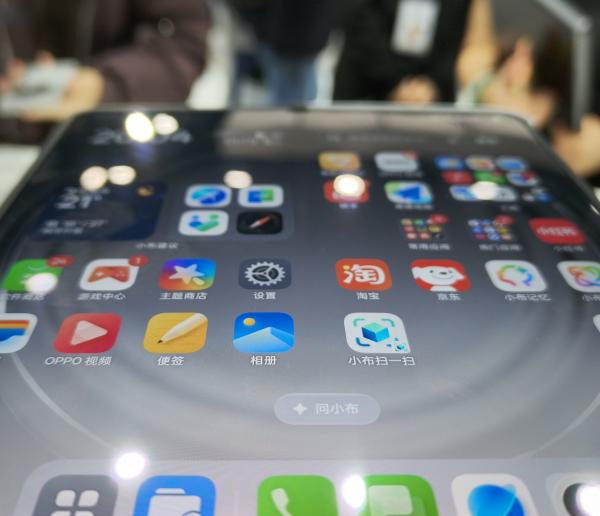
No visible crease at the event, image source: Leitech
Coupled with the Sky Memory Glass, which offers enhanced rigidity and 99.9% self-repairing accuracy, it's clear why OPPO is confident in the Find N6's "Drift Plan"—a unit underwent 100,000 folds, and as demonstrated at the launch event, its inner screen remained flat.
For reference, the OPPO Find N6 has earned TÜV Rheinland certification for its crease-free performance, enduring "600,000 continuous folds while maintaining long-term flatness." It also supports IP59, IP58, and IP56 water resistance.
Lighter, with a larger battery: Foldable phones as true imaging powerhouses
Beyond the crease, OPPO continues to pursue a vision: making foldable phones increasingly resemble standard flagship phones.
First up is weight. The Find N6 maintains an overall weight of around 225 grams, comparable to many non-foldable flagships. This is achieved through continuous optimization of structural design—the new titanium alloy hinge not only reduces volume but also improves internal space utilization.
Combined with advancements in silicon-carbon anode battery technology, battery capacity has increased rather than decreased. The Find N6 packs a nearly 6000mAh battery, an impressive capacity for a large foldable phone. With 80W wired fast charging and 50W wireless charging, it eliminates daily battery anxiety for foldable phone users.
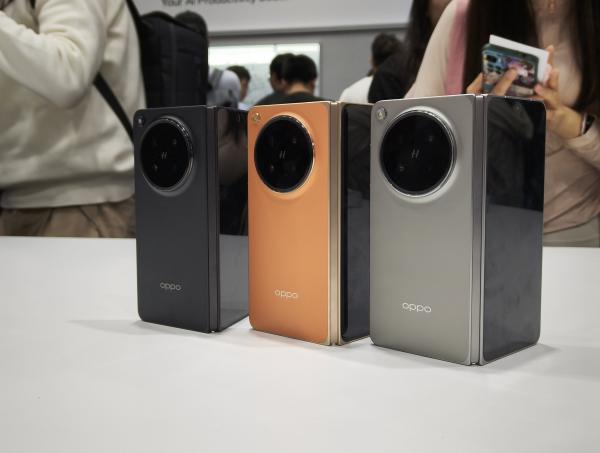
Three color options for the Find N6, image source: Leitech
Another long-standing issue with foldable phones is imaging performance.
Due to the space occupied by the hinge and two screens, most foldable phones compromise on camera configurations. Many products fall significantly short of their brand's flagship non-foldable models in terms of imaging capabilities.
This time, OPPO not only equipped the Find N6 with the fifth-generation Snapdragon 8 flagship processor but also implemented a remarkably advanced imaging system.
The standout feature is a 200-megapixel primary camera, complemented by 50-megapixel ultra-wide, 50-megapixel telephoto (3x optical zoom), and Danxia color reproduction lenses. Paired with Hasselblad-tuned imaging, it fully embraces the "imaging flagship" identity.
The enhancement of imaging capabilities is, in essence, a crucial aspect of the product positioning for foldable flagships.
One step closer to a "superior phone"
Five or six years ago, foldable phones occupied a niche market. The industry's most debated question was whether foldable phones could survive.
That question is no longer relevant. Manufacturers like Samsung, Huawei, OPPO, Honor, vivo, and Xiaomi continue to release new products, with key metrics such as hinge structures, screen materials, and overall weight steadily improving. While foldable phone shipments still lag far behind non-foldable phones, the market continues to grow steadily.
Compared to early concerns about "feasibility," "which is thinner," or "whose hinge is more reliable," manufacturers now focus on resolving the last few experience-related issues, with the crease being a critical one.
However, hardware primarily addresses user "concerns" about foldable phones. To truly attract more users, the key lies in software experiences that differ from—and surpass—those of non-foldable flagships, specifically leveraging the expandable large screen.
Thus, on the Find N6's 8.12-inch inner screen, OPPO upgraded the panoramic virtual screen to a "panoramic free window," creating a desktop-like multi-window design.
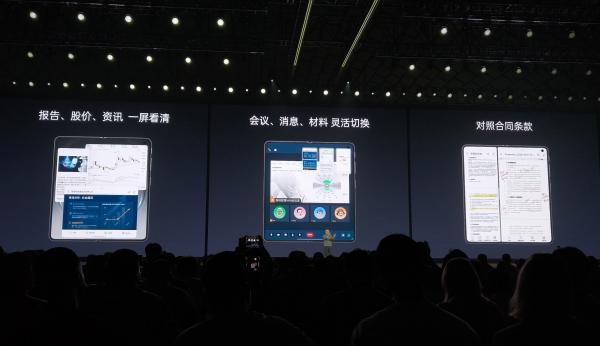
Image source: Leitech
Of course, foldable screens are still relatively small compared to MacBooks or Windows laptops to adopt their design philosophies directly. Visually, the panoramic free window not only supports running three large app windows simultaneously in a panoramic virtual screen but also allows opening three additional apps in small windows, enabling a desktop-like multi-window mode with freely adjustable window sizes.
More importantly, both windowed and split-screen modes can switch with a pinch-and-release gesture, ensuring continuity across modes as part of a unified window system. Dragging windows adjusts layouts, double-tapping small windows switches to fullscreen, and split-screen can instantly become multi-window.
When the window system becomes sufficiently flexible, multitasking experiences transform significantly. For example, users can take notes while researching or reply to messages while watching videos, eliminating the need for frequent app switching and enabling direct multitasking like on a desktop system.
Beyond window system upgrades, the Find N6 introduces: a stylus.
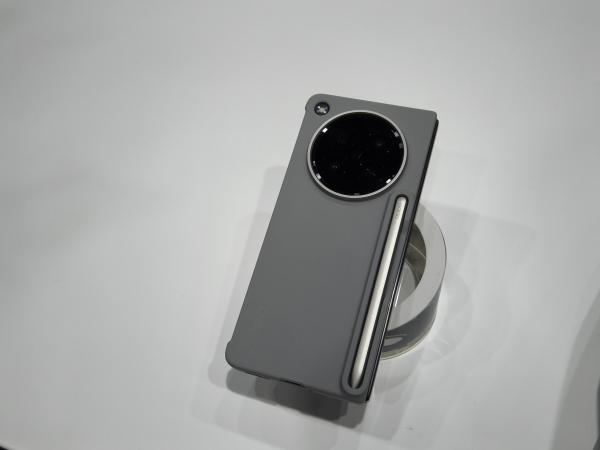
AI stylus and matching phone case, image source: Leitech
The combination of foldable screens and styluses is not new. Samsung has implemented it for years with the Galaxy Fold series, but among Chinese foldable phones, such experiences have remained incomplete. The Find N6's supported AI stylus is clearly more than just an input tool. The system incorporates AI capabilities for pen input, such as circle-to-convert handwriting to text, automatic note organization, and key point extraction.
On portable large-screen devices, such capabilities make perfect sense: touch is the primary interaction, but in reading, note-taking, or annotation scenarios, stylus input feels more natural. Users can browse documents while annotating or taking notes with the stylus, with AI handling automatic organization. Combined with circle-to-search functions, OPPO clearly aims to make the AI stylus a more efficient interaction gateway for foldable screens.
Another point of anticipation is that many hoped Xiao Bu Claw (OPPO's "Lobster") would be included, but Chen Xi, head of ColorOS, stated it will "arrive later." If there's interest, we'll continue to monitor and experience Xiao Bu Claw in the future.
Final thoughts
Even so, foldable phones still face challenges before reaching the true mainstream market, with price being the most direct barrier. The full pricing for the OPPO Find N6 is as follows:
- 12+256GB: 9999 yuan
- 16+512GB: 10999 yuan
- 16+1TB: 11999 yuan
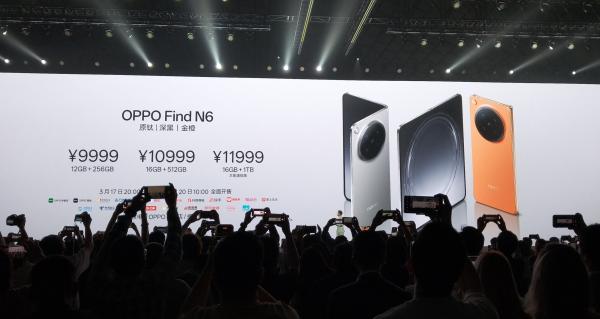
Image source: Leitech
For many users, the widespread pricing of large foldable flagships around the ten thousand yuan mark remains high. However, from a product evolution perspective, foldable phones have overcome their most difficult stages. Weight, thickness, battery life, and imaging now closely match non-foldable flagships, and even creases are disappearing. Meanwhile, manufacturers continue to develop the unique experience advantages of foldable large screens.
Viewed through this lens, the Find N6 underscores its critical significance for OPPO's foldable lineup and the entire industry—not only in conquering creases to bring the visual experience closer to a single, unbroken screen but also in innovating multitasking software experiences.
Perhaps foldable phones won't replace non-foldable phones in the coming years. However, they are likely to become an increasingly important choice in the premium phone market. Products like the Find N6 are driving this transformation step by step.
-
![]()
Hardware is the skeleton, AI is the soul, and data integrates the two
-
![]()
China’s AI Industry: A Unified Pivot Towards Monetization?
-
![]()
New Progress! Infineon Completes Acquisition of ams OSRAM's Non-Optical Sensor Business
-
![]()
35 Million Bet on an Optical Future! Tengjing Technology Makes a Move in AR
-
![]()
Why World Models Get Stuck on Construction Roads in Autonomous Driving Applications
-
Alibaba Initiates Cultural Transformation: Is Jack Ma Making a Strategic Comeback?
-
Tianfeng Heads to Hong Kong for IPO with RMB 3.8 Billion in Funds: Xingyu's Cross-Border Foray into Embodied AI Faces Uncertain Future
-
![]()
Mengshi Auto’s High-End Aspirations Dashed: Huawei Partnership Fails to Revive Sales, New Model’s Entry Price Dips Below 300,000 Yuan