Zhang Ruimin: The Philosophical Businessman Who Forged a Fortune 500 Giant with a Single Hammer Blow
 04/10 2026
 547
547
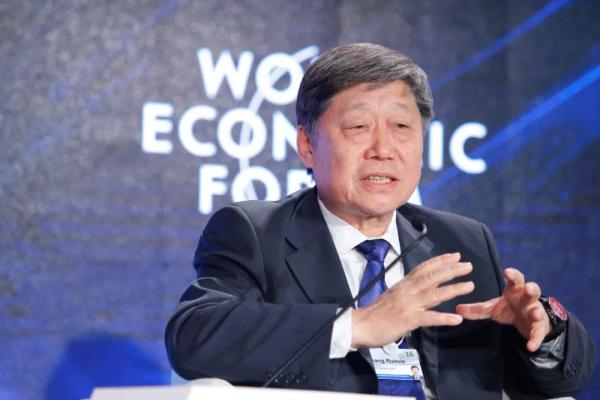
Source | Jiadpai (Home Appliance Pai)
Author | Xiaoxiao
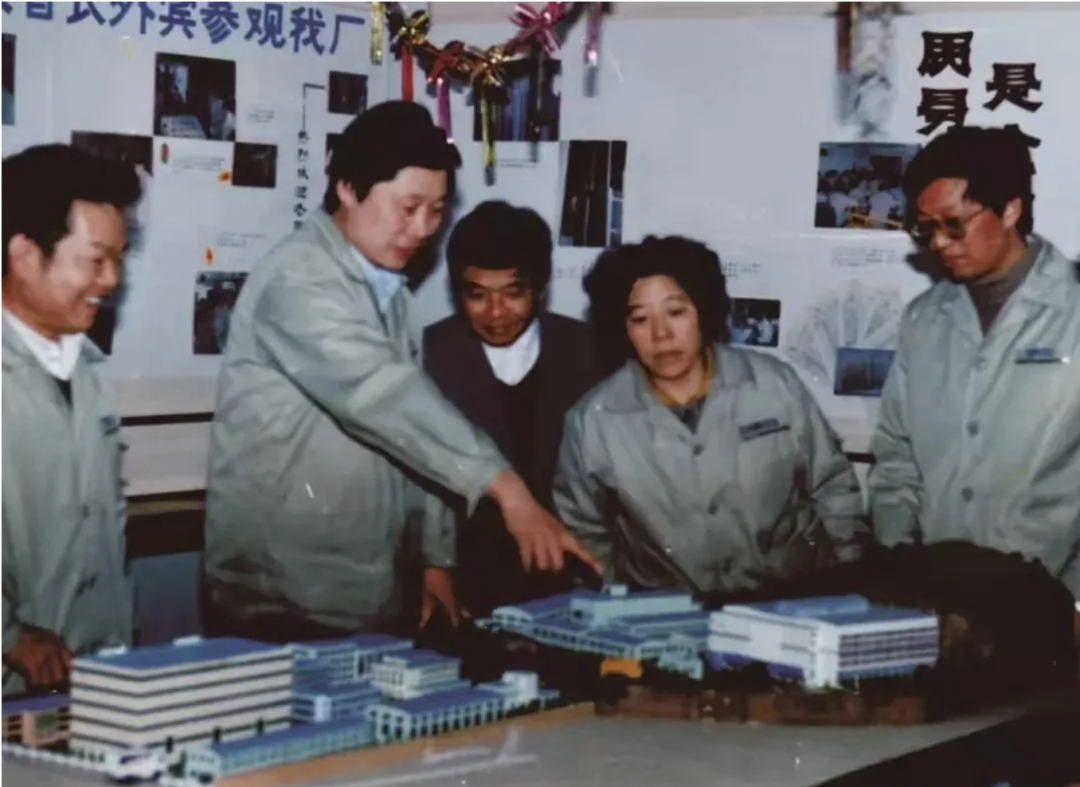
If you had stepped into the Qingdao Refrigerator Factory in 1984, you would have encountered a scene of utter disarray: weeds taller than people overran the courtyard, workers idled and smoked in the workshop, and, most shockingly, some even relieved themselves in the corners. That year, the factory had cycled through three directors, each leaving in frustration, burdened with 1.47 million yuan in debt and unable to pay wages.
Then, a 35-year-old visionary arrived on the scene.
His name was Zhang Ruimin. Having just returned from Germany to introduce refrigerator technology, he witnessed fireworks being set off. A German remarked, "Chinese fireworks are truly impressive," a statement laden with implication: that was all China was good for. In that moment, Zhang Ruimin felt a surge of resolve—he vowed to forge a Chinese brand that would command global respect.
Easier said than done. Who could have foreseen that this small factory, struggling to pay its workers, would transform into a Fortune 500 company with revenues exceeding 370 billion yuan four decades later?

The Hammer That Laid the Foundation of Chinese Quality
Zhang Ruimin's first act as leader was not to unveil a grand strategy but to establish order. He implemented 13 strict 'military regulations,' one of which, "No relieving oneself in the workshop," seems absurd today but underscored the dire state of the factory.
However, it was his hammer strike in 1985 that truly catapulted him into the limelight.
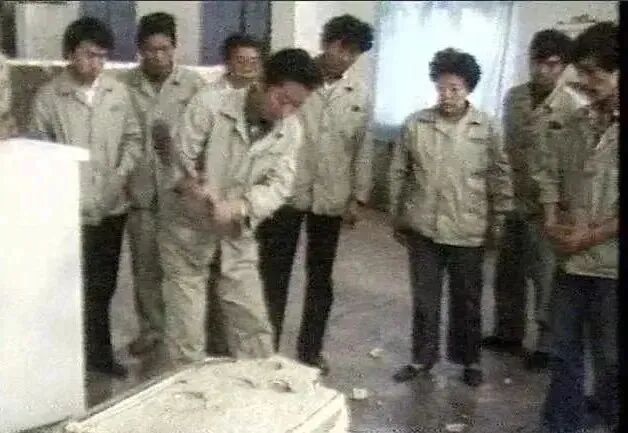
That year, a customer complained about the poor quality of the refrigerators. Zhang Ruimin inspected the warehouse and discovered that out of over 400 refrigerators, 76 were defective. In an era of scarcity, refrigerators were coveted items, costing over 2,000 yuan each—equivalent to three years' salary for a worker. Even defective units were in high demand.
Factory leaders suggested selling them cheaply to employees.
Zhang Ruimin disagreed. In a bold move that stunned everyone, he ordered all 76 defective refrigerators to be dragged to the factory gate and smashed with hammers by the workers who had made them. One strike, and two or three months' wages vanished. Some workers wept on the spot.
This act ignited Haier's commitment to quality. Three years later, Haier claimed the first National Quality Gold Award in China's refrigerator industry.
The hammer used in that fateful act was later acquired by the National Museum of China. But Zhang Ruimin's true achievement was shattering the mindset of a bygone era. In an age where "good enough" was the norm, he demanded perfection.

While Others Chased Quick Profits, He Built a Brand
By the 1990s, Chinese home appliance companies were expanding globally, primarily through OEM branding—a lucrative, low-risk path to quick profits.
But Zhang Ruimin refused to take the easy route. He chose the arduous path of building an independent brand.
What did that entail? It meant investing in channels, establishing brand recognition, and cultivating user loyalty—all while incurring losses upfront. An American distributor offered to sell Haier refrigerators under his brand at a higher price. Zhang Ruimin declined, stating, "That would mean there would never be a Haier brand."
This strategy persisted for 26 years.
From exporting under its own brand in 1991 to finally breaking even in 2015, and then to the overseas market profit margin surpassing the OEM average in 2021, Haier invested tens of billions of yuan over these 26 years.
Yet, the payoff was substantial. Today, China produces 56% of the world's white goods, but Chinese brands hold only 8.5% of the overseas market share—and Haier alone accounts for 62% of that 8.5%.
In essence, when it comes to Chinese brands going global, Haier has shouldered the bulk of the burden.

After Smashing Refrigerators, He Revolutionized the Organization
If smashing refrigerators made Zhang Ruimin famous, his actions after 2005 made him legendary.
That year, Haier was just 200 million yuan short of Fortune 500 revenue. Any other leader would have rushed to meet the threshold. But Zhang Ruimin did the opposite: he launched the 'RenDanHeYi' model, completely overhauling Haier's organizational structure.
What is 'RenDanHeYi'? Simply put, it means every employee directly faces the user, and their compensation is tied to the value they create. The execution, however, was ruthless. Haier laid off over 10,000 middle managers, dismantling the entire bureaucratic system.
10,000 people! Many had dedicated over a decade to the company, suddenly faced with the choice of starting a business or leaving.
This was far more daunting than smashing refrigerators. Refrigerators were mere products; this time, it was people's livelihoods at stake. Doubts arose both within and outside the company: Is Zhang Ruimin insane? Isn't he dismantling his own empire?
But Zhang Ruimin's logic was straightforward: in the internet age, the distance between users and companies is nonexistent. If your organization remains pyramid-shaped, with information flowing up and orders flowing down layer by layer, by the time you react, the users have moved on.
After dismantling the middle layer, what did Haier become? A massive platform supporting thousands of 'micro-entrepreneurial units.' Employees were no longer cogs executing orders but 'autonomous agents' directly responsible to users. Each micro-unit could find its own users, develop its own products, and distribute its own profits.
This model has since been adopted by 417,000 companies in 75 countries worldwide. Even GE Appliances, after being acquired by Haier, saw its revenue double and profits triple in five years by implementing 'RenDanHeYi.'

Reading Matters More Than Networking, Thinking Is More Fulfilling Than Earning
Many wonder: How does Zhang Ruimin consistently make the right moves? The answer may surprise you: reading.
His office is a library of over 5,000 books, all read and annotated. He reads at least two books a week, covering management, philosophy, internet studies, and classical Chinese texts. He dislikes socializing and traveling; his only passion is reading and studying businesses.
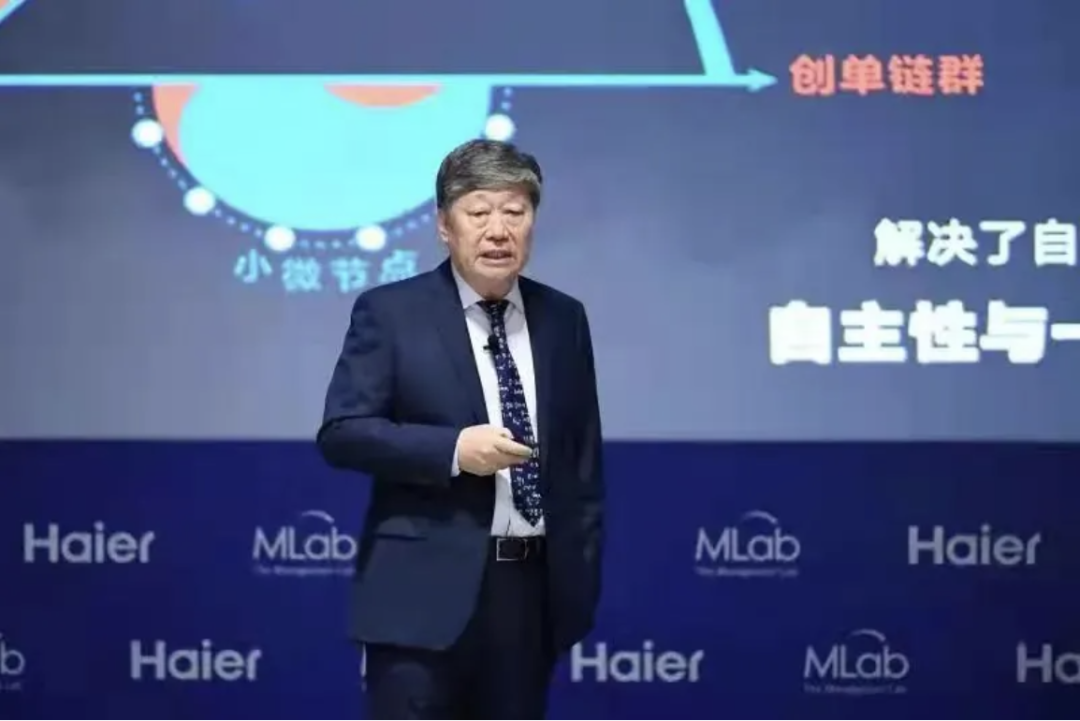
That's why his speeches don't sound like a boss lecturing but more like a philosophy professor imparting wisdom. He can effortlessly quote Sartre, Kant, and Weber, as well as draw insights from 'The Art of War' and 'Tao Te Ching.'
He once summarized: Haier's decades of development borrowed wisdom from 'three sages': Confucius, Sun Tzu, and Laozi. Confucius' 'lead by example' helped unite people, Sun Tzu's 'speed over cleverness' guided strategy, and Laozi's 'non-action' taught him to delegate.
This explains why, at 76, he could speak of 'ecological succession.'
What is ecological succession? Traditional succession is like a single ship: when the captain leaves, the ship drifts. Ecological succession means no captain—everyone paddles their own small boat, forming a fleet, each seeking new continents.
Zhang Ruimin never aspired to be 'indispensable.' He wanted a system that could thrive without him.

Passing the Baton to Zhou Yunjie
In 2021, Zhang Ruimin officially handed over the reins to Zhou Yunjie. Even in retirement, he continues to read and study businesses daily, occasionally giving speeches. Many describe him as 'low-key for a founder,' but those who know him understand—he's not low-key; he simply prefers spending time on ideas over public appearances.
Zhang Ruimin is now 76. Looking back at his life: at 35, he took over a chaotic factory; at 40, he swung a hammer at refrigerators; at 56, he dismantled a management layer of over 10,000; at 72, he stepped down in triumph.
Every step was outside his comfort zone. Every time, people called him crazy. But every time, he bet correctly. He often says, "There are no successful companies, only companies of the era." Meaning, don't think you're that great—you just rode the wave of the times.
But I believe he's only partially correct. The wave was there; the question is, did you dare to ride it? Zhang Ruimin did.
From a hammer to a lighthouse. He shattered the old Haier and rebuilt a new one. And he transformed himself from a 'refrigerator-smashing factory director' into a spiritual beacon for a generation of Chinese entrepreneurs.
This isn't just a business story. It's a tale of courage, vision, and unwavering commitment.
END
-
![]()
Breaking News | Core Chip Team Member Unexpectedly Changes Jobs! OpenAI Transforms into Anthropic's Talent Hub, with Over 15 Ex-OpenAI Core Members Now Holding Key Roles at Anthropic
-
![]()
When European Factories Face Idle Capacity, Chinese Brands Offer a ‘Traditional Chinese Remedy’
-
![]()
SEER Robotics Passes IPO Hearing: How Valuable Is the 'First Robot Brain Stock?'
-
![]()
5 Years, 170 Billion Yuan Wealth Vanishes: Where Did Wei Jianjun Go Wrong?
-
![]()
What Exactly Has Changed with the AI That Automatically Opens a Browser to Search Xiaohongshu?
-
![]()
Over 3,000 Heat-Related Deaths Daily, Yet India Imposes Ban on Chinese Air Conditioner Imports: Unraveling the Underlying Motives
-
![]()
Second-Hand Car Prices Plummet: Are Gasoline Vehicles on the Verge of Collapse?
-
![]()
800V vs. 48V: Which Reigns Supreme? Online Clash Between Executives Intensifies Debate Over Li Auto and NIO's Suspension Systems | MIRROR Pro