Labubu Fridge Falls Short of Best-Seller Status
 04/28 2026
 503
503
From 'Useless Gadget' to Fridge Sales.
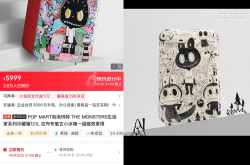
Pop Mart's foray into refrigerators has finally materialized: a limited-edition Labubu-themed fridge is now available in two variants, Home and House of the Monsters, each restricted to 999 units globally with unique numbering, and priced at 5,999 yuan. Officially launched on April 30th, the pre-order channels have been inundated. The total pre-order count on JD.com has surpassed 28,000, while resellers on Xianyu are offering them at 8,999 yuan each, marking a 3,000 yuan markup.
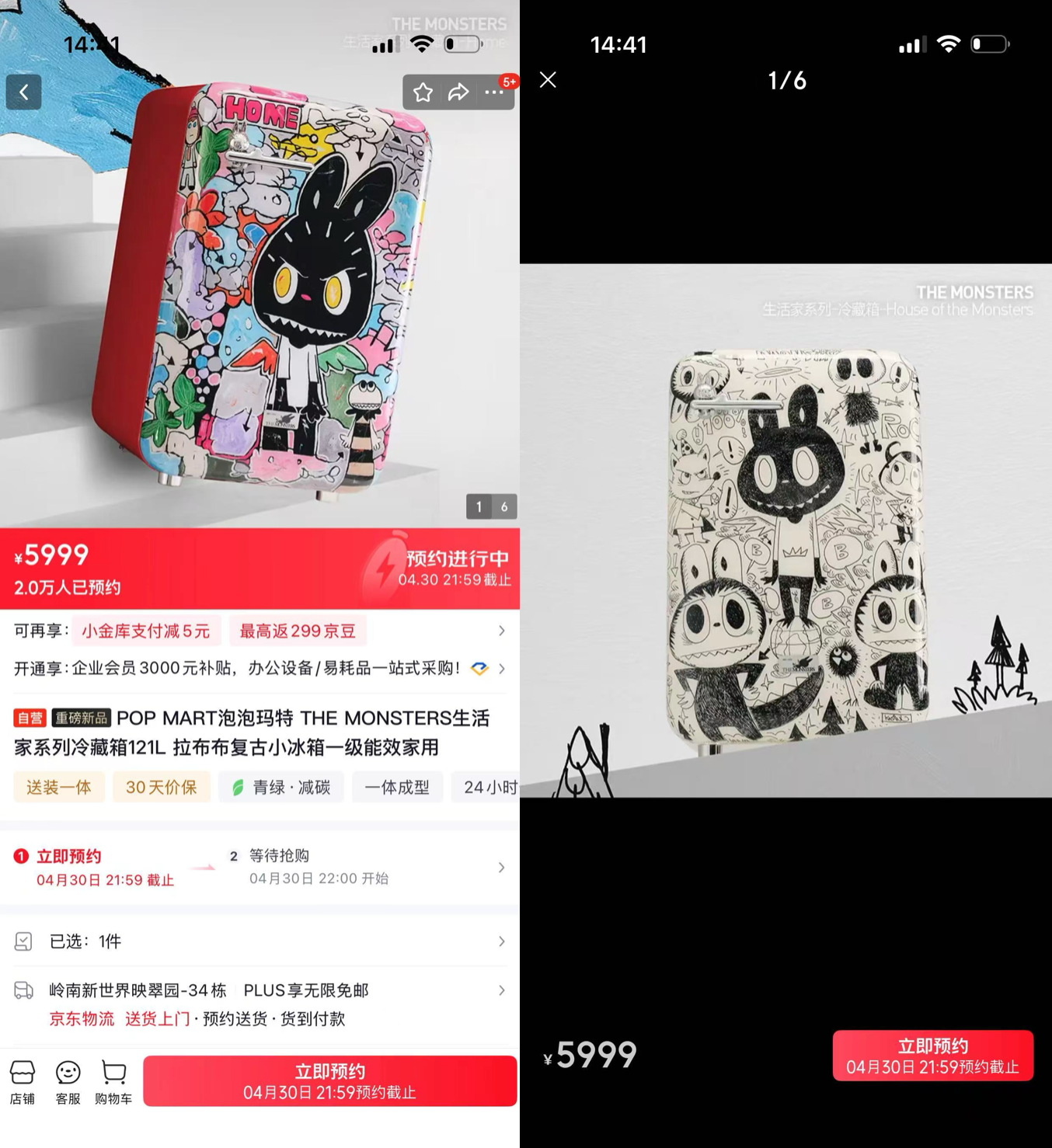
Social media users have propelled the 'LABUBU Fridge' to trending status. Some critics accuse Pop Mart of greed: 'A 5,999 yuan 121-liter mini-fridge when standard models of the same size cost a few hundred yuan—this is blatant price gouging!' However, fans retort with, 'This is LABUBU, you just don't understand.'
The Labubu fridge offers limited utility, with its primary selling point being its compact size: a 121L mini design perfect for storing beverages in the living room. As someone who has closely monitored the home appliance industry and covered major tech expos like IFA, CES, and AWE for years with the Leitech team, the Labubu fridge's popularity leaves me feeling that Haier, Casarte, Midea, TCL, and Hisense have been unjustly overshadowed.
For example, at the AWE expo in March, new fridges showcased features such as 'ocean liner-grade controlled atmosphere preservation,' 'AI cellular-level thawing,' 'smart ingredient management,' and 'voice-activated automatic doors.' With capacities exceeding 500L (ten times that of the Labubu fridge) and comprehensive after-sales service systems, they still couldn't match the popularity of a fridge adorned with Labubu artwork.
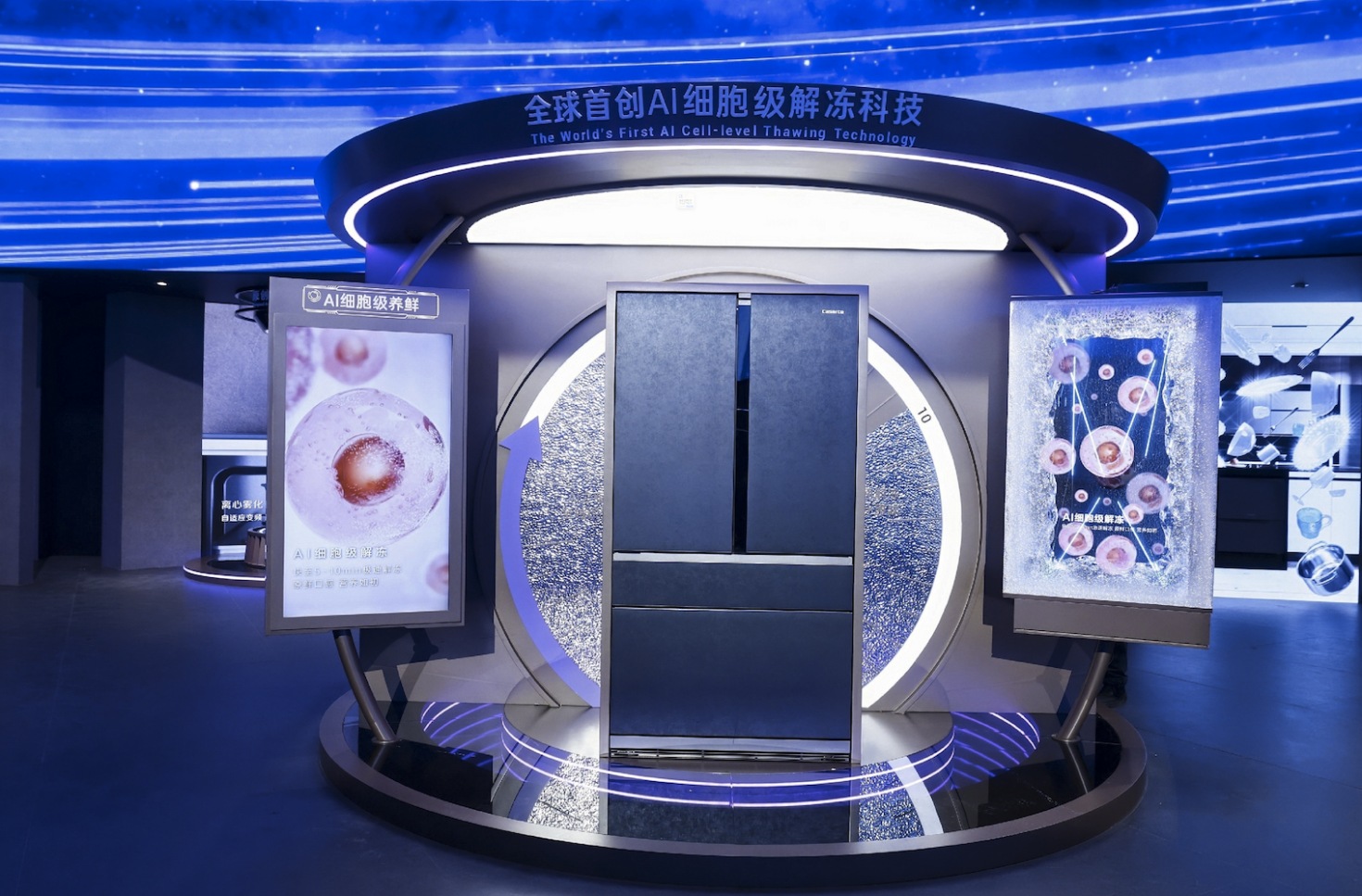
However, I must point out that this scenario is not new. As someone well-versed in the fridge category, the outcome is predictable—the Labubu fridge can sell, but it's unlikely to achieve mass-market success (with only 1,998 units available, Pop Mart doesn't seem to aim for mass sales either). The home appliance industry has never been driven by emotions, and Pop Mart's potential in this sector is extremely limited.
Home appliances are a category where functional value reigns supreme, with little room for debate.
White goods are evaluated based on efficiency: preservation, thawing, cleanliness ratios, noise levels, energy efficiency, and health features—all supported by advanced technology.
Black goods focus on user experience: resolution, picture quality, color accuracy, peak brightness, and sound field calibration—users meticulously examine parameter sheets.
Smart home appliances compete on AI technology stacks, scene experiences, service systems, and ecological integration.
Small appliances, while more diverse, still prioritize functionality at their core.
For a product to succeed in the home appliance market, it must first address functional needs before considering design. Emotional value plays a minor role in the decision-making process, determined by the category's inherent nature.
However, fridges are an exception, especially those placed in the living room. Their prominent visibility endows them with strong decorative attributes, making appearance crucial. Aesthetics, color coordination, and trendiness directly impact a home's 'facade,' especially for high-end models.
More importantly, fridges have long carried a unique cultural attribute: refrigerator magnets. A small detail from daily life illustrates this better than any market analysis: people stick travel memories and life's little joys on their fridge doors, creating emotional value. Consider a real industry example: when some manufacturers replaced fridge front panels with colored crystal glass for better aesthetics, users complained because magnets no longer stuck, leading to a social media backlash. Haier's Yunxi fridge, launched earlier, invested heavily in incorporating magnetic media into the glass panel using 'innovative composite processes' to ensure magnet compatibility—a true understanding of fridge culture.
From the perspective of this niche demand, Pop Mart's strategy of printing Labubu on fridges makes sense, as fridges are indeed the most IP-friendly category in home appliances.
The issue is that emotional value isn't the entirety of a fridge's appeal. While fridges can carry emotional value, they cannot be defined solely by it. Breaking down a fridge purchase decision, functional value accounts for 80%, decorative value 15%, and emotional value at most 5%. This 5% represents Pop Mart's opportunity—not zero, but certainly not the main driver.
Certainly, a small group of users will buy Pop Mart's fridge because of Labubu. These are avid collectors of trendy toys, likely already owning a wall of Molly figures. For them, adding a Labubu fridge is a natural progression, and they may not mind inferior cooling performance. Moreover, the fridge serves a purpose—as a Labubu-themed storage cabinet or 'art installation.' As a limited-edition design, they're willing to pay a premium.
Yet, this group is extremely niche compared to the hundreds of millions of households in the home appliance market. Collaborations between home appliances and popular IPs are not new. Disney's Mickey Mouse has adorned fridges, and Haier's 'Fresh & Fun' series launched a decade ago at Suning's Nanjing headquarters boasted strong channel capabilities and brand momentum. However, sales were merely satisfactory, though marketing value was maximized. To date, no home appliance category, brand, or product has achieved large-scale success through IP collaborations. This isn't due to any single IP's weakness but rather the decision-making weight distribution inherent to the home appliance category.
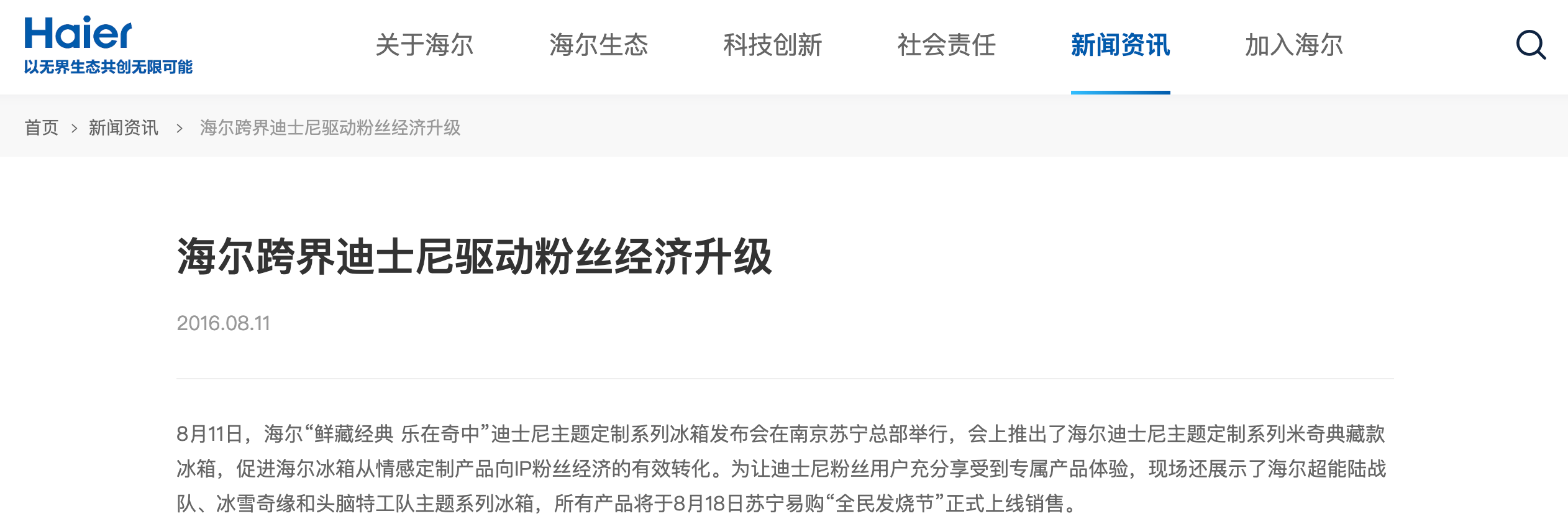
In the fridge category, functional value is the foundation, while emotional value commands a premium. The ideal for consumer goods is when 'emotional value' surpasses the product itself—a specialty of Pop Mart, often distilled into 'Wang Ning's Economics of Uselessness.' A widely circulated story recounts how Wang Ning, during an internal Pop Mart meeting, explicitly rejected adding practical functions (like USB drives) to toys, arguing that 'uselessness is eternal.' This 'economics of uselessness' works for trendy toys but is impractical in the home appliance sector.
So why did the Labubu fridge see explosive pre-orders and secondary market premiums of thousands? This is a familiar tactic for Pop Mart. Limited releases create scarcity, and secondary market circulation endows products with financial attributes, prompting consumers to hoard through various means. Note that I'm not accusing Pop Mart of doing this; compared to Jellycat, which emerged in 1999, Labubu is just a newcomer.
Two and a half centuries ago, Adam Smith stated in 'The Wealth of Nations': 'Nothing is more useful than water, yet it commands little price; though diamonds are nearly useless, vast quantities of other goods are frequently exchanged for them.' Water is abundant, while diamonds are rare, hence diamonds' higher price.
The methodology of 'synthetic diamonds' has been pushed to extremes in the trendy toy blind box sector. The Labubu fridge follows a familiar formula across different categories. However, scarcity premiums do not equate to genuine demand, and buying frenzies do not reflect market capacity—something Pop Mart understands better than anyone. Heat generated by limited quantities cannot sustain mass-market sales, and manufacturing inherently favors scale, which impacts production efficiency, supply chain costs, R&D investment capabilities, and more.
Moreover, the only large home appliance Pop Mart can likely sell is fridges.
Screening through home appliance categories yields a harsh conclusion. Televisions, air conditioners, washing machines, range hoods, gas stoves, dishwashers, water heaters, water purifiers, smart beds, floor washers, robot vacuums—larger categories prioritize functional value above all. No one would replace their range hood or buy a less intelligent robot vacuum just for Labubu.
What about small appliances? While they seem low-threshold, competition hinges on price and functional details, with supply chain efficiency determining survival—ultimately reverting to scale logic. Limited releases can sustain hype, but volume efficiency cannot compete with 'price killers' like Laifen and Xiaomi. Personal care small appliances offer some leeway, being more suited for 'companionship.' Products like toothbrushes, hair dryers, and shavers are small, frequently used, and socially visible, allowing for some IP premium space. If Pop Mart combines Laifen-level product strength with Labubu design, a few successful SKUs might emerge, explaining their official emphasis on small appliances.
That said, Pop Mart's foray into home appliances sends a positive signal to the industry. Its inability to achieve mass sales doesn't impact the overall market, contrasting sharply with Xiaomi's influence. Xiaomi's entry into TVs, air conditioners, washing machines, and even rice cookers has genuinely redirected market share, with its ecosystem approach slashing prices across categories, causing traditional manufacturers significant pain. Pop Mart's strategy is the opposite—it attempts to sell home appliances at a premium, pursuing an extreme brand IP-based route rather than price wars. In a mature, competitive home appliance market, this attempt itself holds industry value, whether successful or not.
The home appliance industry has engaged in price wars for too long, needing proof that consumers will pay for more than just functionality. Even if Pop Mart fails, it opens a door, providing inspiration for industry players—and they can always retreat to collaborate with appliance manufacturers for another wave.
Pop Mart once championed 'the utility of uselessness,' yet today it ventures into the functionally driven home appliance sector, overturning its previous stance likely due to circumstantial pressures—not poor performance, as Pop Mart lacks no results but needs new narratives beyond IPs.
In 2025, Pop Mart's revenue surged 184.7% YoY to 37.12 billion yuan, with net profit reaching 13.08 billion yuan, up 293.3% YoY—a windfall. However, its stock price plummeted upon earnings release: a 20% intraday drop, with a cumulative two-day market cap erosion exceeding 250 billion HKD. The latest stock price stands at 151.8, down over 50% from its August 2025 peak of 339.80. Capital markets demand new stories, leading to Pop Mart's push into IP-based filmmaking and attempts to make 'uselessness' 'useful.' It's never too late to adapt—whether this direction is correct remains to be seen, but at least the Labubu fridge exists.
Pop Mart, Fridge, Home Appliances, Trendy Toys, Labubu
Source: Leitech
Images courtesy of 123RF Royalty-Free Library
-
![]()
Behind Anyu Aixin’s Funding Success: The Dawn of the ‘Photoacoustic Fusion’ Era!
-
![]()
Domestic Automotive-Grade Chips: Navigating the Challenges of Advanced Integration
-
![]()
Q1 Color TV Summary: Five Major Trends Propel the Industry Towards High-Quality Development and Transformation
-
![]()
Revenue Hits 3.4 Billion, Non-Recurring Profit Rockets 52%! Yutong Optics Embarks on Its Second Growth Phase
-
![]()
Labubu Fridge Falls Short of Best-Seller Status
-
![]()
Large Models in Vehicles: Consumers Show Indifference
-
![]()
Seven Ways to Start a One-Person Company in the AI Entrepreneurship Era
-
![]()
400 Billion Market Cap Reversal: The Twilight of the AI Four Little Dragons and the Dawn of New Large Model Contenders