Meta Takes the Lead in Defining the AI Glasses Ecosystem Amid Android XR Competition
 05/20 2026
 567
567
The Ecosystem Battle Among Major Players
Written by / VR Top Journalist
The competition in the AI glasses market is entering a new, pivotal phase.
On May 18th, Meta announced a significant functional upgrade to its Ray-Ban Meta smart glasses and officially opened up permissions for third-party application adaptation on the Ray-Ban Display.
This strategic move comes as Google prepares to unveil its Android XR smart glasses ecosystem for the first time at its I/O Developer Conference, aiming to replicate the success of the open ecosystem model from the Android smartphone era. (For more details, read: Google I/O 2026 Preview: AI Makes Its Mark in XR)
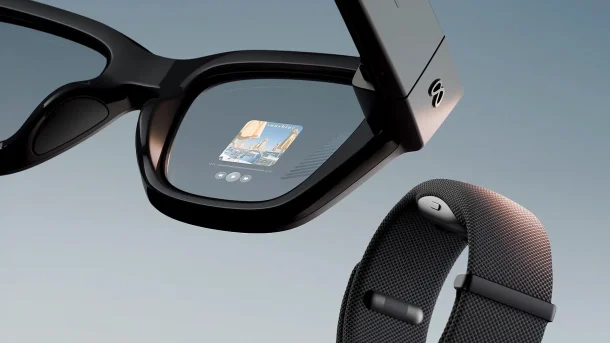
As Meta fully embraces third-party development capabilities, the focus of competition among major players is gradually shifting towards ecosystem construction. For Meta, this is not merely a functional expansion but also an exploration into platformization. Its objective is to have developers build a robust application ecosystem around its AI glasses before Android XR glasses reach full maturity.
01 From 'Sellable Hardware' to 'Scalable Platform'
Over the past two years, the success of Ray-Ban Meta has been largely attributed to several key selling points: photography, open audio, voice interaction, Meta AI, and the everyday wearability achieved through collaboration with traditional eyewear brands like Ray-Ban. Initially, it did not pursue complex displays or immersive experiences but instead focused on making the product resemble a regular pair of glasses, encouraging long-term user wear.
However, becoming a mere 'sellable hardware' product is clearly not Meta's ultimate goal. To this end, Meta has begun to incorporate a crucial element of platformization—support for third-party developers.
According to Meta's developer documentation and related reports, developers can, on the one hand, extend existing iOS or Android applications to the Ray-Ban Display using the Meta Wearables Device Access Toolkit, displaying text, images, lists, buttons, videos, and other content within the glasses' display area.
On the other hand, developers can also leverage Web Apps to create lightweight applications using HTML, CSS, and JavaScript, utilizing capabilities such as motion/direction data, phone GPS, Meta Neural Band input, and local storage.
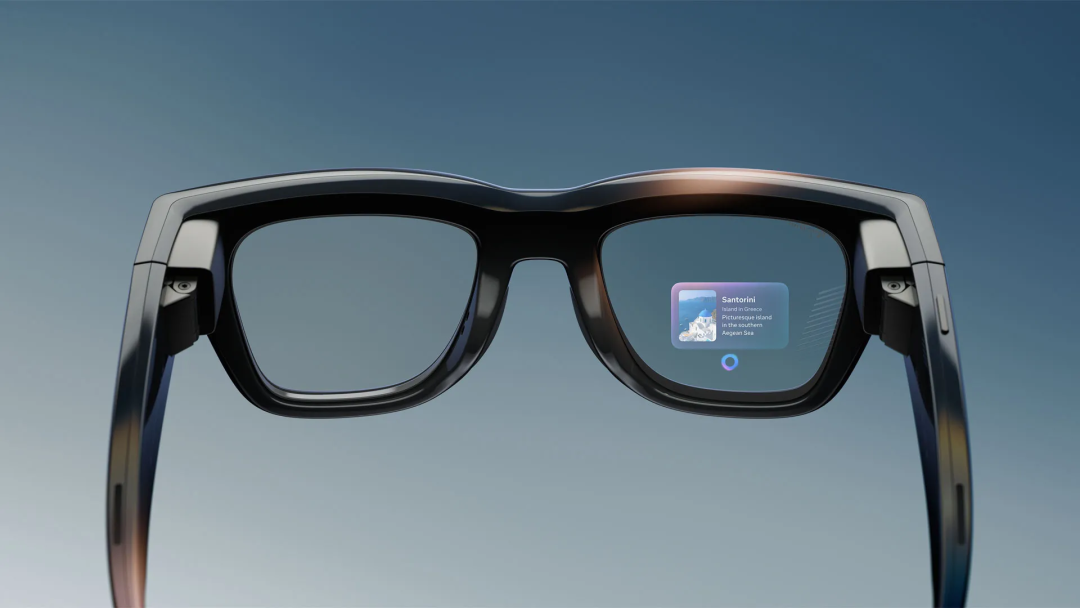
This signifies that Meta's AI glasses now truly possess the prototype of 'third-party display applications.' Previously, its AI glasses relied more on voice, audio, cameras, and Meta's own AI capabilities. With the new openness, more developers have the opportunity to present information directly in users' field of view.
This step may seem like just an interface opening, but in the competitive landscape of AI glasses, its significance is profound. For a pair of smart glasses to evolve from a single hardware product into a computing platform, they cannot rely solely on the manufacturer's self-developed functions; third-party developers must continuously expand the application boundaries.
02 Android XR Pressure Mounts, Meta Acts Early to Secure Developer Ecosystem
Meta's decision to open up third-party support for the Ray-Ban Display at this juncture is also influenced by external competitive pressures.
Google's Android XR Glasses are set to make their debut at the I/O Developer Conference opening on May 19th. Google has already laid the groundwork for its Android XR ecosystem's future development through partnerships with Samsung, XREAL, Warby Parker, and Gentle Monster, expecting these companies to introduce wearable devices equipped with Android XR technology to the market. (For more details, read: Android XR Empowers! Samsung's First AI Glasses Set to Launch Soon, Backed by Its 'Full Suite')
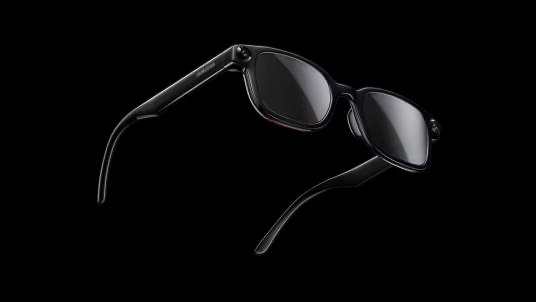
Samsung's 'Jinju,' potentially showcased at the I/O Conference
The advantage of the Android XR ecosystem lies in its seamless inheritance of the Android development system, Play Store distribution capabilities, and Gemini AI capabilities. Once Android XR glasses truly hit the market, a large number of Android developers and the application ecosystem could potentially migrate to this new generation of eyewear devices.
This poses a direct threat to Meta. Although Meta has a first-mover advantage in AI glasses sales and market recognition, it lacks the massive mobile developer base that Android enjoys, as well as a mature application distribution system like Google Play. If Android XR glasses can swiftly inherit the Android ecosystem in the future, Meta will find it challenging to maintain its platform advantage relying solely on self-developed AI functions and a few partner integrations.
Therefore, Meta's current opening of the Ray-Ban Display's development capabilities is more akin to an early strategic move to secure its position. It aims to have developers explore application forms for glasses around its hardware and establish recognition of the Meta AI glasses platform before Android XR glasses fully mature.
From this perspective, Meta is competing not just for users but also for developer mindshare. Whoever can help developers understand earliest how AI glasses applications should be designed will have a better chance of defining the future software ecosystem for AI glasses.
03 Open Ecosystem Still in Its Infancy, Meta Lacks Mature Commercial Closed Loop
Of course, Meta's current open ecosystem is still in its nascent stages. Its open third-party development capabilities are more akin to a developer preview than a mature application store. Developers can engage in prototype development, testing, and small-scale sharing, but there is still no entirely clear path for how users will discover applications, how developers will monetize, and how the platform will review and distribute them.
This is another area where Meta must make strides. AI glasses involve cameras, microphones, location, visual recognition, and personal data, making privacy sensitivity far higher than that of ordinary smartphone applications. How Meta manages third-party application permissions, data calls, and user safety will directly impact the speed and boundaries of ecosystem openness.
At the same time, whether a platform can truly succeed often hinges on whether a few must-have third-party scenarios emerge. Currently, third-party applications on AI glasses have not yet formed strong must-have categories similar to social media, maps, payments, and short videos in the smartphone era.
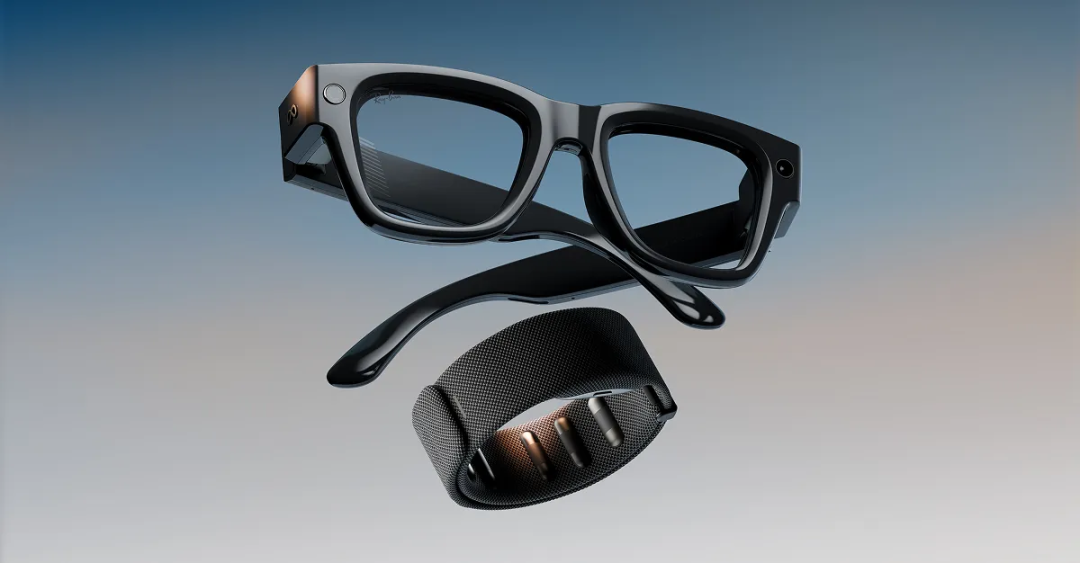
Therefore, Meta's current openness is more like building platform infrastructure. It has the hardware, development tools, AI capabilities, Neural Band input, and funding programs for developers and organizations, but it is still far from a complete application ecosystem.
However, Meta still holds one significant advantage: its AI glasses are already being sold. If hardware installation volumes are too small, developers will not see a return on investment; without developers, there will be no content ecosystem; without a content ecosystem, hardware will be even harder to sell, ultimately trapping itself in a vicious cycle.
Meta's approach is more pragmatic. It first launched the display-less Ray-Ban Meta, using photography, audio, AI assistants, and a fashionable eyewear appearance to open up the market and get users to accept wearing smart glasses. Subsequently, it added display capabilities and Neural Band input, gradually enhancing its platform attributes.
For developers, whether the hardware has a certain user base is an important prerequisite for deciding whether to invest. Meta's previously accumulated sales and user recognition are precisely the confidence it has in driving third-party ecosystem development.
04 AI Glasses Competition Enters a New Phase
From an industry perspective, Meta's opening of third-party support for the Ray-Ban Display signifies that the competition for AI glasses has entered a new phase. In this phase, major players are competing on ecosystem capabilities. Whoever can engage third-party developers, enable AI glasses to support more scenarios, and establish a stable distribution and commercialization system will likely emerge victorious.
Meta's strengths lie in hardware sales, Ray-Ban brand partnerships, Meta AI, a social content ecosystem, and long-term AR/VR technology accumulation; its weaknesses are the lack of a massive developer base and a mature distribution ecosystem like Android or iOS.
In comparison, although the Google and Android XR camp may be slightly slower in hardware implementation, once their ecosystem launches, it will naturally have stronger software migration capabilities. The same goes for Apple, whose ecosystem has always been a formidable strength, and once its AI glasses product lands, it will also exert significant pressure on Meta.
This is why Meta must accelerate its openness. It cannot wait for Android XR glasses to form a scale before building its ecosystem; instead, it must leverage its first-mover advantage in AI glasses hardware to define how developers should design applications for glasses in advance.
Overall, Meta's opening of third-party support for AI glasses marks the beginning of its attempt to transform AI glasses from a single hardware product into a lightweight computing platform. In the short term, Meta's open ecosystem is most likely to spawn lightweight scenarios such as real-time information, contextual assistance, accessibility services, sports and health, navigation reminders, and AI Agents, rather than complex games or heavy applications. These applications will not occupy users' attention for long periods like smartphone apps but will appear in a more fragmented, immediate, and real-world-integrated manner.
In the long run, if Meta can continue to improve its development tools, distribution system, commercialization mechanisms, and privacy and security frameworks, and truly integrate AI glasses, Neural Band, Meta AI, and the third-party developer ecosystem, it will have the opportunity to build its own ecological platform before Android XR enters the market on a large scale.
It can be said that the new round of competition among major players has only just begun.
-
Ofilm Teams Up with ADSensE to Propel Large-Scale Deployment of All-Solid-State LiDAR Powered by ADS6311 Chip!
-
![]()
Loss of 2.5 Billion Yet Facing Strong Demand for Shares? Another Battle for Control of Lianchuang Electronics
-
![]()
Huawei’s Enjoy Series Flies Off the Shelves, Prompting Xiaomi to Double Down on Budget Smartphones
-
![]()
Beijing Hyundai's Top Executive Criticizes Industry Disorder: Certain Brands Treat Customers as Beta Testers
-
![]()
The domestic mobile phone market has declined for five consecutive quarters! Huawei defies the trend with significant growth: maintains its top market share
-
Annual Revenue Surpasses 3 Billion: An Automotive Trim 'Little Giant' Makes Its Debut on the Beijing Stock Exchange
-
![]()
The Space Force Wants to Spend $30 Billion on Rocket Launches: Is Trump Doubling Down, and Is SpaceX the Big Winner?
-
![]()
Going Crazy! One out of Every Three Plug-in Hybrids Sold in Europe is a Chinese Vehicle