AI Smartphones: ByteDance Pumps the Brakes, Dreame Steps on the Gas
 06/16 2026
 479
479
Following up on our previous article, "Anker Yang Meng Speaks Out for the Fourth Time: Transitioning from Easy Mode to Hard Mode", it's clear that smartphones dominate the deep-sea category (with a market size hovering around $100 billion).
Currently, the smartphone market is valued at $500 billion, PCs at $200 billion, and tablets at approximately $60 billion.
Amidst the current AI hardware craze, AI smartphones are generating significant buzz. ByteDance's Doubao AI smartphone, launched in collaboration with ZTE last year, initially sparked excitement (refer to "Can ByteDance's $10 Billion Hardware Dream Find Success with AI Smartphones? | Hard Insights"). However, ByteDance, the pioneer in this space, has recently encountered setbacks.
ByteDance's AI smartphone project is undergoing substantial personnel shifts. Media reports indicate that Lin Xi, a key member of ByteDance's AI hardware team Ocean and the leader of Doubao smartphone hardware, has recently departed the company.
Prior to joining ByteDance, Lin Xi worked at Huawei, where he served as the hardware product leader for the Huawei Pura X foldable phone. The Pura X was a resounding success upon launch, with pre-orders surpassing 1.2 million units within 48 hours. By the end of 2025, cumulative sales exceeded 1.1 million units, and shipments reached 1.5 million units within a year of release. These accomplishments mark a significant milestone in his career.
Despite this impressive track record, Lin Xi's abrupt departure just before the release of the second-generation Doubao AI smartphone casts doubt on the project's progress and commercialization. The highly anticipated second-generation AI smartphone now faces an uncertain future.
------
Meanwhile, Dreame has made a bold announcement that its new project, Eclix, will enter the AI smartphone market. The project is spearheaded by Yu Lei, a seasoned veteran in the mobile industry and former vice president of Gionee. Late last year, I had the privilege of adding Yu Lei on WeChat and briefly chatting with him before he joined the Dreame MOVA system. A review of his WeChat moments reveals that he joined in March this year, and within just two to three months, he has swiftly established a preliminary business direction and assembled a team. The team now comprises around 60 members and is projected to expand to 300 by the end of the year. The first-generation AI smartphone is slated for release this autumn, with shipments planned for October, aiming to hit the market before Singles' Day. Currently, core research and development are nearly complete, and the project is about to enter the full-device testing phase. 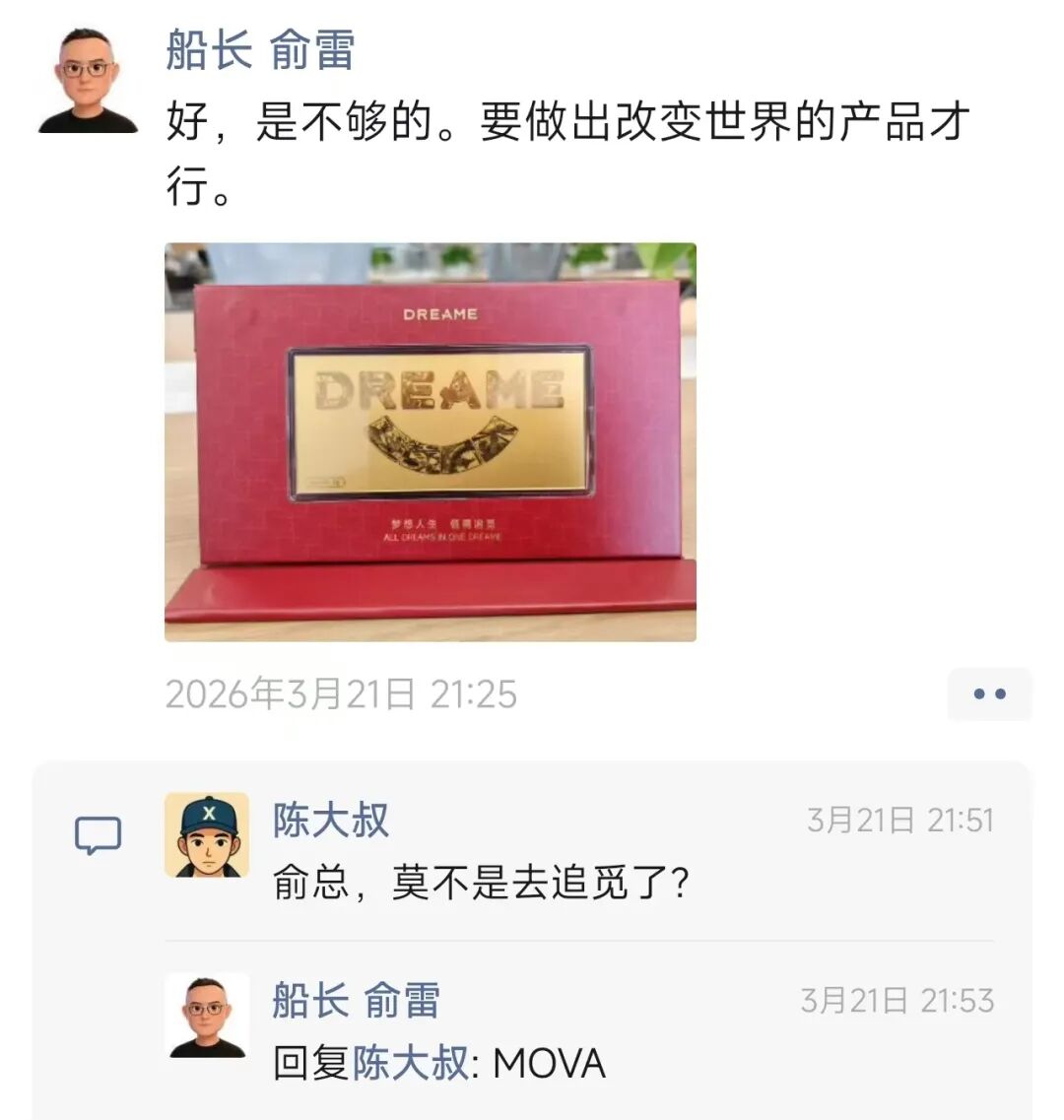
His WeChat nickname is "Captain," and interestingly, he hails from Hangzhou—the same hometown as DJI's Frank Wang, who also ventured to Shenzhen for the smartphone industry. Gionee may not be a familiar name to the younger generation, but from 2006 to 2008, it was the second-best-selling brand in China, trailing only Nokia and Samsung. In 2016, Gionee reached its zenith, selling 40 million units annually. As an absolute veteran in the mobile industry, Yu Lei faces no encumbrances in his AI smartphone venture. Lei Feng Network conducted an exclusive interview with Yu Lei about his AI smartphone project, which you can read in "Exclusive Interview with Eclix's Yu Lei: When China's Top Operator Decides to Build an AI Smartphone". I won't delve into the details here but will highlight a few key points:
1. AI smartphones must revolutionize interaction methods, with voice interaction as a major breakthrough.
Yu Lei: I don't believe current smartphones can genuinely be called 'AI smartphones.' The primary reason is that interaction methods haven't undergone significant changes. When Steve Jobs unveiled the iPhone in 2007, its most revolutionary feature was the transformation in interaction methods—we transitioned from keypad phones to touchscreens. To become the next generation of products, interaction methods must evolve.
The key interaction breakthrough for AI smartphones is the shift from touchscreens to voice. Our smartphones will primarily utilize voice interaction, supplemented by multimodal inputs.
2. Doubao AI smartphones are valiant explorers but remain in the Symbian era.
Yu Lei: I consider us all valiant explorers, even though our exploration paths diverge. Doubao's practical experience provides us with invaluable insights and support.
However, I believe GUI is not revolutionary but rather a transitional technology. Current AI smartphones are akin to the Symbian or Windows Mobile era of smartphones.
3. Apps will vanish; we aim to build an app-less smartphone.
Yu Lei: Users don't truly need apps; they need app functionalities. We aspire to create a smartphone that doesn't require apps. Users won't need to tap icons on the screen or switch between apps. A single voice command can accomplish tasks that previously required dozens of steps. We believe the essence of AI smartphone interaction is AI directly invoking atomic capabilities to meet user needs, without requiring users to see app interfaces.
4. The timing is ripe for AI smartphones. Major players like OpenAI and Stepfun are also entering the market. Venturing into this alone might be a misstep, but having companions suggests we're on the right path. Moreover, the new AIOS will experience exponential growth. The transition from feature phones to smartphones and from smartphones to AI smartphones represents a fundamental leap.
------
Indeed, the concept of an app-less smartphone is highly innovative. The iPhone's groundbreaking impact stemmed from its shift from keypads to touchscreens, ushering in the golden age of smartphones.
Now, AI smartphones aim to redefine interaction methods, and I'm eagerly anticipating this breakthrough.
I noticed in his WeChat moments that he plans to write a 30-year history of Chinese smartphones, which piques my interest. After reading "China's Turbulent 30 Years", I imagine the smartphone industry's 30-year history is replete with compelling narratives.
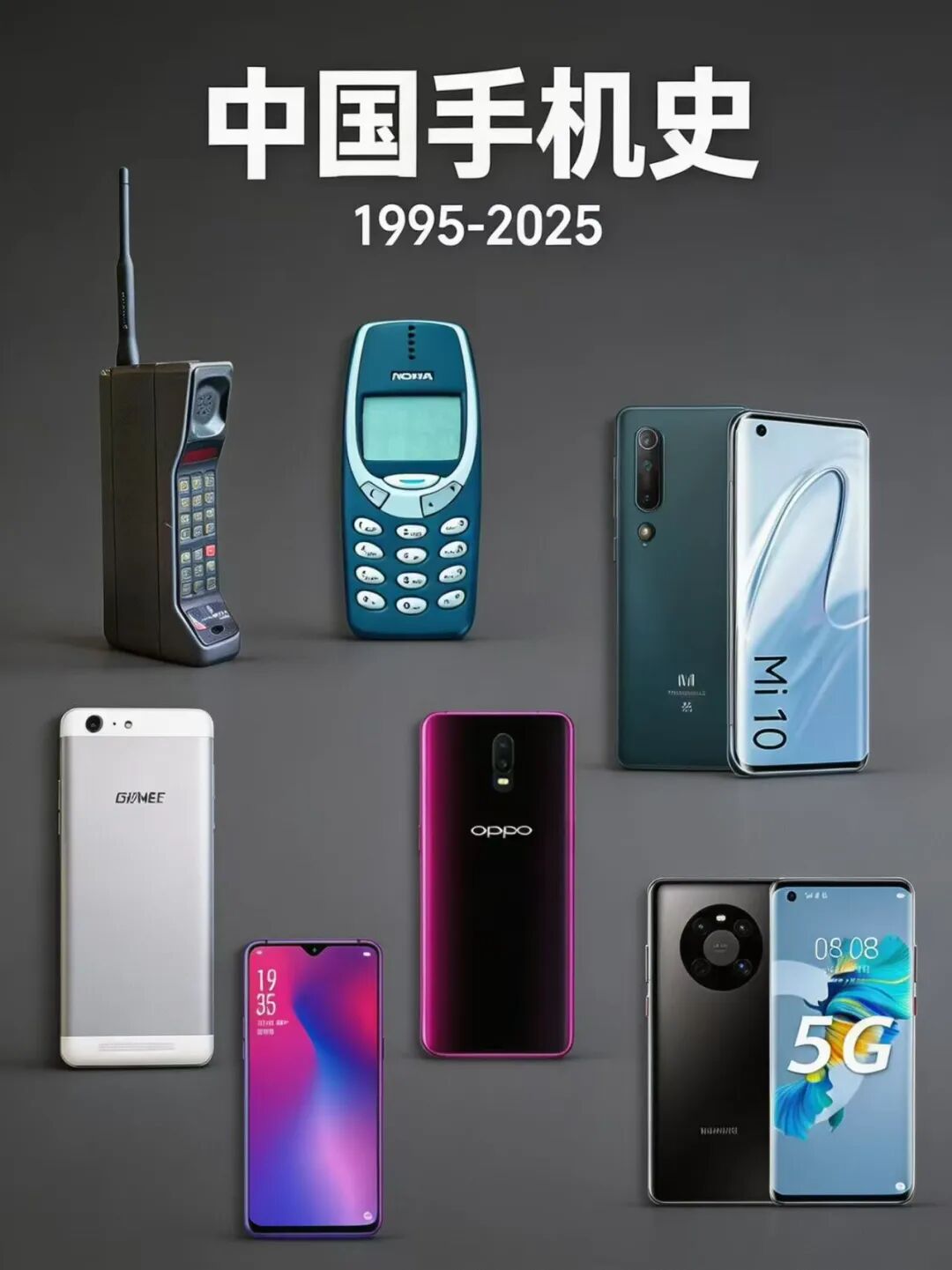 Image source: Yu Lei's WeChat moments
International brands once reigned supreme, with Nokia in one hand and Motorola in the other, while Sony Ericsson was a favorite.
Domestic brands like the "ZHONG HUA KU LIAN" (ZTE, Huawei, Coolpad, Lenovo) were early frontrunners. Besides Gionee, brands like Bird (the "fighter jet" of mobile phones) and Tianyu (the king of knockoff phones) were once household names. Yu Lei has outlined the chapters for his "History of Chinese Smartphones" and was previously seeking a title to encapsulate the turbulent 30 years of the mobile industry. 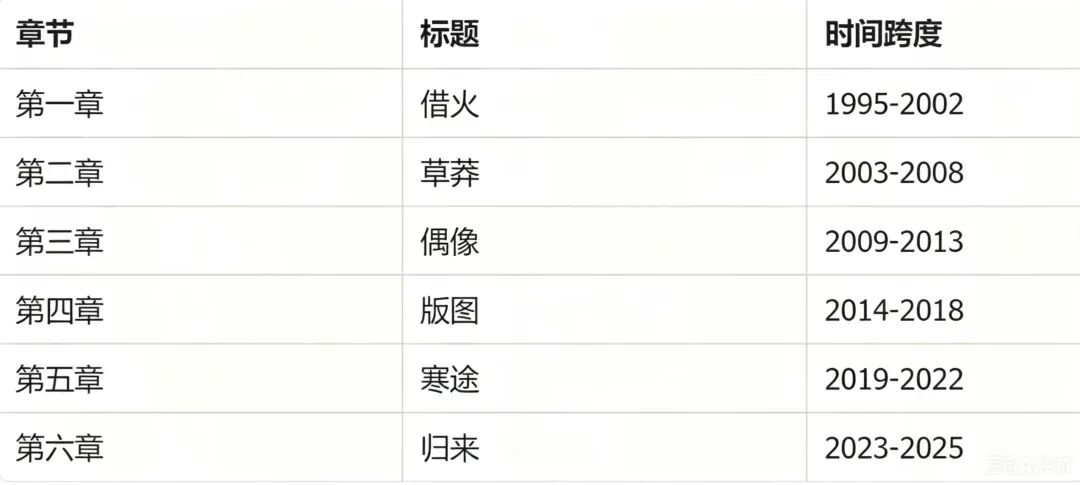
What title would you suggest? Feel free to join the discussion and reminisce about the history.
Epilogue: AI smartphones are an incredibly captivating category. In consumer electronics, no market is larger than smartphones. I believe AI smartphones will become a strategic focus for many companies in the coming years, attracting more brands to enter the field. According to Yu Lei, professionals in traditional smartphone development earned annual salaries in the tens of thousands, but those in AI smartphones now command millions. Undoubtedly, more people will flock to this space.
-
![]()
AI Payment War: Strategic Maneuvers by WeChat and Alipay
-
4 Individuals Whose Destinies Were Altered by Jensen Huang
-
![]()
Is DingTalk Still Necessary in the AI Era?
-
![]()
Exclusive Insight | DeepSeek's Funding Puzzle: 100 Billion Yuan in Interest, Yet 50 Billion Yuan Left Unclaimed
-
Another Domestic GPU is About to Hit the Market, with Tencent as Major Shareholder and Big Client
-
![]()
Duan Yongping Offers Insightful Perspectives: New Hurdles for Long-Term AI Investment
-
![]()
Chinese New Energy Vehicle Design: Stepping Out of the Shadows
-
![]()
Li Auto Awards Executives 35 Million Shares Based on Performance Metrics