Huawei Leads, OPPO Faces Internal Challenges, Honor Grapples with Identity: The Contrasting Fortunes of China's Smartphone Titans
 07/06 2026
 493
493
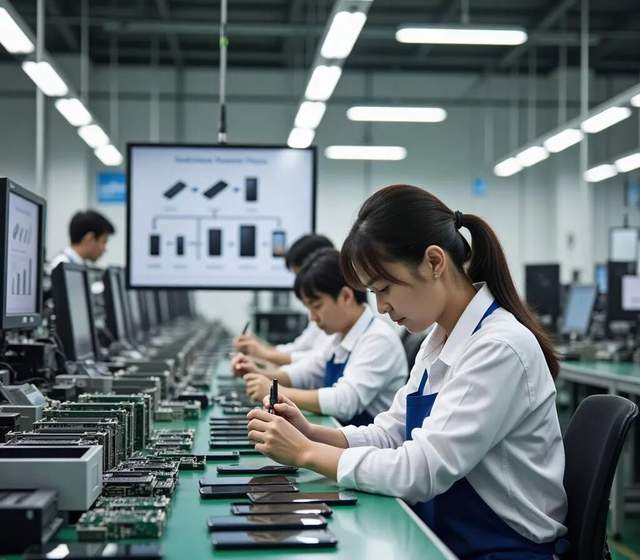
The domestic smartphone market has reverted to a landscape reminiscent of the Warring States period, characterized by intense competition and shifting alliances.
According to the latest sales figures, in the domestic smartphone market during Week 20 (May 11-17), Huawei emerged as the leader with a 22.6% market share, trailed by Apple at 20.7%, vivo (inclusive of iQOO) at 14.6% in third place, OPPO (encompassing OnePlus and realme) at 14.3% in fourth, Xiaomi slipping to fifth with 13.5%, and Honor securing a 9.7% share.
The smartphone industry has now matured into a fiercely competitive arena, where even minor fluctuations in market share necessitate relentless efforts from manufacturers. Today, setting aside Apple, the sole foreign contender, let's delve into the diverging trajectories of the top five domestic smartphone makers.
Huawei's Ascendancy: Dominating Across All Price Tiers
Unlike some manufacturers that specialize in a single price segment, Huawei has achieved a commanding presence across the entire spectrum.
From the budget-friendly Enjoy series priced under ¥1,000, the mid-range nova series around ¥2,000, the premium Pura and Mate series above ¥4,000, to the cutting-edge Mate foldable series costing ¥10,000, Huawei stands as the sole domestic manufacturer capable of launching blockbuster products in every major price bracket.
A pivotal factor to consider is the maturity of the HarmonyOS ecosystem. Following several major updates, HarmonyOS now poses a formidable challenge to Apple's iOS system. Consequently, in the ultra-premium market segment above ¥6,000, many affluent and patriotic consumers have shifted their allegiance to Huawei.
In terms of channel profit distribution, the lucrative returns from the premium market propelled Huawei's overall gross profit margin to 44.4% in 2025, instilling confidence for further channel expansion. Reuters reported that Huawei offered more generous profit-sharing to incentivize dealers to become exclusive partners, a strategy that yielded significant results.
However, Huawei does face concerns, particularly regarding its overseas market, which remains a bottleneck. A report by Omdia Consulting revealed that Huawei's overseas sales accounted for a mere 6.6% in 2025, while other major domestic manufacturers typically exceeded 50% overseas. In the short term, Huawei is unable to resolve external market disruptions and must rely on its automotive and other ventures to drive overseas growth.
OPPO's Predicament: Cold Reception Domestically, Warm Welcome Overseas
As the "second brother" among domestic manufacturers, OPPO currently finds itself in a paradoxical situation—struggling domestically while thriving overseas.
Thanks to its global premium strategy, OPPO is perceived as a high-end brand from the East in foreign markets. In 2025, OPPO's global average selling price ranked third worldwide, and its premium Find series has gradually gained traction in European and Southeast Asian markets in recent years.
However, OPPO has faced frequent controversies on the domestic front. A Mother's Day marketing campaign backfired due to cultural insensitivity, underscoring the need for OPPO's marketing team to better grasp domestic consumer sentiment.
Additionally, two of OPPO's domestic strategies have come under scrutiny. Firstly, by streamlining its mid-to-low-end product lineup, OPPO missed out on government subsidies for affordable smartphones—a benefit that competitors capitalized on, resulting in a loss of entry-level market share. Secondly, abandoning in-house chip development has limited OPPO's narrative space in the premium market.
Establishing a premium foundation in the AI era poses an unavoidable challenge for OPPO moving forward.
vivo's Bold Move: Self-Revolution
Among the leading smartphone manufacturers in 2026, vivo stands out as a rare example of success both at home and abroad.
vivo underwent a significant organizational restructuring. Previously adhering to a conservative "follow-the-leader" approach with a complex organizational structure, vivo transitioned to "agile decision-making" by 2026, flattening its hierarchy and delegating decision-making authority to swiftly respond to market changes.
Externally, vivo deepened its collaboration with Zeiss Optics and leveraged its self-developed imaging chip to bolster its imaging prowess. The X300 series demonstrated superior performance in long-distance, portrait, and video creation scenarios compared to competitors in the same price range, maintaining robust sales in the sub-premium market above ¥4,000.
However, an Omdia report indicates that approximately 40% of vivo's sales originate from India and Southeast Asia, exposing vulnerabilities in its global布局. India's high policy risks and Southeast Asia's increasingly competitive market render these overseas segments unstable.
For vivo's future, consolidating its domestic market while exploring new markets in Latin America and Eastern Europe is crucial.
Xiaomi's Strategic Shift: Pivoting to Automotive
Xiaomi, in a strategic transition phase, relinquished its position among the top three domestic smartphone manufacturers in May.
The root cause lies in dual pressures: escalating component costs in the domestic market squeezed profit margins in the mid-range segment, while the premium market remained elusive due to fierce competition from Huawei and Apple, thwarting sustained breakthroughs.
Globally, Xiaomi's foundation remains robust. Lu Weibing, President of Xiaomi Group, mentioned in a December 2025 speech that Xiaomi's smartphone shipments had ranked among the top three globally for five consecutive years, with a strong foothold in the European market.
More critically, Xiaomi's foray into the automotive business has transformed capital market perceptions, shifting Xiaomi from a pure smartphone manufacturer to a comprehensive tech platform encompassing "people, vehicles, and homes."
Whether Xiaomi can leverage the brand momentum from its automotive business to rejuvenate its smartphone segment will be pivotal. Currently, new users attracted to Xiaomi's automotive offerings are not tech-savvy young males but middle-aged and female consumers with stronger purchasing power and a preference for prestige. Their brand loyalty to Xiaomi smartphones remains to be seen.
Honor's Identity Crisis: Struggling for Recognition
Honor, the "fifth brother" among domestic manufacturers, has grappled with identity recognition issues since severing equity ties with Huawei.
Overseas market growth has been Honor's brightest achievement. After becoming an independent brand in 2020, Honor swiftly broke through in European, Latin American, and Middle Eastern markets. By 2025, its global shipments reached 71 million units, with overseas sales exceeding 50% for the first time, successfully transforming into a globalized smartphone manufacturer.
Domestically, Honor initially capitalized on its Huawei lineage, becoming a conduit for patriotic sentiment and a "substitute for unavailable Huawei devices."
However, this era of benefit is waning. In August 2023, Huawei's Mate60 Pro, powered by the Kirin 9000s chip developed through "indigenous innovation," shattered foreign monopolies on 2nm chip manufacturing. With the "real Monkey King" unveiled, the true leader of domestic smartphones became evident.
Deeper internal governance anxieties have surfaced. After shedding Huawei's halo, Honor's IPO progress stalled, and channel risks emerged from abandoning the "national distributor" model, indicating a painful period of organizational restructuring.
Without Huawei's brand support, Honor must discover its unique technological identity and brand essence.
Breakthrough Strategies: AI + Globalization
Examining the five domestic manufacturers collectively, three key trends will shape the domestic smartphone market in the second half of 2026.
Firstly, the premium duopoly of Huawei and Apple will solidify, accelerating the consolidation of the mid-range market. Huawei and Apple will continue to dominate the ¥6,000+ premium segment, with little prospect of either displacing the other. As "deities clash," mid-range players face the greatest pressure.
Secondly, artificial intelligence will emerge as the next growth engine. With hardware specifications reaching their limits, user demand remains unfulfilled. The next wave of products capable of driving consumer spending will focus on AI-driven scene experiences. Manufacturers that can memorize user habits and address big data privacy concerns will gain a competitive edge.
Finally, globalization has become imperative. With clear ceilings in domestic market competition, smartphone manufacturers' future survival hinges on expanding overseas markets, which depends on localized operations, overseas supply chains, and deep brand-building in foreign markets.
So, who will claim the domestic smartphone sales crown in June? Let's wait and see.
-
![]()
The Surprisingly Significant Impact Difference Between Quiet and Noisy Cars!
-
![]()
Breaking Through Storage Cycle Barriers: How AI Large Models and Coding Technology Synergize to Drive Transformation in the Security Industry
-
Facilitating the Slimming of Camera Modules! O-film Obtains Utility Model Patent for Periscope-Type Reflective Component
-
![]()
Hikvision Raytine’s Millimeter-Wave Body Imaging Security Inspection Device Achieves ECAC SSc Category A Standard Level 2.1 Certification for European Civil Aviation
-
![]()
Global Market Share for Security Windows Hits 26%! This Optical 'Little Giant' Makes Its Debut on NEEQ
-
![]()
The Evolutionary Path of Agent Engineering: From Prompt to Harness by Zhang Yutao, Co-founder of Moonshot AI
-
![]()
Profits and stock prices are both declining, so why are executives from these auto companies increasing their purchases?
-
![]()
Burning Tens of Billions of Dollars, Yet No Unified Definition for World Models