Debounce, Image Quality, and Low-Light Performance: A Comprehensive Test of vivo X300 Ultra and Pocket 4P—Which One Takes the Crown?
 07/06 2026
 380
380
Each has its own unique strength.
In the past two years, the threshold for video creation has significantly dropped. Previously, producing high-quality visuals necessitated professional gear; nowadays, even flagship smartphones claim to capture cinematic footage, and pocket gimbal cameras boast "cinema-grade" image quality.
Recently, I had the opportunity to test both the vivo X300 Ultra and the DJI Pocket 4P—one is a flagship smartphone designed for imaging, and the other represents the pinnacle of pocket gimbal cameras. Both devices emphasize video capabilities but are positioned and utilized quite differently.
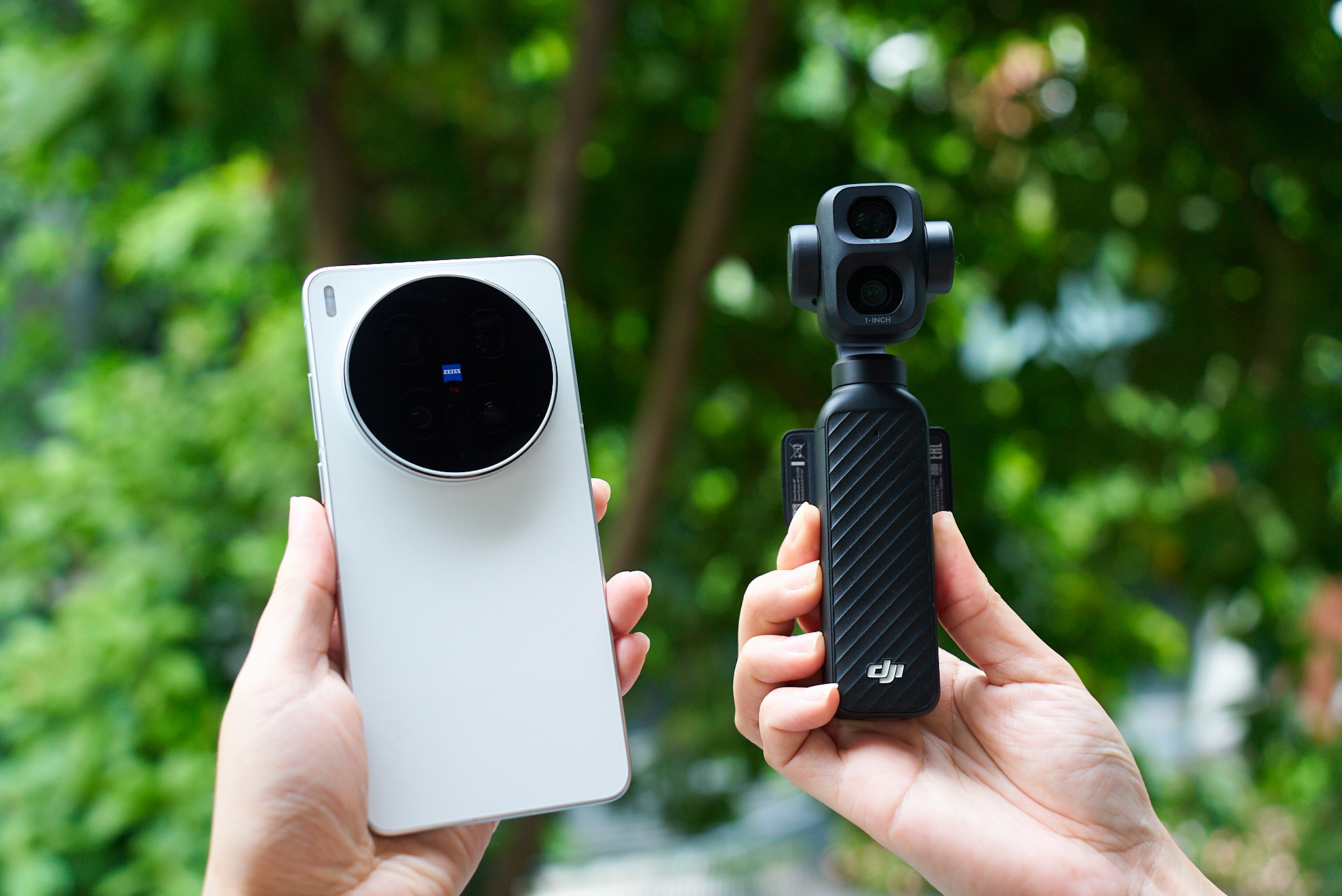
(Image Source: Leitech)
Today, Leitech will delve into, based on real-world experience, what each device offers in terms of video shooting and which one truly deserves the title of "pocket cinema machine." (Note: This article contains no sponsored content.)
In essence, the vivo X300 Ultra is a smartphone, while the DJI Pocket 4P is a gimbal camera specifically crafted for video. Smartphones are portable and ready to shoot at a moment's notice; gimbal cameras offer professional stability, with three-axis stabilization as a hardware advantage. However, gimbal cameras are often used less frequently due to the need for charging, memory cards, and file transfers. While smartphones may lack stability, they are always within reach.
Simply put, this is the difference between "casual shooting" and "serious shooting." Smartphones are perfect for capturing spontaneous moments in life, while gimbal cameras excel in scenarios where you plan to shoot and want to do it well.
For instance, if you spot an interesting scene on the street, you can start recording with your smartphone in just three seconds. But with a gimbal camera, you need to take it out of your bag, power it on, and adjust settings—by the time you're ready, the moment may have passed. Conversely, if you're planning to shoot a carefully crafted vlog, the stability and image quality advantages of a gimbal camera become apparent.
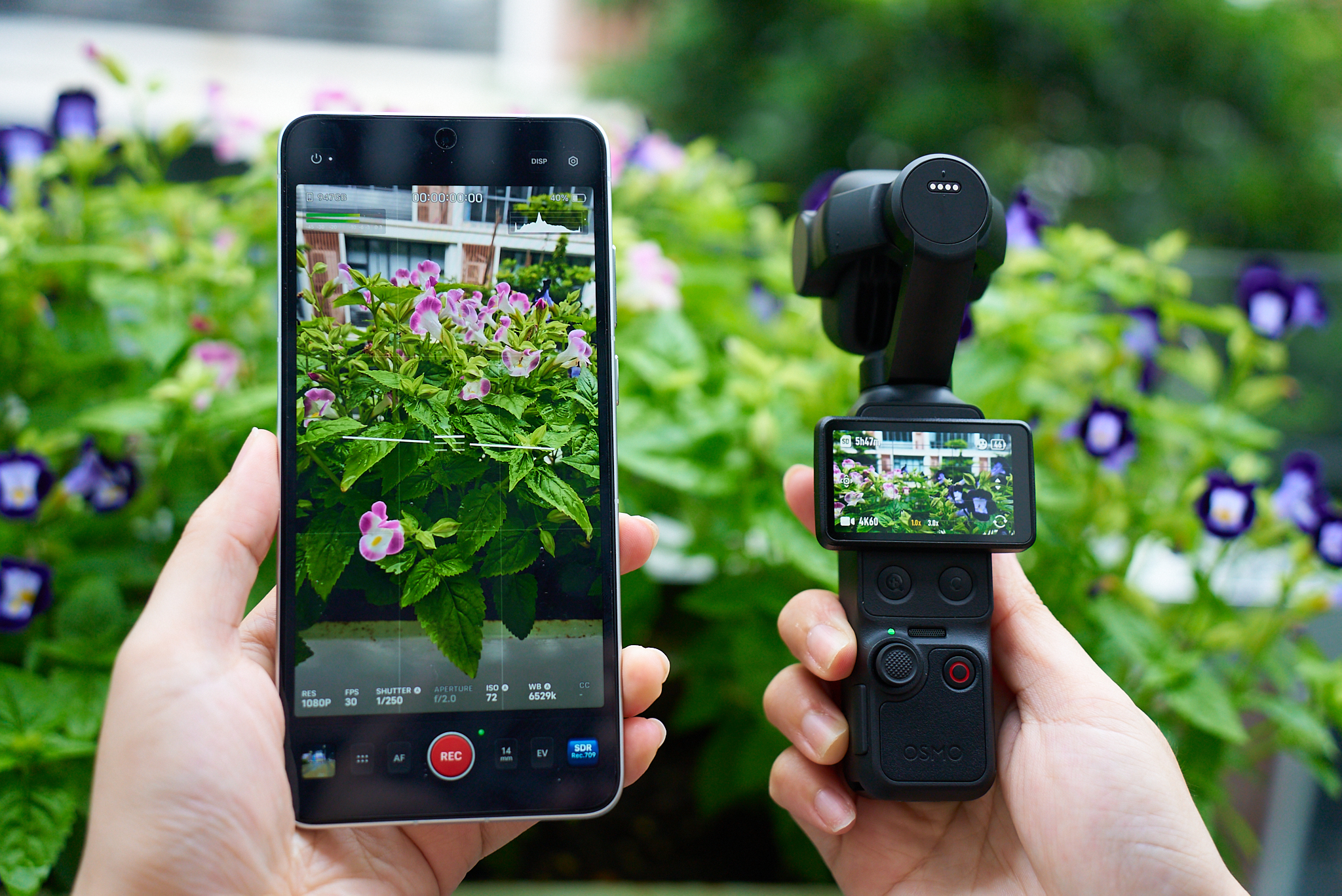
(Image Source: Leitech)
Now, let's examine the technical specifications. The vivo X300 Ultra supports full-focal-length 4K 120fps 10-bit Log recording, meaning all focal lengths—from ultra-wide to telephoto—maintain consistent high-specification recording capabilities. For a smartphone, this is impressive.
The DJI Pocket 4P supports 4K 240fps slow-motion recording (wide-angle) and 4K 200fps (medium telephoto), also with 10-bit color depth. The 240fps slow-motion can capture incredibly smooth footage with elevated frame rates, such as water droplets falling or pets jumping, with stunning results.
In terms of encoding formats, the vivo X300 Ultra introduces APV 422 encoding, offering greater flexibility for post-production color grading. The DJI Pocket 4P uses the D-Log 2 color curve, supporting up to 17 stops of dynamic range. Both perform well in post-production but with different focuses: vivo emphasizes encoding efficiency, while DJI prioritizes dynamic range.
However, specifications are merely numbers on paper—real-world experience is crucial. Testing revealed that the vivo X300 Ultra's 4K 120fps performs excellently in well-lit conditions, delivering smooth and detailed footage, but exhibits noticeable noise in low-light environments due to the physical limitations of smartphone sensors. The DJI Pocket 4P's 4K 240fps slow-motion, while offering higher frame rates, produces larger file sizes—a minute of footage can consume several gigabytes, demanding more from storage cards.
If you primarily shoot daily vlogs, 4K 60fps is sufficient, balancing quality and storage. Only consider high-frame-rate modes for slow-motion effects. Don't jump straight to the highest specs, or your storage will fill up quickly.
It's also worth noting that the vivo X300 Ultra supports full-focal-length 4K 120fps Dolby Vision recording, a unique feature among smartphones. Dolby Vision enhances brightness and darkness details and expands the color gamut, delivering stunning playback on compatible displays.
Another often-overlooked difference lies in their focal length approaches. The vivo X300 Ultra adopts a "full-focal-length coverage" strategy, ranging from 14mm ultra-wide to 400mm super-telephoto, aiming to handle any scenario. The DJI Pocket 4P, however, uses a "dual-focal-length complement" approach, featuring a 20mm wide-angle and a 60mm medium telephoto, with each focal length carefully refined. This difference affects your shooting habits and compositional thinking, which I'll discuss in detail later.
Both devices offer "cinematic" features but implement them differently.
The vivo X300 Ultra provides two modes: Film Style and Film Look. Film Style simulates a 2.4:1 cinematic aspect ratio and 24fps frame rate, overlaying film grain, halos, and vignettes for a retro cinematic feel. Film Look supports 4K 60fps high-frame-rate recording, replicating the layered colors of modern films for a more commercial blockbuster look.
The DJI Pocket 4P includes six stylized film filters (NC, CC, Fresh, Warm, Cinema, Retro), allowing users to choose styles based on the scene. These filters, fine-tuned by DJI, deliver excellent results straight out of the camera, ideal for users who prefer minimal post-production.
My real-world experience: vivo's Film Style mode offers a stronger "cinematic feel" but requires parameter adjustments for optimal results. DJI's filters are more plug-and-play, suitable for users who dislike post-production. For travel vlogs, DJI's "Cinema" filter provides great colors instantly, while vivo's Film Style may need parameter tweaking but delivers more professional results.
Vivo also offers a "Color Tone Master" feature, providing multiple preset styles and allowing fine-tuning of tone and color balance via a video color wheel. This is highly practical for users with some color grading experience, enabling custom color styles based on personal preferences.
DJI provides the D-Log 2 color curve, supporting 10-bit color depth to retain more highlights and shadows, offering extensive post-production flexibility. DJI also includes various style LUT files, allowing users to perform initial color grading and restoration with a single click in the app, lowering the barrier to professional color grading.
However, cinematic feel is subjective—the best choice is what suits you.
Stabilization is crucial for video shooting, directly impacting the viewing experience. The vivo X300 Ultra uses full-focal-length OIS (Optical Image Stabilization), compensating for shake through physical lens movement. The DJI Pocket 4P employs three-axis mechanical stabilization, adjusting the camera's orientation in real-time via gimbal motors.
Theoretically, mechanical stabilization offers superior stability, especially in motion scenarios. I designed several test scenarios:
First, walking while shooting. Both perform well, but differences are noticeable. The DJI Pocket 4P delivers smoother footage with minimal shake, akin to using a dolly, absorbing footstep vibrations almost entirely. The vivo X300 Ultra exhibits slight undulations, reflecting walking rhythm but remaining acceptable for social media sharing.
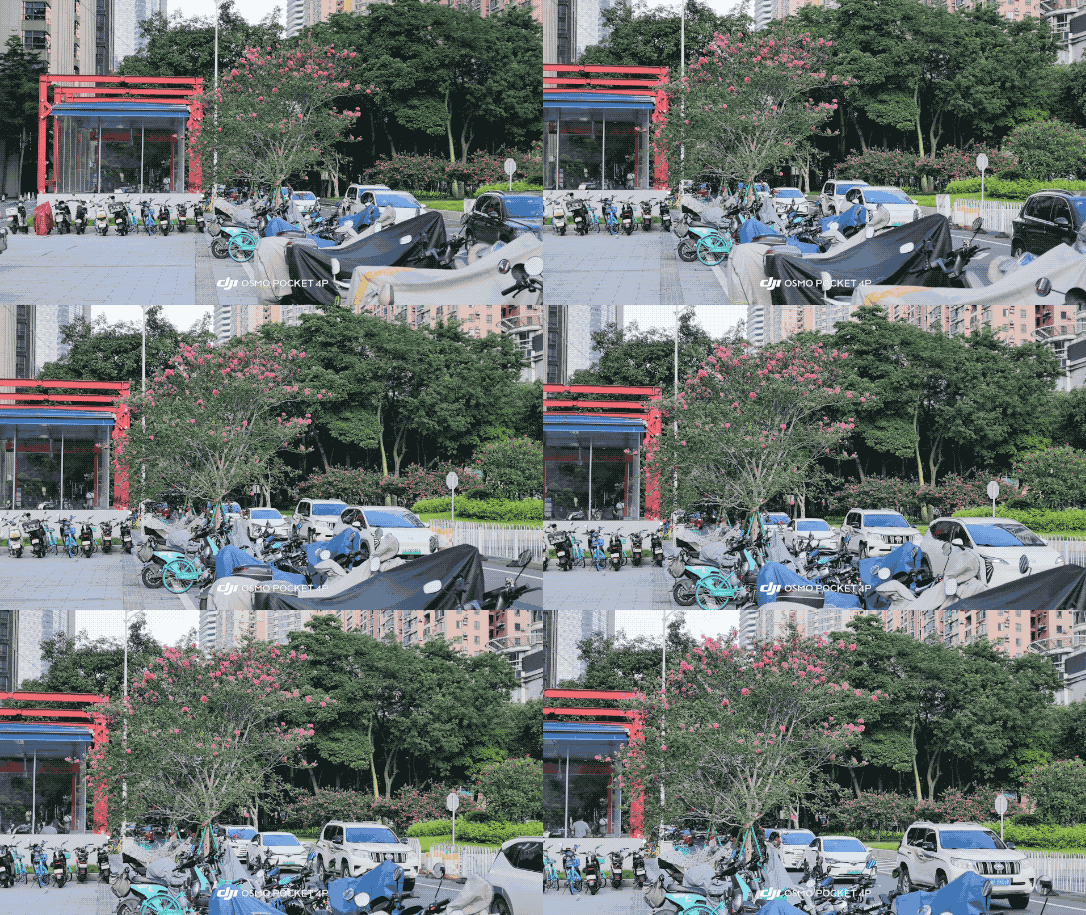
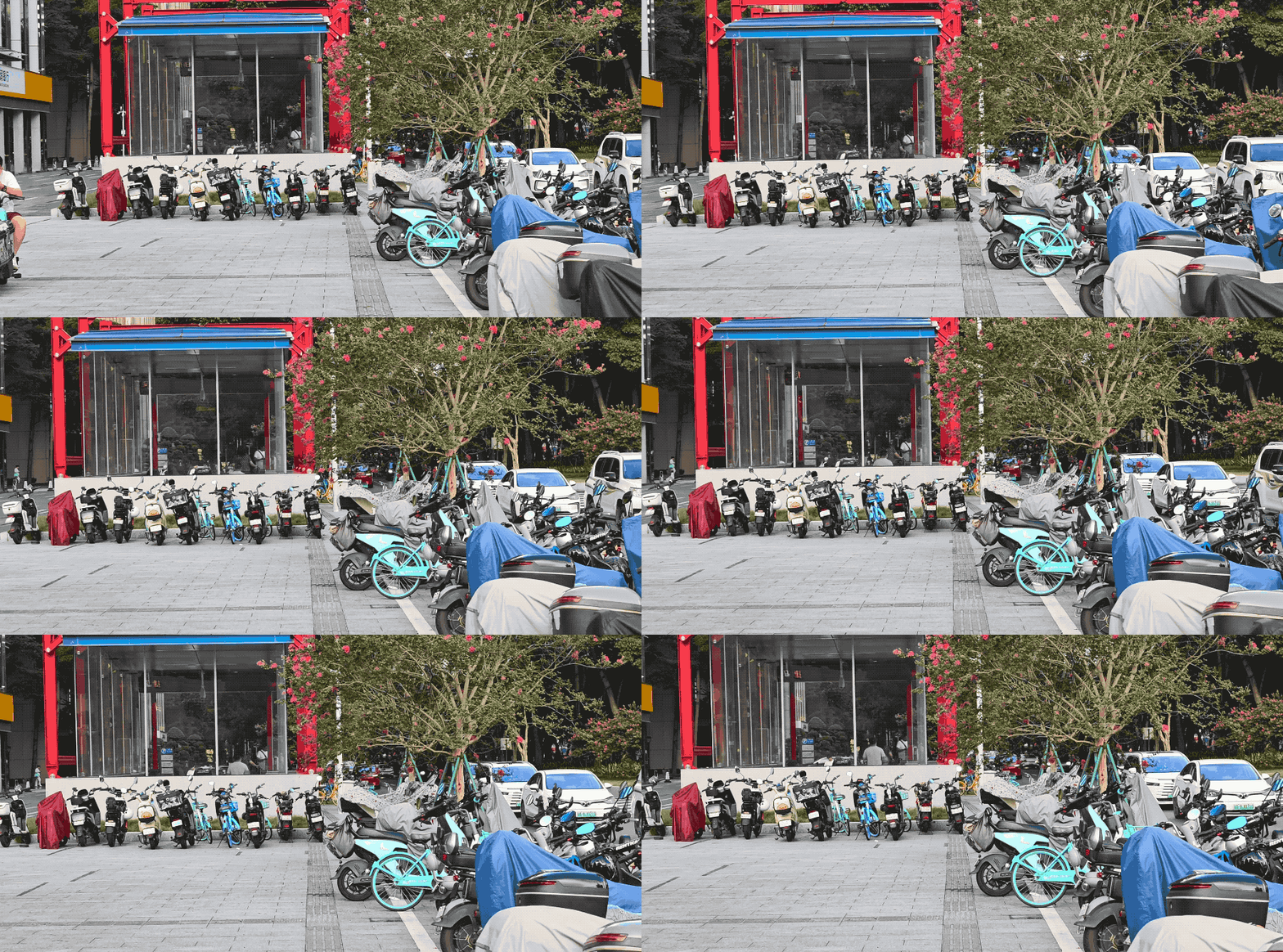
(DJI on top, vivo below; videos replaced later)
When navigating stairs (vertical movement), the DJI Pocket 4P's three-axis stabilization effectively suppresses up-and-down shake, maintaining a steady frame.
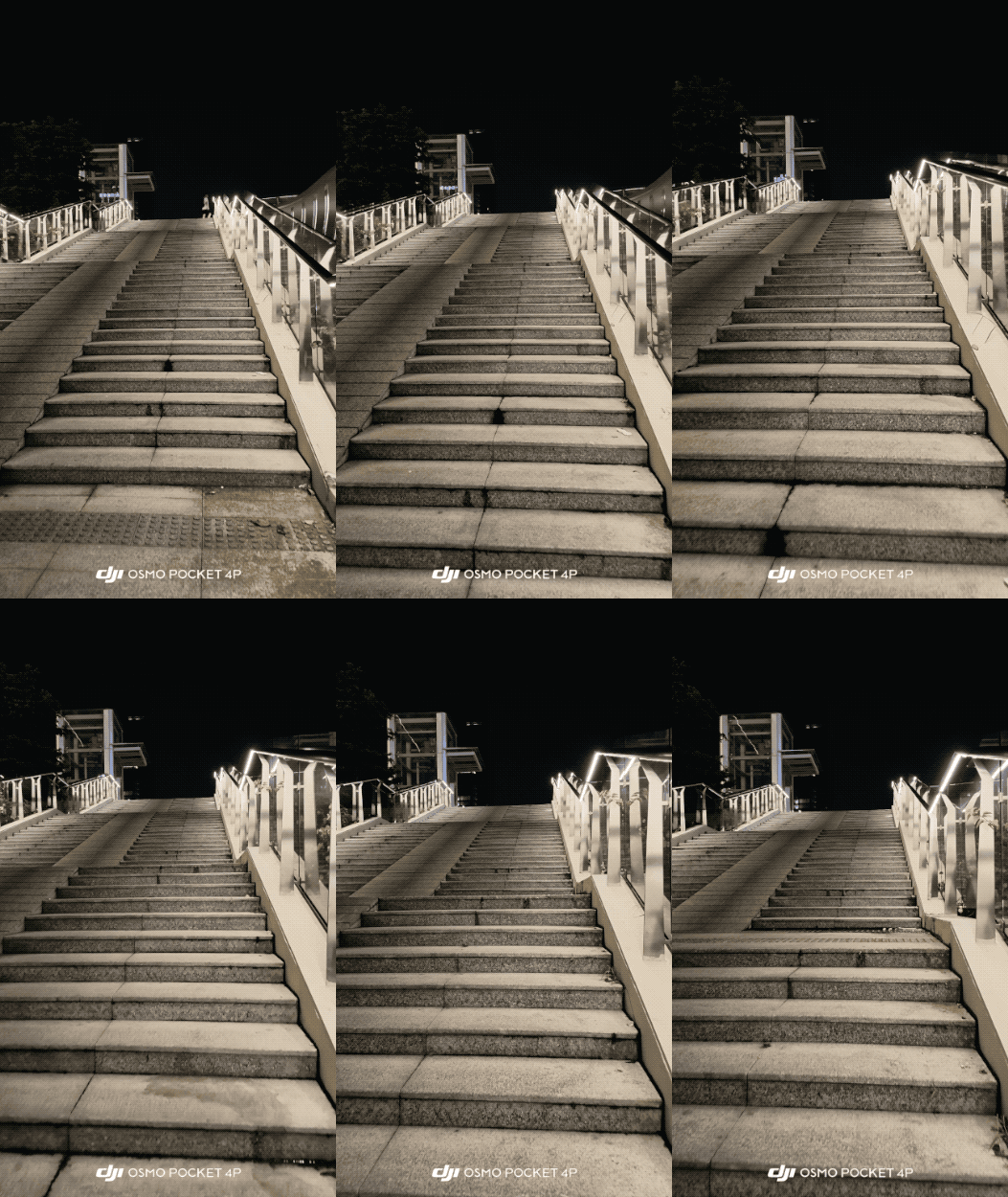
(Image Source: Leitech)
The vivo X300 Ultra shows noticeable undulations, especially when moving quickly up and down stairs, with handrails visibly bouncing. This scenario is common, such as shooting restaurant reviews or hotel environments, which often involve stairs.
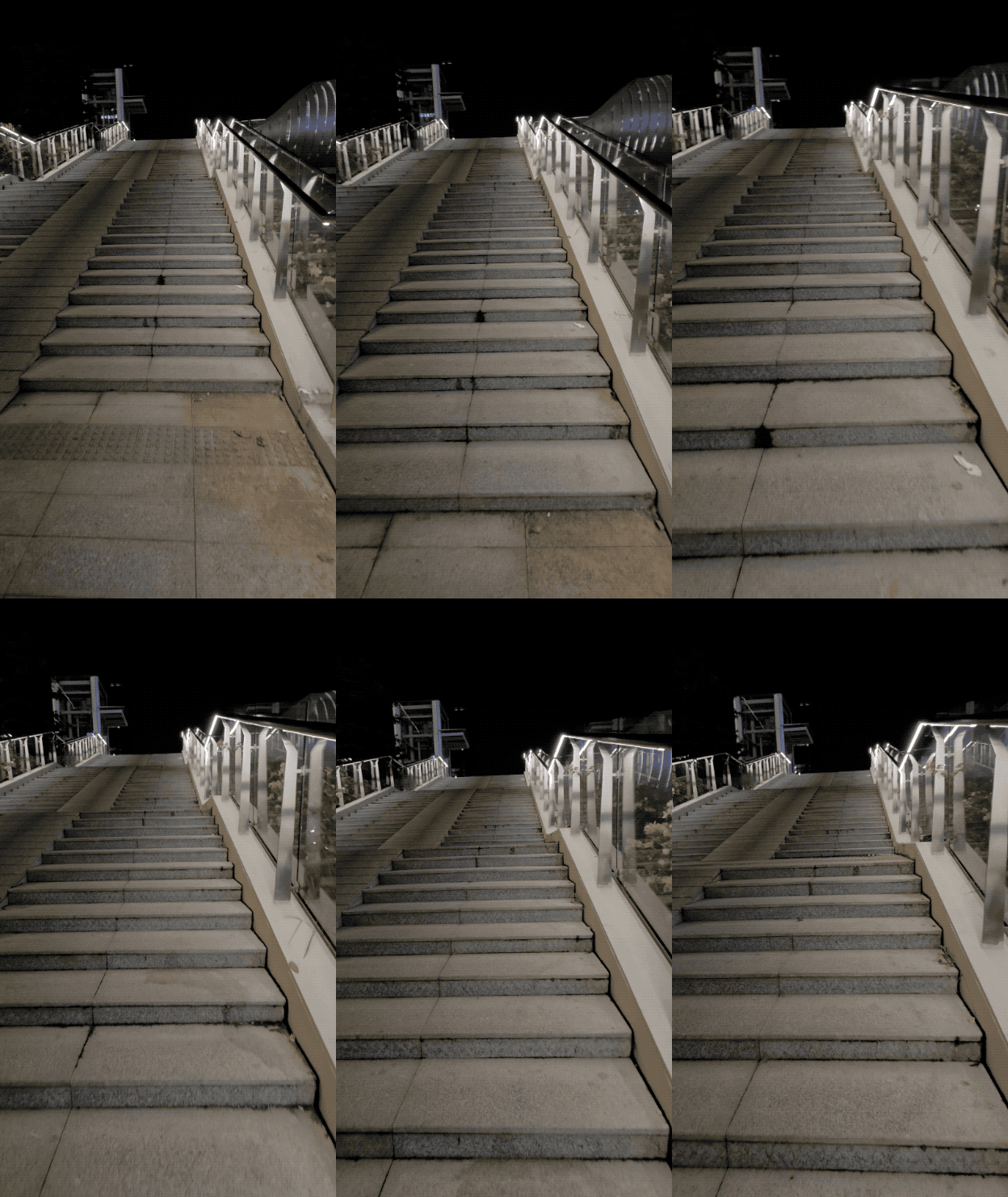
(Image Source: Leitech)
Another test scenario, discovered later, involves pivoting while walking to capture the surroundings, testing the device's panning capability. Here, the DJI Pocket 4P maintains stability with smooth turns, while the vivo X300 Ultra exhibits noticeable stuttering, especially during sharp turns, with sudden jumps and white balance shifts.
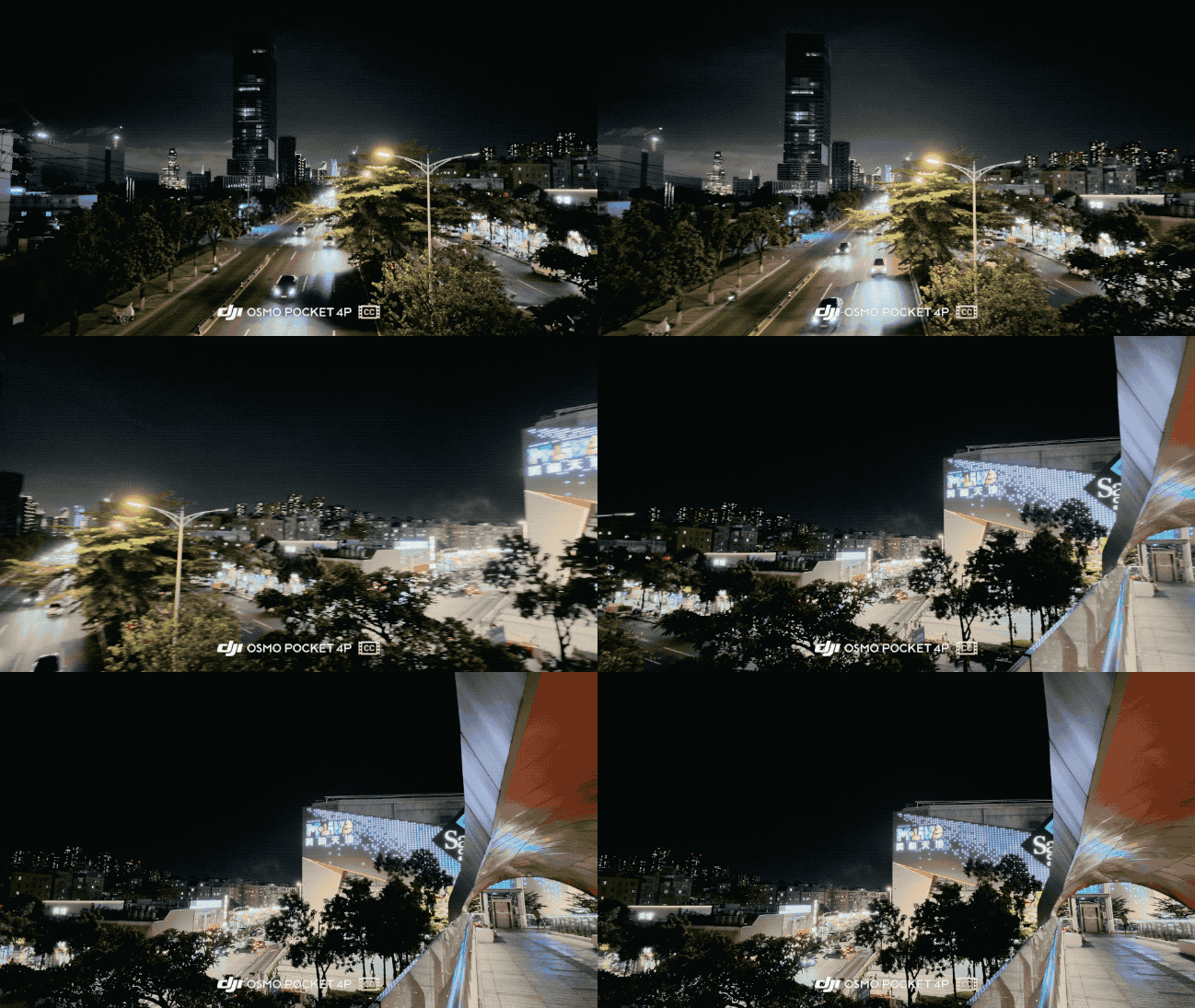

(DJI on top, vivo below; videos replaced later)
However, I found that the vivo X300 Ultra's stabilization performs better at the wide-angle end, with cropping at telephoto lengths, losing some perspective. The DJI Pocket 4P maintains consistent stabilization across all focal lengths without cropping. Thus, if you frequently shoot at telephoto lengths, the Pocket 4P's advantage becomes more pronounced.
Additionally, the vivo X300 Ultra offers a "Super Stabilization" mode, further enhancing stability via algorithms but with additional cropping. Testing showed that while footage becomes steadier, the perspective loss (field-of-view loss) is around 20%, equivalent to shifting from wide-angle to standard focal length.

(Image Source: Leitech)
This mode suits extreme motion scenarios like cycling or skiing but isn't recommended for daily use due to significant cropping and compositional limitations.
Another often-overlooked point: The DJI Pocket 4P's three-axis stabilization isn't just for video—it also stabilizes photos. For instance, shooting long-exposure photos with the Pocket 4P effectively reduces blur from hand shake. The vivo X300 Ultra's OIS offers a similar effect in photos, but the physical advantage of mechanical stabilization remains superior.
In summary: If you primarily shoot motion scenarios or need to shoot while moving, the DJI Pocket 4P is the better choice, as its three-axis stabilization's physical advantage is hard to fully replicate with software algorithms. For static or slow-moving scenes, like chatting in a café or shooting products in an office, the vivo X300 Ultra suffices and offers greater convenience.
Beyond stabilization, low-light image quality is another major concern. I intentionally compared both devices in extremely dim environments, and the results were surprising: The Pocket 4P significantly outperformed the vivo.
Specifically, in dark scenes like nighttime streets or dimly lit interiors, the Pocket 4P retains impressive dark detail, with visible road signs, sky objects, and textures, delivering a relatively clean image.
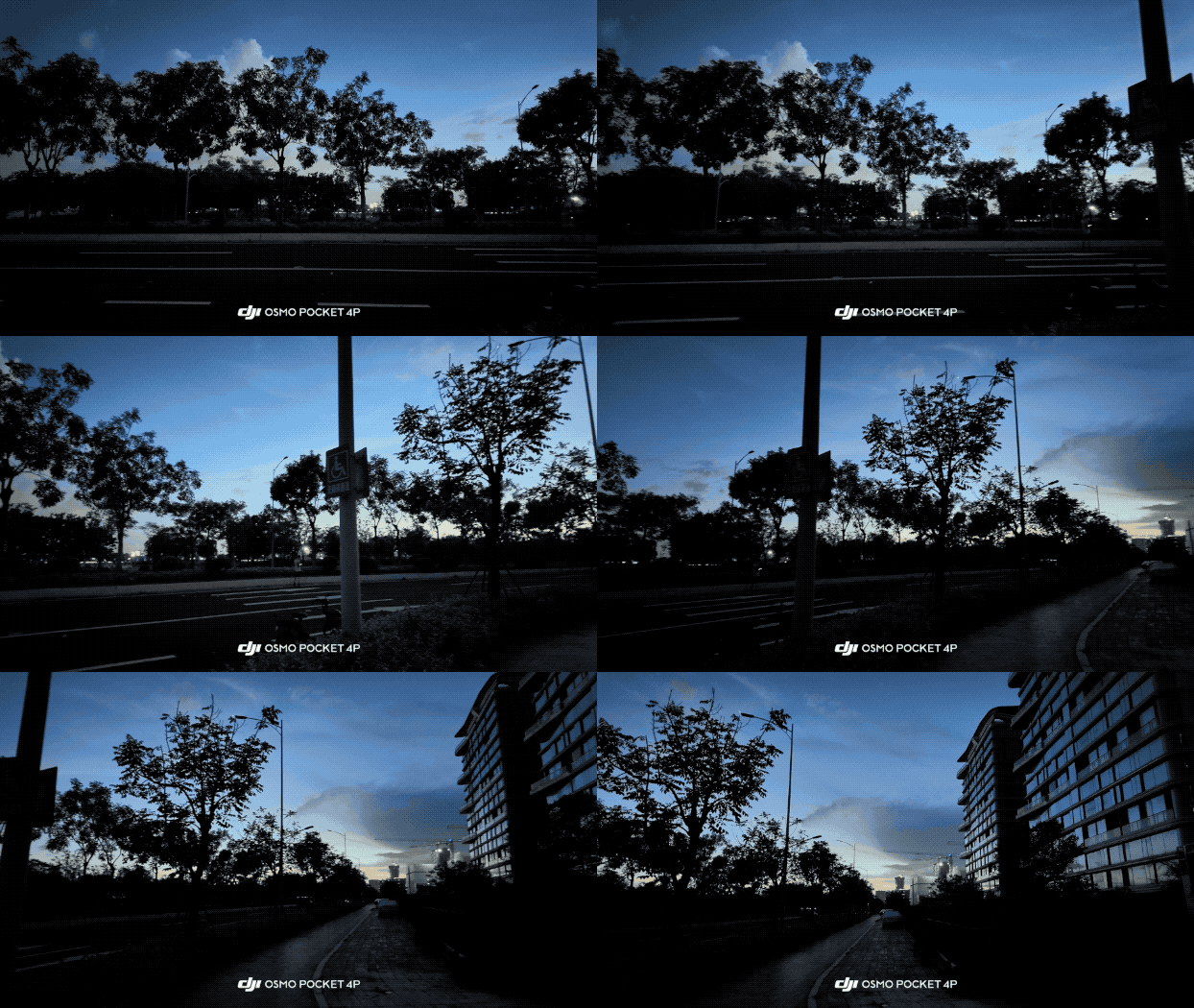
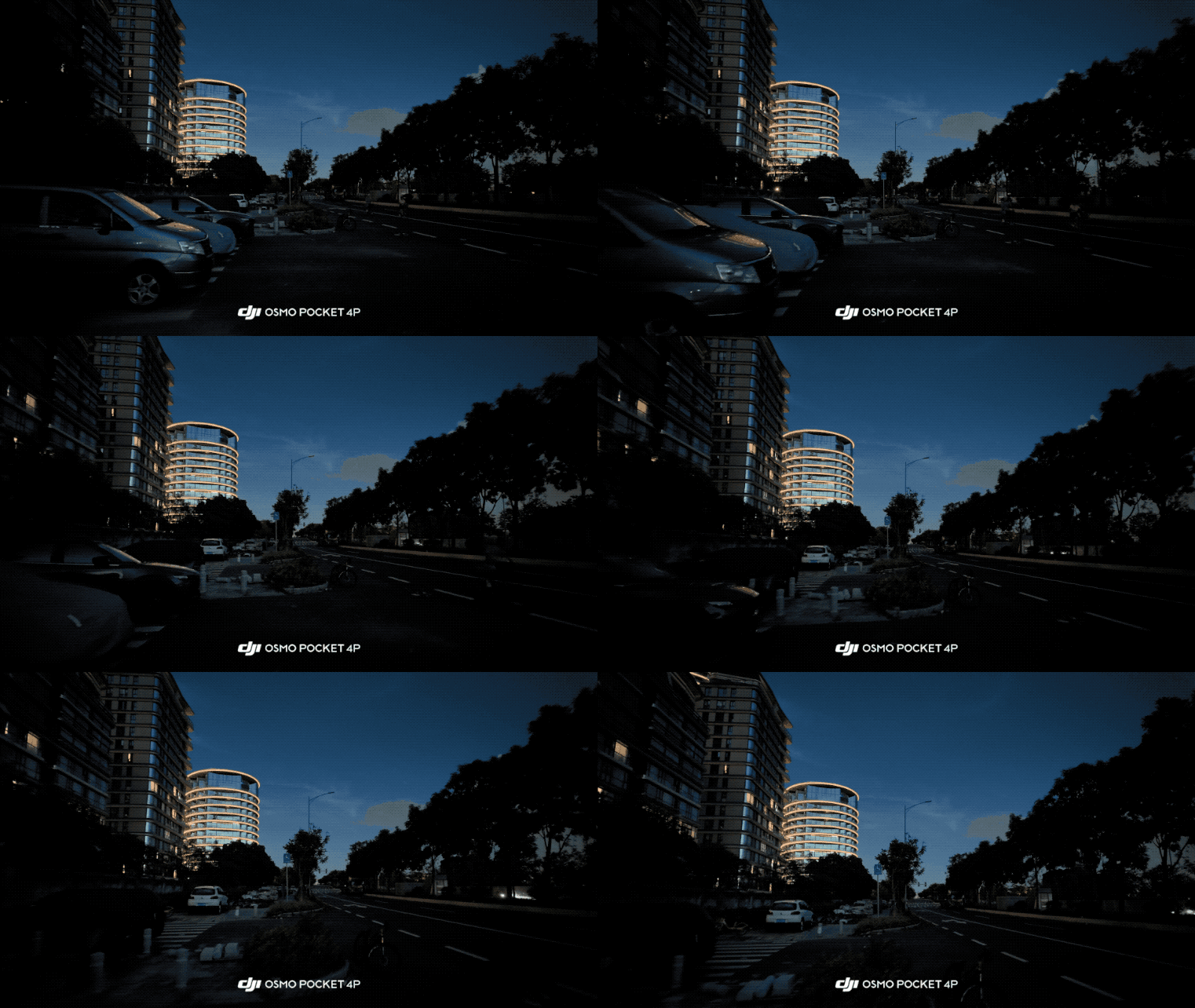
(Image Source: Leitech)
Under the same conditions, the vivo X300 Ultra's image appears almost entirely black, with significant detail loss and more pronounced noise.
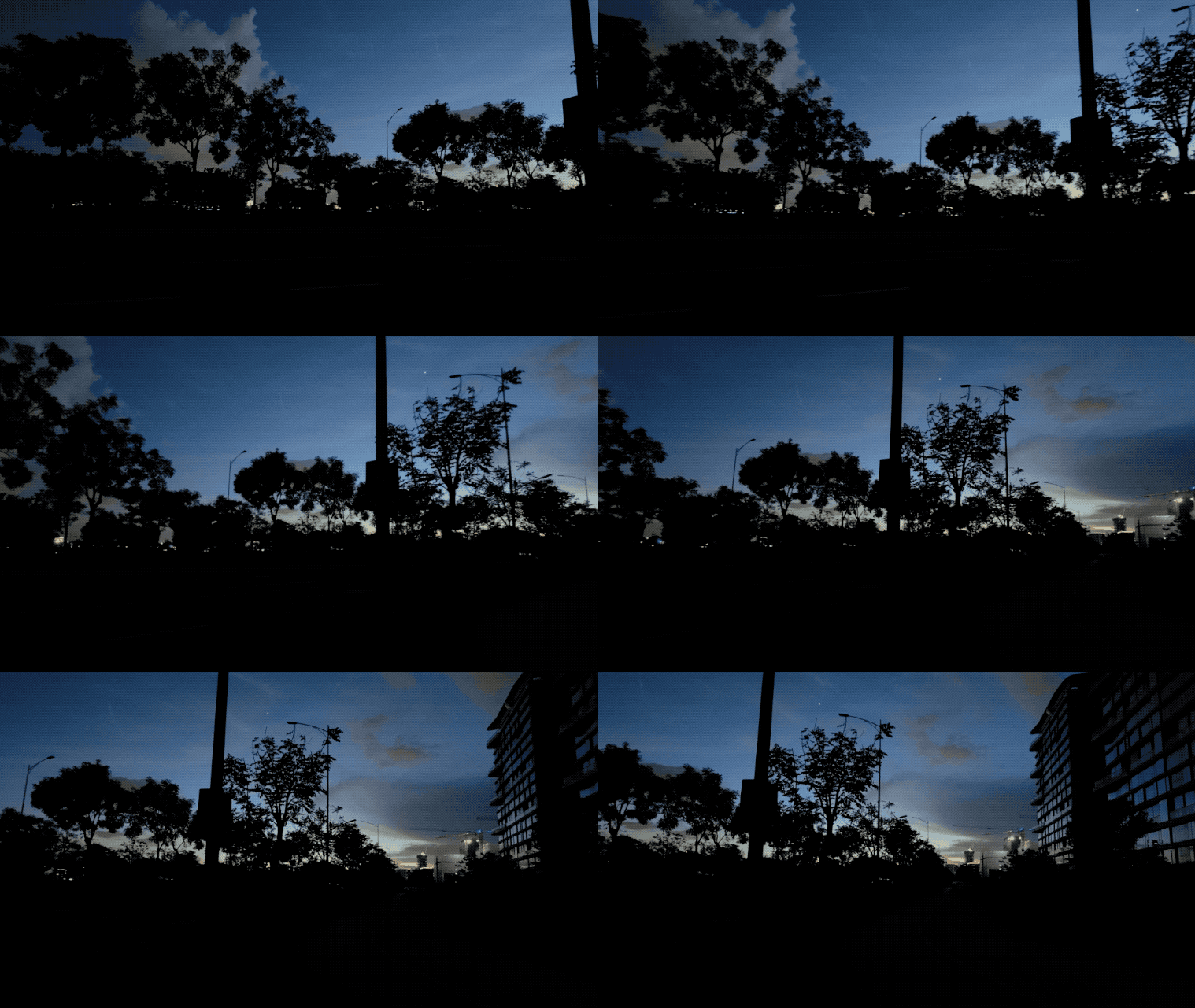

(Image source: Photographed by Leitech)
Xiaolei believes this is mainly related to the sensor sizes and algorithms of the two devices. The Pocket 4P uses a one-inch sensor, which inherently allows for more light intake. Coupled with DJI's accumulated algorithm expertise in video noise reduction, its performance in low-light conditions is indeed more stable. Although Vivo's sensor is also sizable, as a smartphone, it is constrained by heat dissipation and power consumption limitations, which inevitably compromise its performance in low-light conditions.
This difference is quite noticeable in actual shooting. For example, if you shoot a Vlog on the street at night, the Pocket 4P can capture the lights and details of street-side shops, while the details in Vivo's footage tend to blur. If you frequently need to shoot in low-light environments, the Pocket 4P would be more suitable for you to use.
For professional users, the control experience is equally important.
The Vivo X300 Ultra offers a professional video Pro mode with an interface layout similar to that of a professional camera, supporting professional tools such as customizable 3DLut monitoring, peak focusing, and zebra patterns. This mode displays commonly used parameters on the screen, making adjustments very convenient and highly practical for users with professional needs.
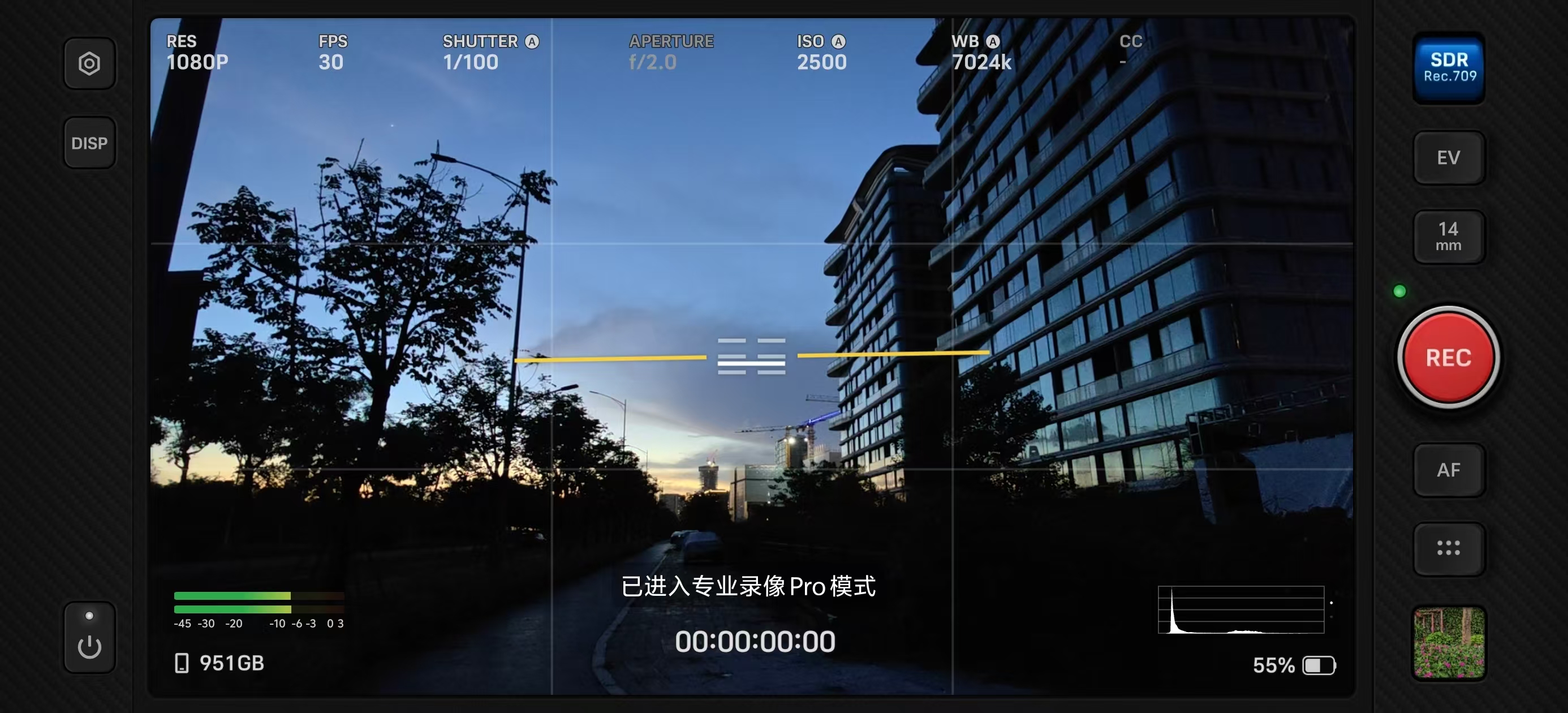
(Image source: Photographed by Leitech)
The DJI Pocket 4P supports Intelligent Follow 8.0, which adds telephoto intelligent following and multi-person following functions, making tracking shots more precise. Intelligent Follow 8.0 can automatically identify and lock onto the subject, whether it's a person, pet, or vehicle, maintaining a stable tracking effect.
It's worth mentioning that the Pocket 4P's Intelligent Follow works at two focal lengths with slightly different effects. When following at 20mm wide-angle, the field of view is wider, suitable for shooting scenes that require context, such as running or cycling. When following at 60mm telephoto, the image is more focused, suitable for shooting portraits, close-ups, or pet expressions that require highlighting the subject. This flexibility is unmatched by Vivo, as smartphones' tracking functions are not as intelligent.

(Image source: Photographed by Leitech)
DJI supports Wi-Fi live streaming and webcam functions, allowing the Pocket 4P to be used directly as a live streaming device. For creators who require live streaming capabilities, this function is highly practical, eliminating the need for additional capture cards and conversion devices.
If you frequently need to shoot tracking shots, DJI Pocket 4P’s Intelligent Follow will save you a considerable amount of trouble. If your shooting primarily takes place in fixed scenes, Vivo’s professional mode may be more practical.
Finally, let’s revisit the most practical aspect: portability and usage scenarios.
As a smartphone, the Vivo X300 Ultra’s greatest advantage is its constant availability, eliminating the need to carry additional devices and enabling instant recording. For instance, if you spot an interesting scene in a café, your phone might have already captured it while the gimbal camera is still in your bag—an experience that gimbal cameras simply cannot match.
Although the DJI Pocket 4P is compact, it still requires separate carrying, and considerations such as battery life and storage are necessary. However, the Pocket 4P’s battery performance is commendable, allowing for approximately 160 minutes of continuous shooting on a single charge, which generally meets a day’s shooting needs. Moreover, it supports fast charging, reaching 80% in just 18 minutes, offering great convenience.
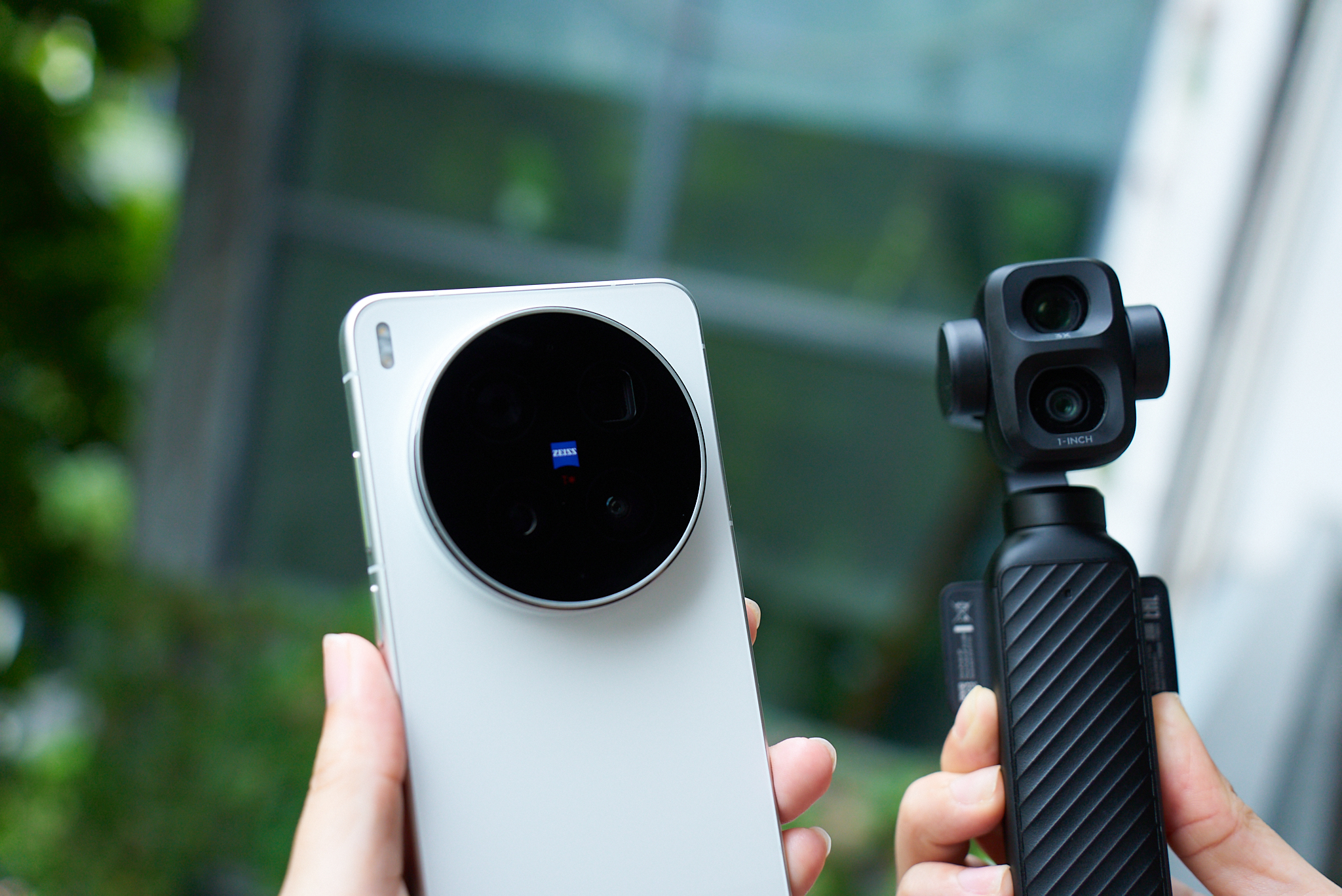
Xiaolei summarizes the applicability of the products in several common scenarios:
Daily Vlogs: Both are suitable, but smartphones offer greater convenience. If you’re just casually recording your life, a smartphone is sufficient. If you desire more stable footage and better image quality, you can opt for the Pocket 4P.
Travel recording: The DJI Pocket 4P provides greater stability, free from interruptions by various notifications, and its form factor is more suitable for prolonged shooting. During travel, you often need to shoot while walking, and the Pocket 4P’s three-axis stabilization ensures steady footage without shaking caused by walking.
Sports shooting: The DJI Pocket 4P’s anti-shake advantage is evident. Whether cycling, running, or skiing, the Pocket 4P can capture stable footage, while smartphones will exhibit noticeable shaking during strenuous activities.
Professional creation: Both are capable, but the choice depends on specific needs. If you require full focal length coverage and ample post-production space, the Vivo X300 Ultra is more suitable. Its 14mm-400mm focal length range can handle various shooting scenarios, and the APV 422 encoding leaves ample space for post-production color grading. If you need stable footage, professional colors, and better low-light performance, the DJI Pocket 4P is preferable. Its D-Log 2 color curve and 17-stop dynamic range are top-notch among products in the same class. Xiaolei knows some professional creators who carry both devices: the smartphone for casual footage and behind-the-scenes, and the Pocket 4P for formal content.
Night shooting: Both perform well, but with different focuses. In extremely dark environments, the Pocket 4P retains more detail in the shadows and produces cleaner footage. The Vivo X300 Ultra performs decently in ordinary night scenes, but under darker conditions, smudging and noise become apparent. If you frequently shoot night Vlogs, the Pocket 4P is more reliable.
Many users own both devices and switch between them based on the scenario. For example, using a smartphone for daily use and a gimbal camera for important occasions. This combination covers more shooting scenarios, making creation more flexible.
The Vivo X300 Ultra and DJI Pocket 4P represent two distinct concepts of video creation: smartphones strive for “shooting cinematic footage anytime, anywhere,” while gimbal cameras aim for “professional stability, a pocket-sized film machine.”
The Vivo X300 Ultra’s strengths lie in its full focal length specifications, portability, and intelligence. It is an all-rounder that can meet daily shooting needs and is also capable of professional creation. Moreover, as a smartphone, it can be instantly shared on social media, making the workflow very smooth.
The DJI Pocket 4P’s advantages lie in its mechanical stabilization, professional colors, and focused creative experience. It is a professional-grade device dedicated to video shooting, with image quality and stability reaching professional standards. Moreover, its Intelligent Follow function is highly practical, significantly reducing shooting difficulty.
The choice of device depends on your creative needs and scenarios. If you pursue ultimate portability and hope to shoot high-quality videos with just your smartphone, the Vivo X300 Ultra is the better choice. If you need more stable footage, more professional colors, and don’t mind carrying an additional device, the DJI Pocket 4P will provide you with a more professional creative experience.
Both devices make “filmmaking” more accessible, but through different avenues. For most users, a smartphone might be the more practical choice. For video enthusiasts, a gimbal camera offers more professional creative tools.
Ultimately, devices are merely tools. The true “cinematic feel” stems from the creator’s ideas and expression. Regardless of the device you use, the most important thing is to record and create with heart.
DJI, Vivo, Pocket, imaging, video, shooting
Source: Leitech
The images in this article are from the 123RF Authentic Library (123RF Royalty-Free Image Library). Source: Leitech
-
![]()
The Surprisingly Significant Impact Difference Between Quiet and Noisy Cars!
-
![]()
Breaking Through Storage Cycle Barriers: How AI Large Models and Coding Technology Synergize to Drive Transformation in the Security Industry
-
Facilitating the Slimming of Camera Modules! O-film Obtains Utility Model Patent for Periscope-Type Reflective Component
-
![]()
Hikvision Raytine’s Millimeter-Wave Body Imaging Security Inspection Device Achieves ECAC SSc Category A Standard Level 2.1 Certification for European Civil Aviation
-
![]()
Global Market Share for Security Windows Hits 26%! This Optical 'Little Giant' Makes Its Debut on NEEQ
-
![]()
The Evolutionary Path of Agent Engineering: From Prompt to Harness by Zhang Yutao, Co-founder of Moonshot AI
-
![]()
Profits and stock prices are both declining, so why are executives from these auto companies increasing their purchases?
-
![]()
Burning Tens of Billions of Dollars, Yet No Unified Definition for World Models