Who Will Be the Final Winner in the Imaging War Between Insta360 and DJI, Who Are 'Stealing' Each Other's Home Turf?
 07/07 2026
 490
490
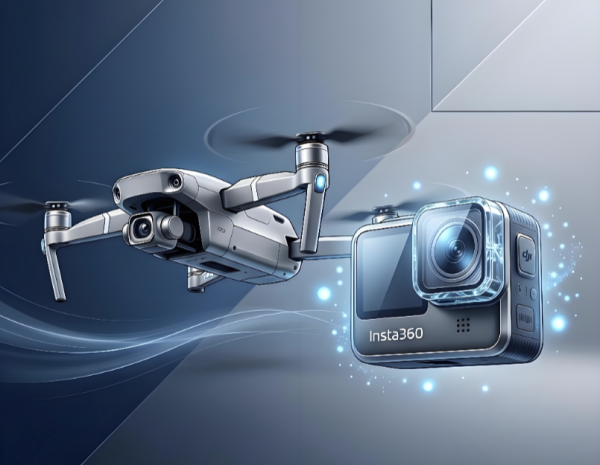
In mid-2026, the consumer imaging industry reached a meaningful intersection!
In June, Insta360 officially released its flagship handheld gimbal camera, the Luna Ultra, priced at 3,999 yuan. Featuring a 1-inch large sensor and new full-stack stabilization technology, it directly encroached on the core territory long defended by DJI's Pocket series.
Almost simultaneously, DJI filed a patent infringement lawsuit in the U.S. District Court for the Eastern District of Texas, accusing Insta360 of "willful infringement" of three patents related to gimbal structure and tracking algorithms, seeking triple damages.
In just six days, the two sides clashed three times: DJI sued, Insta360 countersued, and Insta360 simultaneously filed for patent invalidation in China. These three encounters filled the air with a strong sense of conflict.
This is not the first time the two companies have engaged in direct competition, but this time, the scale, intensity, and strategic significance of the conflict have reached unprecedented heights. From drones to action cameras, from 360-degree cameras to handheld gimbals, the business scopes of DJI and Insta360 are rapidly overlapping. The imaging industry, once characterized by "misaligned competition," is now entering a period of more direct and intense rivalry between two giants.
Why have two companies that once stuck to their own lanes and respected each other's boundaries suddenly gone on the offensive across the board? Why is the all-out war, extending from products to patents, escalating? How will the global consumer imaging landscape be reshaped?
Market Landscape Shifts: From Vertical Competition to Full-Scale Rivalry
Three years ago, the smart imaging market was clearly divided. DJI firmly held over 70% of the global market share in consumer drones and dominated the gimbal camera sector. Meanwhile, Insta360 monopolized the 360-degree camera market, leading for eight consecutive years with a global market share exceeding 85% in the first three quarters of 2025.
One company "flew in the sky," while the other "shot in 360 degrees." Although there were occasional intersections, they largely coexisted peacefully.
This balance was shattered in 2025. In July of that year, Insta360 announced its first 360-degree drone, the "Yingling A1," officially entering DJI's core territory. Just 48 hours later, DJI swiftly previewed its first 360-degree camera, the Osmo 360, striking directly at Insta360's stronghold. The full-scale war of "stealing each other's home turf" had begun.
Since then, both companies have accelerated their product line expansions: DJI entered the action camera, thumb camera, and 360-degree camera sectors, while Insta360 moved into action cameras, gimbal cameras, and drones.
Notably, the two companies have entered a nearly synchronized iteration cycle. Less than three months after DJI released the Pocket 4 Pro, Insta360 unveiled the Luna Ultra. When Insta360 emphasized night shooting capabilities with the Ace Pro, DJI quickly optimized low-light performance with the Action 5 Pro.
The two sides have fallen into a "you launch, I launch" rhythm of close combat, with nearly every new category seeing a counterpart product from the other side.
The battlefront rapidly expanded from product competition to price wars and patent disputes. Since 2025, DJI has launched its most aggressive pricing strategy, reducing prices by about 30% across popular models like handheld imaging devices, action cameras, and 360-degree cameras, with some products seeing price cuts of up to 2,500 yuan.
Insta360 followed suit. During the 2026 618 shopping festival, Insta360's thumb camera GO Ultra, handheld gimbal camera Luna Ultra, and 360-degree drone Yingling A1 all saw price reductions. Even its flagship product, the 360-degree camera X5, was discounted by 1,370 yuan.
At the patent level, the two sides escalated from a drone patent clash in March 2026 to a full-scale legal confrontation in the gimbal camera sector. Litigation has become a regular weapon in their competition.
Therefore, DJI's choice to sue in the U.S. market in June was no coincidence. The United States is Insta360's largest single overseas market. If DJI's "willful infringement" claims are upheld, triple damages could amount to hundreds of millions of dollars, and there is a risk of Insta360's products being banned from the U.S. market. This is clearly a heavy blow aimed at Insta360's international lifeline.
Insta360's counterattack was equally fierce. It filed a patent countersuit against DJI in the same U.S. court, accusing DJI of infringing five invention patents, and submitted a request to the China National Intellectual Property Administration to invalidate DJI's equivalent patents.
Ceilings and Openings: The Underlying Logic of Full-Scale War
This all-out confrontation is not accidental but an inevitable result of the industry's development to a specific stage.
Behind the rivalry between the two giants lie two major industry trends: First, the ceiling pressure in single sectors and the blurring of technological boundaries are driving giants toward diversification. Second, the rapid decline of GoPro has created a huge market vacuum, providing a strategic window for the expansion of these two Chinese companies.
From a market size perspective, neither drones nor 360-degree cameras can sustain the continuous growth of giants as standalone sectors. After years of rapid development, the drone market has entered a stable phase. According to Statista, the global consumer drone market was valued at approximately $4.27 billion in 2025, up 7% year-on-year, with a projected compound annual growth rate of just 3.4% over the next five years. As the absolute monopolist, DJI must find a second growth curve to sustain its expansion.
Handheld imaging devices and drones share highly homologous technologies. Gimbal stabilization, image processing algorithms, motion tracking capabilities, and supply chain systems can almost be seamlessly reused. This blurring of technological boundaries gives DJI a natural cost advantage and technological accumulation in extending into the handheld imaging sector.
For Insta360, although it dominates the 360-degree camera market, the overall market size is relatively limited. In 2025, the global retail market for 360-degree cameras was about 6.44 billion yuan, with the consumer 360-degree camera market at approximately 6.21 billion yuan. Even if Insta360 captures the entire market, the ceiling is still visible.
In 2025, Insta360's revenue reached 9.741 billion yuan, maintaining high growth of over 70%. However, to break through to a higher level, it must expand into more and larger consumer sectors. Action cameras, gimbal cameras, and drones—adjacent sectors that highly match Insta360's core algorithm capabilities—naturally became its preferred expansion directions. In a sense, this is not a question of whether to expand but of being cross-dimensional attacked by others if it does not.
On the other hand, the decline of GoPro, a U.S. company in the same category, has created a huge market vacuum for Chinese companies. As the inventor of action cameras and once the absolute leader, GoPro held over 75% of the global market share at its peak. However, in recent years, it has made frequent strategic missteps, with slow product iterations, sharply declined innovation capabilities, and deteriorating financial performance. By 2025, GoPro's annual revenue had shrunk to less than half of its peak, with cumulative losses exceeding $500 million over the past three years. In the first quarter of 2026, its revenue fell by another 26% year-on-year, and net losses expanded by 73%. Faced with such dismal performance, GoPro announced a 23% workforce reduction.
More critically, GoPro completely missed the 360-degree camera category, the most important segment in consumer imaging, and was slow to respond to the AI imaging trend. The global market vacuum it left, especially among high-end users in developed markets like Europe and the United States, has become the ideal target for DJI and Insta360's expansion.
Leveraging faster iteration speeds, stronger technological innovation capabilities, and better cost-effectiveness, these two Chinese companies have quickly filled the market vacuum left by GoPro's retreat. With external competitors weakened, competition naturally shifted to the two strongest internal rivals.
Dual-Giant Standoff and Industry Restructuring: A Long-Term Game Without a Clear Winner
In this war that shows no signs of ending in the short term, who will be the final winner?
Zijin Finance believes that DJI and Insta360 represent two distinct capability models, each with its own boundaries and irreplaceable value. The more likely outcome is the formation of a stable "dual-giant landscape," where DJI leverages its scale advantage to capture a larger market share, while Insta360 defends its territory through differentiated innovation, further marginalizing other brands.
DJI's core strengths lie in its scale, ecosystem, and supply chain. With revenue exceeding 80 billion yuan and net profits over 20 billion yuan, this scale advantage translates into strong supply chain bargaining power and channel control. DJI has over 700 offline stores in China and a highly perfect online channel layout.
Moreover, DJI has built a complete ecosystem spanning drones to handheld imaging devices, with high interoperability between products and significant user switching costs. The synergistic effects of this platform-based ecosystem form DJI's strongest moat.
However, Insta360 is no easy opponent. Its core competitiveness lies in its category innovation capabilities and globalization barriers. Over 60% of Insta360's revenue comes from original niche categories it defined and expanded, such as 360-degree cameras.
At the same time, nearly 70% of Insta360's revenue comes from overseas markets. Through online official stores, platforms like Amazon and Tmall, and offline retail stores, it has built a global sales network covering over 200 countries and regions. Its main markets are concentrated in developed regions like the United States, Japan, and Europe. This highly globalized revenue structure forms a natural risk diversification barrier.
The real variable worth watching is the uncertainty brought by patents and legal systems. If overseas courts uphold claims of "willful infringement" in key patent disputes, the technological barriers to entering the sector will be significantly raised, potentially altering the industry's cost structure for market entry. Conversely, if patent disputes are deemed more about blurry technological evolution, industry competition will remain relatively open.
For consumers, competition is undoubtedly the best dividend. Faster product iteration, more transparent pricing, and richer choices are all industry benefits directly brought by the rivalry between the two giants. From 1-inch large sensors to AI auto-editing, from omnidirectional obstacle avoidance to spatial audio, technologies once found only in professional equipment costing tens of thousands of yuan are now entering ordinary consumers' hands at increasingly affordable prices.
Conclusion
From misaligned competition to full-scale confrontation, from product clashes to legal battles, the imaging war between DJI and Insta360 has just entered its midgame.
It is no longer a confrontation between Chinese and overseas brands but an internal duel between China's top hard-tech companies. Although brutal, this internal competition is a necessary path for the industry to mature. Only through full market competition will these two companies emerge stronger.
No matter the final outcome, one thing is certain: The global smart imaging industry's dominance is now firmly in the hands of Chinese companies. From following to running alongside and now leading, the rise of China's hard-tech sector continues to advance through the mutual competition, achievement, and complex relationship between DJI and Insta360.
-
![]()
The Surprisingly Significant Impact Difference Between Quiet and Noisy Cars!
-
![]()
Breaking Through Storage Cycle Barriers: How AI Large Models and Coding Technology Synergize to Drive Transformation in the Security Industry
-
Facilitating the Slimming of Camera Modules! O-film Obtains Utility Model Patent for Periscope-Type Reflective Component
-
![]()
Hikvision Raytine’s Millimeter-Wave Body Imaging Security Inspection Device Achieves ECAC SSc Category A Standard Level 2.1 Certification for European Civil Aviation
-
![]()
Global Market Share for Security Windows Hits 26%! This Optical 'Little Giant' Makes Its Debut on NEEQ
-
![]()
The Evolutionary Path of Agent Engineering: From Prompt to Harness by Zhang Yutao, Co-founder of Moonshot AI
-
![]()
Profits and stock prices are both declining, so why are executives from these auto companies increasing their purchases?
-
![]()
Burning Tens of Billions of Dollars, Yet No Unified Definition for World Models