Apple’s AI Finally Makes Its China Debut, But the iPhone’s ‘Intelligence Sovereignty’ Starts to Falter
 07/20 2026
 424
424
After two years of anticipation, Chinese users are finally witnessing the dawn of Apple’s AI rollout in the domestic market.

On July 15, 2026, the Cyberspace Administration of China released the “Announcement on the Filing Information of Seven Generative AI Services for Mobile Devices,” revealing that Apple’s “Apple Intelligence” large model had been officially filed on July 8 for use on iPhones.
Similar to its global strategy, Apple has not relied solely on a single in-house model for Apple Intelligence. Instead, it has adopted a hybrid approach, combining a self-developed model with supplementary external models.
According to Kechuangban Daily, Alibaba’s QianWen will be integrated into Apple Intelligence, offering capabilities such as text and image understanding, as well as content generation. Baidu, meanwhile, will primarily supply AI-driven search and information retrieval functions for the platform.
Overall, Alibaba’s QianWen serves a role akin to Google within Apple Intelligence, handling complex reasoning tasks in the cloud. Baidu, on the other hand, continues its positioning as Siri’s default search engine, primarily acting as a search technology provider to deliver network information retrieval services for Apple devices’ AI functions.
While Apple Intelligence is set to launch in the Chinese market with the support of Alibaba, Baidu, and other partners, Apple cannot afford to rest on its laurels. Due to the absence of a robust in-house large model, as Agent technology matures, Apple’s control over its AI ecosystem will weaken, posing long-term challenges to its competitive edge.
Why Did Apple Choose Alibaba for Its AI Entry into China?
As a tech company known for its desire for control, Apple initially aimed to achieve AI transformation independently. However, slower-than-expected progress in developing its own large models and the “delay” of Apple Intelligence showcased at WWDC 2024 prompted Apple to adjust its AI strategy, actively engaging with external large model providers.
In the Chinese market, given the stringent regulatory environment for AI, Apple needed to select local suppliers. According to media reports, Apple has approached domestic large model companies such as Baidu, Alibaba, and ByteDance in recent years, seeking technical support for Apple Intelligence’s entry into China.
Although Apple has never officially announced its Chinese large model partner, Alibaba executives revealed over a year ago that the company would collaborate with Apple on AI technology.

At the World Government Summit in Dubai in March 2025, Alibaba co-founder and chairman Joe Tsai stated, “Apple has always been very selective. They engaged with multiple Chinese companies and ultimately chose us as partners. We feel very fortunate and honored to collaborate with such a great company.”
The question arises: Why did Apple choose Alibaba, given that Alibaba does not hold an absolute leading advantage in large model performance or market influence in consumer-facing AI applications compared to other domestic providers?
The answer lies in the fact that, needing to serve hundreds of millions of users, Apple’s AI technology requires not a high-scoring large model but a supplier with balanced comprehensive capabilities.
According to The Information, the domestic version of Apple Intelligence initially chose to collaborate with Baidu, with Apple even covering the costs of Baidu’s large model training.

However, Baidu’s Wenxin large model had shortcomings in responsiveness, failing to meet Apple’s requirements. To enhance model capabilities, Baidu hoped to retain and analyze data generated by Apple users utilizing AI functions—a demand unacceptable to Apple, which places extreme importance on user privacy protection.
In comparison, Alibaba’s QianWen aligns closely with Apple Intelligence’s needs in terms of both model performance and commercial implementation capabilities.

From a model perspective, QianWen is one of the few full-stack large model technology platforms in the industry, achieving full-scenario coverage from high-intensity reasoning to local instant response through an “edge, cloud, and multimodal” architecture, matching Apple Intelligence’s technical framework.
Additionally, as a leading cloud service provider in China, Alibaba Cloud possesses sufficient computational power reserves and extensive engineering experience to ensure stability and responsiveness in the face of Apple’s high-concurrency, high-computational AI demands.
Apple’s Collaboration with Alibaba: A Mutually Beneficial Transaction
Apple’s decision not to publicly disclose its large model supplier in China is largely aimed at downplaying the prominence of external large model providers and reinforcing the perception of Apple Intelligence as the core gateway.

In other words, Apple does not want its AI ecosystem to be dominated by third-party large model providers but views external models as replaceable capability modules. Whether it’s ChatGPT, Gemini, or QianWen, model providers are responsible only for supplying underlying AI capabilities, while Apple firmly controls user relationships and system gateways at the upper layers.
To enhance autonomy, after its collaboration with OpenAI fell through, Apple abandoned the “zero-cost” mutually beneficial model and instead directly paid third-party large model providers for their technology.
According to Bloomberg reporter Mark Gurman, Apple pays Google approximately $1 billion annually to use the Gemini large model. Similarly, The Information reported that Apple paid Baidu $10 billion to use the Wenxin large model, covering the computational costs of training and fine-tuning the model.
Thus, it is highly likely that Apple will also pay Alibaba a substantial “technical service fee” for Apple Intelligence’s entry into China.
While Alibaba stands to gain significant financial benefits from its collaboration with Apple, it may not be satisfied with that alone.
Because Alibaba is not just a model provider but an internet giant with ecosystem resources in e-commerce, instant retail, and payments.

As AI technology matures, Alibaba is focusing on deploying Agents with QianWen at the core. In January 2026, QianWen announced its integration into Alibaba’s ecosystem businesses, including Taobao, Alipay, and Fliggy, enabling AI-powered shopping functions such as ordering food, purchasing goods, and booking flights.
In response, Wu Jia, president of QianWen’s consumer business group, stated, “After acquiring a super-powerful brain, AI is beginning to grow hands and feet that can reach the real world, truly working for users in their daily lives. We will take step-by-step actions to build the QianWen App into the most powerful human AI assistant, truly enabling AI to help everyone.”
After integrating with Apple Intelligence, Alibaba not only gains access to Apple’s vast user base but can also leverage “user intent interpretation rights” and “service scheduling rights” to subtly invoke its own ecosystem services on Apple devices, meeting user needs.
It is evident that Apple’s collaboration with Alibaba is essentially a mutually beneficial transaction.
Apple hopes to leverage Alibaba’s reliable AI capabilities to launch Apple Intelligence in the Chinese market. On the one hand, Alibaba gains direct financial benefits; on the other hand, it has the opportunity to embed QianWen’s Agent services into Apple’s AI assistant—a core gateway—significantly expanding the reach and conversion efficiency of its own ecosystem.
Agent Technology Emerges as a New Force, Revealing Cracks in Apple’s Closed Ecosystem
On the surface, Apple appears to hold the power in selecting model providers and firmly occupies the dominant position in its collaboration with Alibaba. However, given the characteristics of AI technology, Apple is actually in a passive position.

In the mobile internet era, Apple’s competitive moat was built on a closed ecosystem integrating hardware and software. By creating a differentiated user experience, Apple not only generated substantial revenue from hardware products like iPhones, iPads, and Macs but also earned significant profits through software services like the App Store.
However, as AI technology advances into the commercial application phase, the competitive advantages Apple once relied on through its ecosystem are facing collapse.
Currently, tech companies like OpenAI, Alibaba, and ByteDance are striving to transition AI assistants beyond the Chatbot paradigm into task-executing Agents, becoming core gateways for users to access various services.
In this context, the value of iOS, Siri, the App Store, and other gateways will diminish. Because Agents possess “user intent interpretation rights” and “service scheduling rights,” the authority to distribute mobile internet applications will shift from operating systems to AI platforms.
Since Siri’s capabilities rely on third-party large models, the iOS system cannot control the paths through which Agents execute tasks, naturally leading to a decline in Apple’s ecological dominance and influence in the AI era.
Given that Agents are set to spark a new wave of smartphone revolution, AI companies like StepFun, ByteDance, and OpenAI are increasingly investing in “native agent smartphones,” aiming to initiate a new “iPhone moment.”
For example, on July 13, 2026, StepFun launched the native agent smartphone STEPX Neo, featuring the agent-native operating system Step AOS and the built-in personal agent “Step Amoo,” capable of handling travel bookings, daily consumption, and local life services in one place.

Similarly, at WAIC 2026, which opened on July 17, Doubao collaborated with Nubia to create the AI agent smartphone Nubia NaviX Ultra, equipped with the Doubao mobile assistant to support task execution with a single sentence.
Although products like STEPX Neo and NaviX Ultra currently have far less market influence than the iPhone, their innovative concepts indicate a subtle shift in the competitive logic of the smartphone industry.
In the future, the core factors attracting consumers to purchase smartphones will no longer be feature-richness or ecosystem prosperity but the ability to deeply understand user needs and efficiently execute corresponding tasks.
As StepFun Chairman Yin Qi stated, “The entry of agents into the real world brings not only capability leaps but also order reconstruction.”
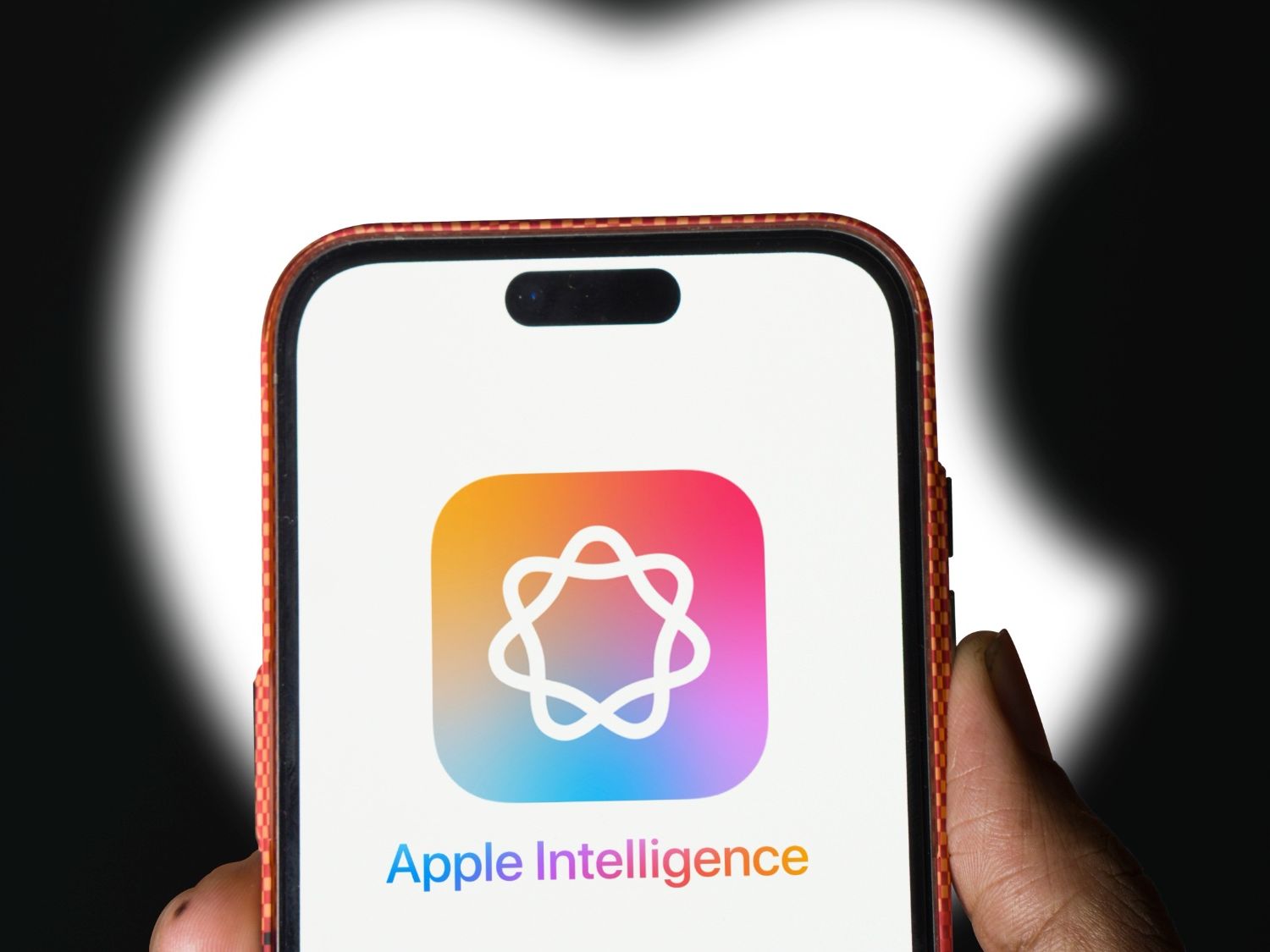
With the smartphone industry set to undergo intense changes, Apple Intelligence’s approval does not mean Apple has won the Chinese AI market; it merely signifies its entry into the AI era.
Apple Intelligence’s entry into China solves the problem of “whether Apple has AI” but does not answer the challenge of “how to win in the AI era.”
As agents gradually become the new gateway connecting users and services, relying on “external” large models, Apple will find it difficult to replicate its success from the mobile internet era.
-
DRAM, A Disruptive Technological Breakthrough!
-
Robot Army Mobilizes for Action
-
![]()
Electric Vehicle Penetration Soars Past 60%, Yet Seven of Top Ten Brands Hail from Traditional Fuel Vehicle Sector, Casting Doubt on Their Longevity
-
![]()
Conant Optics Clinches R&D and Procurement Framework Deals with Top Tech Firms!
-
![]()
Over 87% Surge in Net Profit for H1 Anticipated! Dongtian Micro Leads in AI Optical Communication
-
![]()
Tech Titans Offload AI Ventures, Tencent Shifts Stakes to Capitalize on Artificial Intelligence Surge
-
![]()
WAIC 2026 Observations: Mapless, Brain-Powered, and Task-Ready—Is Physical AI Taking Off?
-
![]()
Self-driving Technology Hits the Road: NVIDIA's Structural Adjustment, the Emergence of a First Mover... The Second Half of the Autonomous Driving Race Begins