WAIC 2026 Observations: Mapless, Brain-Powered, and Task-Ready—Is Physical AI Taking Off?
 07/20 2026
 368
368

Source: Zhiche Technology, Publicly Available Online Data
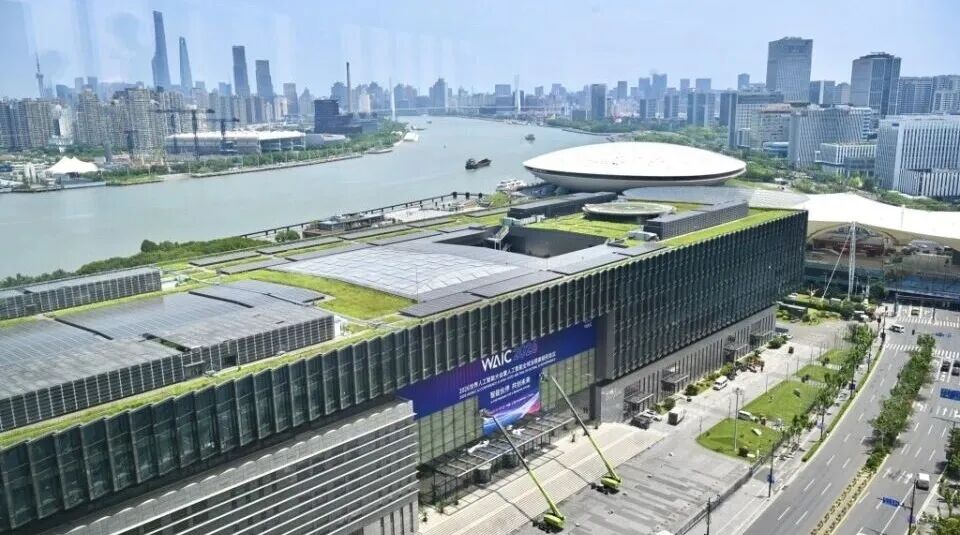
From July 17 to 20, the 2026 World Artificial Intelligence Conference was held simultaneously across Shanghai Expo, Zhangjiang, and West Bund venues, featuring four exhibition halls. Under the theme of 'Intelligent Partners, Creating a Shared Future,' the event covered over 100,000 square meters of exhibition space, attracted more than 1,100 participating companies, and witnessed over 300 global product premieres.
Amid this annual AI extravaganza, autonomous driving and intelligent vehicles dominated the core positions in exhibition areas and forums. From the commercialization of L2++ advanced driver-assistance systems to L4-level fully driverless operations, these technologies were a recurring theme throughout the conference.
If previous conferences debated whether AI could empower the automotive industry, the 2026 edition clearly answered a different question: How is AI reshaping every link of the automotive industry?

Mapless Solutions Go Mass-Produced: L4 Autonomy Breaks Free from HD Map Dependence
Jiushi Intelligence announced at the conference that its L4-level autonomous driving mapless solution has achieved mass production. This marks the official shift of L4 autonomy away from reliance on high-definition maps, transitioning to a real-time perception and AI decision-making-based operational model.
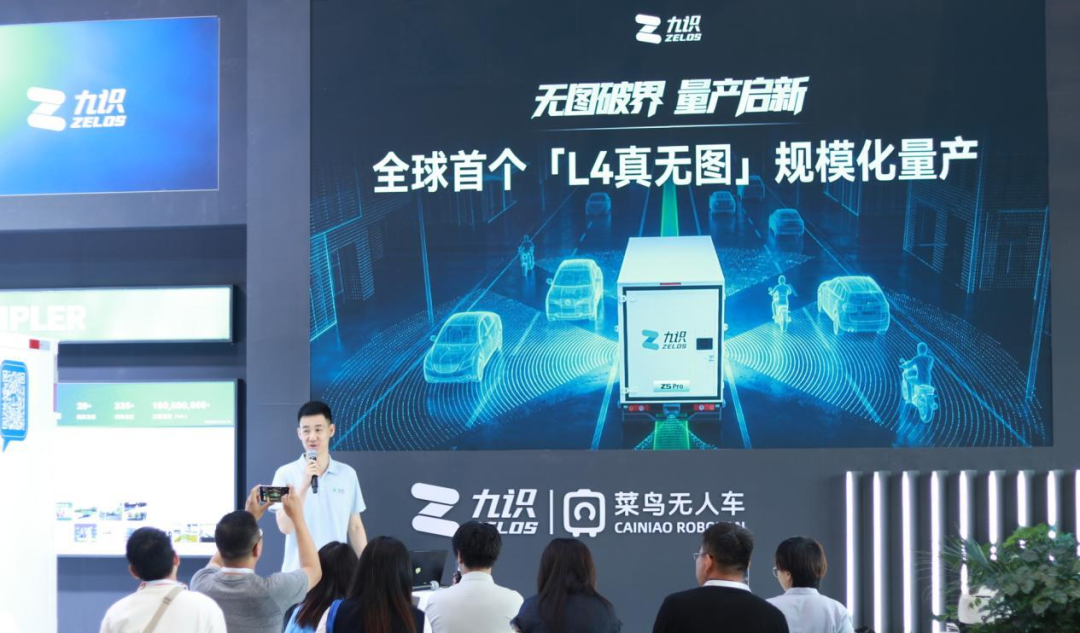
High-definition maps have long been considered the 'digital foundation' for autonomous driving, but their high collection, production, and maintenance costs, along with limited coverage, have remained bottlenecks for large-scale commercialization. Jiushi's solution, centered on visual perception with LiDAR assistance, uses multi-sensor fusion to identify lanes, traffic signs, signals, and surrounding participants in real time. According to Jiushi's CIO at the conference, the solution has achieved 30% penetration in newly deployed operational routes, with cumulative L4 mapless operational mileage expected to exceed 40,000 kilometers by the end of July. Zhu Weicheng, co-founder and CIO of Jiushi Intelligence, stated, 'The mapless solution has further significantly reduced costs while shortening vehicle deployment cycles to under one day, enabling true 'plug-and-play, delivery-and-operation' capabilities.'
Industry insiders analyze that by eliminating reliance on high-definition maps, the cost and coverage bottlenecks that previously constrained large-scale L4 deployment are being broken. From the conference exhibits, Robovan (driverless freight vehicles) emerged as the first autonomous driving application to enter the 'mapless era' at scale.

Large Models Drive Evolution: Cabin Interaction Advances from 'Chatting' to 'Acting'
While mapless solutions address the technical path of 'how to drive,' large models onboard vehicles tackle the experience of 'what driving should be like.'
Geely Auto Group, in collaboration with Step.ai and Qianli Technology, unveiled the new Step end-to-end cloud model and the latest achievements in physical AI integration—Super Eva—at the conference. According to Geely's on-site announcement, powered by the WAM (World Action Model), Super Eva delivers an iterative cabin-driving fusion experience, evolving from 'emotionally intelligent and planning-capable' to an 'all-scenario intelligent agent capable of driving, ordering coffee, and providing services.' Compared to most industry solutions still limited to basic cabin voice interaction, Geely has taken the lead in implementing physical AI in real vehicles.
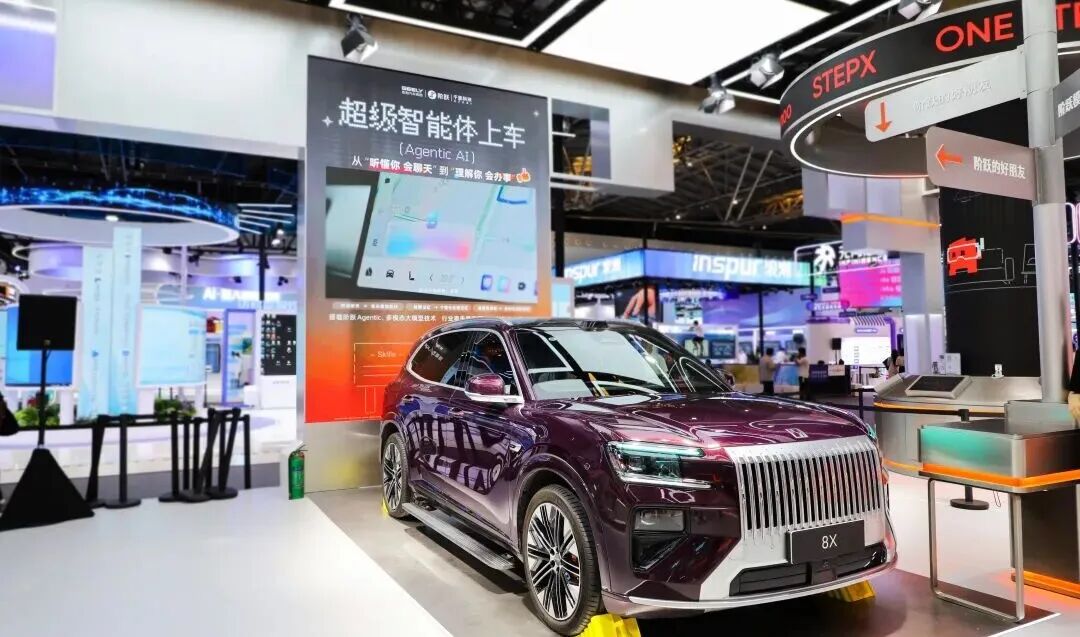
The automotive super intelligent agent co-developed by Qianli Technology and Step.ai also made its debut during the exhibition. According to Qianli's on-site data, the agent, powered by Step's latest Agentic model Step 3.7 Flash with 196 billion total parameters and only 11 billion activated during inference, achieves 400 TPS ultra-fast response. Yang Mu, CTO of Qianli Intelligent Driving, predicted that large model integration into vehicles would complete mass production validation by 2026–2027, making L3 and even L4 autonomous driving technologies feasible for implementation.
SenseTime showcased its next-generation flagship multimodal foundation model, SenseNova-U1 Pro. Positioned as the industry's first 'understanding-generation-action' native unified multimodal intelligent agent foundation, the model can complete the entire process from environmental perception to task execution within a single closed-loop model, directly supporting autonomous driving decision-making, as explained by on-site technical staff.
From on-site demonstrations, vehicles are evolving from voice-interactive transportation tools into physical AI agents capable of action—a transformation driven by large model integration, moving from concept to real vehicles.

Domestic Chips Rise: Computing Power Supply Chains Step into the Spotlight
The demand for computing power in intelligent applications was directly reflected in this year's exhibition areas. The collective debut of domestic automotive-grade chips marked an important dimension for observing changes in the automotive industry chain at this conference.
NIO's chip subsidiary, Shenji Technology, participated independently for the first time, showcasing not only its 'Shenji NX9031' chip and in-vehicle domain controllers but also introducing new AI products such as the 'Ruidong' embodied intelligence development platform and distributed intelligent agent platform. According to Shenji's on-site display, its NX9031X, NX9031U, and NX9031C chips form a complete product lineup covering three major AI sectors: intelligent driver assistance, embodied intelligence, and agent reasoning. Among them, the high-end NX9031X chip, built on a 5nm automotive-grade process, has been successfully deployed across all models of NIO and Lexee brands, with cumulative shipments exceeding 300,000 units.
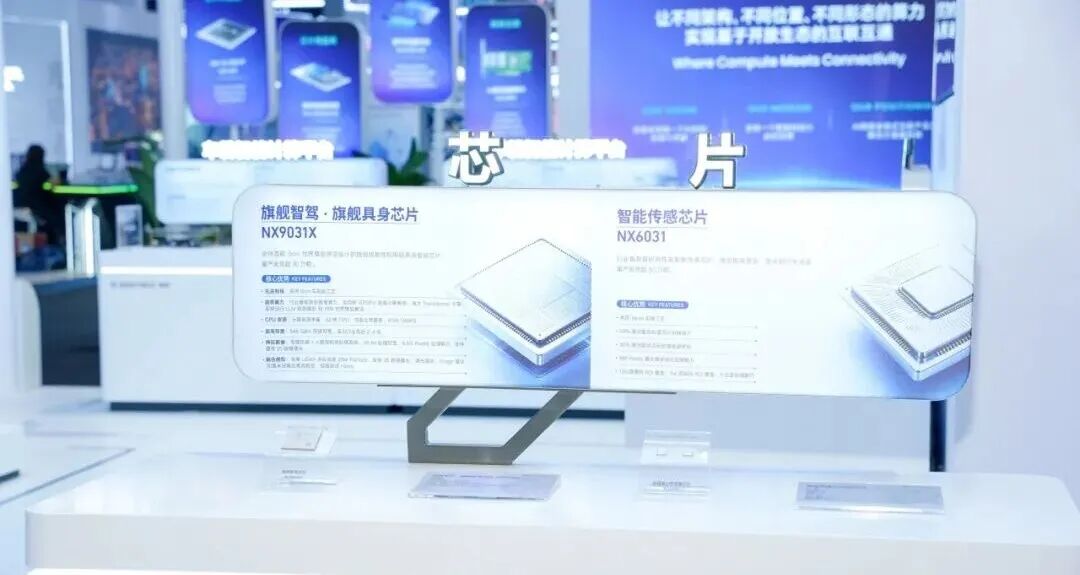
Li Auto's booth featured the Mach 100 chip. According to Li Auto's on-site introduction, dual Mach chips enable separated domain computing power—one for autonomous driving and the other for embodied intelligence. Over the past three years, Li Auto has invested 33 billion yuan in R&D, with AI-related R&D accounting for approximately 50% in 2026.
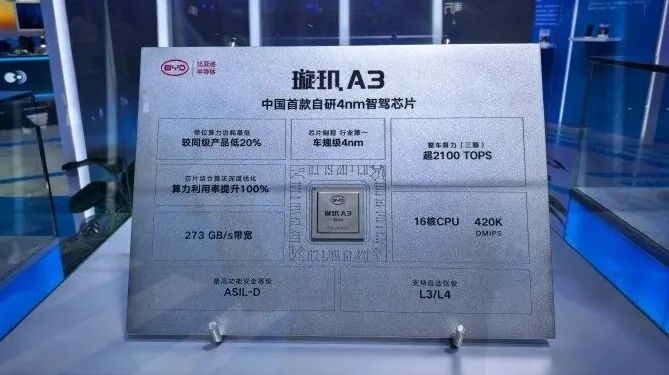
BYD's booth showcased its self-developed automotive-grade chips, complete vehicle AI Large Language Models (vehicle AI large model), and three-electric energy systems. At the center of the booth stood the Xuanji A3 4nm automotive-grade chip, which, when three are used in coordination, delivers a total computing power of 2100 TOPS, suitable for L3 and L4 high-level autonomous driving demands, as introduced on-site.
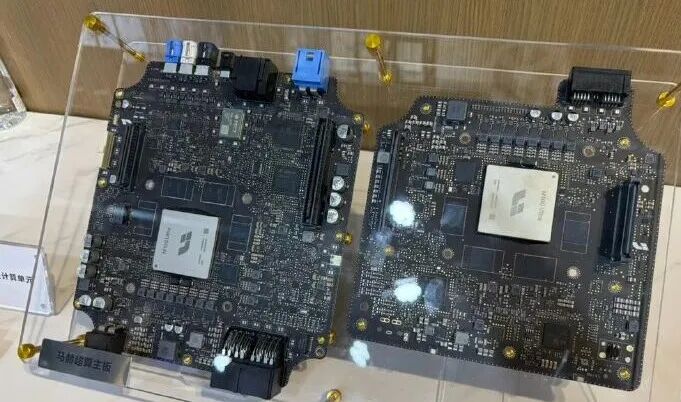
Black Sesame Technologies exhibited its Mount Hua A2000 (Huashan A2000) family of chips, with single-chip computing power reaching up to 1000 TOPS, supporting multi-chip collaborative expansion to meet full-scenario computing power demands for L4 autonomous driving. On-site demonstrations included the FAD Tianyan L3 autonomous driving domain controller equipped with dual A2000 chips and the company's self-developed one-stage end-to-end algorithm for urban and highway NOA (Navigate on Autopilot).
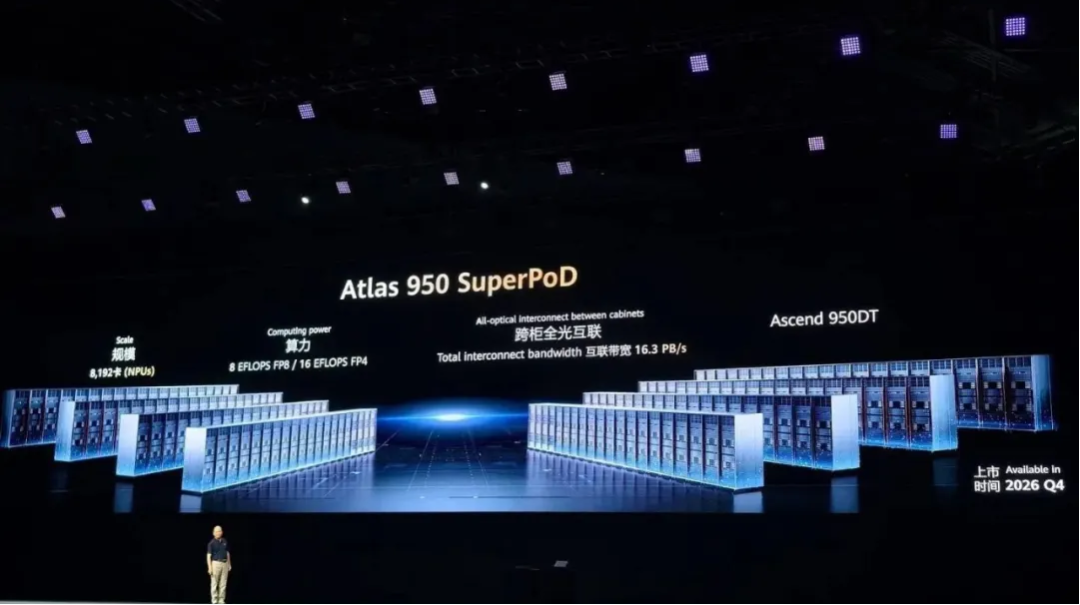
Huawei unveiled the Atlas 950 SuperPoD supercomputing node for the first time. According to Huawei's on-site introduction, the node provides 1 EFLOPS FP8 and 2 EFLOPS FP4 computing power at a 1024-card scale, marking the official commercial delivery stage for domestic 10,000-card-level AI computing clusters. Industry experts pointed out that this not only addresses China's computing power gap for training ultra-large models but also accelerates the implementation of cutting-edge fields such as world models and autonomous driving simulation.
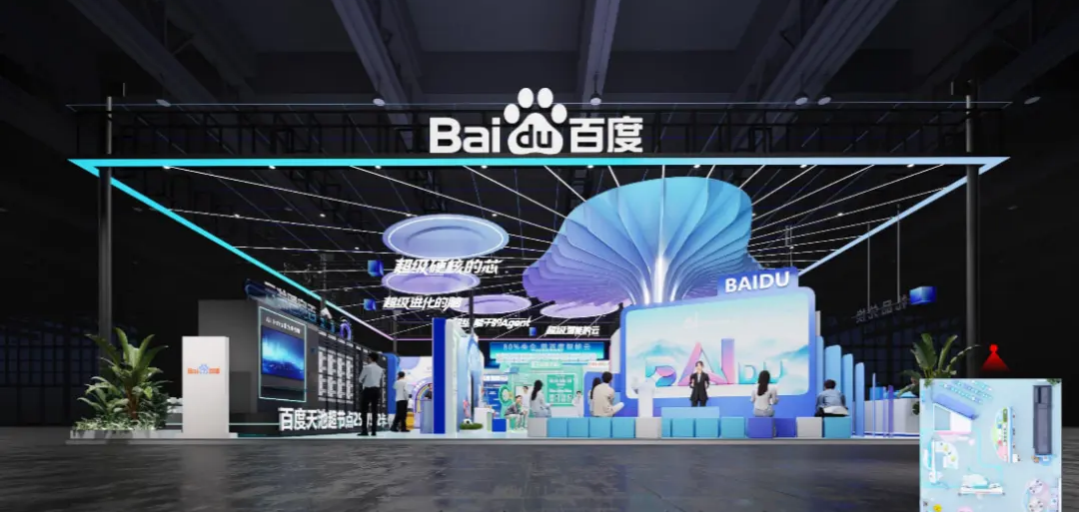
Baidu showcased its 'Chip-Cloud-Model-Agent' full-stack matrix—providing end-to-end solutions for industries like autonomous driving through the synergy of 'chips + cloud + large models + intelligent agents.' By 2025, Baidu Intelligent Cloud had supported the delivery of over 20 million L2-level driver-assistance vehicles, serving representative industry players including Geely, Li Auto, Changan, NIO, Horizon Robotics, and CATL.
The computing power exhibition area also featured products like Dongfang Suanxin's DF1000, the world's first software-defined near-memory computing 3D chip, and Sugon's fully domestic 100,000-card AI supercomputing cluster, dawn 8000 (Shuguang 8000). While industry giants focus on cluster ecosystems, emerging players bet on architectural innovation—supply chain autonomy is becoming a shared direction across all links of the industry chain.

Robotaxi Accelerates: From Regional Trials to Large-Scale Replication
2026 is regarded by the industry as the the first year (first year) for large-scale commercialization of autonomous driving. At this conference, 'trustworthiness' and 'large-scale' became frequent terms.
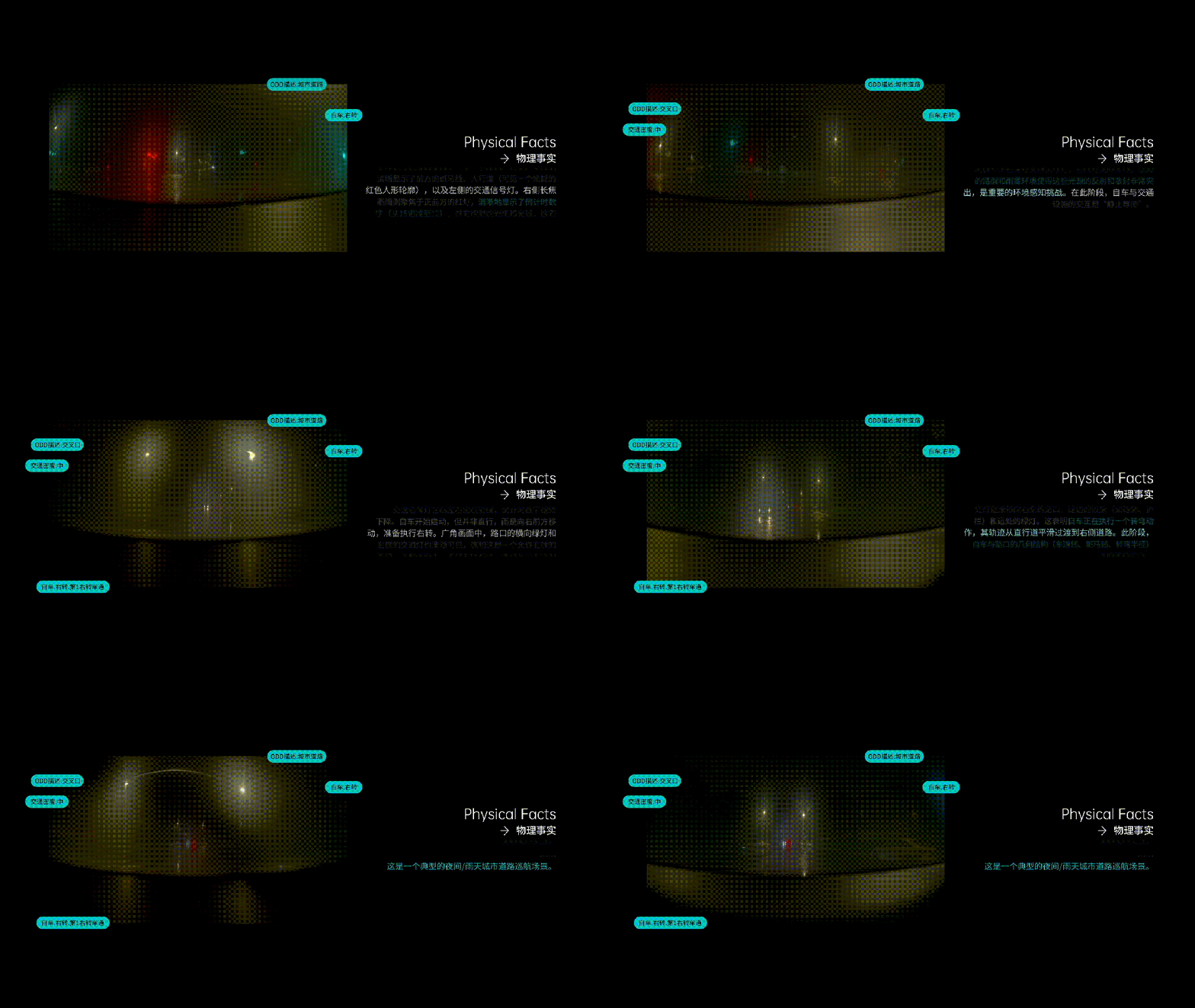
WeRide unveiled dual product lines for L4 and L2++ autonomy. Its new-generation L4 mass-produced Robotaxi, the GXR, is equipped with a self-developed HPC 3.0 high-performance computing platform and an all-new Sensor Suite 5.6 sensor suite. Meanwhile, WeRide introduced its self-developed physical AI cognitive foundation large model, WeRideWITT, which introduces the concept of 'minimal physical fact units' to build a new generation of AI understanding frameworks centered on physical facts.
Caocao Chuxing made its WAIC debut, with Turing Award winner and Chief Scientific Advisor to Caocao's AI Innovation Center, Professor Joseph Sifakis, participating via video to discuss trustworthy large-scale Robotaxi development. Caocao Chuxing proposed that trustworthiness capabilities form an essential foundation for the large-scale commercial operation of Robotaxis.
Prior to the conference opening, Baidu Apollo Go signed a strategic cooperation agreement with Kazakhstan's Turlov Private Holding to jointly explore introducing driverless mobility services in Kazakhstan. This marks the first entry of Chinese driverless vehicles into the Central Asian market, signifying that China's autonomous driving technology exports are extending from product output to model output.

AI Permeates Entire Links: From Vehicle Manufacturing to Driving, All intelligentization (Intelligent)
The AI capabilities showcased at this conference focused not only on 'driving' but also covered 'vehicle manufacturing.'
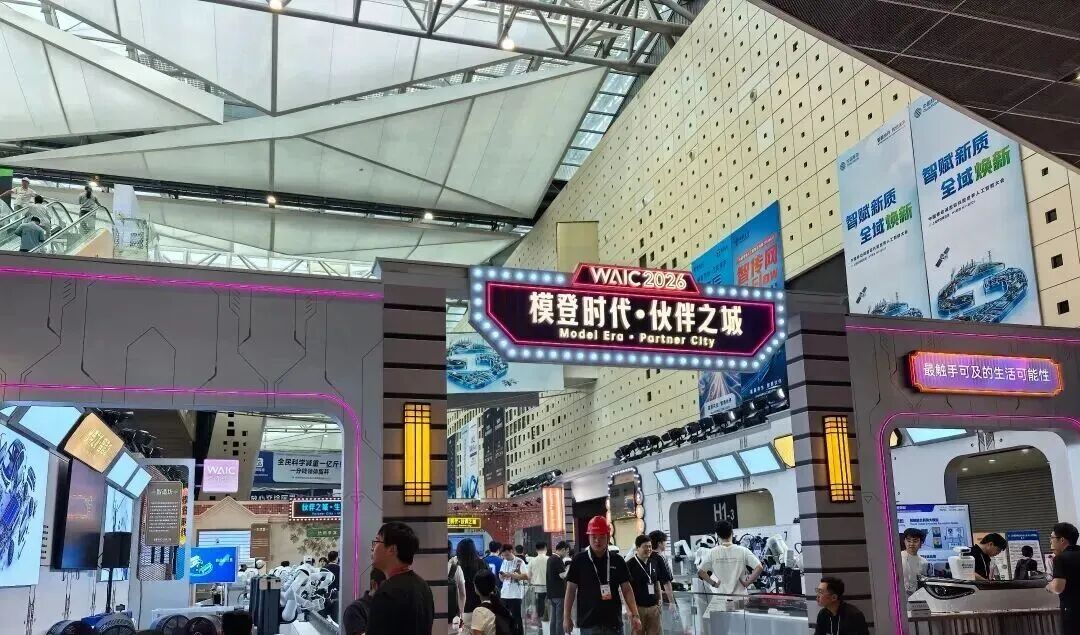
In the 'Model Era · Partner City' exhibition area at the World Expo Pavilion, a complete new energy vehicle production line operated entirely by robots was replicated 1:1. From cell stacking and headlight assembly to wiring harness weaving, every process ran fully autonomously. Humanoid robots collaborated seamlessly, handling stacking, assembly, inspection, and warehousing with precision. This scene was no laboratory demonstration—it represented embodied intelligence taking over delicate human tasks, working in high-precision industrial scenarios with real operational stakes.
BYD's booth presented a three-tier physical AI architecture: the top layer features its self-developed 4nm Xuanji A3 chip and the vehicle AI intelligent agent 'Didi Xia'; the middle layer includes the Tian Shen Zhi Yan 5.0 all-domain high-level intelligent driving system, Yi Si Fang vector drive, and Yun Nian AI active suspension; the bottom layer comprises the second-generation Blade Battery, fifth-generation DM hybrid system, and megawatt-level flash charging temperature control system. BYD announced on-site that the Tian Shen Zhi Yan 5.0 replaces traditional rule-based algorithms with a physical world logic deduction model, achieving signal delays as low as 8 milliseconds.
JUPO Intelligent showcased the world's first autonomous mass production verification production line for BMS, featuring multiple embodied intelligent robots working collaboratively, fully replicating the entire precision assembly process of BMS controllers for new energy vehicles.
Joyson Electronics unveiled multiple core component assembly solutions, including dexterous hands, solid-liquid hybrid batteries, third-generation AI head assemblies, electronic skin, and embodied intelligent brains. The "Vision and Tactile Fusion Embodied Intelligent System," jointly developed by Fudan University and SAIC Motor's IM Motors, made its debut, enabling robots to possess both visual recognition and tactile perception capabilities simultaneously.

Reporter's Observation
Looking across this year's WAIC, several industry trends stand out prominently.
First, the debate over technological routes is shifting towards implementation capabilities. Path choices such as mapless navigation, end-to-end systems, and large models onboard vehicles—once divided among different technological camps—are no longer subjects of contention on this year's exhibition floors. The industry's focus has shifted from "which route is better" to "who will achieve scaling (large-scale implementation) first."
Second, commercial closures are taking shape. Cases like Jiushi's "buy-and-use-immediately" model, WeRide's operations in four cities, and Apollo Go's expansion into Central Asia demonstrate that autonomous driving is transitioning from the R&D investment phase to the operational revenue phase. While the era of spending money to tell stories has not completely ended, business models centered around data collection and fare collection have begun to be validated.
Third, the domestic supply chain is moving from support to dominance. With 300,000 units shipped by Shengji, 1000TOPS computing power from Black Sesame, and Huawei's 10,000-card cluster, China's automotive industry has moved beyond theoretical discussions to demonstrate real autonomy in AI chips and computing infrastructure.
Data from the Ministry of Industry and Information Technology shows that since 2026, the market penetration rate of new passenger vehicles equipped with combined driving assistance functions in China has reached 70%, with over 30% of models featuring NOA (Navigate on Autopilot) functions. When 70% of new vehicles possess assisted driving capabilities and 30% can navigate autonomously, the intelligence of the automotive industry is no longer a predicted trend but an ongoing industrial reality.
The next wave of AI industry explosion will not occur on screens but in the physical world. Judging from the exhibits at this year's WAIC, the automotive industry is becoming the core testing ground for AI's transition from the virtual to the physical realm. While the first half of the race addressed power issues with new energy, the second half of intelligence is answering the question of "who will drive." And when AI truly acquires a "body" capable of continuously operating physical entities in the real world, this transformation will have just begun.
- End -
Disclaimer: Any works indicated as "Source: XXX (non-Smart Vehicle Technology)" in this official account are reprinted from other media outlets. The purpose of reprinting is to disseminate and share more information and does not represent this platform's endorsement of the views or assumption of responsibility for their authenticity. Copyright belongs to the original authors. If there is any infringement, please contact us for removal.
-
![]()
After Three Attempts to List on the Hong Kong Stock Exchange, Has Yonyou Finally Broken Free from Its Painful Transition?
-
![]()
Qianwen Powers Apple’s AI: Alibaba Secures Its ‘Doubao Moment’ with iPhone Integration
-
![]()
JD Marches West, Pinduoduo Ventures East: The Clandestine Struggle for China’s Supply Chain Dominance
-
![]()
GAC Honda Secures 10-Year Contract Renewal: Debunks Merger Rumors, Unites for Market Breakthrough | Mirror Pro
-
![]()
Analysis of BBA Service Reputation Index in the First Half of 2026: Terminal Services Under Pressure
-
Observation of AI Business Models: From Token-Based Payment to Outcome-Based Payment
-
Observations on AI Business Models: From Token-Based Payment to Outcome-Based Payment
-
SpaceX Market Insight: The $1 Trillion 'Fireworks' Fizzle Out, Marking the Start of the Super IPO Gamble