Mobile Phone Market’s Hierarchical Competition: The Rationale Behind OPPO’s Strategic Realignment of Its Sub-Brands
 07/20 2026
 396
396
Author|Chang Yuan
Editor|Focus Editor
The Chinese mobile phone market is experiencing a notable surge in concentration.
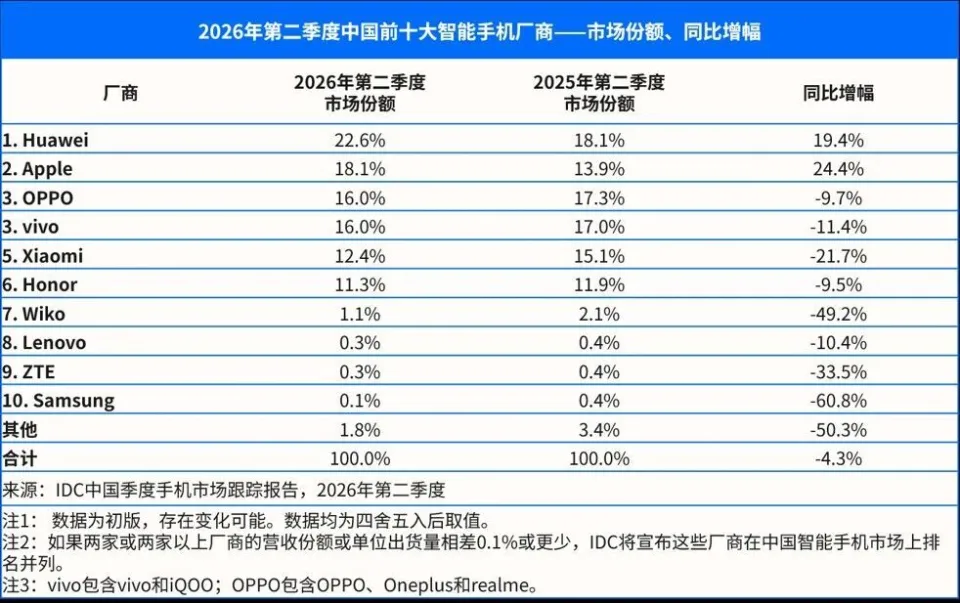
According to the latest IDC report, smartphone shipments in China witnessed a 4.3% year-on-year decrease in the second quarter of 2026, marking the fifth consecutive quarter of decline. However, when examining the top five manufacturers, a complete turnover is evident compared to previous years. Companies that once led the market are now teetering on the brink of being relegated to the “other” category.
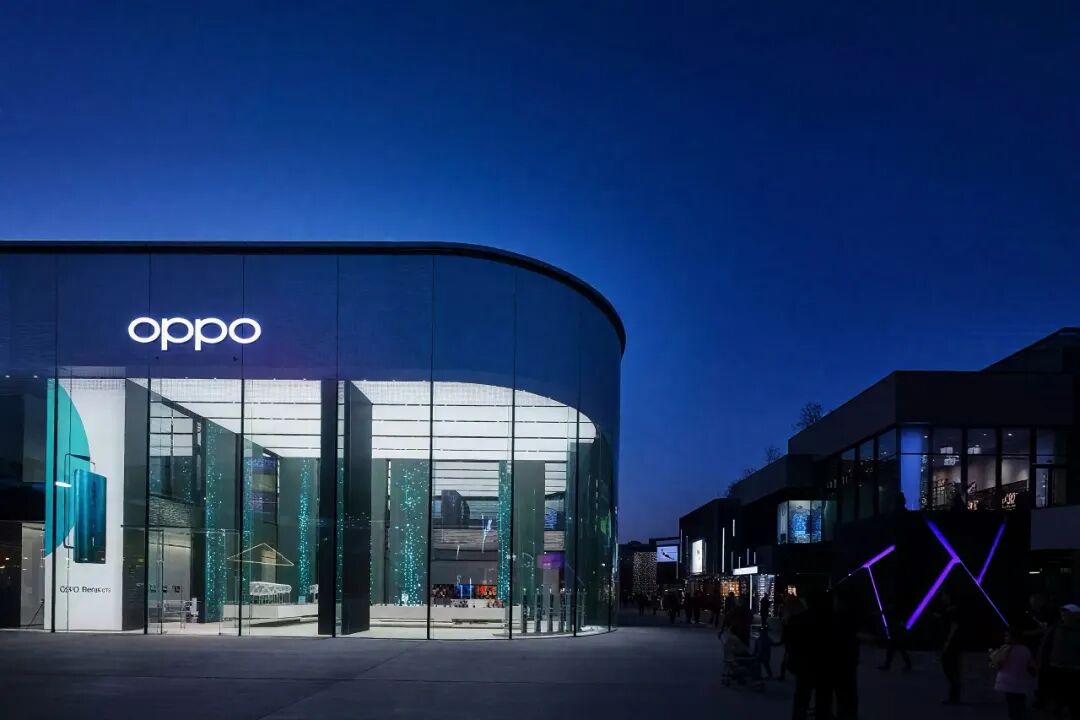
Against this backdrop, OPPO unveiled a series of strategic adjustments for its sub-brands on the global stage: realme will cease product updates in the Chinese market and concentrate solely on overseas markets; OnePlus will halt new product launches in Europe and North America, focusing primarily on the domestic and Indian markets, with both brands zeroing in on the gaming and performance sectors. On the surface, this may appear to be a signal of strategic retreat. However, when viewed within the context of the aforementioned market concentration, it more closely resembles a proactive competitive positioning. Prior to the market becoming more constrained, OPPO is refining and streamlining the offensive directions of each product line.
In IDC’s Q2 2026 data for China, the top six players command over 97% of the market share, a scenario that would have been unimaginable a decade ago. The market leader holds a 22.6% share, while the runner-up claims 18.1%, establishing a relatively secure gap between them. The crux lies in the third position—OPPO (inclusive of OnePlus and realme) and another competitor are tied at 16% each, according to IDC’s tie-breaking rules. At the same time last year, their respective figures were 17.3% and 17.0%, and in Q1 of this year, OPPO had 15.9% compared to 15.1%. The competition for the third spot remains fiercely close.
This is not merely a matter of who can reverse the situation by selling a few thousand more units. Market share is no longer determined by the number of SKUs or promotional efforts but by having a clearer brand structure, minimizing internal competition, and allocating resources more effectively. This is precisely what OPPO’s strategic realignment of its sub-brands aims to achieve.
realme has been active in the Chinese market for seven years. Today, Xu Qi, the Vice President of realme, issued a heartfelt open letter announcing the formal suspension of operations in the Chinese market and a full pivot to overseas markets.
realme, along with all brands targeting the 1,500 to 2,500 yuan price range, faces a challenge this year: Since the second half of 2025, mid-range products have seen their profits severely squeezed due to escalating costs of storage and advanced manufacturing processes. Many brands have been compelled to raise prices, but the impact of price adjustments in the highly price-sensitive sub-1,000 yuan segment cannot be overlooked. Furthermore, with numerous brands vying for cost-effectiveness online and offline channel penetration unlikely to surpass that of main brands, it is challenging for a relatively smaller brand like realme to generate new incremental value at this juncture.
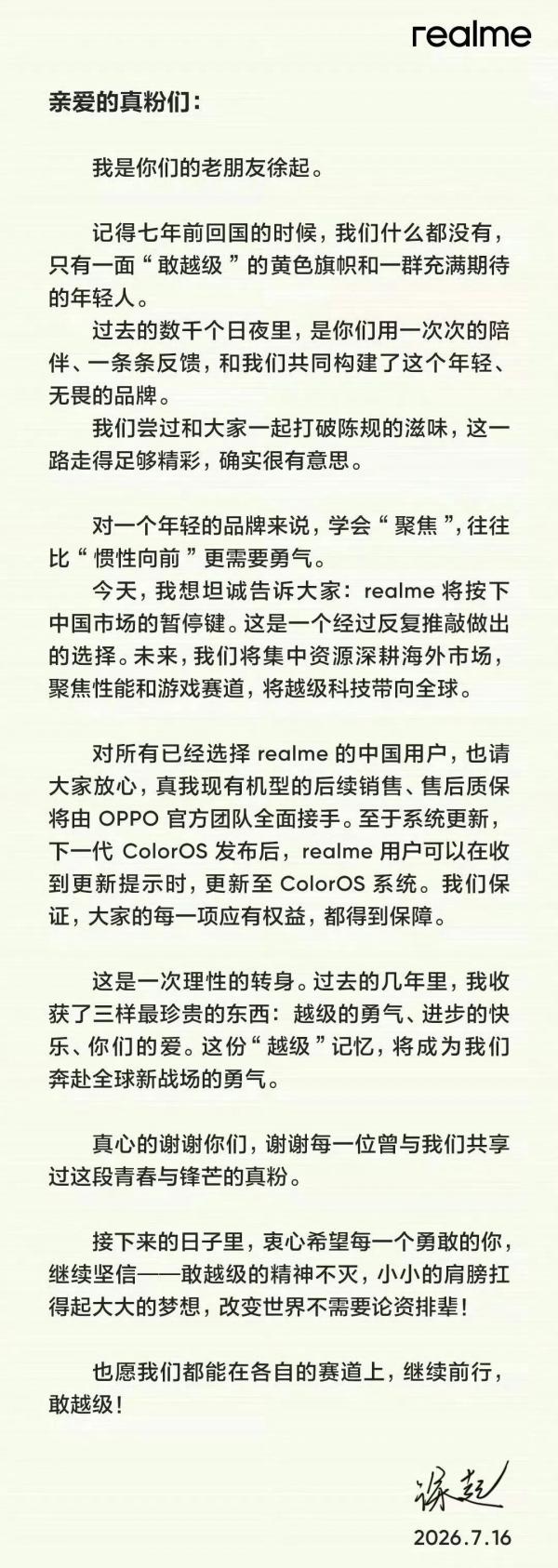
However, realme’s overseas presence remains robust. It consistently ranks among the top five in the Indian market and secures third place in multiple Southeast Asian markets. By reallocating the R&D and marketing resources saved from the domestic market to overseas markets and specializing in the gaming and performance sectors, the marginal return on investment is significantly higher than competing for a few percentage points of online market share in China, representing a rational reallocation of resources.
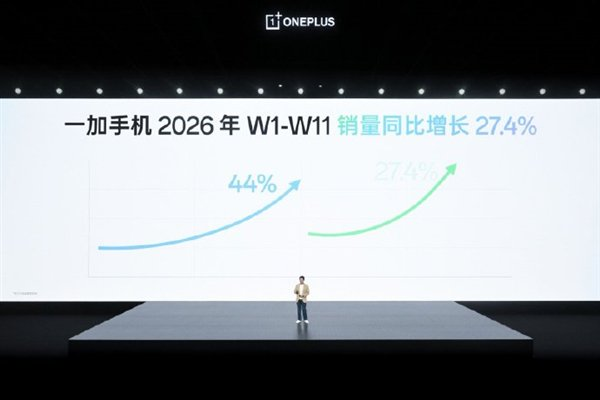
OnePlus’s withdrawal from Europe and North America follows a similar rationale. From the recent OnePlus 15 and OnePlus Ace 6 series, it is evident that OnePlus has forged a strong user perception as a “performance flagship” in China. However, in North America, it encounters structural costs such as carrier access thresholds, compliance certifications, and after-sales network construction. By reallocating these saved resources to the domestic market while maintaining its established presence in India, OnePlus is adopting a prudent approach from an overall perspective.
More significantly, in the past, both OnePlus and realme were integral parts of the OPPO ecosystem in China, but their positioning has become increasingly overlapping in recent years. This could lead to internal competition, causing discomfort in business operations and confusion among users. Now, with OnePlus focusing on performance in China and realme targeting the gaming and performance market overseas with its “Dare to Leap” tagline, the three brands—OPPO, OnePlus, and realme—are each finding their rightful place.
The main brand OPPO is also actively engaged in this landscape. According to Counterpoint data, during the 618 shopping festival this year, OPPO ranked third alongside Huawei and Apple with an 18% market share. During the New Year’s Day period at the beginning of the year, OPPO’s sales growth rate was 32.4%. What is even more noteworthy is the 60% increase in the 2,500 to 4,000 yuan price segment, ranking first in market share for this category. The OPPO Reno16, contrary to the industry trend of downgrading in 2026, upgraded its specifications. This is not because manufacturers have suddenly become more generous but because the streamlined brand hierarchy has provided greater freedom in product definition, allowing more room to benefit consumers.
Moreover, in the past, the OPPO ecosystem had to maintain three distinct Android custom systems: ColorOS, realme UI, and OxygenOS for OnePlus overseas. Given the high costs of mobile phone hardware BOM (Bill of Materials) today, redundant software R&D investment is the most susceptible area for cost-cutting. By consolidating into a single ColorOS, R&D resources are no longer dispersed, and the consistency of the system experience positively impacts all product lines. The strategic adjustment also explicitly mentions that future global realme and OnePlus devices will have the option to update to ColorOS independently, with guaranteed support for after-sales and software updates for brands exiting the market.
The mobile phone market in 2026 is undergoing not just cyclical fluctuations but a structural transformation. OPPO’s strategic realignment of its sub-brands on the global stage is not about retreating defensively but rather positioning each team for optimal combat in the hierarchical competitive landscape, leveraging the synergistic effects of its sub-brands to explore new possibilities.
-
DRAM, A Disruptive Technological Breakthrough!
-
Robot Army Mobilizes for Action
-
![]()
Electric Vehicle Penetration Soars Past 60%, Yet Seven of Top Ten Brands Hail from Traditional Fuel Vehicle Sector, Casting Doubt on Their Longevity
-
![]()
Conant Optics Clinches R&D and Procurement Framework Deals with Top Tech Firms!
-
![]()
Over 87% Surge in Net Profit for H1 Anticipated! Dongtian Micro Leads in AI Optical Communication
-
![]()
Tech Titans Offload AI Ventures, Tencent Shifts Stakes to Capitalize on Artificial Intelligence Surge
-
![]()
WAIC 2026 Observations: Mapless, Brain-Powered, and Task-Ready—Is Physical AI Taking Off?
-
![]()
Self-driving Technology Hits the Road: NVIDIA's Structural Adjustment, the Emergence of a First Mover... The Second Half of the Autonomous Driving Race Begins