The Food Delivery Battle: An Inevitable Shift to a New Era
 12/01 2025
 568
568
Will the food delivery battle rage on?
Following the release of financial results from JD.com, Alibaba, and Meituan, a clear trend emerges: a significant short-term profit slump, with Meituan even witnessing a staggering billion-yuan loss in profits. This prompts many to wonder: Will the food delivery battle persist? Is there a new phase on the horizon? Will subsidies dwindle, marking an end to the fierce competition?
Judging by the statements from key figures like Wang Xing and Jiang Fan, who are steering the course of this competition, the food delivery battle is far from over; it's simply evolving in its tactics.
In the third quarter, Alibaba and Meituan each invested over 30 billion yuan. Taobao Flash Sales managed to reduce losses while maintaining discounts, and the next step in its strategy involves expanding efforts across more categories, particularly branded retail. Meituan also acknowledged in its financial report that it anticipates continued competitive losses in the fourth quarter.
This clearly signals the dawn of a new phase in the food delivery battle, characterized by altered tactics and a transformed mindset among platforms.
The confrontation in this phase has shifted from a subsidy war or an order volume battle, as Wang Xing once put it, "winning at all costs," to an ecological and systemic war.
The Billion-Dollar Investment Cost
Preliminary estimates suggest that in the second and third quarters of 2025, Alibaba, Meituan, and JD.com collectively burned over 100 billion yuan on their food delivery businesses in just six months. That's equivalent to treating everyone in the country to three to five cups of milk tea.
Previously, Goldman Sachs research forecasted that from July 2025 to June 2026, Alibaba's food delivery business would reduce profits by 41 billion yuan, Meituan's EBIT would decrease by 25 billion yuan, and JD.com's food delivery business would reduce profits by 26 billion yuan.
Based on the third-quarter financial performance of these three companies, it appears that Goldman Sachs' estimates were conservative.
Meituan's third-quarter financial report revealed revenue fluctuations and significant profit hemorrhages, with its core local business taking a hit. The report showed Meituan's largest loss since going public, with an operating profit of negative 16 billion yuan.
The core local commerce segment, encompassing food delivery, incurred a loss of 14.1 billion yuan, compared to a profit of 14.6 billion yuan in the same period last year. Notably, Meituan's sales and marketing expenses surged to 34.3 billion yuan this quarter, 18.3 billion yuan more than the previous year, and sales costs also rose by 13.5 billion yuan. However, this did not translate into revenue growth for the core local commerce segment, which instead declined by 2.8%.
Alibaba's Chinese e-commerce business, with Taobao and Tmall as its core, saw its operating profit plummet from 35.2 billion yuan to 5.4 billion yuan in the third quarter, an 85% decrease. Sales and marketing expenses for the quarter reached 66.496 billion yuan, 34 billion yuan more than the same period last year.
On JD.com's front, although its food delivery subsidies in the third quarter were not as substantial as those of Meituan and Alibaba, and it did not disclose separate instant retail profit and loss figures, its Q3 financial report showed revenue growth without corresponding profit growth. The new business segment, including food delivery, incurred a loss of 15.736 billion yuan in the third quarter. Marketing expenses increased by 110.5% year-on-year to 21.1 billion yuan, an increase of approximately 11.1 billion yuan. Its overall operating profit turned from a profit of 12 billion yuan to a loss of 1.05 billion yuan.
The stock market's response has been telling. Although Alibaba's instant retail business has temporarily dragged down its profits, the future prospects of AI and big consumption have boosted its stock price. Since this year, Alibaba's Hong Kong stock has seen a 92.42% increase. Meituan and JD.com, the "beleaguered brothers," have witnessed their stock prices decline steadily.
Wang Xing once remarked, "The food delivery price war is a low-quality, low-price 'involutionary' competition." He echoed regulatory pressure against 'involution' and self-reflection on financial and operational challenges.
Meituan is undoubtedly under immense pressure, but the food delivery battle does not equate to a food delivery price war, nor does it equate to involution. Instant retail will bring profound changes to the consumer ecosystem, much like the ride-hailing wars of previous years, pointing towards a new future.
The Next Phase: An Ecological Protracted War
For Wang Xing, a positive sign is that the tactics in the competition around food delivery have changed.
At Alibaba's financial report conference call, Jiang Fan stated, "We will dynamically adjust our strategies based on market competition and our opportunities."
Meituan also mentioned in its fourth-quarter outlook in the financial report that it expects the trend of operating losses to continue in the fourth quarter. Wang Xing also stated that he would adjust investments and strategies based on the competitive landscape and would "make necessary investments to maintain our leading position."
This indicates a shift in the pace of the food delivery battle, with close-quarters combat tactics like "zero-yuan purchases" to boost order volumes becoming less prevalent. Each company will not seek to crush its opponents in one battle but will return to a rational phase of stalemate, that is, an ecological protracted war with reduced intensity but deeper dimensions.
In reality, the initiative in the food delivery battle no longer lies solely with Meituan or JD.com. Whether to fight and how to fight is not solely up to Wang Xing or Liu Qiangdong.
The power to initiate lies with Alibaba, a latecomer adept at group warfare.
At the third-quarter financial report conference call, Alibaba's management clearly stated that Taobao Flash Sales has achieved significant optimizations in order structure and logistics costs. For example, the latest average order value increased by double digits compared to August, and this increase also drove the overall GMV share of Taobao Flash Sales.
In the second quarter, Alibaba set a goal that increasing scale would halve the losses in the economic model (UE, referring to per-order food delivery). This quarter, the unit economic model losses of Taobao Flash Sales narrowed, reducing by half compared to July and August.
Additionally, Taobao Flash Sales is driving growth in related categories and businesses. Data shows that Hema and Tmall Supermarket's flash sales orders increased by 30% compared to August.
With these results emerging, there is no reason for Taobao Flash Sales to halt its efforts, as rumored, and stop fighting.
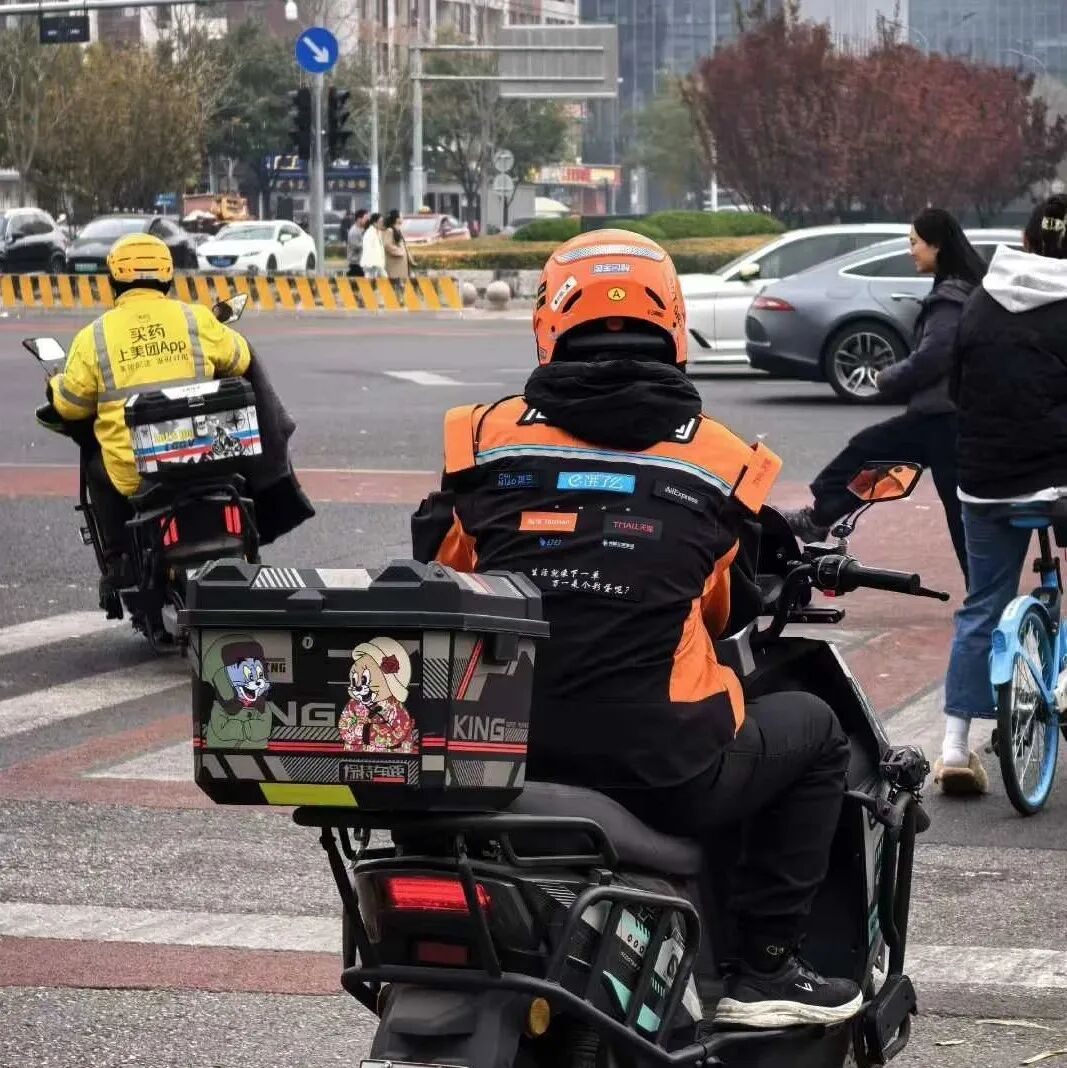
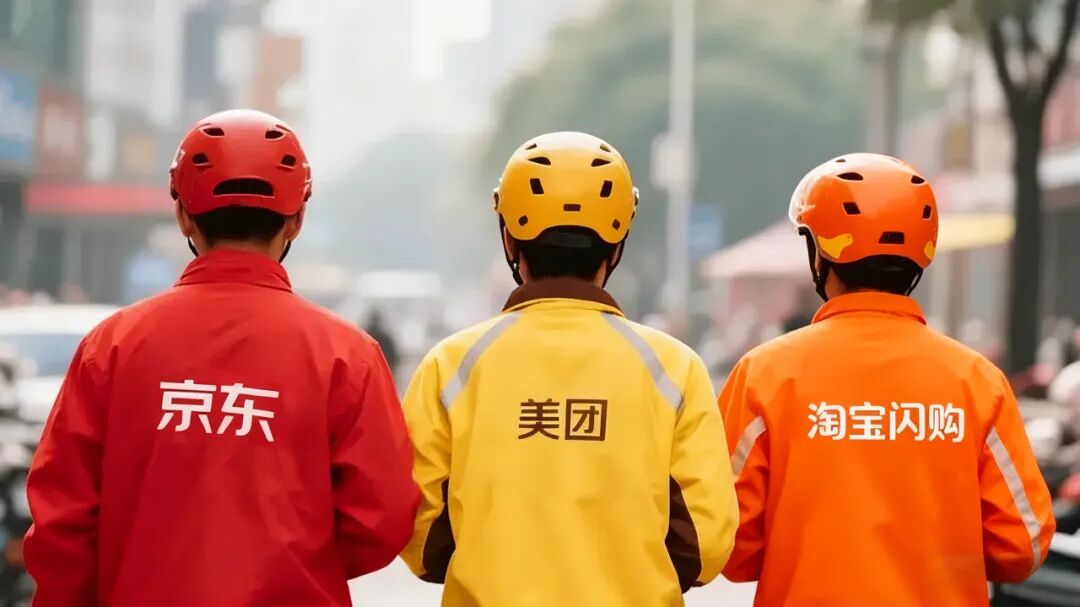
Figure caption: Taobao Flash Sales' new Knight's uniform (knight's outfit) photographed by Tang Chen
In Tang Chen's view, these data and benefits support Xu Hong's fourth-quarter outlook. The reduction in subsidies for Taobao Flash Sales is largely attributed to Alibaba's systematic capabilities in its commercial ecosystem.
With the integration of businesses like Ele.me, Fliggy, and Hema, the improvement of the membership system, and the synergy of businesses like Gaode Maps, forming an efficient "group army" for warfare, it is foreseeable that they can achieve loss reduction and even profitability by expanding scale and improving efficiency.
Jiang Fan once said that efficiency cannot be discussed without considering scale, which is the "miracle of strength" in the instant retail version. Taobao Flash Sales is his key to connecting various consumer segments under Alibaba's e-commerce business group, expecting not just order volumes but a transformation from a "large e-commerce platform" to a "large consumption platform," bringing trillion-yuan transaction volumes to the platform in three years.
With Alibaba not intensifying its efforts, Meituan and JD.com have also had the opportunity to catch their breath and start aggressively building their food delivery ecosystems.
Meituan is expanding while consolidating its position. On the one hand, Meituan is increasing direct subsidies to the catering industry, such as providing 2 billion yuan in direct assistance, 300 million yuan to support innovative store models, and 500 million yuan to promote the "transparent kitchen" infrastructure. Offline projects like Xiang Supermarket and Happy Monkey are also supplementing the supply side. At the same time, Meituan is actively expanding overseas, with its food delivery battle with Didi pushing its international business into the spotlight.
On the other hand, Meituan is increasing its R&D investment. Although it incurred significant losses in the third quarter, its R&D investment reached 6.9 billion yuan, a 31% year-on-year increase, making it a rare bright spot in the financial report.
JD.com is also gradually adapting to the rhythm of the battle and adjusting its strategies, attempting to find a more sustainable development path for its high-investment food delivery business. For example, on the supply side, innovative formats like Qixian Supermarket, Qixian Kitchen, and Qixian Coffee are all trying to add new connotations to the supply chain story.
The latest move is that JD.com has launched a standalone food delivery app. JD.com CEO Xu Ran clearly stated that the long-term goal of the food delivery business is to become a "self-sustaining business."
JD.com is taking a differentiated route in food delivery, with its positioning of quality food delivery, supply chain core, and welfare policies like providing social insurance and housing funds for full-time riders, all determining that it cannot engage in a subsidy war that floods the market. At the third-quarter financial report conference call, JD.com's management emphasized that the company has maintained a "relatively rational" attitude in the competition, and the overall investment in the food delivery business narrowed in the third quarter compared to the previous quarter.
Perhaps one can speculate that if JD.com can maintain a daily average order volume of 10 million in the food delivery sector, this scale would be sufficient to drive the development of other businesses.
The Long-Term Significance of the Food Delivery Battle
For Alibaba and JD.com, a protracted battle with controllable intensity can not only prevent Meituan from encroaching on their e-commerce businesses but also drive the integration of their own businesses during the offensive and differentiate users' perceptions of Meituan's instant retail.
All three financial reports share a notable commonality: the emphasis on non-catering delivery and the data driving e-commerce businesses. For example, Wang Xing emphasized quality, stating that Meituan continues to lead in the GTV (Gross Transaction Value) of mid-to-high-priced order markets, with over 70% market share for orders exceeding 30 yuan. JD.com stated that the conversion rate of the earliest users brought by food delivery to other businesses has approached 50%. Taobao Flash Sales' proportion of non-tea beverage orders has increased to over 75%.
The food delivery battle has transcended traditional narratives of catering delivery, entering a new form of integrating near and far fields, and becoming an ecological protracted war centered around instant retail.
However, Meituan does not want to be dragged into such a protracted battle. Compared to JD.com, which still has its e-commerce main business, Meituan is more passive. Food delivery is its largest traffic entry point, activating its core local commerce and other business models.
Once Meituan is embroiled in a war of attrition, its development rhythm will be disrupted, and the local life moat constructed by its previously touted systematic advantages will also be breached.
For Wang Xing, this battle is uncomfortable to fight; he doesn't want to fight but cannot afford to lose his defensive position. As Guangzi Xingqiu pointed out, the balance mechanism previously established by Meituan has been broken. Winning this battle will not significantly enhance Meituan; it will merely maintain its original standard. Losing, however, means losing part of its market share and subsequently shaking its "high-frequency beating low-frequency" traffic foundation.
Although Taobao Flash Sales has taken the initiative in the food delivery battle, in the broader instant retail market, achieving more efficient ecological synergy still requires extremely high wisdom and strategy to balance. At the same time, Jiang Fan must also guard against surprise attacks from the front lines. Besides Meituan, Pinduoduo and Douyin E-commerce are both aggressively expanding on the e-commerce supply side.
LatePost mentioned that Douyin and Pinduoduo, which have not participated in the battle, are secretly preparing. Douyin's on-site and e-commerce services are both accelerating towards the top spot, while Pinduoduo's e-commerce and community group buying continue to grow, accumulating more cash.
JD.com, on the other hand, has reduced its investment in the later stages of the battle, striving to balance the cost-effectiveness ratio between food delivery and other businesses. For Liu Qiangdong, staying at the instant retail table means having the opportunity to grab a share of the new trillion-yuan market.
It can also be said that the food delivery battle has entered an ecological protracted war, with Alibaba, JD.com, Meituan, and even Douyin and Pinduoduo, which are waiting for the right moment, vying not just for a few coins in the catering delivery business but for dominance in the entire instant retail market.
In this round of the battle, the link from food delivery to instant retail, then to e-commerce and other OTA businesses, has been established, running from high-frequency to low-frequency and from near-field to far-field.
The real changes in the consumer ecosystem that will follow are still going to be very exciting.
-
![]()
July Sees Record 65.1% Penetration Rate for New Energy Passenger Vehicles, Fueled by Robust Export Growth
-
![]()
After Three Months of Duan Jianjun Taking Over, Yu Kexin 'Goes Missing' as Top Sales Executive—Is Volvo's Core Management Facing Another Shake-Up?
-
![]()
Lexus Wants to Repeat Tesla's Playbook
-
![]()
Cars Priced at 50,000 Yuan Struggle in Sales, While Those Over 400,000 Yuan See High Demand
-
![]()
Analysis of BBA Reputation Index in July 2026: Service Issues Become a Common Problem
-
![]()
CATL Takes a Step Back, Li Auto Dives Deeper
-
![]()
Tencent's Chess Game in WorkBuddy
-
![]()
R&D Cycle Cut in Half Following Trends: Joint Venture Automakers Now Producing Quick-Turnaround Vehicles