Again Following Apple’s Lead? The iPhone 17’s Square Front Camera Sparks Immediate Interest in the Android Camp
 02/09 2026
 568
568
Shooting convenience often outweighs pure resolution.
In 2025, Apple surprised the tech world with a significant upgrade to the front cameras of the iPhone 17 series and iPhone Air. The resolution was boosted from the long-standing 12MP to 18MP, and the aspect ratio shifted from the traditional 4:3 to a 1:1 square format for the image sensor.
The square image sensor opens up a wider range of creative possibilities for the new iPhone models, enabling seamless vertical and horizontal video recording, regardless of how the device is held. Apple also introduced a dedicated feature for simultaneous front-and-back video recording, empowering vloggers to capture footage from multiple angles effortlessly. According to Weibo tech blogger Digital Chat Station, Huawei and OPPO are currently evaluating 1:1 aspect ratio front camera sensors, with potential implementation as early as next year.
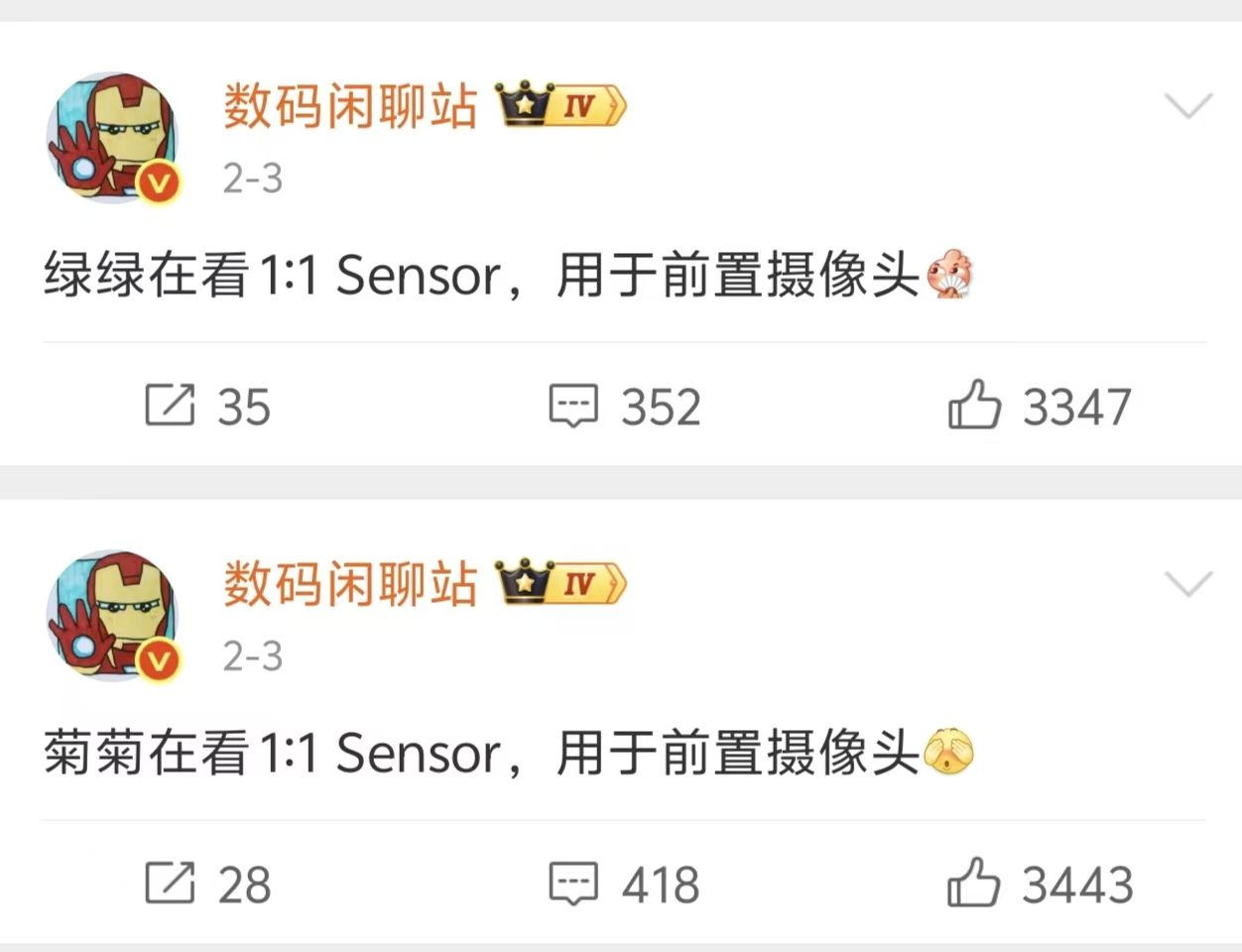
(Image Source: Weibo)
For a long time, the front camera has been considered a "non-essential" component in mobile imaging. Even high-end imaging smartphones rarely invest heavily in this area. However, this often-overlooked component is now gaining significant attention from manufacturers.
Square sensors breathe new life into the long-neglected front camera
Front camera upgrades have been relatively modest in recent years. While rear cameras have advanced to 1-inch sensors and 200MP resolutions, front camera sensors have remained at 32MP or 50MP, with dimensions around 1/2.55 inches.
It's not that manufacturers are unwilling to upgrade front cameras; the challenge lies in spatial constraints. Rear camera modules already occupy a significant portion of the upper half of smartphones, leaving limited space for front cameras. Moreover, upgrading front sensors requires larger lenses, which most consumers find unacceptable due to the resulting large screen cutouts.
Apple's iPhone 17 series and iPhone Air take a different approach with square sensors. This shift focuses on enhancing shooting convenience rather than solely improving image quality and pixel count.
Square sensors are not revolutionary, but their 1:1 aspect ratio transforms them from "fixed-frame output" devices into professional-grade "master frame acquisition platforms." In simpler terms, Apple's Center Stage front camera setup on the iPhone 17 series uses a larger square sensor to capture a "bigger negative." The system then dynamically determines whether the final output should be vertical, horizontal, or a center-tracked reframed shot.

(Image Source: Apple)
Traditional sensors typically use 4:3 or 16:9 rectangular aspect ratios. Whether held horizontally or vertically, users often cannot fully utilize the entire frame. For example, shooting a vertical selfie video for horizontal export usually requires cropping the top and bottom; conversely, horizontal shots converted to vertical require cropping the sides.
More critically, video stabilization relies on electronic image stabilization (EIS) to compensate for shake by leaving safety margins within the sensor frame for inter-frame displacement. Automatic composition and center tracking also require window adjustments within the frame. When users switch between horizontal and vertical orientations, these cropping effects compound, often resulting in significantly reduced clarity and narrowed fields of view.
The value of square sensors lies in providing balanced cropping space in all directions, enabling stabilization cropping, automatic composition, and orientation exports to coexist without compromising image quality or stabilization performance. Objectively, while square sensors offer creative advantages, they do not fully utilize the entire sensor area. For instance, the iPhone 17 series front camera technically has 24MP but outputs only 18MP after cropping.
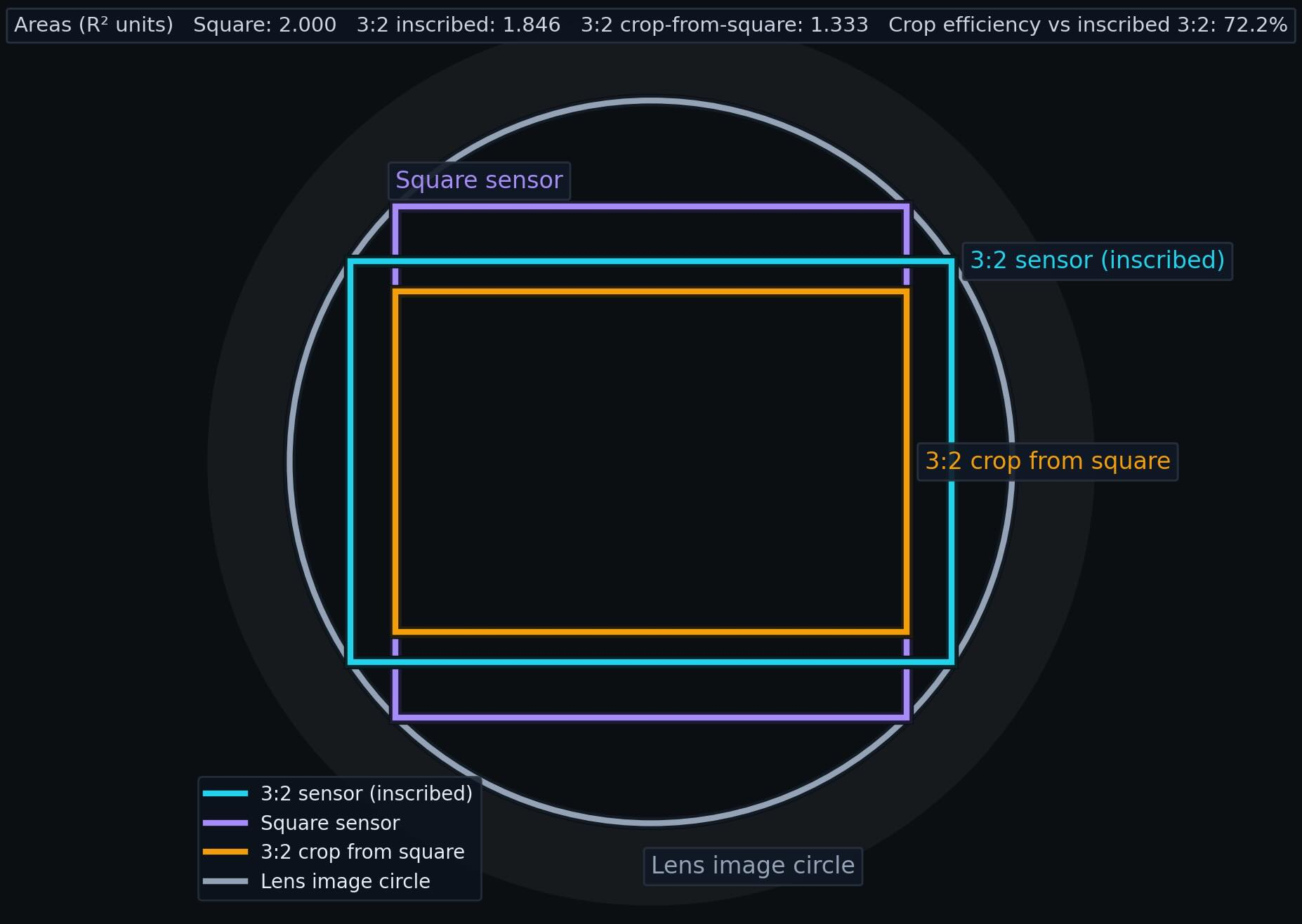
(Image Source: iphoneislam)
Clearly, when hardware upgrades for front cameras offer diminishing returns in image quality, square sensors represent an optimal solution. They do not require larger sensor areas or higher pixel counts but provide wider fields of view, stronger stabilization, and intelligent frame tracking. With short videos and vlogs becoming universal creative formats, these advantages are undeniably significant.
Mobile imaging shifts focus to video, with front cameras as the key
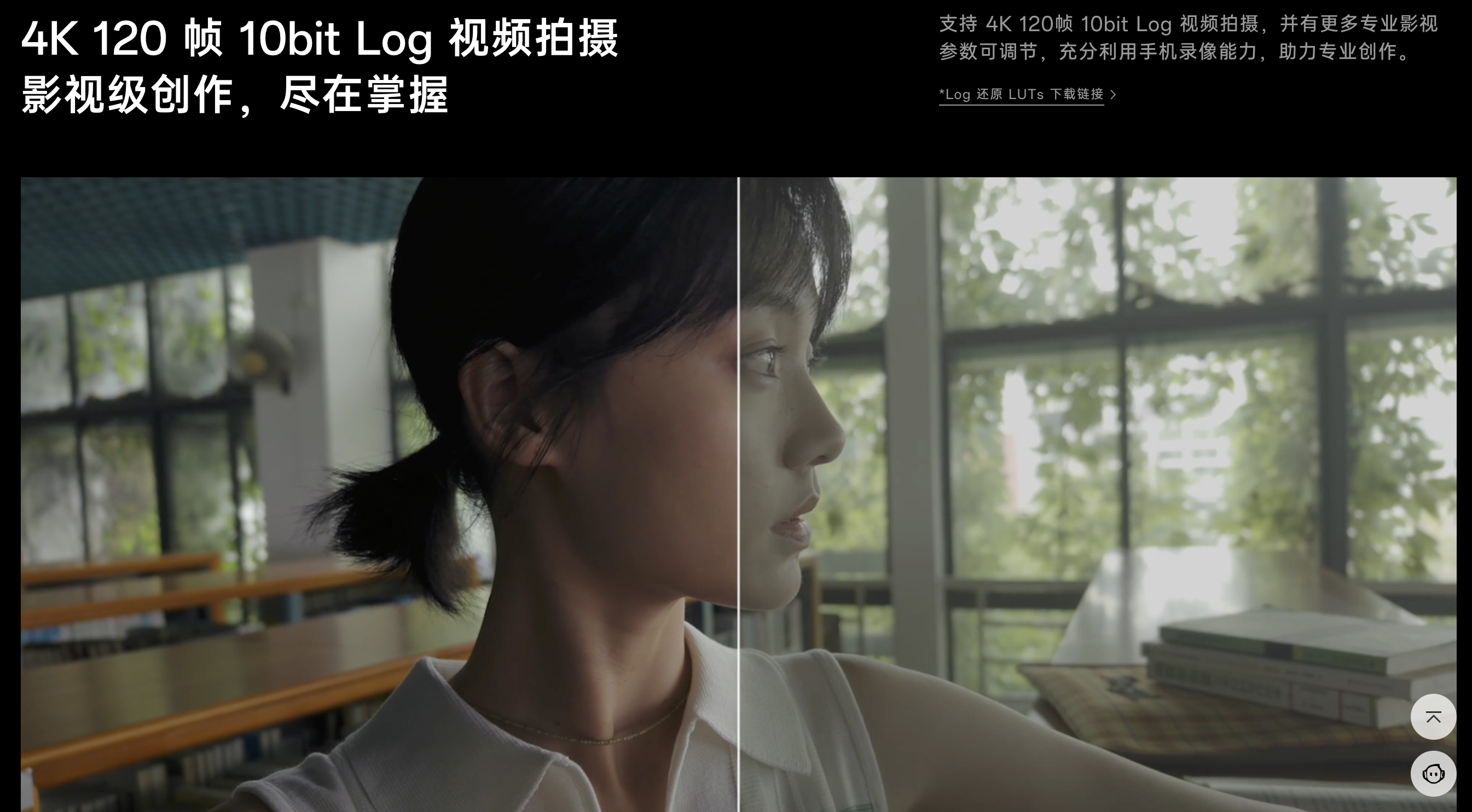
A closer look at recent flagship imaging phones reveals a clear shift from photography to videography as the primary focus. Whether through high frame rates, high dynamic range, or professional color grading and post-production capabilities, manufacturers have collectively elevated video to the core of their imaging offerings.
More flagships now emphasize full-focal-length video consistency, 4K/8K resolution, high-specification HDR video, Log profiles for professional grading, and upgraded stabilization systems. The goal is no longer mere video recording but achieving steadier, more user-friendly, and professional results. While Android phones previously lagged behind iPhones in video capabilities, this gap has rapidly narrowed, with some specifications now surpassing Apple's offerings.
For example, the vivo X200 Ultra's LYT818 sensor, though slightly smaller than its predecessor's LYT900, supports new HDR technology that reads pixel charges at three different gains during single exposures, combining them into one frame. It also debuts 4K 120fps recording, indicating vivo's focus on mobile videography.
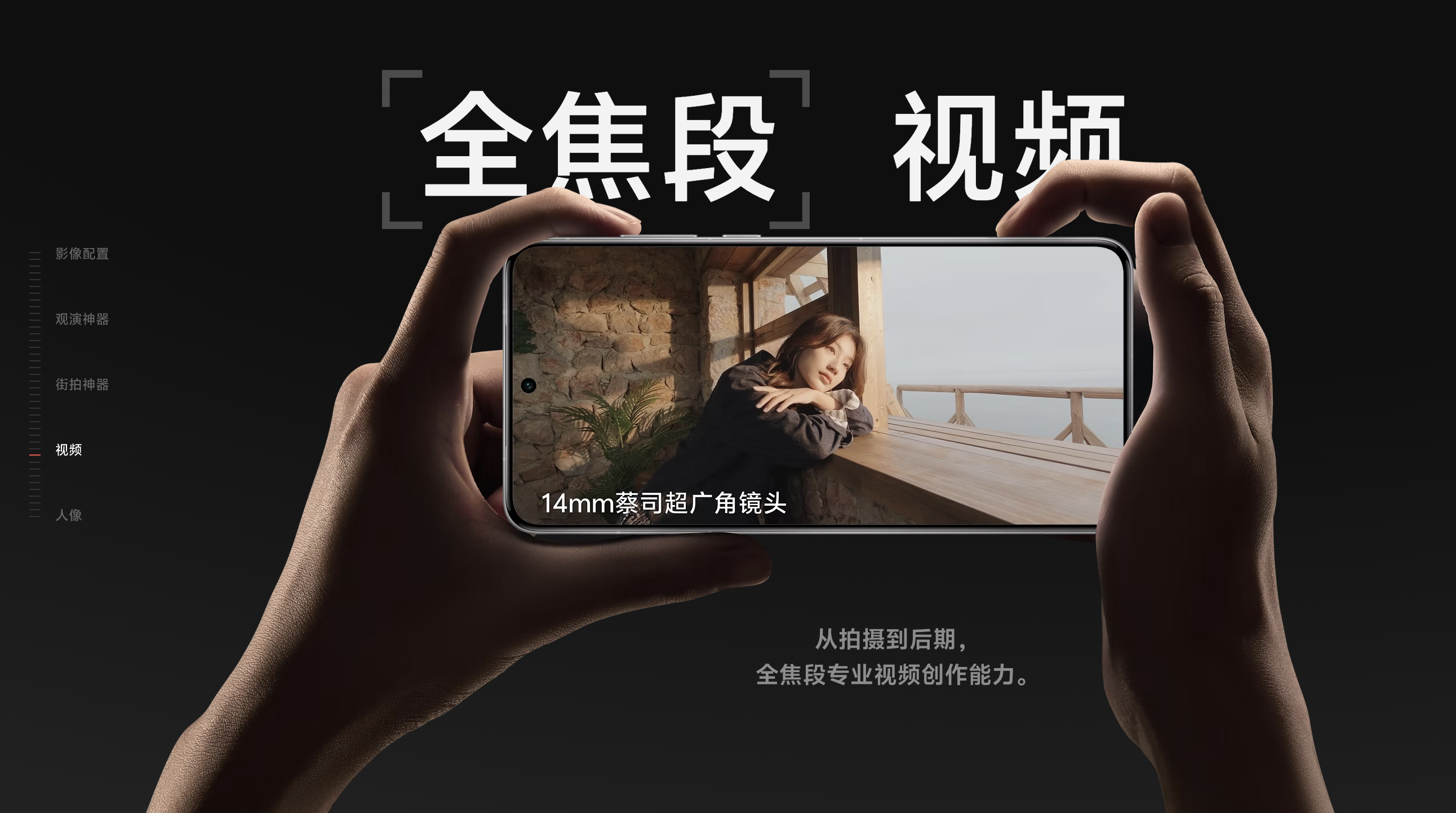
(Image Source: vivo)
The Xiaomi 15 Ultra introduced ACES LOG color management—the first Android phone to support this film-industry standard—along with full-focal-length 8K recording, dual-focal-length 4K 120fps, and Dolby Vision, pushing video specifications to their limits.
Beyond Apple's ecosystem advantages and post-production tool compatibility, Android and HarmonyOS flagships now match iPhones in hardware video capabilities. The industry consensus is clear: video recording represents the future of mobile imaging.
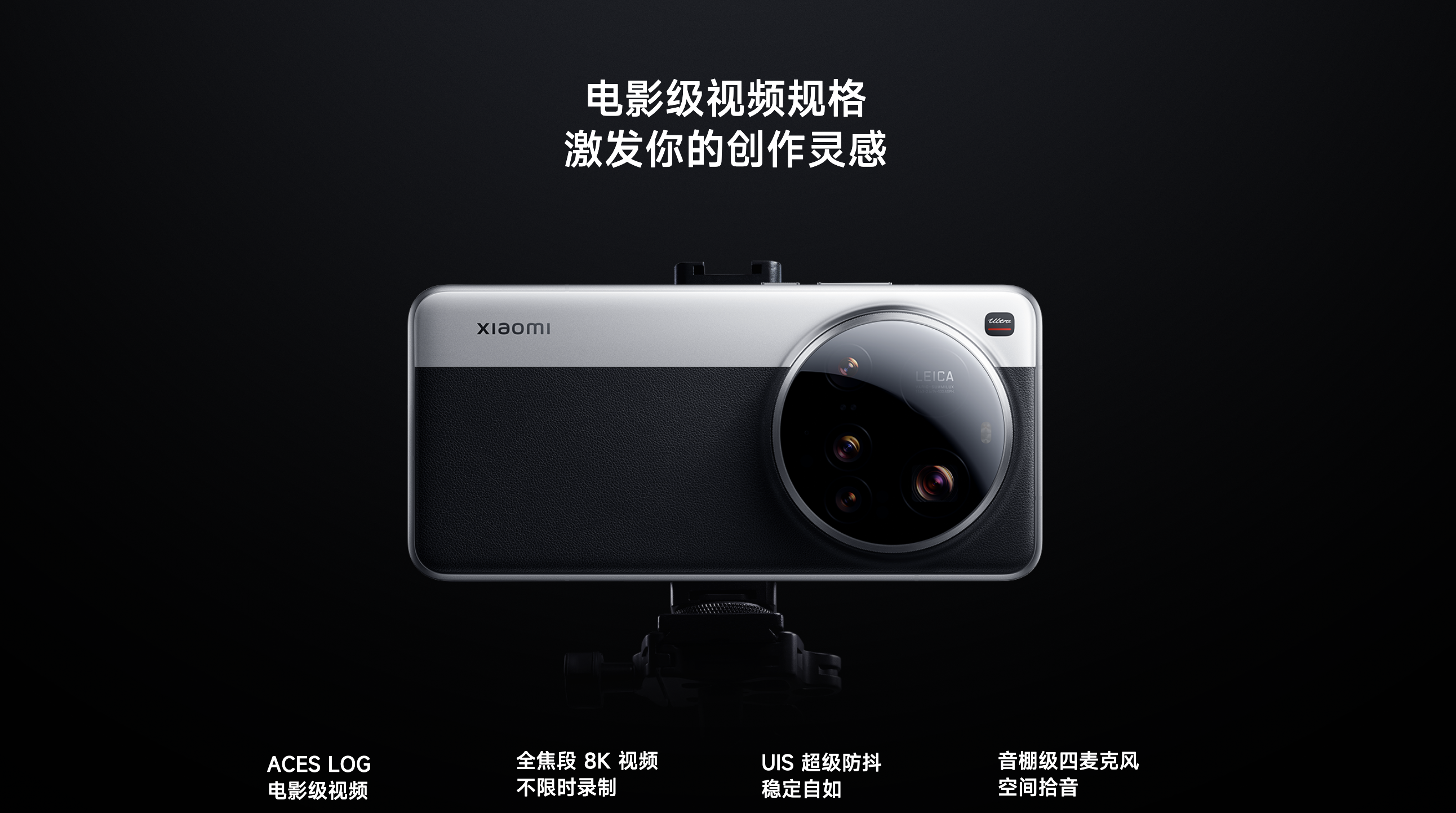
(Image Source: Xiaomi)
The most significant gap with Apple now lies in front cameras—a gap that widens further with the iPhone 17 series' square sensor adoption. This explains why Huawei and OPPO are early adopters of square sensors. With clear advantages in mobile imaging and growing market recognition for video capabilities, accelerating front sensor upgrades allows them to enhance full-scenario video performance across front, rear, and telephoto lenses.
"Shootability" matters more than "image quality"
Front cameras occupy a unique position in mobile imaging—convenience trumps resolution.
According to the China Network Audio-Visual Development Research Report, as of December 2024, China had 1.091 billion network audio-visual users (98.4% penetration), with 1.04 billion short video users (93.8% penetration). Short videos remain the most time-consuming network audio-visual format. With more users creating short videos, front cameras have become essential for daily documentation. When long-neglected front cameras become creative tools, their shortcomings become glaring.
Most short video content—vertical, close-up, facial—is tailor-made for front cameras. The mobile imaging paradox is that flagship rear cameras offer complete "video production toolchains," while front cameras barely meet basic usability standards. This disconnect grows in the content era, as high-frequency front camera scenarios (unrepeatable, unposed moments) demand not just sharpness but forgiving video pipelines and framing logic.
(Image Source: OPPO)
As previously discussed, square sensors inherently outperform traditional 4:3 sensors in front cameras. This advantage will likely become an industry trend—not mere Apple emulation, but genuine design merit.
However, square sensors won't become ubiquitous soon. First, they demand more from lens coverage, edge image quality, vignette/distortion correction, and real-time video processing bandwidth. Second, third-party app adaptations for non-standard aspect ratios remain limited. Even the iPhone 17 series faced issues two months before launch, suggesting Android platforms like Douyin and Xiaohongshu may take longer to adapt.
Nevertheless, phone manufacturers' renewed focus on front cameras—with Huawei and OPPO pioneering square sensors—demonstrates clear strategic vision for mobile imaging. The future lies beyond rear camera professionalism; it requires full-scenario coverage that prioritizes creator convenience—not just "great shots," but "effortless shooting."
-
On the Eve of Its IPO, Avatr Finds Itself Embroiled in a 'Farce of Controversy and Belittlement'
-
![]()
Yutong Optics' Japanese Subsidiary Unveiled in Tokyo, Shifting Strategic Focus to Technology-Driven Growth
-
![]()
Half-Year Revenue Outstrips Last Year’s Total! Zhongrun Optics Forecasts 80.2% H1 Revenue Growth
-
![]()
Why Does AI Competition Start with Computing Power?
-
![]()
Apple AI Finally Makes Its Debut in China, Yet iPhone's 'AI Autonomy' Faces Uncertainty
-
![]()
Apple AI and QianWen Make Up Lessons: Alibaba Has Its Own 'Doubao Phone'
-
![]()
QianWen Joins Apple, Signal for Large Models to ‘Fade into the Background’
-
![]()
The ‘Anchor’ Strategy of Google Hidden Behind the Bleeding Financial Report