In-Depth Analysis | Why Does Google Consistently Make the Right Decisions?
 01/23 2026
 665
665
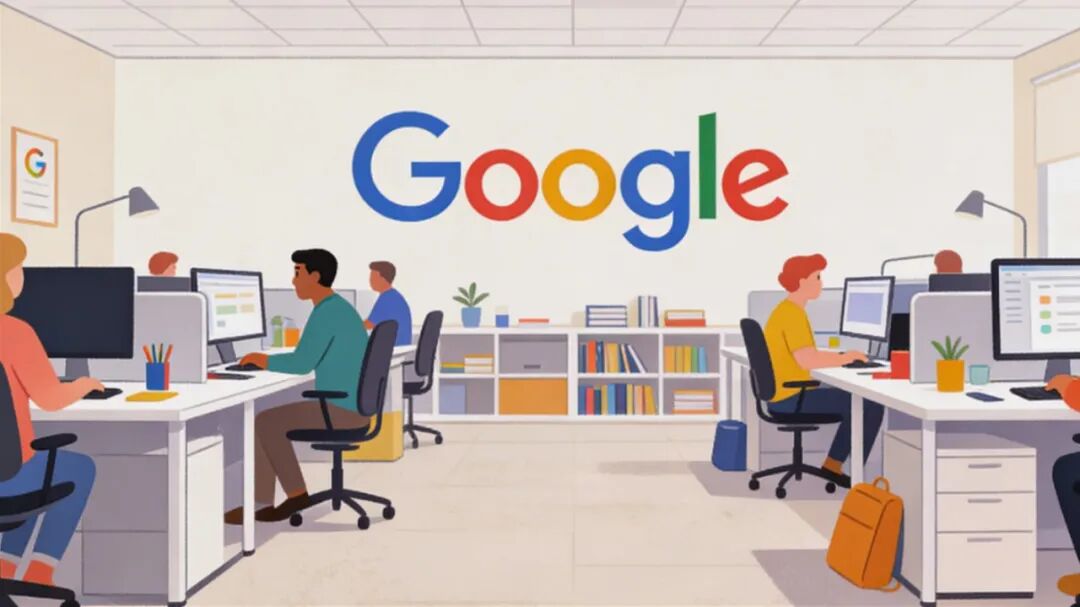
Google harmonizes highly rational, data-driven methodologies with an unwavering respect for individual creativity.
Years ago, the unveiling of the Gemini large model prompted the global tech community to reevaluate Google's AI strategy.
While the external world was engrossed in comparing its parameters with GPT, few observed a pivotal detail: the core technology of this cross-modal large model stemmed from Google's Transformer architecture, which was open-sourced in 2017, and its acquisition and sustained investment in the DeepMind lab. These two seemingly disparate initiatives harmoniously converged nearly a decade later.
Even earlier, when Amazon Web Services (AWS) had already secured half of the cloud computing market, Google Cloud (GCP) was initially perceived as a 'follower.' However, by positioning itself as an AI-native cloud, it has now ascended to become the world's third-largest cloud service provider, leading the industry in growth rate.
From its absolute dominance in search engines to the Android system's command of over 70% of global mobile devices, from its late-mover success in cloud computing to technological leadership in the AI era, Google has consistently struck the right chord at nearly every pivotal technological turning point in its more than two-decade history.
In stark contrast, Microsoft boasts Bill Gates and Satya Nadella, Amazon has Jeff Bezos, and Apple is synonymous with Steve Jobs and Tim Cook—the personal auras of these CEOs are nearly indistinguishable from their companies. Meanwhile, Google's successive CEOs, whether Eric Schmidt, Larry Page, or the current CEO Sundar Pichai, have all maintained a low-key and reserved demeanor, lacking a strong 'public presence.'
More intriguingly, discussions on 'management culture' in the tech industry often revolve around Microsoft's refresh, Amazon's Day 1 philosophy, and Apple's extreme product focus. In contrast, Google's decision-making logic has remained somewhat enigmatic. It has not embraced catchy management slogans or formulated replicable 'blockbuster methodologies,' yet it consistently makes the right choices in complex market competitions. So much so that, to this day, amidst wave after wave of generational change, the company has never fallen behind, with its market value even surpassing Apple to become the world's second-largest.
What operational model underpins this success?
What is the 'engine' propelling Google to consistently make the right decisions?
01
Decentralized Decision-Making: Empowering Those Closest to the Action
When attempting to decipher Google's decision-making process, a common cognitive bias is to search for a single, charismatic individual authority or a catchy management maxim.
However, Google's decision-making system fundamentally rejects the 'CEO-centric' model.
From the outset, Larry Page and Sergey Brin recognized that the uncertainty inherent in technological innovation meant the most correct decisions often did not stem from top-down design but rather from frontline teams' acute perception of technological trends and user needs. This insight ultimately evolved into the core logic of Google's 'decentralized decision-making network.'
Within Google, there is virtually no top-down strategic planning process. Any team capable of presenting sufficiently convincing technical arguments and market analyses can apply to the company for resource support and even challenge established strategic directions.
In 2013, when Google Cloud was still in its infancy, three internal teams were simultaneously exploring different cloud computing technology paths: one focused on Infrastructure as a Service (IaaS), another on Platform as a Service (PaaS), and a third attempting to package Google's core technologies (such as the BigQuery big data processing tool) into industry solutions.
However, this 'internal competition' did not resemble the disorderly rivalry seen in many internet companies today.
At the same time, any major product decision, from interface design to market entry, must undergo rigorous A/B testing and data analysis for validation. Even the cherished '20% free time' policy, which allows employees to work on personal projects, survives and adapts based on continuous internal evaluations of innovation output.
An internally widely followed principle states: 'Do not trust the HIPPO—the Highest-Paid Person's Opinion.' In meetings, regardless of position, the most persuasive factor is not the title but the quality of data supporting the viewpoint. A junior engineer can use detailed A/B test results to question or even overturn a vice president's product vision.
This creates a near-'intellectual equality' debate arena where the decision-making process shifts from power struggles to truth-seeking.
Ultimately, Google did not simply choose one path but integrated the strengths of the three teams, forming a trinity model of 'infrastructure + platform + industry solutions.' As a result, Google Cloud avoided AWS's early weakness of 'heavy IaaS, light ecosystem' and did not repeat Microsoft Azure's initial 'blurry positioning,' achieving a breakthrough in the AI era through the synergistic advantage of 'cloud + AI.'
At Google, 'making decisions' is not the core responsibility of executives; decisions often emerge from in-depth debates among technical elites. The CEO's role is closer to that of a debate moderator, resource coordinator, and ultimate execution responsibility bearer, rarely directly intervening in specific business decisions. Instead, the focus is on coordinating cross-departmental resources, ensuring smooth internal communication, and upholding the company's long-term value orientation.
This is Google's most unique and easily misunderstood aspect: its decision-making authority increasingly shifts from individuals to the system. This explains why its CEOs remain relatively low-key without hindering organizational efficiency.
Page and Brin's most enduring legacy may not be a specific product but OKR (Objectives and Key Results), the core process that mandates transparency, ambition, and measurability in goal-setting. Throughout the company, from the CEO to frontline teams, everyone's OKRs are mutually visible. This mechanism produces two revolutionary effects:
First, it automatically aligns organizational forces vertically and horizontally, reducing redundant efforts or directional deviations caused by opaque information. Second, it bases performance evaluations on contributions to public goals rather than subjective impressions from superiors, further weakening office politics.
'Empowerment rather than control' fosters a 'bottom-up' decision-making dynamic within Google. Each team has sufficient freedom to explore, and the company's role is to support promising directions through a robust resource allocation mechanism.
Thus, Google's CEO does not need to play the role of a product visionary like Steve Jobs, micromanage like Jeff Bezos, or bind the company brand to a personal image like Elon Musk.
02
Long-Term Orientation: Avoiding 'Urgent but Unimportant' Decisions
Google's decision-making logic bets on long-term value, but this long-term orientation is not simply about 'delayed gratification.'
In 2006, when Google acquired YouTube for $1.65 billion, the video site was still losing money, and outside observers widely questioned whether Google had spent a fortune on a money-burning machine.
However, Page and Brin saw the trend that video content would soon become the mainstream form of internet content.
In the decade following the acquisition, Google did not force YouTube to generate profits quickly but instead continuously invested in optimizing algorithmic recommendations, building a content ecosystem, and improving creator incentive mechanisms. By 2019, YouTube had become Google's second-largest revenue pillar and now dominates half of the global video streaming market.
In contrast, competitors like Yahoo Video and Microsoft MSN Video fell behind due to their impatience for quick results in pursuing short-term profits and frequently adjusting strategies.
Additionally, during the early boom of advertising, a team proposed 'precisely targeting ads based on user search histories and even selling some data to third parties,' a scheme that could have significantly boosted short-term revenue but was rejected by management.
The advertising business leader at the time presented a user privacy survey indicating that while most users were willing to accept a moderate amount of advertising, they resented data abuse. The team's logic was clear: the foundation of advertising revenue is user trust, and sacrificing trust for short-term growth is not worthwhile. Today, Google's advertising business remains one of the most profitable ad models globally, primarily due to the accumulation of user trust.
We often praise companies for being 'quick to react' and 'seizing opportunities,' but many of Google's crucial decisions appear 'slow' or even 'lethargic' to outsiders. Cloud computing offers another typical example.
When Amazon AWS was already capturing market share and Microsoft Azure began giving it their all to catch up, Google Cloud seemed to be leisurely building its technical architecture. The market grew anxious, analysts questioned, and clients drifted away. According to the decision-making logic of most companies, this would have been the time to immediately launch a simplified product mimicking competitors to seize market share.
Urgent? Very urgent. Important? Seemed important. But Google chose to continue digging its canal.
Because it knew that merely replicating an AWS alternative would forever make it a follower. What it wanted was to build a completely different waterway: a cloud truly designed for the cloud-native era, machine learning, and big data.
This decision meant enduring years of market skepticism and falling behind in market share, investing massive resources into open-source infrastructure like Kubernetes (which at the time seemed like building infrastructure for competitors), and persuading developers to adopt an entirely new mindset and workflow.
This process was far from exciting. However, when the digitalization process advanced to the next stage, and enterprises sought not just to move servers online but to build intelligent, flexible applications on the cloud, people realized that Google's canal led precisely to where the future most needed water.
It is important to note that within Google, some teams are tasked with addressing 'today's' and 'this week's' problems, such as operating and optimizing existing products. However, other teams have OKRs (Objectives and Key Results) spanning three, five, or even more years.
Their success criteria are not next quarter's revenue but whether they can achieve breakthroughs in fundamental technological or scientific problems. The company allows, even encourages, a portion of resources to remain detached from 'urgent' business pressures.
This resembles a forest with both fast-growing shrubs that absorb nutrients and slow-growing trees that ultimately determine the forest's height. When making decisions, you cannot allocate all sunlight to the shrubs just because they grow faster.
So, who safeguards this long-term perspective? In a company without a dominant, autocratic CEO, this responsibility is dispersed.
Technical leaders bear part of it. At Google, senior engineers wield significant influence, with their promotions and evaluations largely depending on their judgment and contributions to technological direction. The system also bears part of it. The OKR framework requires goals to be 'challenging,' naturally encouraging thinking beyond current capabilities. Of course, leaders remain crucial gatekeepers.
Decisions guided by long-term orientation do not yield immediate results. However, when they finally bear fruit due to strategic planning, people often attribute it to 'luck' or 'foresight.'
03
Emergent Intelligence: Building an Innovation Ecosystem Rather Than Planning Innovation Paths
In the book 'Work Rules!,' Google argues that breakthrough innovations often cannot be 'planned' or 'directed.'
Planning innovation sounds reasonable: set clear goals, allocate resources, establish timelines, and execute. However, the essence of innovation, especially breakthrough innovation, often cannot be planned. Just as you could not have planned the internet in 1920 or the exact form of smartphones in 1990, breakthroughs frequently emerge unexpectedly.
Google realized this early on. The famous '20% time' policy, which allowed employees to spend one-fifth of their workweek on personal projects, was essentially an institutionalized mechanism for emergent intelligence, providing resources, time, and legitimacy for bottom-up creativity. Landmark products like Gmail and Google News originated from this policy. Although the policy's form has evolved as the company grew, its core—stimulating creativity through autonomy—has become ingrained in Google's DNA.
This system operates not just on rules alone but on a set of matching decision-making logics.
First, Google's decision-making respects 'bottom-up' discoveries. In most hierarchically rigid organizations, information flow and idea recognition heavily depend on reporting lines, where ideas can easily be filtered out by intermediaries. Google strives to let good ideas 'float' to the surface through technical forums, internal code open-sourcing, and flattened project initiation processes.
Second, it encourages seemingly 'unproductive' cross-disciplinary collisions. Management does not decide whether to support a project solely based on 'how relevant this topic is to our core business.' They believe innovation often occurs at the edges and intersections of disciplines. Maintaining broad knowledge flows and cross-disciplinary exchanges increases the probability of unpredictable innovations.
In a planning-driven culture, failure is a stain to be avoided, but in an ecosystem-thinking culture, 'try-fail-learn' is the fundamental mode of system evolution.
Google has phased out numerous products, ranging from Google+ to the consumer edition of Google Glass. These decisions were not made on a whim. However, the company does not completely negate (a more precise term than "deny" in this context) the efforts of the teams or individuals behind these unsuccessful projects. Nor does it shut down all avenues for high-risk exploration after a single setback.
Stories about canceled projects frequently circulate within the company. Some of these projects boasted promising user data, dedicated teams, and had even started generating revenue. Yet, if they were deemed to offer only marginal improvements over existing models or if they strayed from the core technological vision, they faced termination.
Resources, particularly top-tier talent, are then redirected towards projects of greater foundational significance and those with the potential to shape the future.
This decision-making process, though often painful, conveys a clear message: within Google, the value of a decision is gauged not solely by its immediate problem-solving capabilities but by its relevance and impact five years down the line.
This approach cultivates a culture where individuals instinctively weigh the long-term potential when proposing new ideas.
This mindset is particularly pronounced in technological strategy. Confronted with the AI wave, Google embarked on a systematic foundation-building endeavor over a decade ago. Acquiring DeepMind, pioneering the release of the Transformer architecture paper, and developing the TensorFlow open-source framework—these seemingly disparate decisions adhered to a unified logic: planting seeds in the deepest, most fertile ground and patiently nurturing the entire ecosystem.
Thus, when ChatGPT sparked the generative AI craze, the outside world came to realize that Google had already erected formidable barriers spanning algorithms, computing power, data, talent, and infrastructure. Its decisions had transcended the pursuit of individual product trends, instead investing in all the foundational elements of an inevitable technological era.
This model necessitates exceptional patience and long-term strategic resolve from decision-makers. Many investments do not yield immediate returns and may even face criticism for being "scattered" or "slow to react." Nevertheless, Google's decision-making system accommodates this ambiguity because, within the right ecosystem, emergent outcomes will far outstrip any meticulously planned roadmap.
-
![]()
Xiaomi's MiMo Stages a Two-Year Comeback to Top Global Inference Volume Rankings
-
Tech Titans' Offline Tussle for Desktop Dominance: The Office Agent Showdown
-
![]()
Full-Spec Power and BOSE Subwoofer: The REDMI K100 Pro Max Performance Review
-
![]()
Yuewen’s Unending Innovation: Navigating Content Industry Shifts
-
![]()
Huawei, Li Auto, XPENG, Xiaomi: After Scrutinizing Seven Papers, What Are 'World Models' and 'VLA' Really Competing For?
-
![]()
Proposed to Raise 955 Million Yuan through Private Placement! Huicheng Vacuum Boosts Localization of Ultra-Precision Optical Coating Equipment
-
![]()
Cash Flow Soars 13-Fold! What Major Strategic Move is Wuhan Five Square Optoelectronics Planning?
-
![]()
Leaked Design of vivo X500: Reverts to Circular Camera Module in Top-Left Corner, Pays Homage to Classic X90 Aesthetic