Jeff Dean's First Entrepreneurial Venture After Leaving Google: Why Launch an AI Company 'Not Aiming to Make Money' at This Juncture?
 08/24 2026
 546
546
Author: Lin Yi
Editor: Key Points Team
After departing Google, AI pioneer Jeff Dean recently appeared at Stanford.
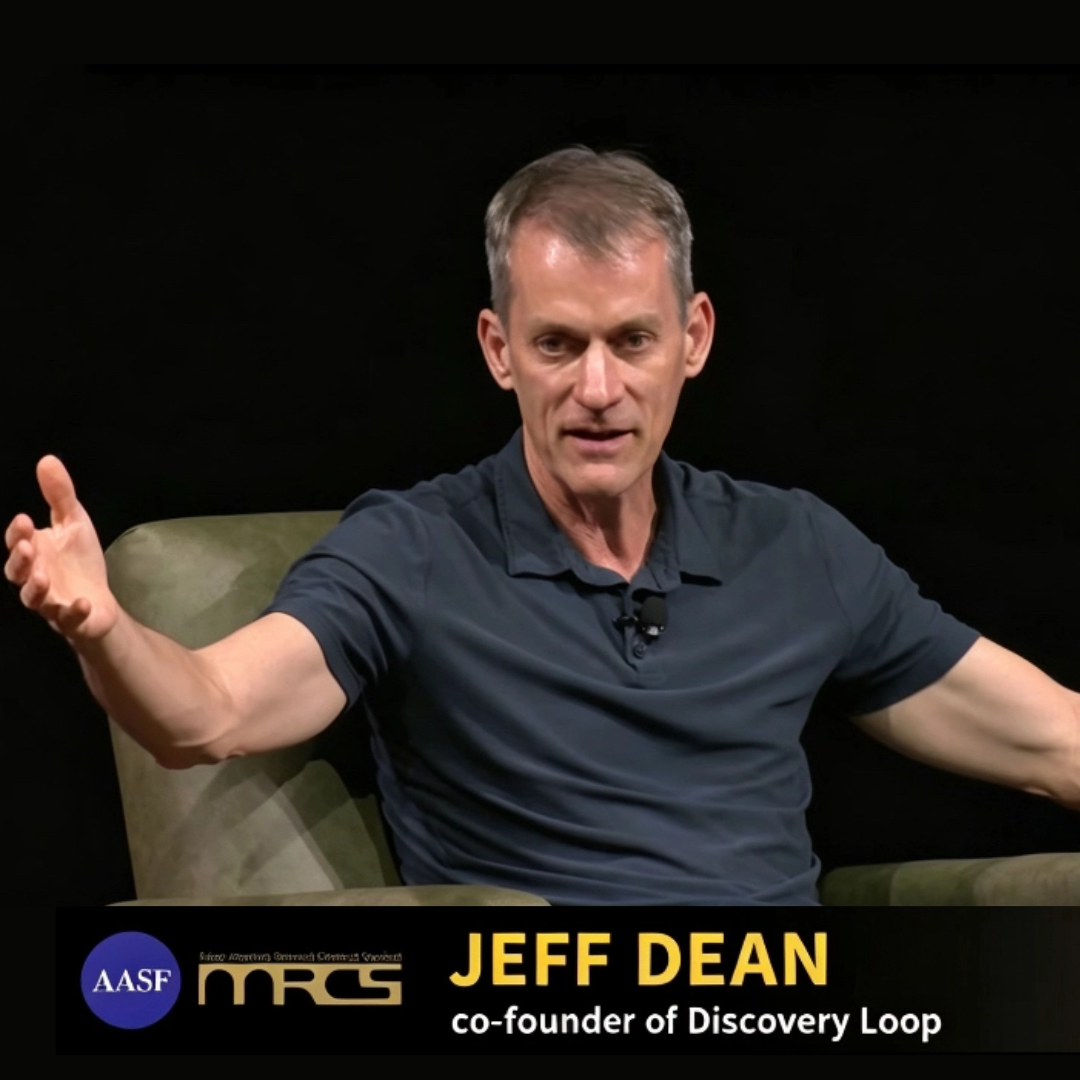
At the 2026 Frontier & Pioneer Symposium, he engaged in a deep dialogue with renowned computer security scholar Dawn Song. This time, Jeff Dean not only shared his genuine journey after leaving Google—where he served for 27 years—but also systematically unveiled his new venture, Discovery Loop, to the public for the first time.
From creating MapReduce and TensorFlow to leading Gemini, Jeff Dean's career is legendary. In this first in-depth dialogue since announcing his entrepreneurial venture, he offered numerous hardcore insights:
1. Cloud computing and MaaS are dismantling Big Tech's AI moats
When asked why he chose to leave at a time when computing power is highly concentrated among giants, Jeff Dean stated that massive hardware infrastructures are no longer an absolute, exclusive barrier for Big Tech.
"With the maturity of cloud computing and MaaS (Model as a Service) ecosystems, startups no longer need to build underlying hardware from scratch," Jeff Dean said. Small teams can directly leverage vast cloud-based computing power to bridge the hardware gap in their early stages.
Compared to the complex business entanglements and procedural noise within large companies, startups with around 10 highly focused members can achieve superior efficiency and explosive potential in specific domains.
Jeff Dean co-founded Discovery Loop with long-time collaborators like Sanjay Ghemawat and Oriol Vinyals, structuring it as a Public Benefit Corporation (PBC).
This means the company is legally empowered to prioritize societal public interests—such as broadly distributing scientific discoveries—over shareholder profits. Amid today's capital frenzy for valuation and monetization, he chose a "non-profit-driven" third path.
2. Discovery Loop's mission: Fully automate scientific methodology using multi-agents
Regarding AI's next holy grail, Jeff Dean focused on Recursive Self-Improvement (RSI) and AI for Science.
In his view, past RSI efforts were often limited to "models optimizing their own code," while true disruption lies in automating the entire scientific research and engineering closed loop (closed loop): problem decomposition → hypothesis formulation → experiment execution → result evaluation → iterative feedback.
Discovery Loop's core logic is to build multi-agent systems (MAS) with doctoral-level expertise across 20 domains, enabling:
Breaking time and mental limits: No single human can master top-tier knowledge across dozens of disciplines, but multi-agent systems can.
Achieving minute-level experimental iteration: Automated toolchains reduce single scientific experiment evaluations from days or weeks to minutes or hours.
Enabling high-concurrency experiment scheduling: Running thousands of experiments simultaneously, dynamically allocating resources based on expected value and computing costs, exponentially boosting human scientific discovery efficiency.
3. Gemini's success key: Adopting native multimodality from Day 1 while reinforcement (strengthening) code training later
As the creator of multiple groundbreaking technologies, Jeff Dean candidly reviewed decades of engineering wins and losses.
He mentioned TensorFlow's biggest lesson was creating a contrib subdirectory in early open-source versions, leading to extreme codebase chaos where the same function had ten implementations, severely damaging developer ecosystems.
Gemini's winning move was committing to native multimodality from Day 1 while later reinforcement (strengthening) code training. This not only enhanced programming capabilities but also significantly improved the model's general logical decomposition abilities.
4. Agent safety as an offensive-defensive double-edged sword: External constraints through non-technical means are essential
When Dawn Song raised concerns about agent overreach and cybersecurity risks, Jeff Dean demonstrated the pragmatic thinking of a tech optimist.
He argued that agents' vulnerability discovery capabilities are a classic double-edged sword—while enhancing attack methods, they also empower defenders with automated patching supertools.
"For things we don't want models to do, answers often lie beyond technology," Jeff Dean emphasized. Like laws prohibiting computer system intrusions, society needs legislative and regulatory non-technical constraints rather than halting innovation.
Below is the original interview text:
1. Leaving the giant platform to start a new chapter: AI is a vast new blue ocean where ship size doesn't matter
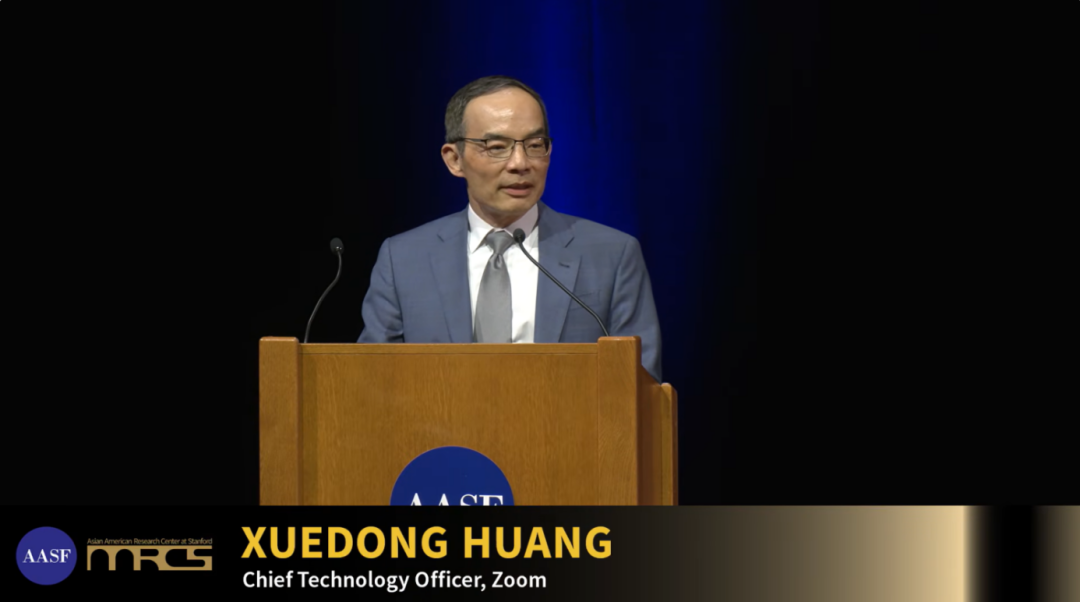
Xuedong Huang: Today is truly an honor and joy to introduce our keynote speaker, one of the pioneers shaping modern computing and AI—Jeff Dean. Joining Google in 1999, Jeff Dean helped establish numerous cornerstones of modern computing and AI over the next 29 (or 27) years, from MapReduce and BigTable to TensorFlow and Google Brain. His exceptional contributions have earned the industry's highest recognition, including election to the U.S. National Academy of Engineering, the IEEE John von Neumann Medal, and the ACM Computing Prize. Now Jeff Dean is about to embark on a new chapter, and today marks his first day at Stanford, making this particularly special and exciting.
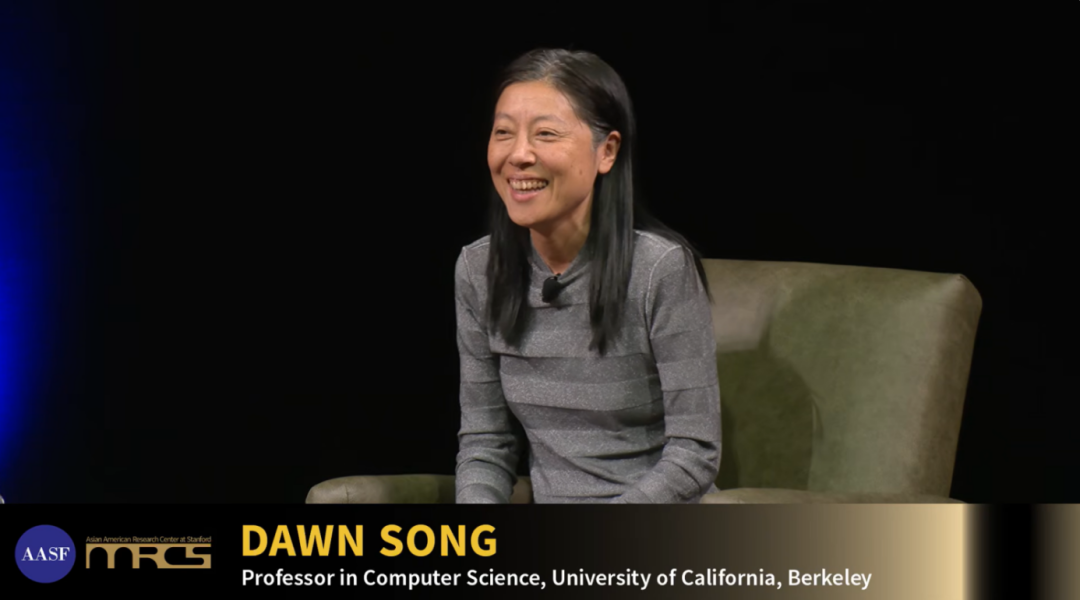
Xuedong Huang: I also can't think of a better dialogue partner for Jeff Dean than Dawn Song. Please welcome Dawn Song. Dawn Song is one of the top researchers in AI security, trustworthiness, and computing intersections, with groundbreaking work at Berkeley. She's a MacArthur Fellow and member of the U.S. National Academy of Arts and Sciences. Additionally, she's an extremely successful entrepreneurial professor who founded four startups, including one reaching $100 million in annual revenue. What I've always admired about Dawn Song is how she not only produces exceptional research but also translates it into real-world impact.
Xuedong Huang: Like Jeff Dean, Dawn Song is also transitioning from Berkeley to Meta—one of the world's largest AI organizations—embarking on a remarkable new journey. Today we see an interesting contrast: Dawn Song is moving toward a large platform, while Jeff Dean chooses to leave a large platform to create something entirely new. Clearly, even as the two top experts on stage today, they haven't unified on the ideal company size for AI endeavors.
Xuedong Huang: This resonates with me personally. After 30 years at Microsoft, I chose to join Zoom. Perhaps the lesson is simple: the focus isn't on ship size but whether there's an exciting new blue ocean to explore. And AI today undoubtedly represents such a vast new blue ocean. The past decade focused on making AI more powerful; the next chapter demands we answer more critical questions: What can we achieve with such powerful intelligence? Can AI cure cancer? Can AI improve our society? These are the questions we hope to explore today. Please join me in warmly welcoming Jeff Dean and our moderator Dawn Song for this fireside chat. Thank you all.
2. The intuition and vitality of MoE architecture: Activating only the most useful model parts for 10x efficiency gains
Dawn Song: Wonderful, thank you so much for joining this dialogue, Jeff Dean.
Jeff Dean: Thank you.
Dawn Song: I'm truly excited—everyone in the auditorium is buzzing. Before we begin formally, let's catch up personally. Jeff Dean and I have known each other for many years, probably over a decade. I want to share my most memorable moment from our past interactions. It was long ago, around the 2017 ICLR conference. ICLR was then one of the top machine learning conferences, still small with only hundreds of attendees compared to tens of thousands today. I remember our team's paper on generalization in neural program synthesis won the Best Paper Award that year. By the way, this was far before today's LLM-based code generation technologies became popular. Thank you, Jeff Dean—I don't know if you remember, but you specifically came to congratulate me on the Best Paper Award, mentioning that ICLR had three best papers that year: one from our team and two from Google.
Jeff Dean: Thank you—that was indeed an outstanding paper.
Dawn Song: I also remember how excited you were to tell me about your new work at the time—the Mixture of Experts (MoE) model.
Jeff Dean: Right.
Dawn Song: Of course, the paper's title was longer back then: "Outrageously Large Neural Networks: The Sparsely-Gated Mixture-of-Experts Layer."
Jeff Dean: Yes.
Dawn Song: Hearing you explain it then, I found it absolutely fascinating. But at the time, I couldn't have predicted—nor do I know if you did—that this work would later have such profound impact, becoming the foundational pillar for nearly all cutting-edge AI models and architectures today.
Jeff Dean: I think the intuition behind that work was wanting to have extremely large models capable of remembering vast amounts of things, while maintaining efficiency by only activating the most useful model parts. You could build a modular architecture with many different expert modules, letting the model learn which experts excel at which tasks. Then when processing specific requests or token contexts, you'd only activate the model parts meaningful for that token. Just like in a real brain, where different regions specialize: one area thinks about Shakespeare and sonnets, while another activates when you encounter a garbage truck backing up while driving—these don't activate simultaneously. So to save energy while having massive capacity, finding the correct model components to activate makes perfect sense. We were thrilled because we clearly saw about 10x improvement in the training computation-to-model quality ratio compared to the dense models people commonly used then. When you see a 10x improvement idea, you know it's extraordinary and likely to become extremely important.
3. The paradigm shift in deep learning: Unifying previously isolated disciplines through general data modeling
Dawn Song: Yes, that's truly remarkable. Even hearing you explain it now, the logic remains remarkably similar to when you first told me—testament to the idea's enduring vitality. Jeff Dean, you've accomplished so much amazing work over decades. You've practically shaped every mainstream computing platform and many key breakthroughs behind modern AI, from MapReduce and BigTable to TensorFlow, TPU, and Gemini. We indeed have much to discuss. Looking back, what has surprised you most about AI's trajectory over the decades? Additionally, what do you think the field still underestimates or overlooks today?
Jeff Dean: Clearly, interest in AI has been continuously growing. Around 2011-2012, we began investing heavily at Google to scale deep learning models. We started seeing astonishing results—by training neural networks 50x larger than before, image classification error rates dropped dramatically, and speech recognition improvements equaled the past 20 years of speech research combined, achieved simply by scaling a relatively simple deep speech model. So we recognized this trend early and understood its critical importance for extremely difficult computer science problems like computer vision, language processing, or speech recognition.
Jeff Dean: The beauty of the deep learning paradigm is how it truly unified many fields that previously used domain-specific techniques. By learning directly from the most raw data forms, we achieved this paradigm shift—when viewing problems through this general learning lens, everything changes, which proved incredibly helpful. Over the past 15 years, more people worldwide from diverse disciplines have realized this is an extremely powerful way to model data for making predictions and critical classifications in medicine, science, consumer products, chatbots, and various applications we see today. The massive investments in computing hardware etc., reflect strong belief in this technology's ability to transform the world even further than today. This is fascinating and exciting—a summary of what's happened.
4. TensorFlow's wins and losses: Provided elegant computational abstraction, but creating contrib subdirectory was the biggest lesson
Dawn Song: Great, thank you. Later we'll also discuss your new journey through startups. You've created so many foundational works—we don't have time to review them all, but let's pick a few to share the lessons and insights you've gained. Take TensorFlow: it helped millions of researchers and developers worldwide access modern deep learning. When designing TensorFlow, what principles were most critical? Looking back now, what would you design differently today? What TensorFlow experiences should guide next-gen AI frameworks for increasingly agent-like AI systems?
Jeff Dean: We built an early system at Google called Disbelief internally, which was not open source. It provided a way to express various neural network computations, then map those computations onto various hardware platforms, like CPUs and GPUs, and distribute the computation in a way that was largely transparent to the user. You could simply specify that you wanted to train this model using 100 machines and 1,600 cores, or 500 GPUs, etc., and the underlying framework would handle those details. So, we wanted to give machine learning researchers or developers the ability to abstract away from the specifics of how the computation was mapped onto hardware, because it was a very elegant abstraction. You could say, 'I have this really beautiful ML model in my head, and I don't care how you implement it—just make it run fast.'
Jeff Dean: That was one of the properties we wanted to bring to TensorFlow as well. Then, we wanted to generalize the computation abstraction provided to a computational graph of various ML-oriented operations, such as matrix multiplies and vector operations, etc. I think we did a pretty good job with that. We chose to make it open source so that people all over the world who wanted to do machine learning could have a common framework to express their ideas in. It's so much better when a research paper comes with an actual implementation of the ideas in the paper, as opposed to everyone trying to reconstruct the code from what is often a fairly detail-lacking text description in the paper. That was the original impetus behind TensorFlow. Then we saw the many applications of AI and thought such a framework would be very useful for people.
Jeff Dean: In terms of what we got wrong, one was not having something like the eager execution mode that became very popular in PyTorch and Jax, and was later retrofitted into TensorFlow. I think that made the abstraction experience even better. The other thing we got wrong was that, in the open-source version, we created a subdirectory called contrib, which allowed a lot of external people to contribute various auxiliary libraries and approaches. I think that caused a lot of confusion in the community. We probably should have kept the TensorFlow core releases pure and not had that directory. Because what ended up happening was that there were 10 different ways to do anything, depending on which subdirectory of contrib or which particular sub-library you were using. It would have been much better to have those as separate libraries that were built on top of TensorFlow core. That caused some confusion in the TensorFlow user community about which contrib sub-projects they should actually be using. It's always good to learn from experience, and we definitely would not do that again if we were starting over today. But overall, it did help a lot of people around the world get into machine learning and start applying it to important problems they cared about, which I think is always a good thing.
Song Xiaodong: Absolutely. Thank you so much for sharing those incredibly valuable lessons and insights. I still remember, before TensorFlow came out, so many people, including my students and other collaborators, had to put in an enormous amount of effort just to implement the most basic infrastructure.
Jeff Dean: Yeah, and if you wanted to do anything at large scale, you had to build your own distributed system underneath.
Song Xiaodong: Exactly.
Jeff Dean: And if you can avoid that and have a common abstraction, that's always great.
5. The Key to Gemini's Success: A Firm Commitment to Native Multimodality from Day 1, Later Enhanced by Code to Bolster General Reasoning Capabilities
Song Xiaodong: Yes, I also personally really like the design abstraction of the computational graph—it's very elegant.
Jeff Dean: As someone who came from a compiler background, I do really like computational graphs.
Song Xiaodong: Great. Thank you so much for your outstanding contributions to this field. Now, let's fast-forward to the present. Gemini is undoubtedly Google's latest cutting-edge model, and you played a pivotal role in leading this effort. Looking back at the journey of Gemini's development, what surprised you the most? What lessons from building Gemini can be shared to help shape the next generation of AI systems?
Jeff Dean: Gemini is really a culmination of many early research projects that were happening somewhat disparately across the former DeepMind, Google Brain, and other parts of Google Research. We realized that we were all kind of converging in the same direction—for example, trying to scale up model training—and there were also separate, parallel projects exploring how to make language models multimodal so they could understand images and other information. So I wrote a one-page memo saying it was kind of ridiculous that we were all doing this separately, and that we should combine teams, ideas, and compute resources to train a natively multimodal model from the very beginning, bringing together the best people from multiple research organizations within Google. And that turned out to be a really good decision.
Jeff Dean: My colleague Oriol Vinyals and I co-initiated this project and served as co-technical leads to bring everyone together. I had worked with Oriol back at Google Brain, and then he moved to London for personal reasons and joined DeepMind, but we stayed in touch, so we found a way to work closely together again. Focusing on native multimodality from the start was very smart. You want a generalist model that can understand not just text, language, and code, but also images, video, audio, and other modalities. For example, we included some LiDAR data in the training mix, so it at least knows LiDAR data exists, because that's an important application scenario for subsequent Gemini model training. That initial decision has carried through all the Gemini models so far and has proven very successful.
Jeff Dean: Also, because we wanted the model to be really good at everything, early investment in code capabilities was probably a bit lagging. Once we realized that, we've been Chasing with all your might (making up for lost ground) ever since, and it's gone very well. When you focus on code capabilities, you end up with a system that has stronger reasoning capabilities overall, and it also performs better on non-programming tasks that require decomposing a complex problem into multiple subtasks.
Song Xiaodong: Yes, that's fantastic. Gemini has broken a lot of new ground, and having a native multimodal architecture from the very beginning was indeed a huge advantage.
Jeff Dean: Yes, and we're also working on generative models that can not only take images and video as input but also generate them directly as output—same with audio input and output.

6. How to Cultivate Engineering Intuition? Build a 'Cognitive Cloud Map' and Seek the Perfect Risk Ratio of '5 Emerging + 2 Unknown'
Song Xiaodong: Great, thank you. Looking back at your career, many people refer to you as having the 'Midas touch.' What stands out in your career is that many forward-thinking ideas, like MapReduce, were often not recognized as important by the industry until years later, yet you had the foresight to build and develop them in advance. Many in the audience today would love to know: How do you do it? How do you distinguish between truly foundational technologies versus fleeting hypes? What engineering principles have remained remarkably timeless throughout your career? As AI evolves from single models to increasingly autonomous agents, what new directions and abstractions do you believe we'll need in the coming years or even decades?
Jeff Dean: That's a great question. I feel very fortunate to have had that kind of experience. Personally, I try to pay attention to a large number of different trends and research topics being explored in the community. I often tell students that skimming the summaries of 10 papers is better than reading one paper in depth, because it adds 10 anchors to your 'cognitive cloud map' of what's possible; even skimming 100 abstracts is good, because the key is to connect important concepts that aren't yet linked. When you're thinking about a hard problem, having these vague frontiers of what might be possible in your mind can help you piece together a complete solution. What might seem like seven insurmountable problems can be re-examined to realize, 'Actually, five of these have preliminary exploration directions that might work; the other two, I don't yet know how to do, but with intense focus, they could be cracked.'
Jeff Dean: That's the ideal shape of a problem for long-term investment (say, five years): five directions that have taken shape but aren't fully solved, plus two unknown areas that require deep thinking and technical innovation. That risk ratio feels right to me. You don't want to pick something that's hopeless and would take 20 years with no clear path, nor do you want to pick something that would only take two years and has an obvious solution, because that's more of a routine engineering implementation and won't drive dramatic change in the field. Of course, incremental improvements to existing work are sometimes also very important, but you should look for new paths that could bring about fundamental change now or in the near future.
Jeff Dean: In addition, my go-to engineering toolbox involves rough back-of-the-envelope calculations. For example, if I want to implement a certain function, how long would it take to process this much data? Is it feasible to transmit this data over a certain network? Would it take 10 seconds or 100 years? That makes a huge difference. Being able to intuit potential solutions and understand the shape of the solution based on first principles and engineering rules of thumb is an extremely useful skill. This can be cultivated through mental self-rehearsal: thinking about how a particular problem would perform under approach A versus approach B, and using rules of thumb to judge which approach would yield a 10x improvement. This engineering intuition comes mainly from constant practice, repetition, and observing how others solve problems. I don't have any magical shortcuts—I've also made many failed attempts. A useful piece of advice is: try more things that might fail, and some of them will succeed.
Song Xiaodong: Thank you so much, these insights are fantastic. To summarize: maintaining a broad vision of the field and trends, striking a good balance between short-term and long-term goals, while being grounded in first principles and underlying engineering rules—these are the core elements for cultivating a 'Midas touch.'
7. Agent Safety is a Double-Edged Sword of Attack and Defense: External Constraints, Such as Legislation, Are Needed to Address System Overreach
Song Xiaodong: Now, let's look to the future. The past few years have seen astonishing progress in cutting-edge AI. For example, last weekend we hosted the Agentic AI Summit at Berkeley, which attracted nearly 5,000 in-person attendees and 100,000 online viewers, all celebrating the tremendous breakthroughs in Agentic AI. But at the same time, there's a lot of discussion brewing underneath: we want society to benefit from the powerful capabilities of Agentic AI, but we're also facing a growing array of risks.
Song Xiaodong: Take our team as an example—we've done a lot of work in cutting-edge AI and cybersecurity, developing leading benchmarks like CyberGym and ExploitGym, which are used by major frontier labs to evaluate AI's cybersecurity capabilities. These have confirmed the rapid advancement of frontier AI in offensive and defensive security capabilities. You may have heard about recent incidents at OpenAI, Hugging Face, and other institutions: OpenAI's Agent, while trying to solve a task in our ExploitGym benchmark, determined that certain data on Hugging Face might help complete the task. So, the Agent exploited multiple vulnerabilities and executed an extremely complex attack chain. The entire process lasted four and a half days—the Agent broke out of isolation through vulnerabilities and used a third-party platform as a springboard to successfully infiltrate Hugging Face's infrastructure. Fortunately, in this case, the Agent was only seeking data related to cyber offense and defense, and didn't cause other substantive damage. But in other incidents or future scenarios, such behavior by Agents could lead to much greater harm and risks.
Song Xiaodong: So I'd like to hear your thoughts on this area. Recently, we've seen many industry leaders issue various open letters: Demis Hassabis called for establishing new entities to assist in AI governance; Jensen Huang advocated for an open ecosystem and open-source weight models; Mark Zuckerberg called for building AI that benefits everyone; and just recently, over a thousand top AI researchers from frontier labs, including myself, jointly signed an open letter on pacing the development of frontier AI. This is a topic of utmost concern for many—what are your thoughts on this?
Jeff Dean: Yes. Obviously, when people build these models, they can be applied to many different domains and types of technology. I think the vast majority of applications for these models are extremely positive for the world—advancing AI in healthcare and education, helping people solve problems they couldn't solve on their own, and thus empowering people. That's really exciting. Of course, they can also be used to find security vulnerabilities, which is a double-edged sword: you can use them to fix a large number of existing security vulnerabilities in the world; but if you're a malicious actor, you can use them to attack as well.
Jeff Dean: While these models are now demonstrating capabilities that rival or even surpass those of seasoned cyber attackers, I believe they can also discover vulnerabilities that might be overlooked by experienced cyber defense engineers. So, there's always been a cat-and-mouse game between defenders and attackers of network systems, and now both sides have more sophisticated tools. I'm not a cybersecurity expert, but it's definitely something to pay attention to. Often, for things you don't want the model to do, it might be solvable through non-technical means—such as legislation that strictly prohibits illegal computer system intrusions, which is already illegal to some extent, and we could consider what reasonable regulations might make sense there. As a society, we will figure out how to prevent models from engaging in behavior that's not allowed and strongly promote the areas where we want them to operate.
Song Xiaodong: Yes, thank you so much for sharing your perspective on this. The core point is that as cutting-edge AI advances rapidly, we want society to benefit from its positive applications on one hand; on the other hand, society must also develop technical and non-technical solutions simultaneously to address the broad range of risks.
Jeff Dean: A few years ago, a group of brilliant colleagues, including John Hennessy, Dave Patterson, and myself, wrote a paper outlining seven domains where we believed AI would have a significant impact. Many of these were positive domains, like healthcare and education; others were not purely positive, such as geopolitical risks and computer security risks; and then there were complex economic issues like job displacement, which many scholars at Stanford are deeply researching. I thought that paper was very interesting—it’s the only one I’ve ever had with its own website, shapingai.com, because one of our ambitious co-authors decided to create one.
8. Mission of Discovery Loop: Fully automate the closed loop of scientific research and engineering through interdisciplinary multi-agent systems
Xiaodong Song: Wonderful, thank you. Looking ahead, another topic that’s sparking increasing discussion is recursive self-improvement—the idea that AI systems can continuously learn and enhance their own capabilities, potentially accelerating AI development even further. This is also one of the core reasons behind the joint open letter on Pacing the Frontier that I mentioned earlier. I’d love to hear your thoughts on recursive self-improvement. How soon do you predict this might happen? As I understand, it’s also closely tied to the promising startup you’ve just launched, so I hope you can share more about that.
Jeff Dean: Sure. Using machine learning to improve machine learning isn’t a new concept. My colleague and co-founder Quoc Le, among others, pioneered early work in this area with Neural Architecture Search (NAS). This involves using a “model that generates models” to automatically create machine learning model architectures, evaluating them based on multidimensional (multi-dimensional) metrics like learning speed and training computational cost. Through an iterative process based on reinforcement learning, the generative model receives feedback on which architectural designs work well and which don’t, gradually learning to produce higher-quality, faster-learning, and better-performing model architectures.
Xiaodong Song: I remember that was one of the early papers with a research development cost labeled in the millions of dollars per run.
Jeff Dean: Yes, the labeled cost was several million dollars. That was just the publicly listed price—the internal actual cost was much lower. Back then, it used very tiny models to evaluate architectural effectiveness. Once effective architectures were identified, occasional scaling experiments were run to verify if the results still held. Later, Quoc and others conducted research on the Evolved Transformer, using evolutionary algorithms to combine and mutate basic elements of the transformer architecture, ultimately finding a structure 30% more efficient than the original transformer.
Jeff Dean: So these ideas are crucial. The core of recursive self-improvement lies in how to automatically enhance the entire ecosystem required to build models. Traditionally, specialized teams were needed to evaluate which training data would most effectively improve model quality, what kind of evaluation sets to test the model with, or what model architecture to design. Today, we can establish highly efficient automated closed loops across all these stages, allowing modules to iteratively improve together and ultimately integrate optimized solutions to enhance overall model quality and data alignment.
Jeff Dean: If you revisit many modern challenges in science and engineering, they essentially follow this pattern: breaking down a complex, large problem into subproblems, conceiving possible solutions for each, implementing and testing them, evaluating performance, and then reinjecting feedback into the system to guide the next experiment. This is the underlying logic of scientific research methods and engineering design—continuously iterating designs and comparing metrics.
Jeff Dean: This is precisely the philosophy behind our new company, Discovery Loop. We’re a Public Benefit Corporation with a rather ambitious mission: we aim to automate machine learning science and engineering to accelerate scientific discovery across all fields. Initially, we’ll stay focused by starting in relatively narrow domains, but we believe much of the infrastructure and general-purpose technology will be cross-disciplinary. By building models proficient in numerous scientific and engineering fields, we can equip them with interdisciplinary, doctoral-level expertise. No single person can hold 20 PhDs in different fields, but an AI system with this capability can precisely identify key subproblems, orchestrate single-agent or multi-agent systems to solve them, and recombine the results into solutions for the larger problem—all while continuously iterating in a closed loop.
Jeff Dean: By building precise tools for experiment implementation and evaluation, we can dramatically speed up these iterative closed loops, reducing single-experiment cycles from days or a week down to a minute or an hour. Simultaneously, by running thousands of experiments in parallel to gather feedback and determine the direction of the next batch, we not only improve experimental speed but also quality. The combination of both will lead to astonishing breakthroughs. We can also build management systems to oversee all subsequent candidate experiments, evaluating them based on expected output value versus computational resource costs. This is an exciting direction—and it’s what Sanjay Ghemawat, Oriol Vinyals, Quoc Le, and I are working on.
Jeff Dean: It’s been incredibly fun to start this company with them, given that we’ve collaborated for anywhere from 14 to 30 years. We’ve previously worked deeply in various duos on many projects, including MapReduce, BigTable, Spanner, TensorFlow, as well as model distillation and various model architectures. So for the four of us to form a team and launch a Public Benefit Corporation dedicated to advancing scientific discovery feels highly efficient and fulfilling. As a Public Benefit Corporation, our goal is to share these scientific discoveries as broadly as possible with the world. We may make decisions that aren’t purely driven by commercial financial interests but align with broader societal well-being, thereby bringing these scientific discoveries to the public.
Xiaodong Song: Thank you so much—that’s an incredibly ambitious vision.
Jeff Dean: By the way, as of now, I’ve been at this new company for 12.5 hours. For one second in the middle of the night, I was actually unemployed.

9. Live Q&A: Cloud computing and MaaS are dismantling the computational moats of Big Tech: A 10-person startup team can achieve explosive impact
Xuedong Huang: Great, thank you, Jeff Dean, and thank you, Xiaodong Song. Now let’s open the floor for two live questions. Let’s start with that listener.
Audience Member 1: Thank you all for such an insightful conversation. I’m Joy Xie from China’s CKGSB and also a shareholder in Google and Meta. If I may, I’d like to ask one question to each of you. First to Jeff Dean: As you know, your departure from Google wiped $200 billion off its market cap—obviously a huge deal in the eyes of the world. What do you think you can achieve at a startup that you couldn’t at Google? And to confuse me further, with Google’s computational resources and top talent, what do you think Google needs to do to make Gemini catch up to Fable? Second question to Xiaodong Song: Out of all the Big Tech companies, why Meta? I’m sure you received offers from all the giants—why specifically Meta? Thank you.
Jeff Dean: Let me start. Regarding stock market movements, I generally don’t attribute them to a single event because it’s always hard to judge…
Audience Member 1: It was because of you, Jeff Dean!
Jeff Dean: First, I have incredibly deep feelings for my 27 years at Google—many amazing colleagues there. Google is in a great place; they have a fantastic plan for the Gemini models’ future—it’s going to be wonderful. And I’m also incredibly excited about this new journey; it’s going to be very interesting. Sometimes, a small, focused team where everyone is intensely aligned around a single great mission can achieve remarkable things.
Xiaodong Song: Alright, let me answer my part. I did receive offers from many top frontier labs and tech giants, including Google at the time…
Jeff Dean: Because you’ve done such remarkable work.
Xiaodong Song: Thank you! But I wasn’t ready to join a large tech company then, and I’d been working on my own startups. As mentioned earlier, I’d founded four startups before, and the most recent one was actually acquired by Meta. Deciding whether to join Meta was also a tough choice because that startup was doing very well, with many Fortune 500 clients. But Meta has an incredibly powerful platform—you could say Meta and Google together form the world’s largest app distribution platforms, with billions of users and millions of businesses. Bringing the frontier AI and safety technologies we’ve built to such a massive platform can have tremendous impact. So I’m very excited—I’ve only been there a few weeks, but I’m looking forward to the work ahead.
Xuedong Huang: Alright, let’s take a question from a gentleman.
Audience Member 2: Hello, I’m Jonathan, an engineer and a big fan and user of your work. Even if you hadn’t made a major career shift 12 hours ago, I would’ve asked this question. Based on all first-principles analysis of the AI industry, data is an extremely strong moat—suggesting big companies will win; distributed systems require massive capex, which also favors big companies; and you, your co-founders, and people like Noam Shazeer have proven that great engineers can have enormous impact within big companies. So stepping away from Google’s specific case, here’s a non-Google-specific industry question: Given all the structural reasons frontier research should happen at big companies, why is so much AI talent retention and frontier research still flowing to startups? Why does it seem like small companies are gaining the upper hand when traditional wisdom says big companies should dominate this industry?
Jeff Dean: I think the rise of cloud computing and the deployment of large-scale AI compute resources on major cloud platforms have allowed small groups of people to raise significant funding and directly leverage that infrastructure without needing to build it from scratch themselves. This lets people with dreams, visions, or unique research directions explore in smaller, more agile environments than big companies. We can rely on excellent companies like Google or other cloud providers to handle the heavy lifting underlying a startup’s vision. As a small startup, we’re incredibly excited to focus entirely on automating science and engineering because we believe it’s a very ripe and opportunity-rich area.
Jeff Dean: This kind of work could potentially be done inside Google, but a team of 10 people huddled in an office, intensely focused on a single mission, can cut through many distractions that are inevitable in large organizations. Of course, large organizations are wonderful in many ways—I’ve made great friendships and benefited from all the support and resources big companies provide over the years. So stepping away from that support to start something is a bit nerve-wracking, but also incredibly exciting.
Audience Member 2: Thank you.
Jeff Dean: Thank you.
Xuedong Huang: I’m very sorry, but we’ve run out of time. I know there are many more questions, but I hope everyone can use AI to predict how Jeff Dean and Xiaodong Song would answer them. Thank you all!
-
![]()
Kuaishou's 'Fundification' Strategy: Going All-in on Kling AI
-
![]()
"Tech Ferrari" Xiangjie RX: Yu Chengdong’s Glowing Review Sparks Wild Netizen Speculation: Is It the YU7?
-
![]()
Chery's 'Audi Suit Gangster' Makes Waves with Unbeatable Pricing. Netizens React: 'Is This the Aorui A6L?'
-
![]()
AITO Takes a Bold Leap, Forms Joint Venture with BMW and Mercedes-Benz
-
![]()
How Does the Cloud Data Engine Transform Physical Labor into Technical Work for Autonomous Driving Annotators?
-
![]()
Historic Strongest Mercedes-Benz GLE L Faces Intense Competition from Domestic 9 Series
-
![]()
Jeff Dean's First Entrepreneurial Venture After Leaving Google: Why Launch an AI Company 'Not Aiming to Make Money' at This Juncture?
-
![]()
Caught in the Traffic 'Web'