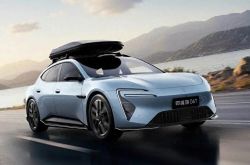
2.3 Billion Yuan Claim: Who Should Foot the Bill for Zeekr and Sunwoda's Product Defects?
 01/04 2026
 482
482
A Far-Reaching Legal Clash.
Investors Network Lead | Wu Wei
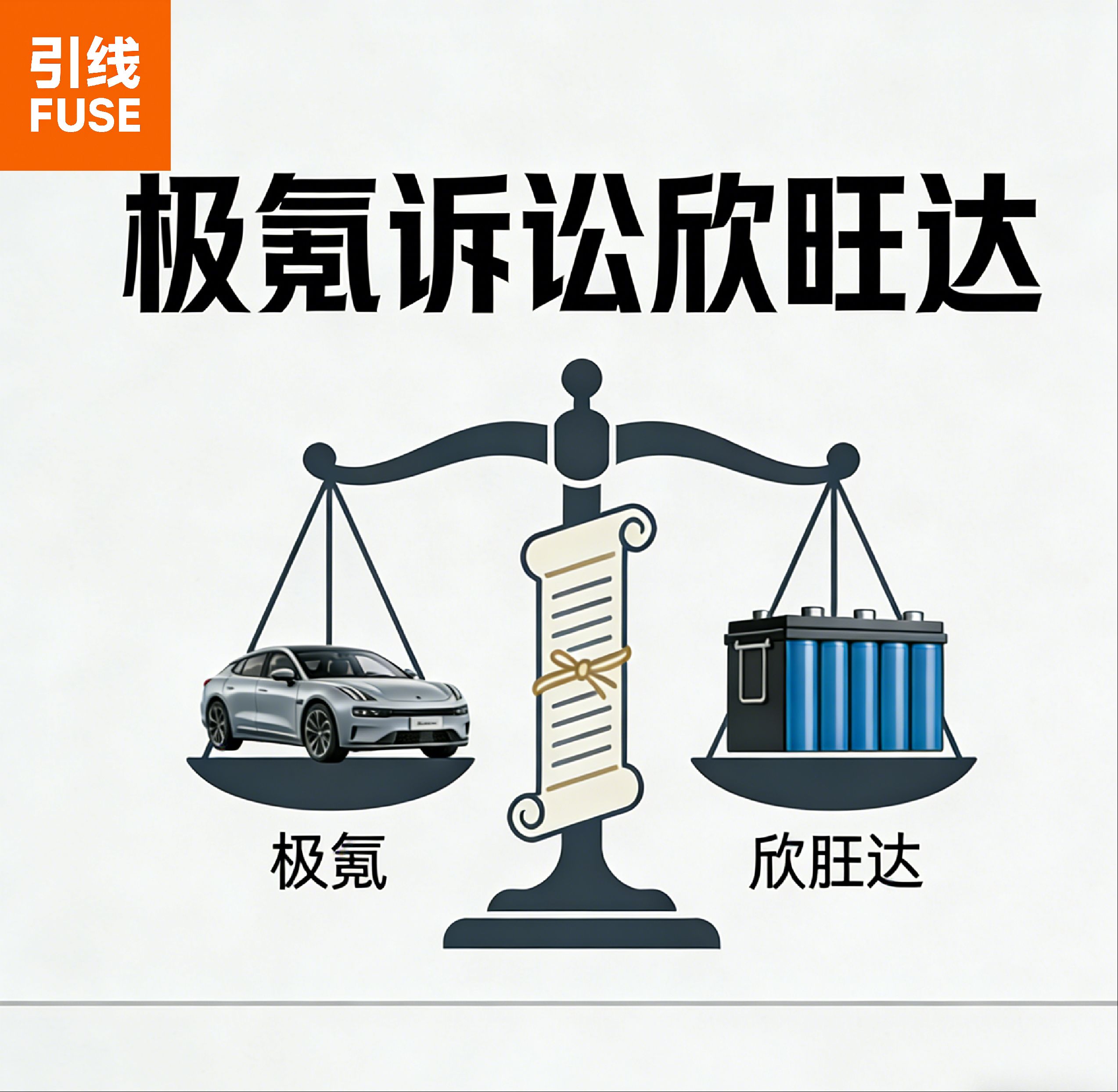
In December 2025, Sunwoda (300207.SZ) made an announcement that set the stage for what could potentially be the most valuable and impactful lawsuit in the history of China's new energy vehicle (NEV) supply chain. VREMT, a core three-electric (battery, motor, and control) enterprise under Geely Holding Group (with Zeekr Automobile holding a 51% stake), officially filed a lawsuit against Sunwoda Electric Vehicle Battery Co., Ltd., a wholly-owned subsidiary of Sunwoda (300207.SZ), demanding compensation amounting to 2.314 billion yuan.
The crux of this long-standing dispute lies in "product quality" issues associated with the batteries used in the Zeekr 001 WE86 model. Zeekr asserts that the battery cells supplied by Sunwoda are inherently flawed, compelling it to undertake a large-scale battery replacement initiative to mitigate the supplier's shortcomings. Conversely, Sunwoda contends that battery performance is influenced by the vehicle's Battery Management System (BMS) strategy, highlighting significant technical disagreements between the two entities.
This lawsuit not only threatens to consume nearly two years' worth of Sunwoda's net profits but also signifies a complete breakdown of the unspoken rule among automakers and suppliers to "resolve disputes discreetly." Beyond mere financial compensation, this legal action marks a pivotal moment as the new energy industry enters a phase of "quality reckoning."
The 2.314 Billion Yuan Compensation Claim: Who Should Bear the "Quality Risks"?
The eruption of this lawsuit was not abrupt but rather the culmination of escalating conflicts over quality disputes and the allocation of after-sales costs between the two parties.
According to the lawsuit documents, VREMT, a subsidiary of Zeekr, alleges that the battery cells delivered by Sunwoda Electric Vehicle Battery Co., Ltd. from June 2021 to December 2023 suffered from severe quality defects. These defects ultimately led to widespread battery quality issues in the Zeekr 001 WE86 version equipped with Sunwoda's 86kWh battery pack.
Numerous vehicle owners have reported issues such as abnormally slow charging speeds (e.g., fast charging becoming slow charging), unexpected battery capacity degradation, and inaccurate range estimates during actual use. Zeekr believes these phenomena indicate irreversible hardware damage to the battery cells.
To salvage its brand image, Zeekr launched a "Winter Care Campaign" at the end of 2024, effectively recalling the affected vehicles by providing free battery pack replacements for owners. Consequently, Zeekr argues that since battery quality issues led to these substantial after-sales costs, Sunwoda, as the provider of the "defective product," should be responsible for covering these expenses.
The 2.314 billion yuan compensation claim is exceptionally rare in automotive component disputes, yet its underlying financial logic is largely sound. The Zeekr 001 sold approximately 72,000 units in 2022, with the WE86 version accounting for roughly 60%. Including orders from 2021 and 2023, the estimated number of vehicles involved ranges from 40,000 to 50,000. The after-sales replacement of 86kWh battery packs entails costs for spare parts, high logistics expenses, labor hours, and the recycling and disposal of old batteries.
Assuming a comprehensive cost of 50,000 to 60,000 yuan per vehicle, the total cost for replacing batteries in tens of thousands of vehicles could range from 2 billion to 2.4 billion yuan. Beyond direct battery replacement costs, Zeekr may also include brand reputation damage, operational costs for handling complaints, and interest on advanced funds in its compensation claim.
Faced with these accusations, Sunwoda does not believe that the core issue of battery failures in end-user vehicles stems from its product quality. The company argues that the focus should be on the operating conditions of the battery cells and the responsibilities associated with system integration. Sunwoda implies that VREMT, as the integrator of the battery pack (Pack) and BMS, may have adopted overly aggressive charging strategies, causing the battery cells to operate continuously under conditions exceeding their design limits.
Additionally, Sunwoda may argue that Zeekr's previous "battery lock" practice, which altered the original operating conditions of the batteries through software means, complicates the determination of liability. Currently, both sides maintain their positions, and the final court judgment will allocate the compensation amount based on the "liability ratio" determined by a third-party technical evaluation agency.
From a "Second Supplier" Honeymoon to Courtroom Confrontation: The Risks of Supply Chain Balancing Acts
Tracing the trajectory of their collaboration, this dispute appears to be a precarious fall from the balance beam of "cost reduction" and "quality" for new energy vehicle companies.
In 2021, when the Zeekr 001 was initially launched, Zeekr introduced Sunwoda as a second supplier (in addition to CATL (300750.SZ)) to ensure supply chain safety while gaining bargaining power. At the time, supporting second-tier battery manufacturers not only reduced per-vehicle procurement costs but also ensured production capacity amid battery supply shortages.
However, this cost-driven cooperation also sowed seeds of quality concerns. Compared to the WE100 version supplied by CATL, the WE86 version equipped with Sunwoda's battery cells received a higher proportion of complaints, leading Zeekr to question the quality of Sunwoda's battery cells.
For Sunwoda, the 2.314 billion yuan compensation claim is a staggering figure that could shake the company's foundations. This amount nearly equals the total net profits attributable to shareholders of the company for 2023 and 2024. Even before the case is adjudicated, Sunwoda may need to recognize a provision for estimated liabilities in its 2025 financial statements, directly pressuring its stock price and causing significant fluctuations in its annual performance. Meanwhile, this pending litigation may also adversely affect Sunwoda's planned Hong Kong listing.
The more profound impact on Sunwoda may lie in client acquisition. Its current client roster includes Li Auto, Xiaomi, XPeng, and Volkswagen, among others. Zeekr's public lawsuit effectively labels Sunwoda as having questionable quality, potentially leading other automakers to downgrade or exclude it from future new model selections. The incident where Li Auto's i6 model initially featured CATL batteries and later randomly included Sunwoda batteries alongside CATL's had already sparked consumer discussions.
Through its "upfront compensation and backward recovery" approach, Zeekr, despite facing substantial short-term cash flow replenishment pressures, has successfully established itself as a premium brand responsible to its users. The publicization of this dispute also reflects a fundamental shift in automakers' mindsets; when issues arise in core three-electric systems, automakers are no longer willing to shoulder the "blame" alone but are turning to legal means to hold upstream suppliers accountable. This undoubtedly serves as a wake-up call for all second-tier battery suppliers, as Zeekr's lawsuit has shattered the industry's previous unspoken rule of "private negotiations and discounted supplies."
2025 Strategic Pivot: Zeekr's Vertical Integration and Sunwoda's Survival Defense
Standing at the end of 2025, this lawsuit is not merely a legal dispute but may profoundly influence the future development trajectories of both companies.
Facing a new competitive landscape and resolving previous controversies, Zeekr is attempting to free itself from external supply chain constraints through a series of organizational and technological transformations to enhance its competitiveness. In terms of organizational structure, Geely Automobile completed the consolidation of Zeekr into its financial statements in 2025, with Zeekr subsequently acquiring a controlling stake (51%) in Lynk & Co. This move aims to eliminate internal competition within the 200,000 to 300,000 yuan vehicle price range. After the restructuring, the company anticipates a 10% to 15% reduction in research and development and BOM costs.
In terms of powertrain, Zeekr has also broken away from a "pure electric-only" approach, introducing a "Super Hybrid" system to directly compete with the Li Auto L9 and Seres M9 in the broader hybrid market, aiming to capture market share. Regarding core technologies, having learned from the battery cell incident, Zeekr is vigorously promoting its self-developed "Golden Brick Battery." Through full-stack self-research and independent production at its Quzhou Jidian factory, Zeekr seeks to firmly control battery costs—its largest expense item—and quality, which is vital for its survival.
Against the backdrop of a trust crisis and profit squeeze in the pure electric large battery market, Sunwoda has also initiated a strategic pivot. Leveraging its "high-power, small-battery" expertise accumulated in the consumer electronics sector, Sunwoda is focusing on the PHEV/EREV market, which demands extremely high discharge rates. The company has become a core supplier for extended-range models from Li Auto, Leapmotor, and Seres, as well as a strategic partner for Li Auto's fast-charging segment, attempting to avoid direct competition with CATL in the pure electric domain.
Simultaneously, Sunwoda is transitioning from a mere battery cell supplier to a provider of energy storage system solutions, utilizing more stable payment terms to hedge against fluctuations in its power battery business. Sunwoda remains a leader in the mobile phone battery sector for companies like Apple and Xiaomi; leveraging the positive cash flow from its consumer business to support its power battery business, which is burdened by the lawsuit, may be crucial for surviving the industry shakeout.
This 2.314 billion yuan lawsuit marks the new energy vehicle industry's formal entry into a phase of "market share competition and quality reckoning." For automakers, low prices will no longer be the sole criterion for supply chain selection. Future contracts are likely to include exceptionally stringent terms regarding "recall cost-sharing" and "full lifecycle quality responsibility."
Following the recall incident, Zeekr is constructing new competitive moats through vertical integration and powertrain diversification, striving to transform from a "specialist in selective strengths" to an "all-rounder." Meanwhile, Sunwoda is executing a defensive retreat, attempting to secure survival space by delving into niche markets such as hybrid vehicles, fast charging, and energy storage. The ultimate outcome of this lawsuit may determine the distribution of influence in China's new energy supply chain for the coming years. (Produced by Thinker Finance) ■
Source: Investors Network
-
![]()
Enflame Tech's IPO Journey: Navigating Over 5.9 Billion Yuan in Losses and Soaring Debt in Q1 This Year
-
![]()
Trillion-Yuan Giant Li Shufu 'Streamlines': Could Levc Be the Casualty?
-
![]()
AI Competes for Electricity and Generates Power in the Gobi Desert
-
![]()
The First Batch of Victims of the AI Bubble: Programmers
-
![]()
ByteDance, DJI, and Xiaohongshu Secure Top Three Positions Among China’s Fastest-Growing Unicorns
-
Tesla's in-car voice system in China is finally learning to 'understand human language'
-
![]()
Foreigners Are Amazed: Chinese Electric Vehicle Drive Systems Unveil Innovative 'Poses'
-
![]()
700,000 Brothers and the Future of Robots: Behind JD.com's 'Nirvana Plan'