Can Minor Car Issues Really Push the American Middle Class to the Brink?
 01/04 2026
 575
575

Lead
Introduction
The answer is likely yes.
Recently, the debate over the "financial cliff" in the United States has continued to intensify, sparking widespread discussion.
The so-called "financial cliff" represents the critical threshold determining whether the American middle class faces financial collapse. When individuals or families encounter unexpected events such as illnesses, unemployment, or even seemingly minor issues like refrigerator breakdowns or car troubles, their financial stability may plummet below this critical point. This triggers a vicious cycle of "losing housing—unemployment—loss of health insurance—escalating debt," ultimately leading to financial ruin, homelessness, and social marginalization.
While numerous cases confirm the existence of the "financial cliff," most are directly linked to medical expenses or unemployment crises. Instances where car troubles trigger the "financial cliff" remain exceedingly rare. This raises the question: Can car troubles truly breach the "financial cliff" and plunge the American middle class into crisis?
01 Inadequate Coverage Leaves Families Exposed
The core logic of the "financial cliff" lies in middle-class households being dragged below the threshold by sudden, massive financial shortfalls.
Unlike uncontrollable risks such as disease or unemployment, car troubles or accidents appear theoretically manageable through warranty policies and auto insurance systems, making them unlikely to be the final straw. However, realities like insufficient insurance coverage and neglected vehicle maintenance can create fatal financial gaps.
To understand the underlying logic, one must first grasp the U.S. auto insurance system. Liability insurance and property damage liability insurance are mandatory in the U.S., but these policies only cover losses inflicted by the at-fault party on others or their property, leaving the at-fault party's own personal and property losses unprotected. Simply put, mandatory auto insurance covers "others," not "oneself."
To secure protection for themselves and their vehicles, owners must purchase additional comprehensive and collision insurance, which covers losses from natural disasters or the owner's own negligence. While the combination of mandatory and commercial insurance appears comprehensive, covering nearly all driving scenarios, actual payouts often fall short.
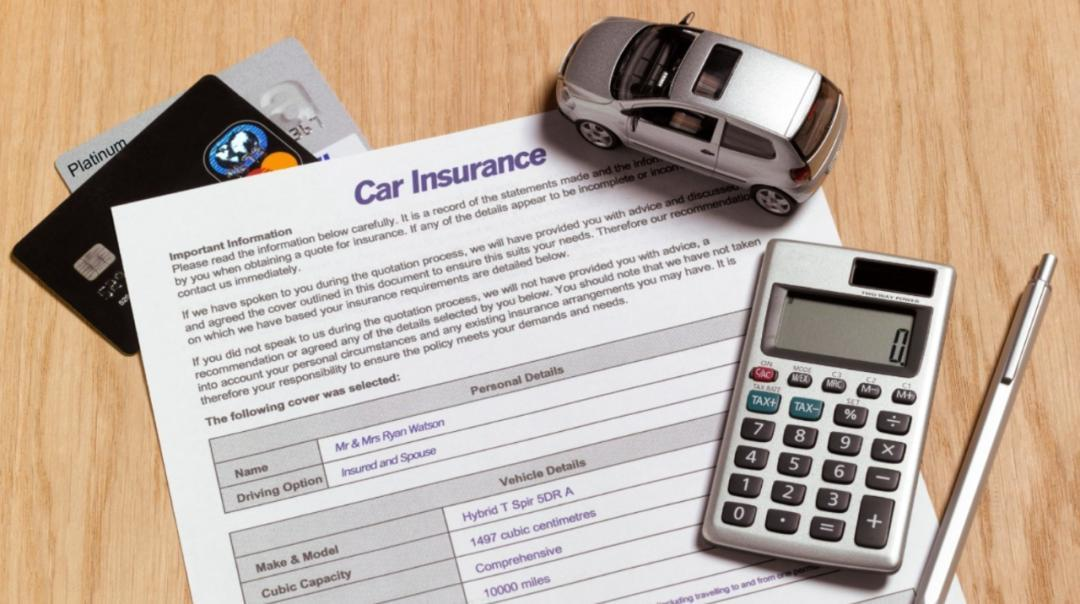
Specifically, liability insurance imposes clear caps on medical expenses and property damage for others. Any costs exceeding these caps must be borne by the vehicle owner. Typically, liability insurance displays a sequence like 15,000/30,000/15,000: the first figure represents the per-person medical payout cap (excluding the at-fault party) per accident, the second the total medical payout cap for all involved (excluding the at-fault party) per accident, and the third the property damage payout cap for others per accident. If losses exceed these caps, the at-fault party must cover the remainder.
As supplements to liability insurance, comprehensive and collision policies also feature "deductibles," with insurers only covering amounts exceeding these thresholds.
Raising liability payout caps or lowering comprehensive/collision deductibles requires higher premiums. For most American vehicle owners, however, increasing insurance expenditures is no easy feat.
On one hand, since 2020, high-tech vehicles equipped with sensors have driven up repair costs, directly fueling a 37% surge in U.S. auto insurance premiums. According to Bankrate, the average annual auto insurance expenditure for U.S. vehicle owners now reaches $2,543 ($212 monthly), a 26% year-on-year increase from 2023.
On the other hand, U.S. consumption patterns show growing polarization, with the top 10% of households by income accounting for nearly half of national consumption. Ordinary middle-class families already struggle with limited disposable income. The Federal Reserve's 2023 "Annual Household Economics and Decisionmaking Survey" reveals that only 63% of adult respondents have $400 in cash or equivalents for emergencies, forcing most to rely on credit cards or borrow from friends and family. Under such financial constraints, compelling ordinary vehicle owners to increase insurance investments proves extremely challenging.

Insufficient premium investments contrast sharply with soaring repair costs. In the U.S., high labor expenses push some vehicle repair costs close to the vehicle's value. When traffic accident damages exceed insurance payout caps, unexpected expenses can become the trigger that pushes middle-class households past the "financial cliff."
More alarmingly, even cautious drivers with good habits risk collisions with uninsured vehicles. Due to exorbitant premiums and low penalties for evading coverage, some owners gamble by forgoing insurance. If hit by an uninsured vehicle, the victim must add uninsured motorist coverage to their policy to cover their own losses.
Beyond traffic accidents, mere car troubles can also push households past the "financial cliff." Media reports describe a Canadian vehicle owner whose engine failed during the warranty period, but the insurer denied coverage, citing the owner's failure to perform timely oil changes.
02 Insolvency Looms: Selling Vehicles Offers Little Relief
When financial shortfalls from car accidents or malfunctions approach the "financial cliff," can selling the vehicle provide emergency relief? The answer is likely no.
Once characterized by low prices, the U.S. market has now become a high-price environment under tariff pressures. From 2020 to 2024, average new vehicle prices in the U.S. surged 30%, while used vehicle prices jumped 38%, with this upward trend persisting into 2025.
Rising used vehicle prices seem to offer owners favorable selling opportunities. However, prolonged auto loans have trapped many owners in negative equity.
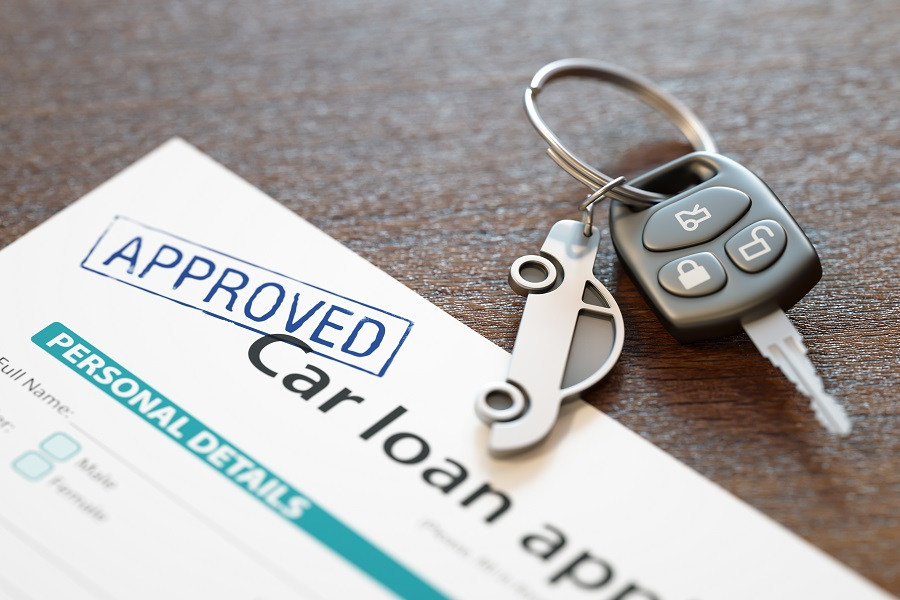
As new vehicle prices climb, U.S. auto loan volumes have swelled. VantageScore data shows a 57% increase in U.S. auto loan balances since 2010, far outpacing other credit products. Simultaneously, the Federal Reserve's aggressive rate hikes to curb inflation have further elevated auto loan rates: by mid-2025, new vehicle loan rates reached 6.7%, while used vehicle rates soared to 11.9%.
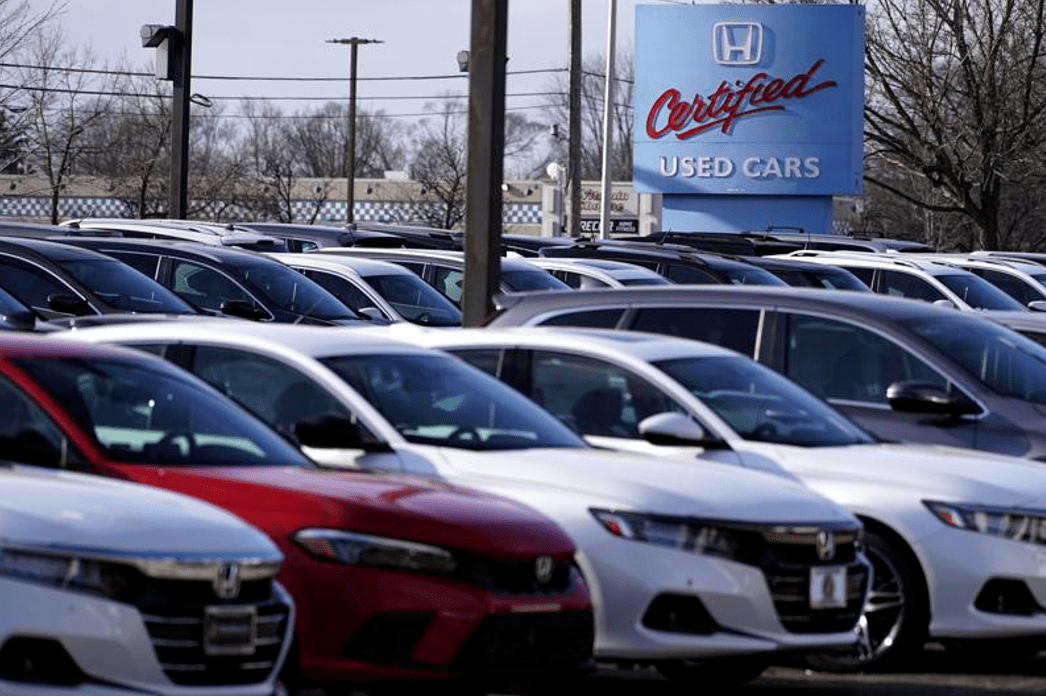
The dual impact of rising prices and interest rates has intensified repayment burdens, driving up auto loan default rates. Fitch Ratings data reveals that in August 2025, the proportion of U.S. subprime auto loans over 60 days delinquent reached 6.43%, one of the highest levels since 1993 and surpassing the 5.04% peak during the financial crisis.
To ease monthly payments, more buyers opt for extended loan terms. For a fixed loan amount, extending the term from 5 to 7 years reduces monthly payments from $1,000 to $780—a significant drop.
According to Edmunds, loans with terms of 7 years or longer accounted for a record 22.4% of U.S. new vehicle loans in the second quarter of 2025. Meanwhile, large loans became the norm, with the average new vehicle loan reaching a record $42,000 during the same period.
While extending loan terms temporarily reduces monthly burdens, it substantially increases total costs. This creates an awkward reality: even with sharply rising used vehicle prices, proceeds from selling a used vehicle may not cover the outstanding loan balance. Thus, selling the vehicle fails to resolve the "financial cliff" crisis and may instead trap owners in a deeper predicament of "losing the vehicle while remaining in debt."
Ultimately, it is not a single car trouble or repair bill that devastates the American middle class, but the widening gap between stagnant income growth and soaring living costs, compounded by flaws in the insurance system, credit consumption traps, and inadequate safety nets.
Car troubles merely serve as a concrete trigger, hiding the persistent erosion of ordinary households' risk resilience. When minor faults can unleash major crises, the "financial cliff" threatens not just individual families' stability, but also an entire generation's confidence in—and aspirations for—the middle-class dream and the American Dream.
Editor-in-Chief: Cao Jiadong Editor: Chen Xinnan
THE END
-
![]()
Enflame Tech's IPO Journey: Navigating Over 5.9 Billion Yuan in Losses and Soaring Debt in Q1 This Year
-
![]()
Trillion-Yuan Giant Li Shufu 'Streamlines': Could Levc Be the Casualty?
-
![]()
AI Competes for Electricity and Generates Power in the Gobi Desert
-
![]()
The First Batch of Victims of the AI Bubble: Programmers
-
![]()
ByteDance, DJI, and Xiaohongshu Secure Top Three Positions Among China’s Fastest-Growing Unicorns
-
Tesla's in-car voice system in China is finally learning to 'understand human language'
-
![]()
Foreigners Are Amazed: Chinese Electric Vehicle Drive Systems Unveil Innovative 'Poses'
-
![]()
700,000 Brothers and the Future of Robots: Behind JD.com's 'Nirvana Plan'