In Search of a Hammer and Its Discovery: Musk's Prophecy Fulfilled, with BYD Leading the Charge
 01/04 2026
 631
631
Authored by Qiaofu
The Interplay of People, Cars, and the Competitive Arena
Jointly Observing the Ascendancy of China's Automotive Sector
Musk once famously remarked that, in the absence of trade barriers, Chinese automotive brands would dominate the global market.
As we step into 2025, two compelling indicators suggest that Musk's forecast is steadily materializing.
BYD emerges as a pivotal player in realizing Musk's vision. 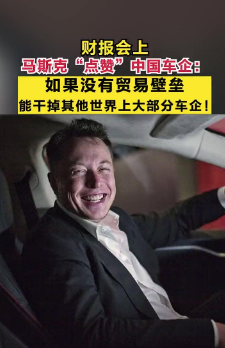
Indicator One
BYD Surpasses Tesla, Claiming Global Leadership in Pure Electric Vehicle Sales
At the dawn of the new year, BYD disclosed that its pure electric vehicle sales for 2025 approximated 2.25 to 2.26 million units, marking a nearly 28% year-on-year surge.
Conversely, Tesla's annual deliveries ranged from 1.60 to 1.636 million units, experiencing an approximate 8.6% decline year-on-year, marking a second consecutive year of contraction.
With BYD's sales on the rise and Tesla's on the decline, BYD has now overtaken Tesla. This overtaking is evident in both 'quantity' and 'quality'.
In terms of quantity, BYD's 2025 sales volume, encompassing all models, reached 4.6024 million units, already eclipsing Tesla. From a trend perspective, BYD is extending its lead over Tesla, with its advantage continuously widening.
BYD now boasts a 2.8-fold sales volume advantage over Tesla.
In terms of quality, BYD's ascent over Tesla is not a sporadic event but a sustained trend.
Particularly in the European market, BYD's sales continue to soar, while Tesla's sales plummet.
For instance, in the German market, Tesla's sales from January to July experienced a sharp decline, with a cumulative sales volume of 10,000 units in the first seven months, representing a 57.8% year-on-year drop. In July alone, sales were 1,110 units, a 55.1% decrease year-on-year. Meanwhile, BYD's sales in Germany in September surged to 3,255 units, a staggering 2225% increase year-on-year, setting a new record.
In the UK market, Tesla's registrations in July were 987 units, a 60% decrease year-on-year. BYD's sales in May were 3,025 units, a 408% increase year-on-year.
This trend can be interpreted as BYD encroaching on Tesla's European market share. In essence, European consumers now perceive BYD as being on par with Tesla.
From a pricing standpoint, BYD's price premium in the European market significantly surpasses that of Tesla.
For example, the BYD Seal Lion 07 (sharing the same platform as the Seal) is priced at 100,000 RMB in China but commands a price of 50,000 euros (approximately 410,000 RMB) in the European market, reflecting a premium rate of about 310%. In contrast, the Tesla Model Y rear-wheel-drive version is priced between 250,000-300,000 RMB in China and about 46,000 euros (approximately 370,000 RMB) in the European market, with a premium rate ranging from 23% to 48%. (Data sourced from third parties)
From quantity to quality and then to brand influence, BYD has achieved parity with Tesla in the European market.
Indicator Two
The EU Reverses Its 2035 Ban on Fuel Vehicle Sales
While BYD's direct competition with Tesla in the European market serves as a tangible example of Musk's prediction, the EU's reversal of its 2035 ban on fuel vehicle sales provides further evidence of the rise of Chinese electric vehicles.
Why did the EU reverse its ban on fuel vehicle sales? Simply put, European legacy automakers have lagged in the electric vehicle race and find it challenging to compete with their Chinese counterparts.
The EU's motive in revoking the ban was to buy time. However, this simplistic approach is destined to fail.
Continued protection of European fuel vehicles will not foster the development of the European electric vehicle industry chain. Instead, the more protection is afforded, the more European legacy automakers will cling to the glory days of fuel vehicles.
Time will only accentuate the competitive advantage of the Chinese electric vehicle industry chain over its European counterpart.
Furthermore, the EU has imposed discriminatory tariffs on Chinese automobiles.
As Musk aptly put it, without trade barriers, Chinese automakers will dominate the market.
03
BYD: The Unrivaled Leader in Electric Vehicles
Among the Chinese contingent, BYD stands out as a preeminent force.
In terms of delivery volume, BYD's global sales have surpassed 4.6 million units, outpacing most automakers. Many large automaker groups have resorted to consolidation to maintain a semblance of respectability, such as the Stellantis Group, which claims to be the third-largest automaker group but is, in reality, an amalgamation of numerous brands like French Citroën and Italian-American Fiat Chrysler. In terms of sheer quantity, there is no need to delve further into such loosely structured entities.
In terms of product布局 (product layout), BYD has established a solid foundation with its Dynasty and Ocean series, while Fangchengbao, Denza, and Yangwang are making aggressive inroads into the high-end market. It has the potential to become the 'Volkswagen' of the electric vehicle era.
Of course, the journey for Chinese automakers will not always be smooth. Fluctuations and adaptations are inevitable to progress further and with greater resilience.
-
![]()
Enflame Tech's IPO Journey: Navigating Over 5.9 Billion Yuan in Losses and Soaring Debt in Q1 This Year
-
![]()
Trillion-Yuan Giant Li Shufu 'Streamlines': Could Levc Be the Casualty?
-
![]()
AI Competes for Electricity and Generates Power in the Gobi Desert
-
![]()
The First Batch of Victims of the AI Bubble: Programmers
-
![]()
ByteDance, DJI, and Xiaohongshu Secure Top Three Positions Among China’s Fastest-Growing Unicorns
-
Tesla's in-car voice system in China is finally learning to 'understand human language'
-
![]()
Foreigners Are Amazed: Chinese Electric Vehicle Drive Systems Unveil Innovative 'Poses'
-
![]()
700,000 Brothers and the Future of Robots: Behind JD.com's 'Nirvana Plan'