Japanese Automakers Are All 'Cozying Up' to Trump
 01/04 2026
 536
536
Lead-in
Introduction
In the ever-evolving automotive industry, tariffs, policy shifts, and geopolitical maneuvers have emerged as pivotal factors shaping its trajectory.
This past November, during a NASCAR racing promotion event in Japan, Toyota Chairman Akio Toyoda made headlines by donning a red cap emblazoned with 'MAGA' (Make America Great Again) and a T-shirt featuring campaign portraits of Trump and Vance. This moment instantly catapulted him into the global media spotlight.
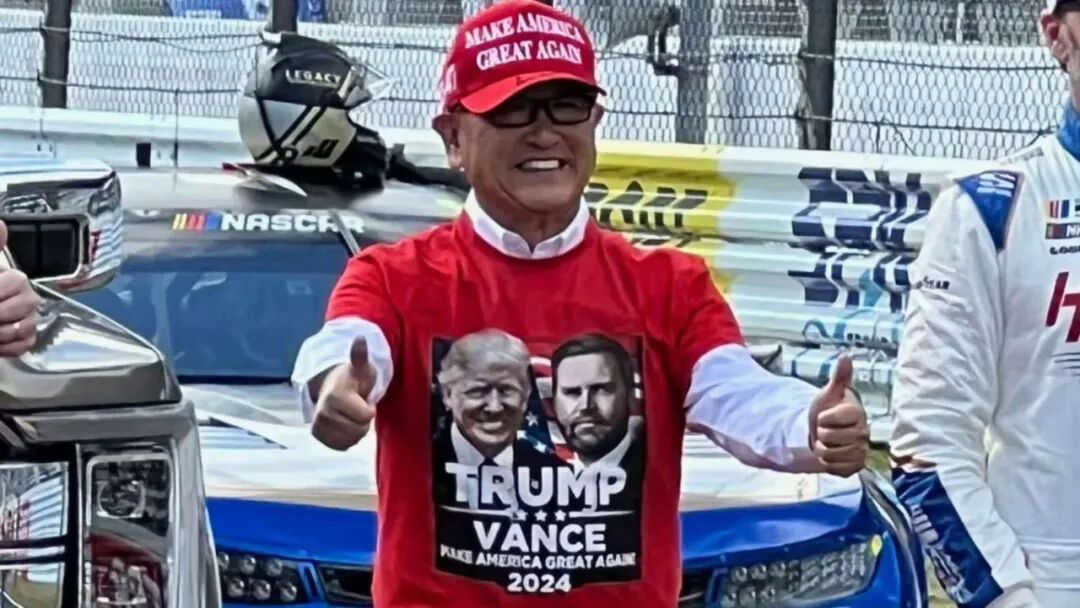
This scene was interpreted by the outside world as Toyota's 'MAGA moment.' Amid escalating tariff barriers and geopolitical tensions influencing the automotive sector, even profit-driven Toyota felt compelled to more explicitly declare its political stance.
Nowadays, the stance conveyed by Akio Toyoda transcends mere corporate leadership rhetoric and is gradually manifesting in a series of concrete corporate actions.
01 Toyota Resumes 'Reverse Imports' After Two Decades
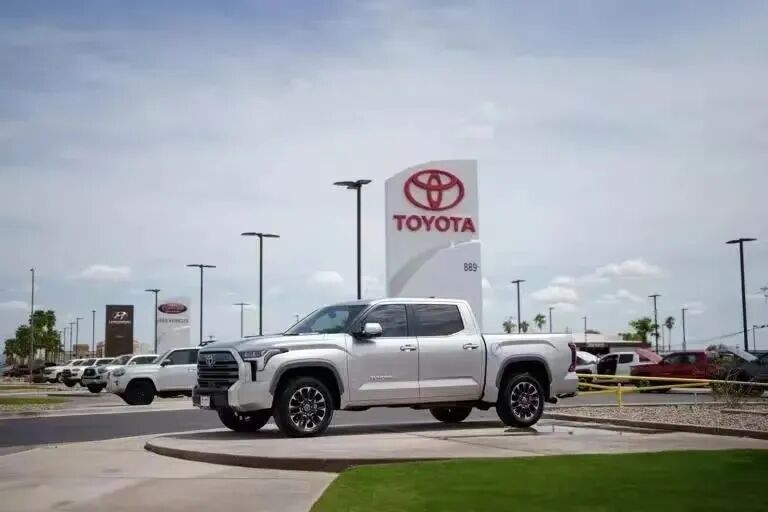
Recently, Toyota announced its decision to import and sell three U.S.-manufactured models in Japan starting from 2026: the Camry sedan, the Highlander SUV, and the Tundra pickup truck, produced in Kentucky, Indiana, and Texas, respectively.
The practice of importing Japanese-brand vehicles from overseas back into Japan is known as 'reverse import.' To bolster Japan-U.S. trade relations, Toyota is reintroducing U.S.-made models to the Japanese market after a hiatus of over two decades, granting 'market clearance' to the aforementioned trio. Under a new framework negotiated between Japan's Ministry of Land, Infrastructure, Transport and Tourism and the U.S., these U.S.-produced Toyotas can be directly launched in Japan 'without the need for additional testing.'
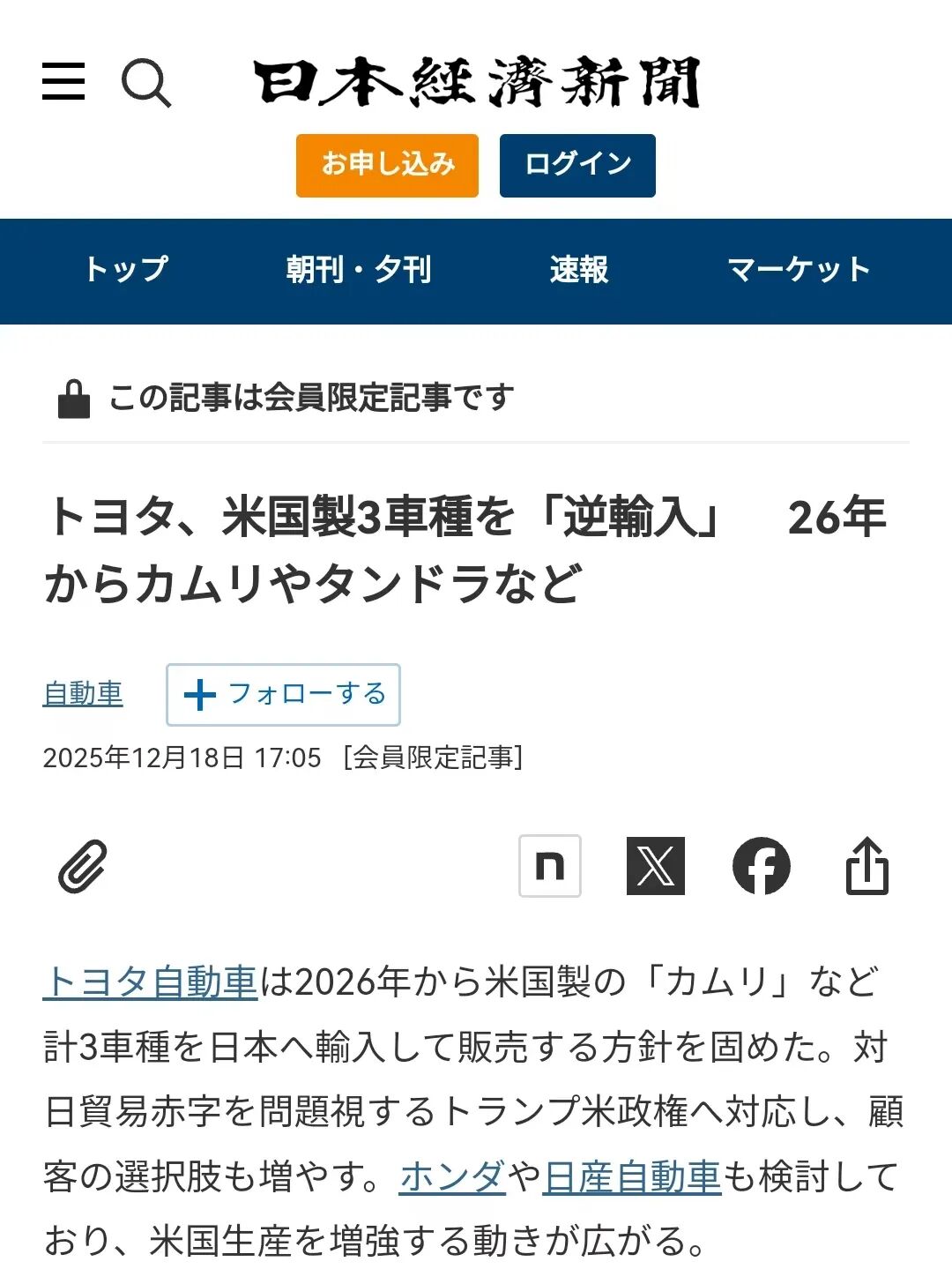
This implies that these models, designed to comply with U.S. emissions standards and safety regulations, can enter Japan as left-hand-drive vehicles. Although Japan is predominantly a right-hand-drive market, relevant regulations permit left-hand-drive vehicles to operate on Japanese roads.
It's worth noting that Japanese consumers have traditionally favored compact cars. However, the three models imported from the U.S. this time include the Tundra pickup, one of Toyota's largest models, and the U.S.-produced Highlander, known for its relatively spacious dimensions. Consequently, the initial market acceptance and scale of these imported models in Japan may be somewhat limited.
Akio Toyoda undoubtedly recognizes that, whether considering market dynamics or cost-benefit analysis, 'reverse importing' Toyota vehicles from the U.S. does not represent an economic optimum for the company.
Toyota's latest statement elucidates, 'By introducing these three U.S.-specification models to the Japanese market, we aim to cater to the diverse needs of a broad spectrum of consumers in Japan and also contribute to enhancing Japan-U.S. trade relations.'
This indicates that the 'reverse import' arrangement can be fundamentally viewed as Toyota's strategic response to the Trump administration's longstanding criticism of Japan-U.S. trade imbalances. Previously, the White House had repeatedly accused Japan of imposing high market access barriers, hindering the penetration of U.S. cars. This move is clearly intended to alleviate bilateral trade frictions.
'They export a million new cars to the U.S. every year!'
In an April speech, Trump publicly 'lambasted' Toyota, making it the sole automaker specifically targeted by Trump in relation to tariffs. At that juncture, Trump had just reclaimed the White House and promptly wielded the tariff stick against the automotive manufacturing sector, with Toyota being cast as the 'villain' harming U.S. interests.
For Akio Toyoda, this presented a dilemma.
'Protecting localized operations' has long been a cornerstone of Toyota's manufacturing and business strategy. To sustain Japan's domestic manufacturing, employment, and supplier ecosystem, Toyota even established a benchmark of producing 3 million vehicles annually in Japan and generating higher revenues through exports.
This 'Maginot Line' benchmark of 3 million vehicles serves as a vital pillar for safeguarding Japan's domestic supply chain, employment, and even the stability of the entire national manufacturing foundation.
However, the U.S. market holds immense significance for Toyota as well.
Toyota manufactures approximately 3 million vehicles annually in Japan, with 540,000 units destined for the U.S., becoming a major catalyst for sales and revenue growth. On the flip side, Toyota's mid-to-high-end models like Lexus, which have enjoyed enduring popularity in the U.S., offer exceptionally high profit margins, rendering North America Toyota's profit powerhouse, with undeniable strategic importance.
Taking Japan's Kyushu economic region as a case in point, the region's total automotive exports in 2024 amounted to 3.5 trillion yen, with exports to the U.S. reaching 1.1 trillion yen, accounting for roughly 30% of the total.
02 New Signals from Japanese Automakers
Akio Toyoda is not merely a top-tier entrepreneur but also a seasoned PR maestro adept at navigating complex situations and discerning key information and decision-making trends. Presently, the core signal Toyoda is projecting externally is crystal clear—
Tariffs, policy shifts, and geopolitical maneuvers have emerged as pivotal variables shaping the automotive industry's evolution. In the long haul, Toyota must proactively embrace a new development cycle dominated by geopolitical considerations.
A month ago, Toyota's North American battery plant, with a total investment of $14 billion (approximately RMB 98.1 billion), officially commenced operations. This facility marks Toyota's inaugural battery production base outside Japan and also its 11th automotive supply chain manufacturing base in the U.S.
Over the next five years, Toyota plans to inject $10 billion (approximately RMB 70 billion) into the U.S. to expand hybrid vehicle production capacity. By then, the company's cumulative investment in the U.S. will surpass $60 billion (approximately RMB 420.3 billion).
In fact, since 2020, Toyota's cumulative investment in the U.S. has soared to a staggering $21 billion (approximately RMB 147.1 billion), nearly doubling the investment amount pledged during Trump's first term. The number of jobs Toyota has generated in the U.S. has risen from 25,000 in 2016 to 31,000 presently.
Not just Toyota, the U.S. market holds paramount importance for other Japanese automakers as well, with far-reaching implications.
North America continues to be Nissan's largest global market and also its biggest profit driver. For an extended period, Honda has derived nearly half of its profits from the U.S. market.
Against this backdrop, an increasing number of Japanese automakers are poised to make the same strategic choice as Toyota—betting on the U.S. market, ramping up investments, or importing U.S.-produced new cars into the Japanese domestic market.
Honda has also recently indicated its consideration of 'reverse importing' some U.S.-produced models to Japan, with potential future introductions including the Ridgeline pickup, the Passport SUV, and select electric vehicles under the Acura brand.
Nissan is also exploring the possibility of selling U.S.-produced SUVs back to Japan, with candidate models encompassing the Murano and Pathfinder. Nissan Chief Technical Officer Eiichi Akashi stated that there exists a certain demand in the Japanese market for U.S.-produced large vehicles, and the company is evaluating the feasibility of reverse imports.
Editor-in-Charge: Li Sijia Editor: Chen Xinnan
THE END
-
![]()
Enflame Tech's IPO Journey: Navigating Over 5.9 Billion Yuan in Losses and Soaring Debt in Q1 This Year
-
![]()
Trillion-Yuan Giant Li Shufu 'Streamlines': Could Levc Be the Casualty?
-
![]()
AI Competes for Electricity and Generates Power in the Gobi Desert
-
![]()
The First Batch of Victims of the AI Bubble: Programmers
-
![]()
ByteDance, DJI, and Xiaohongshu Secure Top Three Positions Among China’s Fastest-Growing Unicorns
-
Tesla's in-car voice system in China is finally learning to 'understand human language'
-
![]()
Foreigners Are Amazed: Chinese Electric Vehicle Drive Systems Unveil Innovative 'Poses'
-
![]()
700,000 Brothers and the Future of Robots: Behind JD.com's 'Nirvana Plan'