Zhuoyu from DJI Expands in Both Commercial and Passenger Vehicle Sectors: Heavy-Truck NOA to Enter Mass Production Next Year, Unmanned Logistics Vehicles to Be Launched Next Month, Aiming to Be the 'M
 01/05 2026
 597
597
Introduction: On December 30, 2025, Zhuoyu Technology, incubated from DJI and independent for less than two years, unveiled two core strategies at its 10th-anniversary celebration:
The heavy-truck highway NOA solution will enter mass production in the first half of 2026, directly securing orders from three major players: XCMG, Shaanxi Auto, and Sinotruk.
The unmanned logistics vehicle, co-developed with leading enterprises, will be officially launched next month.
This move signals Zhuoyu's shift away from the intense competition in passenger vehicle intelligent driving, embracing dual-track expansion in commercial and passenger sectors.
CEO Shen Shaojie bluntly stated that Zhuoyu's ambition is not to build a specific vehicle but to serve as the 'lower body' for all robots, thoroughly solving mobility challenges in the physical world.
This 'walker' from DJI is rewriting industry rules with a stubborn technical approach. While most companies struggle with L2+ takeover rates, Zhuoyu has charged into the vast commercial vehicle and robot sectors with end-to-end technology rebuilt from scratch.
The Unmanned Vehicle Era Is Here (WeChat Official Account: The Unmanned Vehicle Era Is Here) discusses this with everyone! (For reference, click: 'BYD Invests in Zhuoyu Technology: DJI Automotive Legacy Accelerates Intelligent Driving Race') 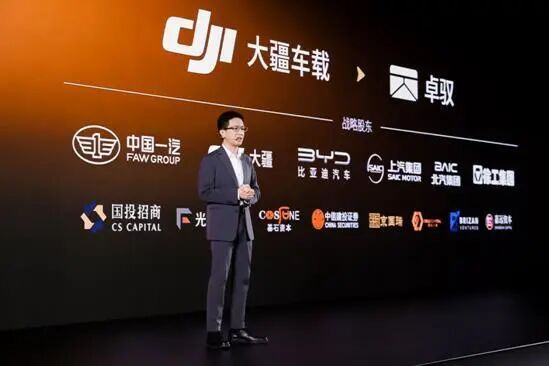
I. From DJI to Zhuoyu: Surviving with 500 Million Yuan Amid Thousands, Rebuilding from Scratch in Desperation
Zhuoyu's DNA is imprinted with DJI's robotics legacy. In 2016, Shen Shaojie's team pioneered the mechanical vision drone era and later led the formation of DJI Automotive, planting the seeds of intelligent driving. They remained obsessed with building 'truly powerful robots' that solve real problems elegantly, not through parameter stacking.
On September 27, 2024, Zhuoyu officially became independent, embarking on a survival journey.
Shen described the mindset using 'The Three-Body Problem's' human space exploration: homeland far away, resources limited.
With only 500 million yuan in funds, supporting thousands of employees, and bearing the dual pressures of international geopolitics and business deviations, self-sufficiency loomed like a mountain.
More critically, technical dilemmas arose.
Zhuoyu initially adhered to traditional rule-driven algorithms, trapping urban navigation development in a deadlock of 'solving one problem only to create ten new ones.'
Shen admitted experiencing 'Davis Double Kill'-like despair during that period, with massive investments yielding minimal returns.
As the industry shifted toward data-driven end-to-end architectures, Zhuoyu faced two choices: passively await extinction or fight back.
On October 14, 2024, they made a resolute decision: completely delete the original codebase and transition to end-to-end systems. 'From now on, only end-to-end, no rules.'
This 'rebuild from scratch' plunged Zhuoyu into its darkest moment in 2025—erratic model outputs, disrupted client deliveries, and organizational pressure. But they avoided internal competitions, focused on long-term gains, and persevered with the belief that 'one more try brings one step closer.' 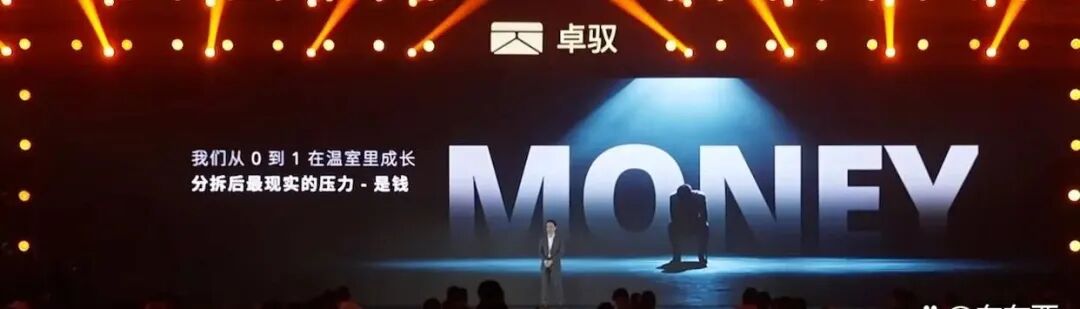
Persisting through desperation brought qualitative change.
Zhuoyu not only broke through technical thresholds, achieving industry-leading safe takeover rates per 100 kilometers but also mastered 'extreme cost-saving.'
They abandoned the frenzy for high computing power, exploring differentiated end-to-end routes. They split the visual-language-action (VLA) model into explainable, specialized modules, solving two major industry challenges—causal reasoning and low-frequency data generation—at minimal cost.
For example, the 8650 chip's performance rivals dual Orin X, and they achieved end-to-end deployment on TDA4's mid-range computing chips, becoming one of the few companies enabling mid-computing-power urban navigation.
Technical prowess allowed Zhuoyu to quickly establish itself.
Today, it has grown into a leading player with nine automaker clients, 15 vehicle brands, and over 50 mass-produced models, shipping hundreds of thousands of units. Its per-vehicle revenue is two to three times that of peers.
Giants like BYD, SAIC, and FAW entrusted it during its most turbulent period.
II. The Magic of VLA Large Models: Balancing High Computing Power and Cost Efficiency, with Rapid Vehicle Adaptation
Zhuoyu's core confidence in crossing into commercial vehicles lies in its self-developed VLA multimodal large model.
This system comprises three modules: V (Visual Model) for environmental perception, L (Large Language Model) for logical thinking, and A (Action World Model) for precise decision execution.
Its most critical strength is 'elastic adaptability':
When computing power is abundant, all three modules operate fully, handling complex long-tail scenarios like construction zones and sudden obstacles. For example, encountering temporary traffic signs, it understands and adjusts routes like humans, outputting transparent decision logic to break the 'black box' limitation of intelligent driving.
For cost-sensitive scenarios like heavy trucks and low-end passenger vehicles, trimming the L module maintains end-to-end architectural advantages while ensuring stability and reliability. 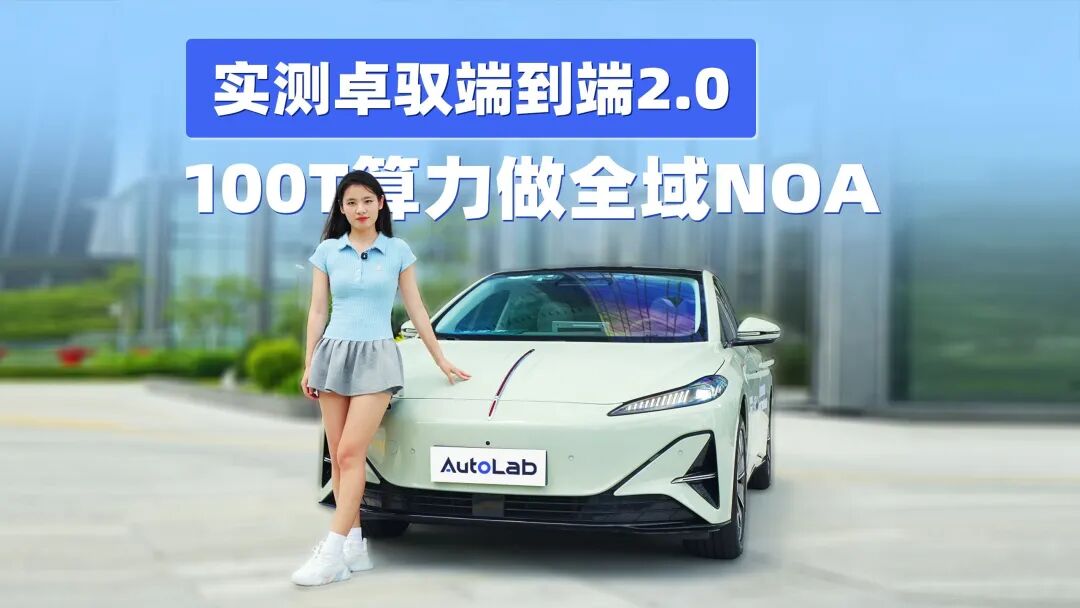
Technical advantages directly translate into engineering efficiency dominance.
While the industry typically requires dozens of people and months to adapt to a new model, Zhuoyu reduces manpower to under ten and shortens mechanical model differences between vehicles to 'days.'
Take the announced heavy-truck NOA project: heavy trucks' dimensions, loads, and braking distances differ vastly from passenger vehicles, demanding extreme safety and reliability. Yet, Zhuoyu's team achieved 80% functional maturity in under two months from receiving the prototype.
More crucially, they can transfer passenger vehicle data capabilities, enabling synchronized model updates with delays under one month—nearly unimaginable in heavy-truck intelligent driving.
Zhuoyu's cost control borders on obsession.
Shen advocates Tesla FSD's logic of 'achieving miracles with cleverness,' insisting on keeping auxiliary driving costs within 3%-5% of the vehicle's price.
This 'extreme value' approach led them down the path of 'technological equity':
While others see intelligent driving as exclusive to high-end vehicles, Zhuoyu enables L2+ auxiliary driving for A0-class electric cars under 100,000 yuan.
While others claim fuel vehicles cannot achieve high-level intelligent driving, Zhuoyu breaks the curse, leading fuel vehicle intelligence.
They premiered a single-chip cockpit-driving integration solution on the ARCFOX Alpha T5, merging intelligent cockpits and driving systems on Qualcomm 8775 chips, upgrading vehicle electrical architectures while helping automakers reduce costs.
Even chipmakers like NVIDIA and Texas Instruments recognize ('recognize' in English, but keeping Chinese here for context): 'The same chip runs more efficiently in their hands.'
III. Dual-Sector Offensive: Heavy Trucks Solve Logistics Pain Points, Unmanned Vehicles Root in Mines and Ports
After stabilizing in the passenger vehicle sector, Zhuoyu avoided internal competition and swiftly targeted the more promising commercial vehicle market.
The two newly announced products precisely address industry pain points.
The heavy-truck highway NOA targets the core challenge of dry-line logistics—driver fatigue from prolonged driving, a major cause of heavy-truck accidents.
Zhuoyu's solution reduces driver burden through precise perception, decision-making, and control, enhancing dry-line logistics safety and efficiency.
Securing orders from XCMG, Shaanxi Auto, and Sinotruk—which dominate half of China's heavy-truck market—demonstrates industry recognition of its technical strength.
As planned, the first batch of heavy trucks equipped with this solution will enter mass production in the first half of 2026, with 'smart heavy trucks' appearing on highways six months later. 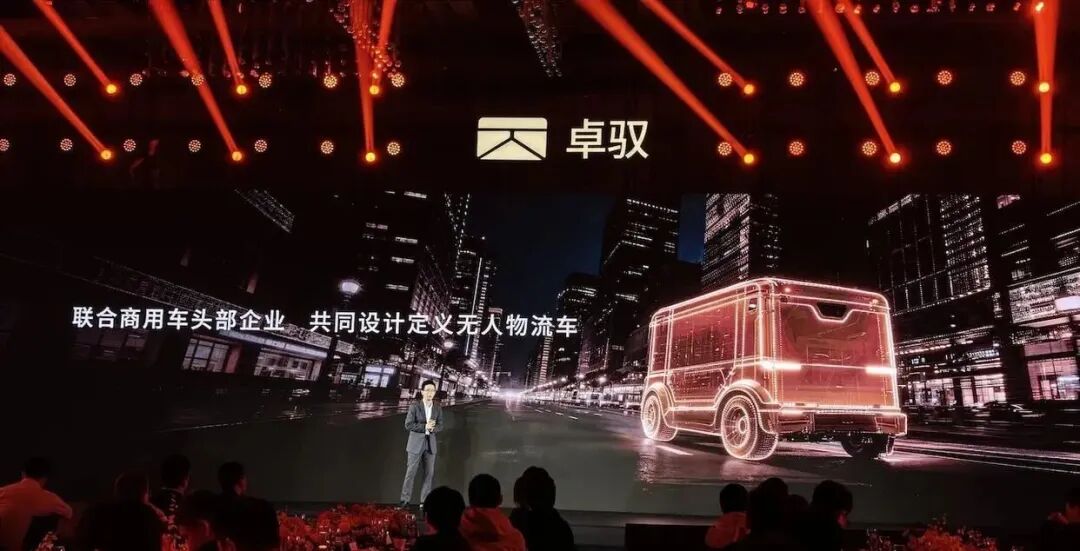
More anticipated is the unmanned logistics vehicle launching next month.
Unlike companies acting solely as suppliers, Zhuoyu deeply participates in the entire product lifecycle, co-designing and defining with leading commercial vehicle enterprises.
The vehicle targets closed/semi-closed scenarios like mines and ports—harsh environments with repetitive operations, ideal for unmanned operations.
For example, in mines, traditional transport drivers endure long hours in dusty, high-risk conditions. Unmanned logistics vehicles enhance safety while improving efficiency and reducing costs.
In ports, container transfers are time-consuming; unmanned equipment operates 24/7, significantly boosting throughput.
Leveraging the VLA model's high generalization, Zhuoyu rapidly adapts to scenario demands, transferring passenger vehicle mobility capabilities to aid traditional industry intelligentization ('intelligent' in English, but keeping Chinese here) transformation.
Zhuoyu's expansion logic is clear:
With data-driven end-to-end architectures as the core and the VLA model as the foundation, it boldly outputs 'mobility capabilities' wherever cross-domain migration can be achieved at minimal cost.
This expansion is not blind but rooted in strong technical reusability—from TDA4 mid-range chips to 8650 high-computing chips, and onto Qualcomm SA8797 cockpit-driving integration chips, the core architecture remains consistently reusable, eliminating redundant R&D and enabling rapid crossovers.
Shen compares this capability to 'the lower body of robots': whether passenger vehicles, cargo-carrying heavy trucks, or logistics vehicles for special scenarios, Zhuoyu's technology empowers mobility wherever needed.
IV. Reshaping Industry Rules: Rejecting 'Half-Baked Products,' Initiating Autonomous Mobility with Technological Equity
The intelligent driving industry widely faces the dilemma of 'investment not matching revenue.' Shen's words strike the pain point: 'Current auxiliary driving systems are all half-baked.'
In his view, the true turning point lies in transitioning from L2+ to L3—when intelligent driving becomes a 'finished product' trusted by users and valued for time savings, new value patterns will emerge.
Zhuoyu's efforts all push toward 'finished products': avoiding parameter races, eschewing flashy features, and prioritizing safety and practicality.
In his speech, Shen defined 'walkers' as 'those who depart daily, arrive, and choose to keep moving forward.' As an industry 'walker,' Zhuoyu regards 'user safety loyalty' as its core duty. 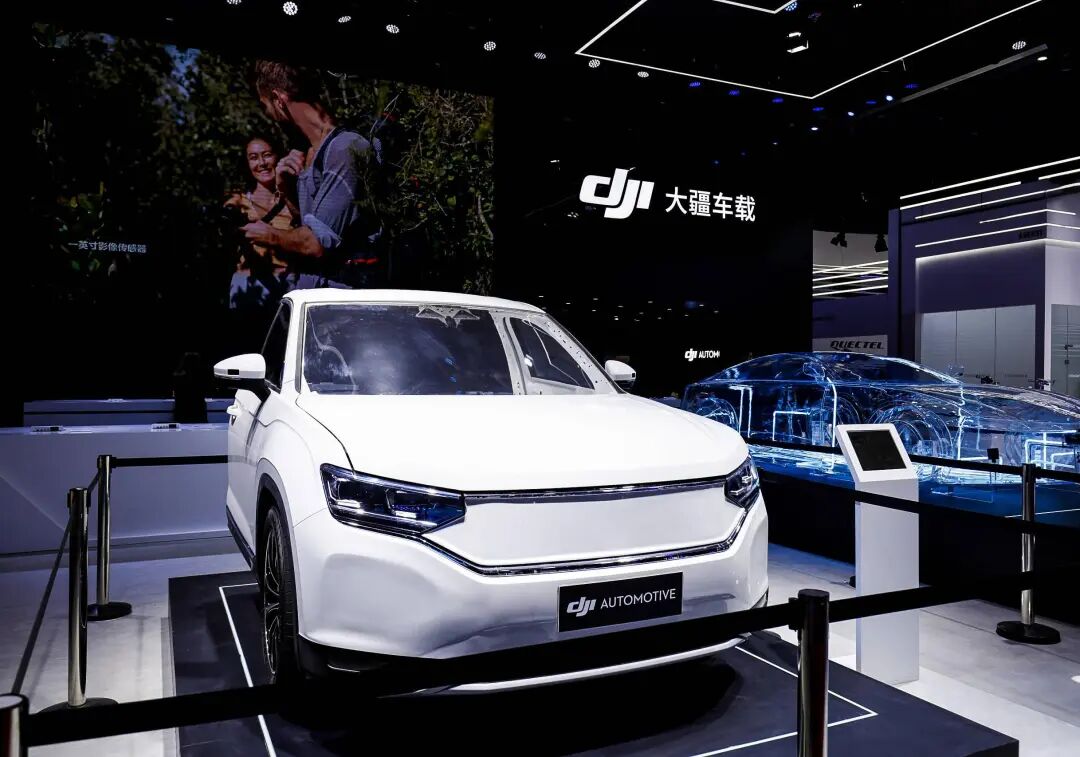
Pragmatic ideals led Zhuoyu down a differentiated path.
They eschew short-term market share grabs, focusing instead on refining technology with a 'pursue excellence with all passion' ethos.
To achieve technological equity, they minimize auxiliary driving costs, enabling ordinary people to enjoy intelligent mobility.
To ensure delivery quality, they built experimental centers and manufacturing plants, leveraging full-stack self-developed hardware-software integration to 'support' clients during critical moments.
This down-to-earth style earned Zhuoyu a strong reputation, attracting industrial shareholders like FAW and BYD to form a stable strategic alliance.
As its brand vision upgrades to 'Empowering Autonomous Mobility,' Zhuoyu's service scope expands from carbon-based humans to silicon-based intelligent entities, looking beyond the automotive industry toward the era of autonomous mobile robots.
Shen concluded his speech by saying, 'See what technological beauty looks like and never stop pursuing it.'
This pursuit lets Zhuoyu avoid industry trends, rewriting rules at its own pace.
From DJI's offspring, this dark horse has grown from a protected R&D department into an industry leader.
Next month, Zhuoyu's unmanned logistics vehicle will launch; in six months, heavy trucks equipped with its NOA solution will enter mass production.
In summary, The Unmanned Vehicle Era Is Here (WeChat Official Account: The Unmanned Vehicle Era Is Here) believes:
Zhuoyu's decade-long journey reflects China's intelligent driving industry evolving from following to running alongside, then seeking lane changes to overtake.
When this former 'DJI Automotive' declares its ambition to empower all things with mobility, it attempts to redefine the boundaries of mobile intelligence.
From the BR1609 research project to aspiring as the 'legs' for robots, Zhuoyu bets on a grand narrative filled with uncertainties but boundless potential.
As technological optimism meets a rigid, fragmented industrial reality, this adventure deserves breathless anticipation from every observer.
What's your take?
#TheUnmannedVehicleEraIsHere #Driverless #AutonomousDriving #UnmannedVehicles
-
![]()
Enflame Tech's IPO Journey: Navigating Over 5.9 Billion Yuan in Losses and Soaring Debt in Q1 This Year
-
![]()
Trillion-Yuan Giant Li Shufu 'Streamlines': Could Levc Be the Casualty?
-
![]()
AI Competes for Electricity and Generates Power in the Gobi Desert
-
![]()
The First Batch of Victims of the AI Bubble: Programmers
-
![]()
ByteDance, DJI, and Xiaohongshu Secure Top Three Positions Among China’s Fastest-Growing Unicorns
-
Tesla's in-car voice system in China is finally learning to 'understand human language'
-
![]()
Foreigners Are Amazed: Chinese Electric Vehicle Drive Systems Unveil Innovative 'Poses'
-
![]()
700,000 Brothers and the Future of Robots: Behind JD.com's 'Nirvana Plan'