As 2026 Begins, Automakers Engage in Another Round of Promotional Battles. Can Multi-Pronged Strategies Resolve the 'Longstanding Issue' of Over-Competition?
 01/09 2026
 612
612
The Chinese auto market in 2026 got off to a roaring start with an unprecedented wave of promotions. By January 8, over 16 auto brands had launched a variety of promotional policies, covering nearly 70 models.
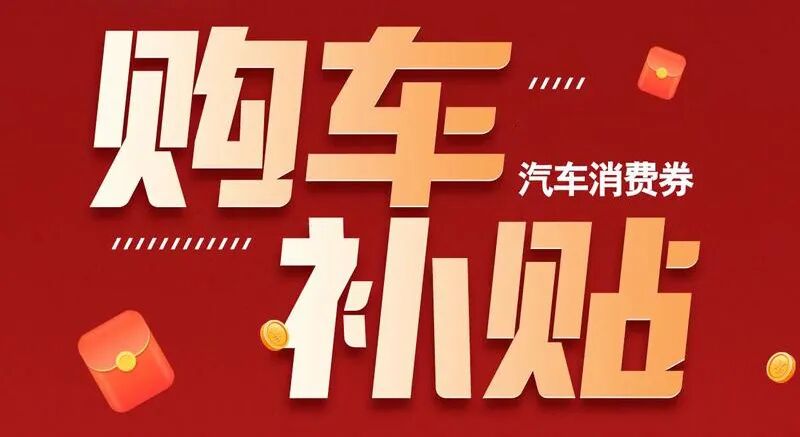
From BMW's official price reductions to Tesla's "7-year low-interest financing," and from Kia's "nationwide uniform pricing" to Wuling's "purchase tax guarantee," these diverse promotional strategies reflect more than just automakers' responses to adjustments in new energy vehicle (NEV) purchase tax policies. They also underscore the fierce competition in the market.
Policy and Market: Dual Drivers
In the first week of 2026, China's auto market erupted in a promotional war without smoke. It all began when Wuling announced on New Year's Day that several of its models would be eligible for full purchase tax subsidies, with all costs covered by the manufacturer.
BMW followed suit with the most direct approach: reducing the official guide prices of 31 key models. Among them, 24 models saw price cuts exceeding 10%, with the highest reduction reaching 301,000 yuan. Tesla introduced a limited-time financial subsidy plan for car purchases, offering 7-year ultra-low-interest and 5-year zero-interest financial policies.
Meanwhile, Yueda Kia officially launched a nationwide uniform pricing model, setting a unified price for the K3 and Yi Run (Yite, a model name) models across the country, thus eliminating the need for price negotiations.
The promotional strategies adopted by automakers in early 2026 are driven by the dual pressures of policy adjustments and market competition. The NEV purchase tax has shifted from full exemption to a 50% reduction, directly increasing consumer purchasing costs.
The "2026 Vehicle Trade-In Subsidy Implementation Details," jointly issued by eight departments including the Ministry of Commerce, further clarified subsidy standards. Scrapping an old vehicle to purchase a new NEV entitles the buyer to a subsidy of 12% of the new vehicle's sales price, up to 20,000 yuan. Scrapping a fuel-powered vehicle to purchase an NEV entitles the buyer to an 8% subsidy, up to 15,000 yuan.
These policy adjustments, coupled with the harsh reality that over half of the brands failed to meet their annual sales targets in 2025, have compelled automakers to adopt proactive strategies to vie for market share at the beginning of the new year.
Diversified Promotional Models
The current automaker promotions exhibit diverse characteristics, primarily falling into the following models:
Direct Price Reduction Model: Luxury brands like BMW have opted to directly adjust their official guide prices, affecting 31 models. This strategy aims to reposition the product pricing system and narrow the gap between guide prices and actual transaction prices.
Nationwide Uniform Pricing Model: Yueda Kia pioneered the implementation of nationwide uniform pricing, allowing consumers to purchase the K3 and Yi Run (Yite) models at the same price from any authorized dealer. Similarly, Cadillac adopted a "limited-time uniform pricing" strategy for models like the CT5 and XT4.
Subsidy Model: Tesla introduced a 7-year ultra-low-interest loan plan, distributing the increased purchasing costs due to the purchase tax policy adjustments over long-term monthly payments. Xiaomi Motors offered a 3-year zero-interest policy for its YU7 model, lowering the purchasing threshold for young consumers. Additionally, several automakers provided extra trade-in subsidies in conjunction with the national trade-in policy.
Purchase Tax Guarantee Model: In response to the policy adjustment reducing the NEV purchase tax to a 50% reduction, Volvo introduced a 14,000 yuan manufacturer subsidy for the purchase tax of the XC70 model. NIO helped consumers save between 1,770 yuan and 9,558 yuan in purchase taxes through its BaaS battery leasing program.
Furthermore, traditional automakers such as Dongfeng, Chery, Shenlan, FAW-Volkswagen, and GAC Toyota have also launched New Year price reduction promotions for some of their brands or models.
'Price Wars' No Longer Just About Price
With regulatory authorities focusing on "excessive competition," the auto industry is undergoing a transformation from "price wars" to "value wars." The state will formulate the "Automobile Industry Price Behavior Compliance Guidelines," explicitly prohibiting improper competition behaviors such as dumping below cost.
Auto analysts point out that the core driving force for the auto industry's development in 2026 is shifting from policy dividends to product competitiveness. This means that relying solely on price reductions for promotions is no longer sustainable. Nearly all newly launched or pre-sold models have adopted original or price-increased sales strategies without exception.
A marketing executive from a domestic brand stated, "We realize that price wars have hit the industry's bottom line. In 2026, we will focus more on enhancing the comprehensive value of our products through intelligent configurations and after-sales services."
The Chinese auto market in 2026 presents a complex landscape with multiple intersecting trends behind the promotional frenzy. At the policy level, the continuation of trade-in subsidies provides stable market expectations. At the industry level, the market has entered the "NEV-dominated" era. At the technological level, the "expansion" of conditional access for L3 autonomous driving and upgrades in battery density and capacity will serve as important benchmarks for industry development.
According to industry forecasts, the number of automakers may decrease by 40% in 2026, with the market concentration ratio CR5 rising from 65% to 80%. This implies that automakers lacking core competitiveness will face even harsher survival challenges.
Therefore, the Chinese auto industry in 2026 will undergo a fundamental shift from scale expansion to value competition. Whether it's Tesla's low-interest financing plan or BMW's official price cuts, different strategic directions not only aim to boost sales but also comprehensively consider cost control and marketing networks. Thus, the 2026 promotional battle at the beginning of the year may serve as a significant watershed for the maturation of the Chinese auto industry.
-
![]()
Enflame Tech's IPO Journey: Navigating Over 5.9 Billion Yuan in Losses and Soaring Debt in Q1 This Year
-
![]()
Trillion-Yuan Giant Li Shufu 'Streamlines': Could Levc Be the Casualty?
-
![]()
AI Competes for Electricity and Generates Power in the Gobi Desert
-
![]()
The First Batch of Victims of the AI Bubble: Programmers
-
![]()
ByteDance, DJI, and Xiaohongshu Secure Top Three Positions Among China’s Fastest-Growing Unicorns
-
Tesla's in-car voice system in China is finally learning to 'understand human language'
-
![]()
Foreigners Are Amazed: Chinese Electric Vehicle Drive Systems Unveil Innovative 'Poses'
-
![]()
700,000 Brothers and the Future of Robots: Behind JD.com's 'Nirvana Plan'