US Self-Driving Bill Advances: A "Timely Boon" for Tesla or a "Double-Edged Sword" for the Industry? Strategic Anxiety Behind the US-China Race?
 02/25 2026
 484
484
Introduction
On February 11, 2026, the U.S. House Energy and Commerce Committee narrowly passed the
Self-Driving Car Era (WeChat ID: SelfDrivingCarEra) is here to discuss this with everyone!
(For further reading, click:
I. No More Fifty Paths to Rome
To understand the significance of this bill, we must first examine the "regulatory map" of U.S. self-driving technology.
Over the past few years, more than 30 U.S. states have enacted their own self-driving regulations.
Some states allow testing without safety drivers, others mandate steering wheels, and some specify how liability is determined in accidents—companies looking to deploy across multiple states must hire an entire legal team to navigate this "patchwork of state laws."
This fragmentation not only increases compliance costs but also sets a ceiling on scalable operations.
Tesla struggled for eight months in Austin, unable to significantly expand its fleet size, partly due to hesitation in crossing state lines—after all, rules vary by state, and the cost of missteps is high.
The
In simple terms, automakers will no longer need to seek approval state by state—compliance with federal standards means seamless operation across all 50 states.
This is a boon for any company seeking scalable self-driving operations.
Tesla Vice President Lars Moravy put it bluntly during hearings: "We need a consistent path across all 50 states to have certainty."
II. Tesla’s "Timely Boon" or "False Hope"?
The bill benefits Tesla in three key ways.
First, legalization of steering wheel-free models.
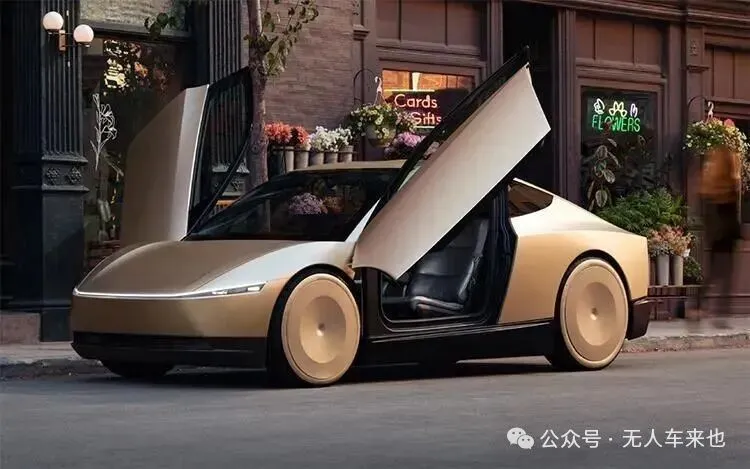
Tesla’s 2024 Cybercab is a concept car without a steering wheel or pedals—a design nearly impossible to approve under current regulations.
The bill explicitly allows manufacturers to produce L4/L5 fully autonomous vehicles, including designs without manual controls.
This transforms the Cybercab from "concept" to "production-ready," a critical step forward.
Second, clarity on FSD regulatory path.
Tesla’s Full Self-Driving (FSD) has long existed in a "gray zone"—officially requiring driver supervision, but with Musk hinting at true driverless capability.
The bill mandates the NHTSA to establish unified safety standards by September 2027, finally providing an official classification for whether FSD is L2 or L4.
For Tesla, a clear regulatory framework is preferable to enduring constant question (zhì yí, "questioning") in a gray area.
Third, reduced cross-state operational costs.
Tesla’s nationwide Robotaxi deployment would currently require separate applications and compliance in each state.
If the bill passes, much of this redundant effort could be eliminated.
However, benefits do not equal "guaranteed success."
The bill sets a September 2027 deadline for safety standards, meaning true nationwide scalability is still at least 18 months away.
Moreover, the content of these standards remains unknown—what if NHTSA mandates LiDAR redundancy, conflicting with Tesla’s pure vision approach?
III. Washington’s "Carrot" and "Stick"
The hearings revealed another side of the bill: Congress is not granting self-driving a "get-out-of-jail-free card" but tightening the "reins."
Tesla’s biggest headache is "mandatory arbitration."
Senator Maria Cantwell made clear she would not support legislation stripping accident victims of their right to sue.
Tesla currently limits owner lawsuits through arbitration clauses in user agreements.
If the bill prohibits "forced arbitration," Tesla’s litigation risks will surge.
Next is accident data transparency.
Tesla’s current NHTSA accident reports omit key details, unlike competitors Waymo and Zoox, which provide full descriptions.
Senator Ed Markey fumed: "Tesla is putting American lives at risk—this is intolerable."
The bill demands greater collision data transparency, ending Tesla’s long-standing "selective silence."
Third is safety standards themselves.
Manufacturers must submit "safety cases" proving their systems "do not pose unreasonable risks."
For Tesla, whose accident rate is already 9x that of human drivers, crafting this "safety case" will be daunting.
Notably, multiple senators questioned Tesla’s radar-free, camera-only tech approach during hearings.
Moravy’s defense—"human drivers rely only on eyes"—may not persuade Congress.
IV. U.S.-China Race: Strategic Anxiety Behind the Bill
Interestingly, a rare bipartisan consensus drives this legislation: countering China.
The bill’s "purpose" clause states explicitly: to ensure U.S. leadership in self-driving technology and counter Chinese competition.
Representative Lata emphasized in a press release: "Competing with China means keeping these jobs in America and securing our global leadership in R&D and manufacturing."
At hearings, executives from Waymo and Tesla echoed this theme.
Waymo’s Chief Safety Officer warned: "If China wins this race, Chinese companies—not American ones—will set global tech standards."
Tesla’s VP added: "If the U.S. doesn’t lead, others—especially China—will shape this technology, standards, and markets."
(For further reading, click:
This "China threat" narrative injects strong political momentum into the bill.
Amid trade wars and tech decoupling, any legislation framed as "countering China" gains bipartisan traction.
Ironically, Waymo’s new Robotaxi platform uses Zeekr models manufactured by China’s Geely.
Senator Bernie Moreno grilled Waymo during hearings: "How does shipping Chinese cars to America strengthen U.S. competitiveness?"
Waymo claimed all Chinese software is removed stateside and replaced with its system—but this satisfied few lawmakers.
This awkward (gān gà, "awkwardness") reflects U.S. self-driving’s reality: it talks of "defeating China" while relying on Chinese manufacturing.
V. Conclusion: Policy Can Pave Roads, but Technology Drives
Tesla’s eight-month Robotaxi struggle exposed core tech issues: pure vision failures in rain, persistently high accident rates, and fleeting unsupervised service.
No bill can solve these problems.
The
But "permitted to operate" ≠ "capable of operating."
If Tesla’s cars still stall in rain and crash 9x more than humans, no policy will save them.
Crucially, the bill imposes constraints: mandatory arbitration may be banned, accident data must be transparent, and safety cases must be robust. These "carrots" come with "sticks" that could worsen Tesla’s challenges.
Representative Lata argued that 94% of crashes stem from human error, making self-driving a lifesaver.
True—but only if the technology itself is safe. Replacing human drivers with a higher-crash-rate machine renders "saving lives" hollow.
The House Energy and Commerce Committee’s approval is just the first step. The bill now faces full House debate and vote, with timing and passage uncertain—the future remains riddled with uncertainty!
In summary, Self-Driving Car Era (WeChat ID: SelfDrivingCarEra) believes:
The
In the U.S.-China tech race, institutional innovation becomes a new competitive dimension.
While China builds infrastructure advantages through "vehicle-road-cloud integration," the U.S. chooses federal legislation to break institutional bottlenecks.
2026 may reshape global self-driving industry dynamics.
What’s your take?
#SelfDrivingCarEra #AutonomousDriving #SelfDrivingTechnology #DriverlessCars
-
![]()
Depreciation Rate on Par with Mobile Phones: Just 40% Value Retention After Three Years—Why Do Battery Electric Vehicles Lose Their Worth?
-
![]()
Clearing Bugatti Stock Worth 7 Billion: Why is Porsche 'Cutting Ties'?
-
![]()
Don’t Dismiss Huawei’s Potential in Sedans Just Because the Shangjie Hasn’t Hit It Big Yet
-
![]()
Unsold Cars in China Find Success Overseas
-
![]()
Ghosn: Only I Can Save Nissan, Shareholders Beg Me to Return
-
![]()
Expanding Automobile Consumption: It's Time to Address the High Cost of Electric Vehicle Repairs
-
![]()
Luna Ultra Entangled in 'National Subsidy Fraud' Controversy, Insta360 Pushed to the Brink by DJI
-
![]()
People have long suffered from splash ads. Will the 'temporarily disappeared' traffic behemoth make a comeback?