Tesla Cybercab Debuts: Is the Driverless Future Finally Here?
 02/26 2026
 566
566
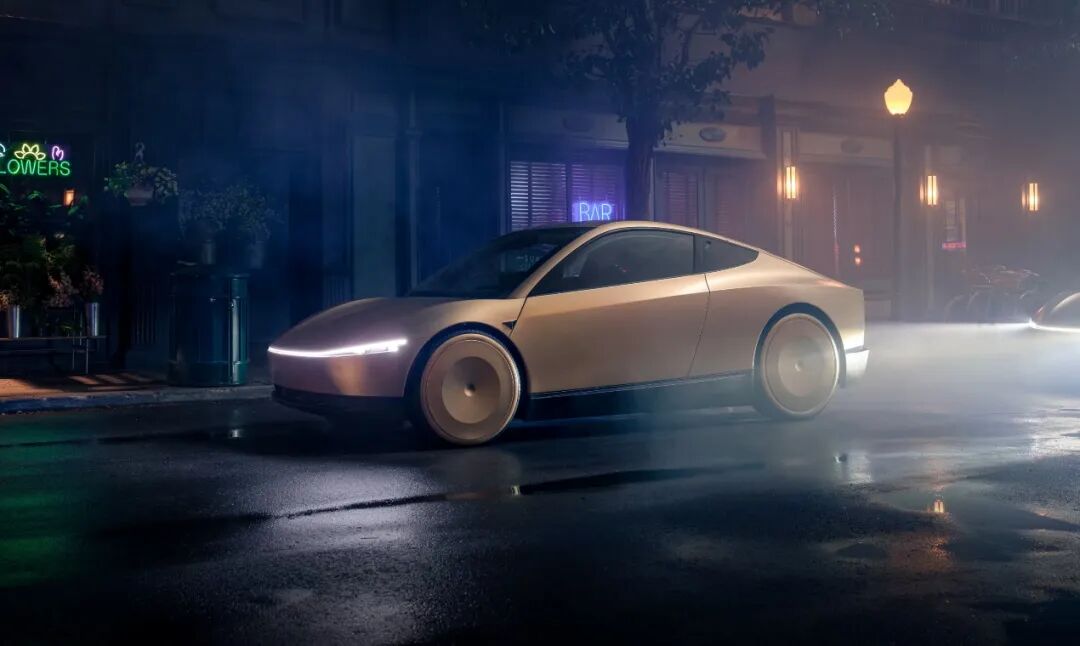
No rearview mirrors, no steering wheel, not even brake pedals—when the Tesla Cybercab slowly rolled off the assembly line at the Texas factory, it seemed to signal to the world: This is the future. Tesla CEO Elon Musk subsequently posted on X (formerly Twitter): "Congratulations to the Tesla team for building the first mass-produced Cybercab!"
The Cybercab is a model specifically designed by Tesla for autonomous driving. Shortly before its debut, Musk reiterated that the vehicle would enter production in April 2026.
Is the driverless future truly within reach?
In January of this year, data released by the U.S. National Highway Traffic Safety Administration (NHTSA) revealed that between July and November 2025, Tesla's Robotaxi fleet (autonomous taxis) reported nine low-speed collisions over approximately 500,000 miles of cumulative driving, averaging one incident every 55,000 miles—nine times the accident rate of human drivers. Not long ago, Tesla's latest filing with the California Public Utilities Commission (CPUC) also implicitly acknowledged that the Robotaxi service still requires dual supervision from both an in-vehicle human driver and local remote operators during operation.
Reality, it seems, remains less optimistic than imagination.
From 'Automotive Company' to 'AI + Robotics' Leader
The launch of the Cybercab is far more than just the introduction of a new product; it marks a pivotal step in Tesla's transformation from an "automotive company" to an "AI + robotics" powerhouse. This shift is evident in the fact that the Cybercab was never designed for human driving.
It is reported that the Cybercab was conceptualized as a transportation solution requiring no human driver intervention from the outset, a decision reflected in every technical detail and user experience aspect of the vehicle. According to Tesla's explanation at the "We, Robot" event in October 2024, the Cybercab's design team was granted unprecedented freedom to eliminate the constraints of human driver presence and rethink the fundamental form of personal mobility. To this end, the vehicle's A-pillars were designed to be slimmer for improved aerodynamics, the front cabin space was significantly reduced, and the cabin was symmetrically laid out entirely around passenger experience. The vehicle transitioned from being a "tool to be driven" to a "service provider," with passengers shifting from "operators" to pure "users."
According to information released by Musk on social media in February 2026, the mass-produced Cybercab will retain its radical configuration of no steering wheel or pedals and will not be equipped with pop-out auxiliary steering devices. Insight into the shared mobility market's demands led to the Cybercab's dual-seat configuration and gull-wing door design—intended to facilitate passenger entry and exit in narrow parking spaces. Passengers entering the vehicle will find that, apart from the seats, the cabin features only a single 21-inch central touchscreen for displaying trip information, adjusting climate control, and playing entertainment content, serving as the sole interface between passengers and the vehicle. During the Q4 and full-year 2025 earnings call, Lars Moravy, Tesla's Vice President of Vehicle Engineering, noted that over 90% of current vehicle miles are driven with no more than two passengers, directly influencing the Cybercab's design.
It is worth mentioning that Tesla does not need the Cybercab to satisfy all passenger scenarios. According to plans, the Cybercab will handle the majority of orders on Tesla's Robotaxi network, while the Model Y will cater to passenger groups requiring three or four seats. For premium demands or large family use cases, Tesla will offer a long-wheelbase Model Y L. For larger group travel or commercial transportation needs, Tesla's already unveiled Robovan can accommodate over ten passengers.
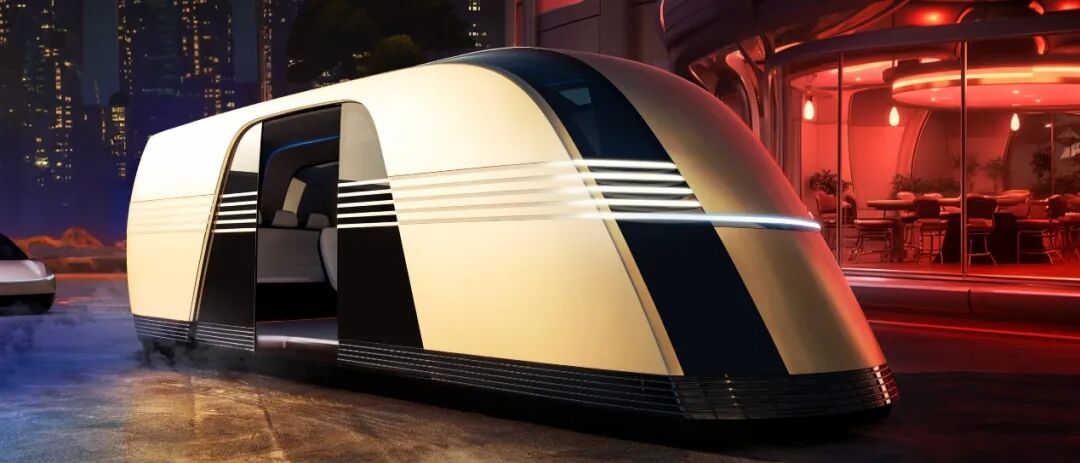
Robovan
It should be noted that Tesla has been particularly resolute—even somewhat "radical"—in its pursuit of transforming into an "AI + robotics" company. In January of this year, Musk stated during an investor call: "It's basically time to wind down the Model S and X programs. We expect to gradually halt S and X production next quarter." Musk said the Model S and X factory in Fremont, California, would be repurposed to produce Tesla's upcoming Optimus robot.
The Rapid Advancement of FSD
Despite facing controversy since its inception, no one can deny that the evolution of Tesla's FSD (Full Self-Driving) has far exceeded expectations, becoming its "unique skill" in the field of intelligent mobility and the biggest source of confidence for the Cybercab to abandon steering wheels and pedals.
The release of FSD can be traced back to the third quarter of 2020, with the debut of the FSD Beta version. On July 10, 2021, Tesla officially rolled out the "Full Self-Driving" FSD Beta V9 to approximately 2,000 U.S. users, notable for abandoning sensors like millimeter-wave and ultrasonic radars in favor of a pure vision-based autonomous driving solution. At the time, Tesla introduced a BEV perception scheme based on Transformer, marking the first appearance of large model technology in the autonomous driving industry. Subsequently, Tesla spent three years achieving a comprehensive upgrade of FSD, culminating in the release of the FSD V12 (Supervised) version in 2024.
Notably, the "beta" label was removed from the FSD name at this point, and its technical performance showed remarkable progress. Feedback from some users at the time, while raising some doubts and issues, commonly described it as "smoother" and "more human-like." Numerous real-world test videos demonstrated that Tesla's FSD could make flexible and accurate responses to complex construction zones, nighttime temporary road barriers, flying paper bags, passing animals, and more.
On December 5, 2024, Tesla released FSD V13.2. Leveraging a full-resolution image processing platform based on HW4.0 hardware and achieving breakthroughs in AI model operation speed, the decision-making speed of the new FSD version doubled, achieving several breakthroughs. These included: initiating autonomous driving directly in parking lots without the need for pre-set navigation, as was previously required, and enhancing pure vision-based reverse functionality, enabling not only automatic reversing while parking but also executing complex maneuvers like three-point turns.
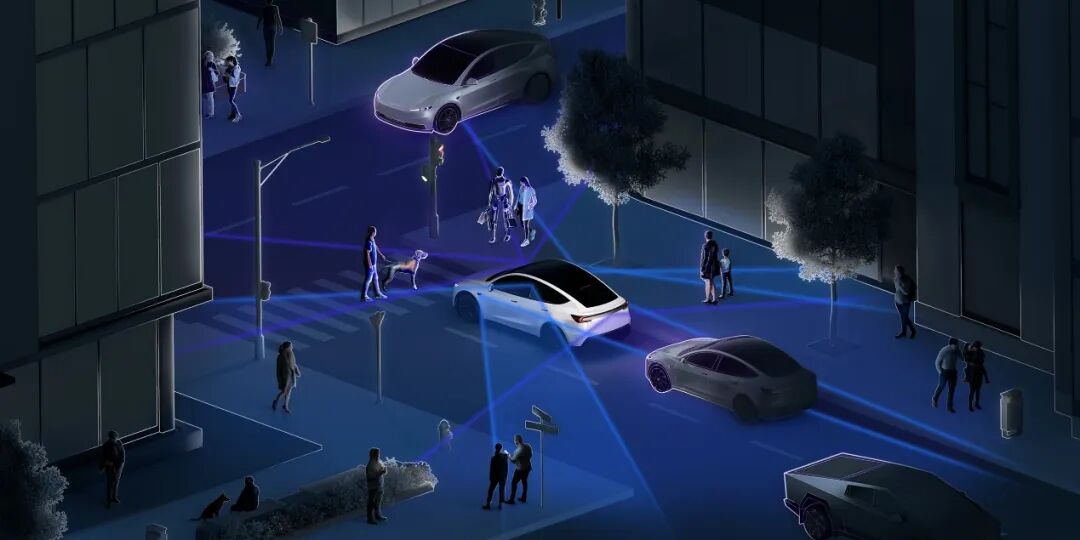
On October 7, 2025, with the official rollout of software version 2025.32.8.5, Tesla FSD entered the V14 era. The core goal of this FSD version was no longer limited to "assisted driving" but aimed to advance toward true fully autonomous driving. On February 22, 2026, Tesla's official social media account released the latest test video, showcasing technical breakthroughs of the FSD Supervised system in European road environments. The test vehicle, driving on narrow lanes in the Netherlands, captured and interpreted hand gesture commands from people ahead in real time, executing forward or stop maneuvers accordingly, demonstrating judgment capabilities close to those of human drivers. Musk subsequently forwarded the video and confirmed: "Tesla's autonomous driving system can now recognize hand signals."
True Implementation Still Awaits
On November 15, 2025, Tesla's official website published a detailed safety report on Full Self-Driving (Supervised) in a new section.
According to the report, Tesla's FSD Supervised has accumulated over 8.2 billion miles of driving, with more than 3 billion miles driven under urban conditions. Tesla claims that the accident rate of the FSD system is far lower than the U.S. average. In North America, owners using FSD average approximately 5 million miles between major collisions, while minor collisions occur every approximately 1.5 million miles. In contrast, drivers across the U.S. average a major collision every 699,000 miles, making FSD's performance in preventing major accidents more than seven times better than the average. Tesla committed to updating this safety data quarterly, using a "rolling 12-month" statistical approach.
However, in January of this year, data released by the U.S. National Highway Traffic Safety Administration (NHTSA) showed that between July and November 2025, Tesla's Robotaxi fleet (autonomous taxis) reported nine low-speed collisions over approximately 500,000 miles of cumulative driving, averaging one incident every 55,000 miles—nine times the accident rate of human drivers. In comparison, human drivers in the U.S. average an accident every 200,000 to 500,000 miles.
In fact, Tesla's latest filing with the California Public Utilities Commission (CPUC) also implicitly acknowledged that its Robotaxi service still requires dual supervision from both an in-vehicle human driver and local remote operators during operation. The filing revealed that Tesla's ride-hailing service relies on TCP vehicles equipped with the SAE Level 2 assisted driving system FSD (Supervised mode), which by definition must always have a licensed human driver seated in the driver's seat for real-time monitoring. In addition to the in-vehicle driver, Tesla has also deployed local remote operators in Austin and the Bay Area as a second layer of safeguard. These personnel must hold a driver's license required by the DMV and pass strict background checks, as well as drug and alcohol tests.
Based on this, the launch of Tesla's Cybercab is less of a clarion call for the "imminent arrival" of the driverless era and more of an important "touchstone" for verifying technological feasibility. It does prove that the technological foundation is taking shape—pure vision solutions and end-to-end large models can support vehicles operating over extended periods and distances without human intervention—but there is still a considerable distance to go before achieving true "driverless" capabilities.
From the current industry landscape, two major gaps remain between technological breakthroughs and commercial implementation: first, safety redundancy, as the current reliability of driverless systems has not yet reached a level suitable for large-scale deployment; and second, regulatory compliance and societal trust. Taking the United States as an example, federal motor vehicle safety standards were formulated with human-controlled systems like steering wheels in mind, meaning Tesla's Cybercab may require special approval from regulatory agencies if it cannot meet relevant requirements. Even if regulations permit, whether the public will trust and embrace the technology remains an unanswered question.
The launch of Tesla's Cybercab is like lighting a torch in the pre-dawn darkness of driverless technology, illuminating the path forward. However, for true daylight to arrive, continuous improvements in technology, regulations, and infrastructure are still needed.
Image: From the Internet
Article: Auto Review
Layout: Auto Review
-
![]()
Doubao Work Unveiled! Domestic AI Leaders Fully Commit to the 'Work' Sector
-
![]()
Who’s Sounding the Alarm on ‘Rushed Vehicles’?
-
![]()
Over 5.3 Billion Yuan in Losses Over Three and a Half Years! Can Yonyou Reverse Its Fortunes Through Streamlining and AI Transformation?
-
![]()
Baidu AI Adopts Free Model: A Strategic Maneuver in Traffic and Monetization
-
![]()
Silicon-Based OLED Pioneer Unveils Financial Results: H1 Shipments Outpace Entire 2025 Volume
-
![]()
AI's First "Lost Summer"
-
![]()
Zeiss Makes Another €2.2 Million Bet: Will Eye Tracking Be the Next Big Thing in the Smart Glasses Industry?
-
![]()
RUNTO Ranking | Global Top TV ODM Factories' Shipment Figures for July 2026