US Large-Scale Tariff Policy Deemed Illegal: A Cause for Celebration for Multinational Automakers?
 02/25 2026
 540
540
As China revels in the joyous Spring Festival celebrations, the United States remains embroiled in turmoil. On February 20 (local time), the US Supreme Court declared the large-scale tariff hikes implemented by the Trump administration under the International Emergency Economic Powers Act (IEEPA) to be illegal. The very next day, the White House announced that President Trump had signed a proclamation imposing temporary import tariffs, marking the commencement of a new round of legal battles between the Trump administration's tariff policies and US law. For businesses, including those in the automotive sector, is this a boon or a bane?
The automotive industry, known for its high investment, lengthy production cycles, and heavy reliance on assets, yearns for 'rule certainty' far more than it does for fluctuations in a single tax rate. When administrative bodies circumvent judicial rulings by swiftly switching policy tools, multinational automakers find themselves not only facing financial losses but also grappling with unprecedented decision-making dilemmas regarding the 'safety boundaries' of their production capacity layouts.
Legal Restraints, Administrative Momentum
On February 20 (local time), the US Supreme Court ruled on the Trump administration's large-scale tariff measures implemented under the IEEPA, determining that they lacked explicit legal authorization. The court upheld the lower court's judgment by a 6-3 margin, stating that the IEEPA does not grant the president unilateral authority to impose universal tariffs without congressional approval. This ruling established legal boundaries for executive power and marked the climax of recent controversies over the legality of sweeping tariffs on goods imported into the US.
CNN characterized the ruling as a 'rare major defeat' for the White House in core foreign and economic policy areas. The judgment not only invalidated the legality of the Trump administration's 'reciprocal tariffs' under the IEEPA but also underscored the absence of upper limits on tariff rates, their near-global coverage, and the lack of clear time restrictions. This 'boundless' expansion of power was never authorized by Congress to the executive branch. The court also noted that these tariffs affected hundreds of billions of dollars in goods, impacted major global trading partners, and significantly influenced US business cost structures and consumer price systems.
However, administrative power quickly stepped in to fill the void just 24 hours later.
At a White House press conference, Trump announced that he would impose a 10% temporary tariff on global imports—on top of existing duties—for 150 days under Section 122 of the 1974 Trade Act. The following day, he raised the rate to 15% on 'Truth Social,' emphasizing it as the 'legally permissible and tested' maximum level. Unlike the 'emergency state' logic of the IEEPA, Section 122 was originally designed to address international payment imbalances, granting the president authority to impose additional tariffs or import restrictions under specific conditions to alleviate payment pressures.
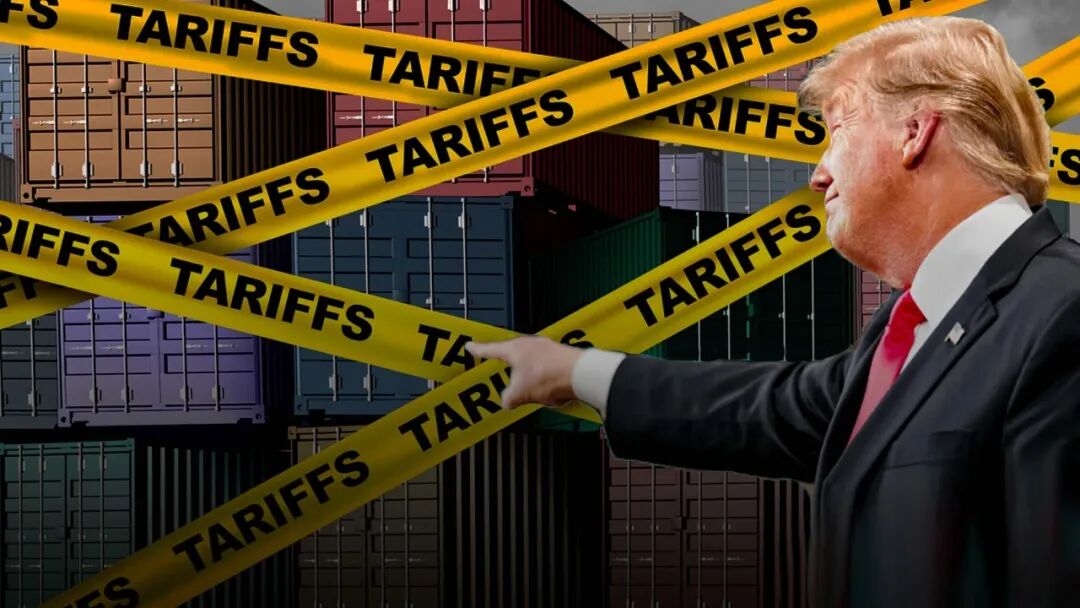
Unlike the IEEPA, Section 122 incorporates inherent 'brakes' in its design: a 150-day time limit, mandatory congressional approval for extensions, and the requirement for the executive branch to provide economic justification. For this reason, Section 122 has long been viewed as a temporary, technical tool rather than a systemic tariff framework. The Trump administration's rapid shift to this clause reflects a strong intent to maintain policy continuity while demonstrating a strategy to find alternative pathways within legal boundaries.
US Treasury Secretary Bessent, speaking in Dallas, attempted to stabilize market expectations, stating that the temporary tariffs under Section 122, combined with ongoing Section 232 and 301 measures, would keep federal tariff revenues 'largely unchanged' in 2026. US Trade Representative Greer also emphasized that multiple trade initiatives would roll out in the coming weeks, ensuring policy continuity despite the court ruling.
Nevertheless, Section 122 is not without constraints. The executive branch must demonstrate how imported goods significantly impact US international payments or economic stability and decide whether to seek congressional authorization for extensions after the period expires. Notably, since its enactment in 1974, the 1974 Trade Act has never been used to implement comprehensive, uniform global tariffs. Thus, this 'global coverage' application is groundbreaking and will inevitably face legislative oversight and future judicial challenges.
Against this backdrop, the legal tug-of-war over 'tariff legality' has rapidly transformed into a policy battle over 'legal pathway switching.'
The Clash Between Tax Payments and Refunds
With the US Supreme Court ruling the IEEPA tariffs legally baseless, the issue of tax refunds quickly escalated into a primary challenge. According to estimates from multiple agencies, tariffs collected under the IEEPA by the end of 2025 could range between $120 billion and $175 billion (varying slightly by source), involving hundreds of thousands of importers and businesses. These funds, integrated into federal revenue structures over the past years, form a critical component of government budgets.
Previously, the US Congressional Budget Office estimated that the Trump administration's tariff policies could generate approximately $300 billion annually over the next decade, with part of the revenue used to offset fiscal pressures from tax cuts. A large-scale refund would not only disrupt short-term fiscal balances but also affect debt and deficit expectations, potentially undermining capital market confidence.
However, refunds are far from straightforward. The US Customs and Border Protection (CBP), responsible for executing refunds, already faces case backlogs and budget constraints. Even if courts rule the tariffs illegal, importers typically must apply for refunds on a case-by-case basis, submitting complete customs records, taxation bases, and amount proofs while undergoing customs audits. This process is complex for large corporations with extensive compliance teams and burdensome for small and medium-sized importers.
The automotive industry is particularly affected. Previous 'reciprocal tariffs' covered finished vehicles and parts, with substantial taxes already factored into vehicle costs and retail prices. While refunds could temporarily improve corporate cash flow, the timing and amount remain highly uncertain, making them unreliable for short-term financial decisions.
The real technical challenge lies in 'tariff stacking identification.' Automotive parts often fall under multiple tariff clauses (Sections 232, 301, and IEEPA), requiring businesses to trace each shipment's import list, applicable tax rates, and legal pathways to determine eligibility for refunds. This dissection relies almost entirely on manual audits, demanding retrospective reviews of every batch's documentation. For automakers with supply chains spanning multiple countries and hundreds of suppliers, this is a time-consuming compliance endeavor.
Complicating matters further, the 'visible but elusive' refund benefits pale in comparison to the financial strain caused by new Section 122 tariffs. Businesses must not only invest heavily in auditing historical accounts but also immediately address cash flow disruptions from new tariffs. In this 'give-and-take' financial struggle, multinational automakers are being forced to pay a steep premium for US policy volatility.
Current Tariff Structure Faced by Multinational Automakers in the US
(As of February 22, 2026)
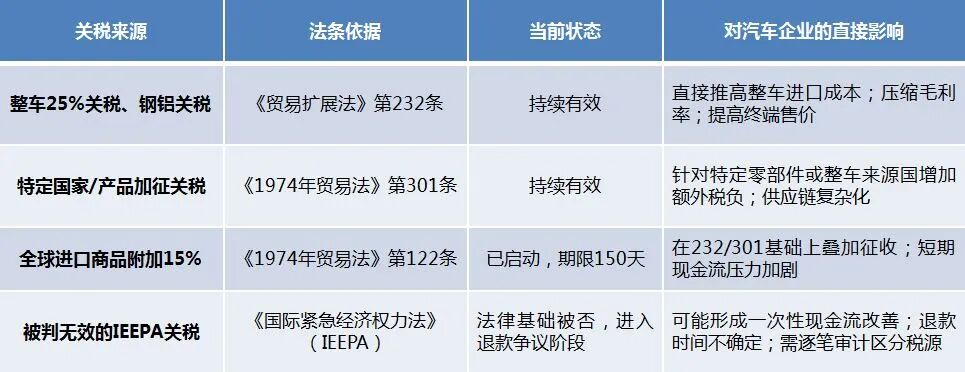
Compiled based on Section 232 of the US Trade Expansion Act, Sections 301 and 122 of the 1974 Trade Act, the International Emergency Economic Powers Act, and public policy information.
Chart: Auto Review
Multinational Automakers Bearing the Brunt of US Tariffs
Over the past year, US multiple tariff measures on imported vehicles and parts have profoundly reshaped the global automotive landscape. The 25% finished vehicle tariffs under Section 232, retaliatory tariffs under Section 301, and the aforementioned 'reciprocal tariffs' under the IEEPA have stacked atop existing benchmark rates, significantly increasing the overall tax burdens on imported vehicles.
German automakers, heavily reliant on cross-border production, face direct impacts. Audi's 2025 annual report revealed that nearly all its US-sold models are imported, with tariff costs sharply rising and after-tax profits declining by over 30% year-on-year. BMW Chairman Zipse stated that tariffs have become a key variable squeezing profit margins. Despite BMW's production base in South Carolina, import ratios continue to pressure overall profitability. Mercedes-Benz and Porsche financials similarly showed noticeable drag on gross margins from tariffs.
Japanese and Korean companies are also affected. Toyota expects tariffs to reduce its operating profit by approximately ¥1.45 trillion in FY2025 and has announced an additional $10 billion in US investments over five years to boost localization. Honda forecasts losses of around ¥450 billion and is considering shifting some hybrid models to US production. Nissan temporarily halted some overseas production for the US market.
Kia reported that its 2025 operating profit was squeezed by US tariffs by approximately KRW 2.9 trillion (USD 842 million at the time).
Amid high tariffs and policy uncertainty, 'localized production' has emerged as a critical strategic option for multinational automakers. By increasing US production capacity, companies can partially mitigate import tariff risks. However, localization is not a low-cost choice: building or expanding factories, restructuring supply chains, and renegotiating parts contracts require substantial capital expenditures and time.
Thus, businesses face a dilemma: endure high tariffs or secure policy stability through long-term investments. Tariffs have evolved from a mere tax rate issue into a deeper variable influencing industrial layouts and capital flows.
Now, the new 15% global tariff under Section 122 lasts up to 150 days. However, this 'temporary' duration exacerbates corporate decision-making dilemmas.
First is the risk of inaccurate pricing. The automotive industry's long sales cycles—spanning months from order placement to production and delivery—make pricing strategies vulnerable to tariff changes. If a company sets prices in February but faces rate changes in May, original profit models collapse. If tariffs are lifted after 150 days, current prices may be too high; if extended or replaced with other high-rate pathways, prices may be too low, eroding profits.
Second is inventory management challenges. Businesses previously used 'front-loading' imports to hedge risks, but this strategy has become costlier amid frequent tariff adjustments and stricter customs reviews. Excess inventory may lock in high tax burdens, while insufficient inventory could disrupt sales and production rhythms. Moreover, with Section 122's broad coverage, potential inventory and tariff costs are more closely linked, making adjustment cycles longer and more expensive if market forecasts err.
The 'New Normal' of Tariff Wars: A Long-Term Battle
After the global uniform tariff rose to 15%, US major trading partners swiftly coordinated assessments.
German Chancellor Mertz stated he would travel to the US for talks after coordinating positions with the European Commission and other EU members. France and other member states mentioned potential countermeasures, such as imposing service tariffs on US exports, restricting American companies' participation in EU procurement contracts, or even considering export controls.
The South Korean government quickly convened discussions, vowing to monitor details of US new tariff measures and maintain communication with industry associations and businesses to safeguard export conditions and benefits under the Korea-US agreement. Japanese automakers, adjusting production layouts due to rising tariff costs, are pushing for higher US localization while consulting with the government on countermeasures.
Clearly, the February 20 ruling did not end US tariff policies but initiated a new form of battle: legal limits constrain executive power, administrations seek alternative pathways, and businesses reconstruct capital and supply chains amid uncertainty. For the global automotive industry, the real question is no longer 'whether tariffs exist' but how to coexist long-term with a policy system prioritizing industrial relocation and national security in one of the world's largest automotive markets.
Image: From the Internet
Article: Auto Review
Layout: Auto Review
-
![]()
Depreciation Rate on Par with Mobile Phones: Just 40% Value Retention After Three Years—Why Do Battery Electric Vehicles Lose Their Worth?
-
![]()
Clearing Bugatti Stock Worth 7 Billion: Why is Porsche 'Cutting Ties'?
-
![]()
Don’t Dismiss Huawei’s Potential in Sedans Just Because the Shangjie Hasn’t Hit It Big Yet
-
![]()
Unsold Cars in China Find Success Overseas
-
![]()
Ghosn: Only I Can Save Nissan, Shareholders Beg Me to Return
-
![]()
Expanding Automobile Consumption: It's Time to Address the High Cost of Electric Vehicle Repairs
-
![]()
Luna Ultra Entangled in 'National Subsidy Fraud' Controversy, Insta360 Pushed to the Brink by DJI
-
![]()
People have long suffered from splash ads. Will the 'temporarily disappeared' traffic behemoth make a comeback?