"Delight" at the Helm: Volkswagen Brand's CEO Qi Zekai Shines!
 04/13 2026
 386
386
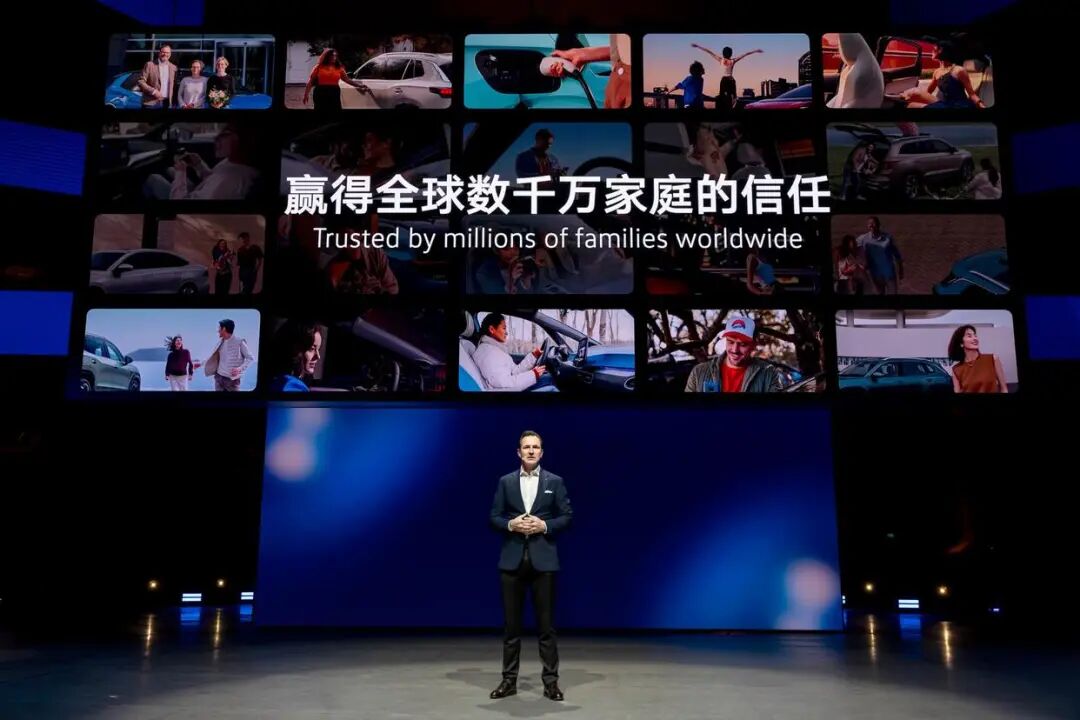
On April 8th, during the Volkswagen Brand Night, the ID. UNYX, SAIC Volkswagen ID. ERA 9X, and FAW-Volkswagen ID. AURA T6 rolled into the spotlight from the depths of the stage, amidst the rhythmic clicks of shutters...
At that moment, Qi Zekai, CEO of Volkswagen Passenger Cars Brand, stood at the center of the stage, undoubtedly brimming with joy!
Since officially assuming the role of CEO of Volkswagen Brand China on July 1st last year, Qi Zekai's tenure has spanned less than a year. There's an old Chinese proverb: "A child's future is discernible at three, and their character at seven." What insights, achievements, or transformations can a seasoned manager glean in such a short time?
Advancing the Xpeng collaboration within Ralf Brandstätter's framework, clarifying product divisions among the three joint ventures through organizational restructuring, or conveying suggestions to local partners on how Volkswagen can maintain its foothold may not be straightforward tasks. After all, given the typical pace of multinational executives in China, a year is often just enough to grasp the intricacies of the Chinese market.
Before Qi Zekai's arrival in China, speculation abounded regarding his motives. However, from my perspective, as Volkswagen's electrification transformation in China gains momentum and the layouts of FAW-Volkswagen, SAIC Volkswagen, and Volkswagen Anhui deepen, the Volkswagen brand urgently requires a new wave of integrated operations centered around channels and the end market. Ralf Brandstätter, CEO of Volkswagen Group China, overseeing the entire operation, also needs a steady, reliable, and highly efficient executive arm. While Qi Zekai may not exude the composed demeanor and clear logic often associated with foreign executives,
as long as he avoids the aloof attitude prevalent among many of his counterparts and possesses a basic understanding of Volkswagen's global system and the rhythm of the Chinese market, he can propel the Volkswagen brand forward in China.
Because it all hinges on his grasp of Brandstätter's strategic vision! So much so that at this launch event and beyond, people instinctively sought another figure in Qi Zekai's smile...
Editor | Li Jiaqi
Image Source | Internet
1
"In Search of" Ralf Brandstätter
The quest for Ralf Brandstätter stems from the fact that the past three to four years have been truly arduous for this German executive!
In August 2022, China's new energy vehicle market was undergoing a seismic shift, with domestic brands closing in with their intelligent advantages, while Volkswagen's electrification pace faltered. At this juncture, Brandstätter assumed the role of Chairman and CEO of Volkswagen Group China. What he inherited was no longer an enviable position.
So much so that many argue that the three strategic models on display pale in comparison to observing Brandstätter's leadership in Volkswagen's transformation. To systematically address the challenges Volkswagen Group faced in China, Brandstätter undertook three key initiatives: 1. Translating "In China, For China" from a strategy into tangible action principles; 2. Actively engaging with local partners related to Volkswagen Group to understand the hurdles in its new energy transformation in China; 3. Initiating a system-wide acceleration, starting from the pantry.
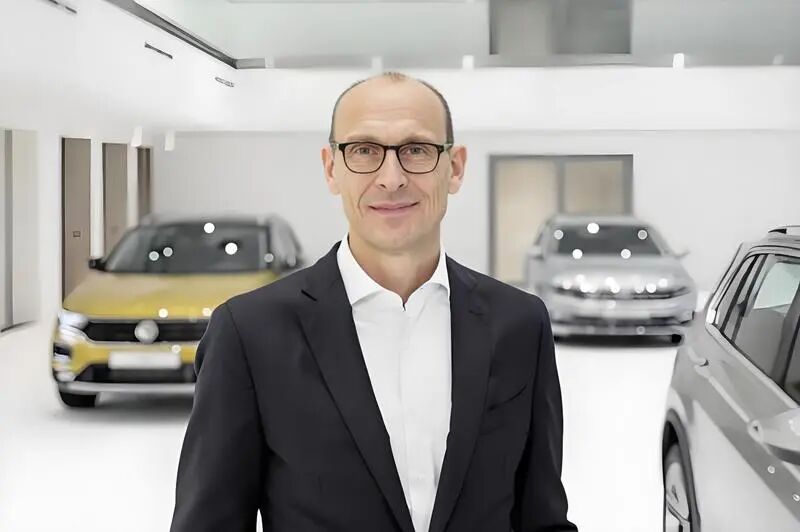
The rationale was that shortly after Brandstätter's arrival in China, he discovered that both internal decision-making processes and model update cycles lagged behind China, the world's most dynamic automotive market. To break this impasse, he issued a clear and urgent directive to all employees: the entire system must "accelerate." To better grasp that Chinese young people value not just safety and reliability but also intelligence and fun in their car purchases, he established the "Next-Gen Board," convening Chinese employees around 30 years old to directly participate in core strategic discussions.
It was during this process that Brandstätter recognized that facing fierce competition, going it alone was no longer viable. He not only actively engaged with local Chinese partners but also took a step that surprised even the German headquarters—proactively visiting China's new energy vehicle startups. In 2023, a photo of Brandstätter standing shoulder to shoulder with He Xiaopeng reverberated through the automotive circle, both beaming with broad smiles. The photo appeared casual, but behind it lay months of intensive negotiations.
At that time, Xpeng was at its nadir, with the G9 flopping, organizational restructuring underway, and sales declining. What Volkswagen sought was not financial investment but tangible technical capabilities—a solution that could swiftly address Volkswagen's shortcomings in smart cockpits and electronic electrical architectures. The two sides ultimately finalized cooperation on two fronts: 1. Jointly developing two Volkswagen-branded electric models based on the Xpeng G9 platform; 2. Collaborating on the development of the CEA electronic electrical architecture. One of the former models is today's ID. UNYX, while the latter has empowered product landings across three brands.
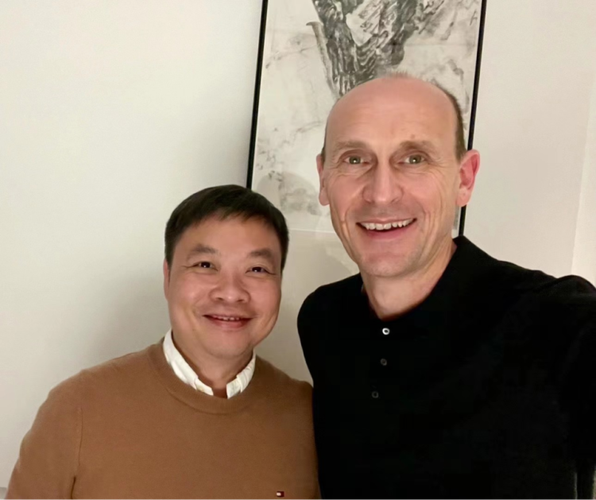
Brandstätter took more than one such photo. There were snapshots with the Horizon Robotics team, engineers at the Hefei R&D center, and leaders of the three joint ventures. Some label Brandstätter a "photo enthusiast," capturing moments everywhere he goes. Brandstätter utilized this approach to document and convey to the outside world every trace of Volkswagen's transformation. It is precisely behind these photos that Volkswagen can now outpace the Chinese market at Chinese speed.
Since assuming office in China in August 2022, Brandstätter has dedicated three years to rebuilding Volkswagen in China, prescribing a Chinese remedy to revive Volkswagen's fortunes in the Chinese market! Many argue that it is this remedy that has shown promising signs of alleviating the challenges faced by Volkswagen's three brands in the Chinese market, enabling Qi Zekai to confidently present these three strategic achievements on stage today.
2
Three Models, or Three "Strategic Missions" for Volkswagen?
Looking back, the most captivating aspect of this Brand Night is not a specific new model but how Volkswagen leveraged three models and three joint venture partners to simultaneously open three doors.
The Gold-Logo Volkswagen shoulders the purest yet riskiest mission. As Volkswagen's youngest joint venture in China and the passenger car joint venture with the highest equity stake, it bears no historical burdens, no fuel-powered vehicle base to defend, and no dealer inventory to manage. This lightweight status makes the Gold-Logo Volkswagen pivotal to Volkswagen Group's "speed" in China.
The ID. UNYX embodies this logic. As Volkswagen's first mass-produced model based on an 800V architecture, it took just 24 months from sketch to mass production. Among all new energy products adhering to Volkswagen's stringent validation standards and led by Volkswagen, it represents the fastest development cycle, reflecting Volkswagen's efficiency in integrating local supply chains in China.
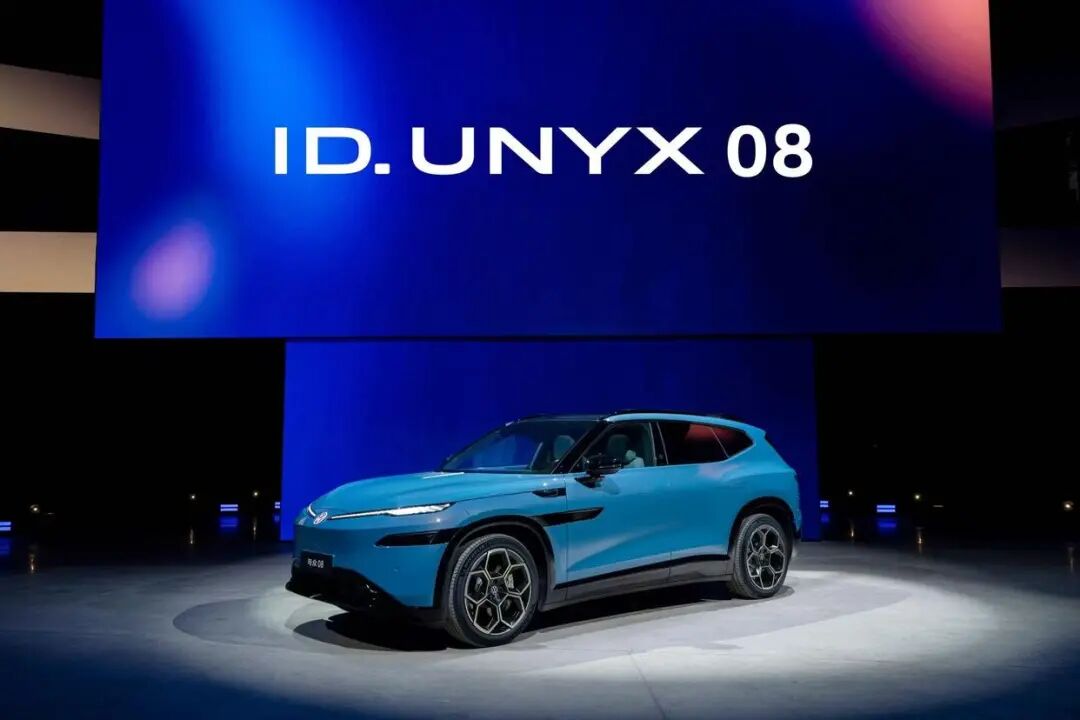
The ability to achieve this speed, besides deep cooperation with Xpeng in core architectures and intelligence and the transfer of R&D systems, lies significantly in the Gold-Logo Volkswagen's localization rate. From batteries, motors, and electric controls to chips, screens, and domain controllers, 80% originates from local suppliers. For instance, the ID. UNYX's intelligent driving solution, based on Horizon Robotics' Journey 6 series chips, is entirely developed by Chinese local teams, from chips to algorithms, perception to planning and control. This not only brings cost advantages to the Gold-Logo Volkswagen but also enhances response speed.
If the Gold-Logo Volkswagen symbolizes efficiency, then SAIC Volkswagen represents a profound response to local consumer demands. The ID. ERA 9X, as Volkswagen's first extended-range model in the Chinese market, essentially acknowledges the unique advantages of extended-range powertrains, which combine a pure electric experience with no range anxiety. Especially in the large family vehicle segment, data indicates that extended-range vehicles account for 35-40% of sales. If focusing solely on large family SUVs priced above 300,000 RMB, extended-range vehicles dominate the technical route, accounting for over 50%.
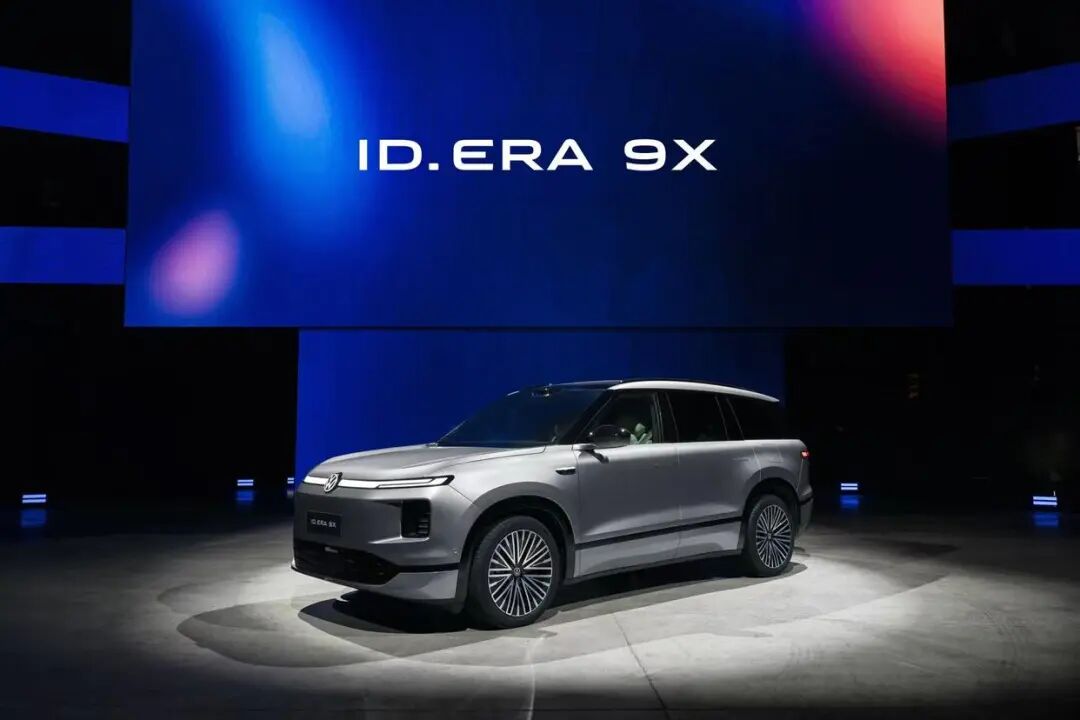
Currently, in the high-end extended-range SUV segment, Seres and Li Auto form a "duopoly," while the top ten in the broader market are almost entirely dominated by Chinese brands. Especially in the 300,000-400,000 RMB price range, there has been a lack of a strong competitor from a joint venture brand. SAIC Volkswagen's launch of the ID. ERA 9X fills this void.
The ID. AURA T6 from FAW-Volkswagen is the most "Volkswagen-like" of the three models. Sitting in the ID. AURA's cabin, one senses a unique "restraint." No exaggerated large screens, no flashy ambient lighting, no dazzling voice interactions. While many brands transform cars into fast-moving consumer goods, FAW-Volkswagen still insists that a car is, first and foremost, a car.
But the ID. AURA is not a conservative creation. In terms of intelligence, it also features Volkswagen's latest CEA electronic electrical architecture and the Core Cheng (CorePilot) high-end intelligent driving assistance system, known as China's version of FSD, offering seamless interaction and rich localized applications. As the first Volkswagen-branded pure electric SUV equipped with LiDAR, it also aims to compete in the top tier of intelligence. Importantly, these intelligent functions are seamlessly integrated into the driving experience rather than aggressively vying for the driver's attention.
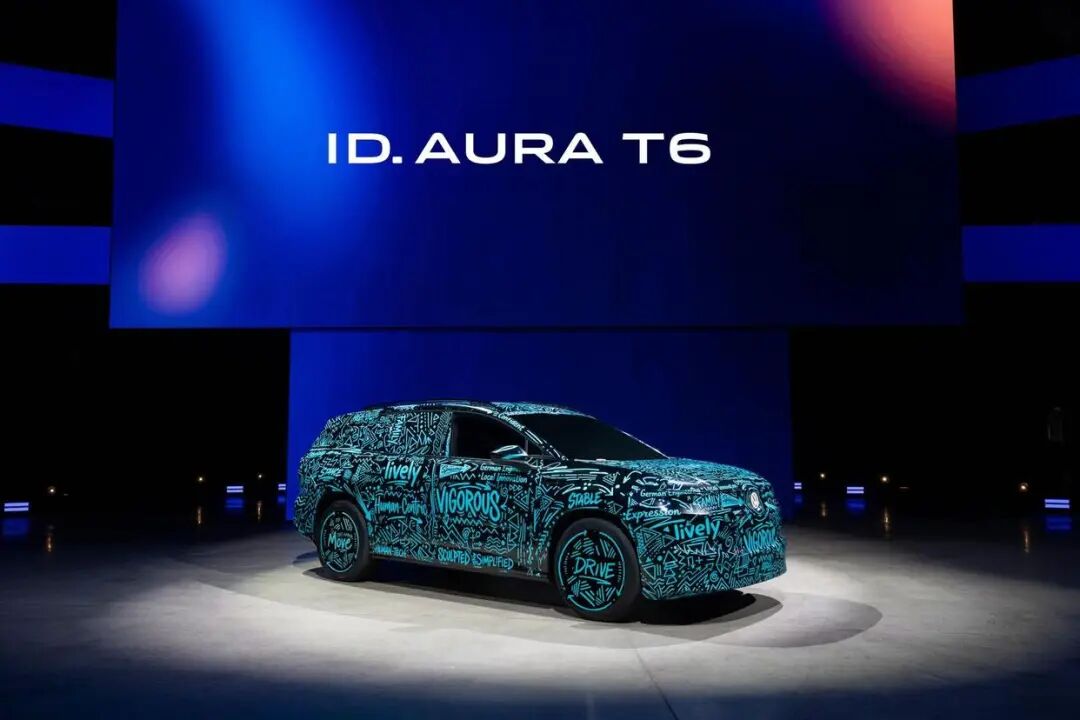
According to Sheng Yehua, Executive Deputy General Manager of FAW-Volkswagen Sales Co., Ltd., the ID. AURA series will encompass pure electric, extended-range, and plug-in hybrid powertrains, with two models launching in 2026 and the matrix gradually expanding. It is evident that the three Volkswagens—one pursuing speed, one safeguarding the base, and one setting the height—collectively bolster Volkswagen's competitiveness in the Chinese market through their distinct strategic missions.
3
Volkswagen's "Short-Term Patience" and "Long-Term Strategic Vision" in China
The past two years have been a unique "period of patience" for Volkswagen China.
The older generation of fuel vehicles neared the end of their lifecycle, while the new generation of electrified products required time to take over. During this transitional phase, Volkswagen China opted to defend: defend scale, defend profits, defend channels, defend brand recognition!
Facing market price wars and the rise of domestic brands, Volkswagen in China, with its three brands under one umbrella, did not blindly follow but proactively adjusted its pace, focusing on more profitable fuel vehicles.
Pushed by joint venture partners, it maintained price stability for key models like the Lavida and Passat while addressing the intelligence shortcomings of fuel vehicles through strategies like "one price for all" and "equal intelligence for fuel and electric." While most joint venture brands halted fuel technology iterations, Volkswagen became one of the few multinational automakers still enhancing intelligence in fuel vehicles. This explains why, despite an 8% year-on-year decline in total Volkswagen sales in 2025, its 22% market share in fuel vehicles reached a historical peak.
Simultaneously, amid the struggles of traditional dealerships, Volkswagen instilled confidence in channel partners through innovative models and firm investments. It introduced a "lightweight" channel model, lowering the barrier for dealers to establish stores. For example, initial construction costs for Type III stores were reduced by 87%, revitalizing existing assets through flexible forms like factory-store separation and workshop sharing.
This was clearly a period of "straining hard," where everyone within the organization understood that the current silence was for a longer-term eruption. What Brandstätter led the team to do was not to rush for temporary success but to patiently lay every foundation.
In 2023, driven by Brandstätter, Volkswagen Technology (China) Co., Ltd. (VCTC) was established, building a vehicle development system from scratch. This is Volkswagen's largest R&D center outside Germany. Coupled with the opening of Volkswagen's first test workshop in Hefei last November, VCTC completed its final expansion phase, marking its ability to independently develop and verify new vehicle platforms outside Germany for the first time.
Building on this, VCTC spearheaded the development of the CMP compact pure electric platform tailored for the Chinese market, with a R&D cycle about 30% shorter and costs over 20% lower than global platforms. From this point onward, "In China, For China" ceased to be a mere slogan but became Volkswagen's most precious asset in China.
Now, after four years of accumulation and a single launch, Volkswagen Group CEO Brandstätter steps back, and Qi Zekai takes center stage. Some argue that a launch event that should have showcased determination has become a mild report; a debut that should have reshaped the landscape lacks the crucial confidence and weight.
Because all the toughest strategies, most painful decisions, riskiest moves, and heaviest pressures are borne by those offstage. How to proceed with electrification, merge channels, set prices, balance north and south, and compete in the premium segment... the person on stage doesn't need to worry, doesn't need to decide, and doesn't need to face public scrutiny.
End
-
![]()
AI Stranded at the Dock of the Era
-
![]()
New Progress! OFILM's Acquisition of Minority Stake in OFILM Microelectronics Approved
-
![]()
From Setbacks to a Potential 1.6 Billion Yuan Deal: What Has Seer Technology Achieved?
-
![]()
Why Has a Former Bottom-of-the-Barrel Destination Become a New Hotspot for Chinese Brands Going Global? | Xiaguang FM
-
![]()
The Hidden Battle of 618 Efficiency: Kunshan Asia No.1, AI, and JD.com's Logistics Performance This Year
-
New Energy Vehicle Safety Baseline Further Strengthened: MIIT Initiates 2026 Safety Hazard Inspections
-
![]()
China Office Intelligent Agent Platform Market Research Report 2026
-
![]()
Analysys: China's GEO Service Provider Market to Reach Approximately 1.6 Billion Yuan in Q1 2026, with Top 10 Industry Concentration Below 10%