[Weekly Auto Talk] Chinese Electric Vehicles Surge in Overseas Sales, Propelled by the 'Unexpected Push' from 'The Donald'
 04/13 2026
 641
641

Lead-in
Introduction
Opportunities often favor the prepared.
This week, the China Passenger Car Association (CPCA) officially released its March sales figures, revealing that the Chinese auto market has yet to fully rebound.
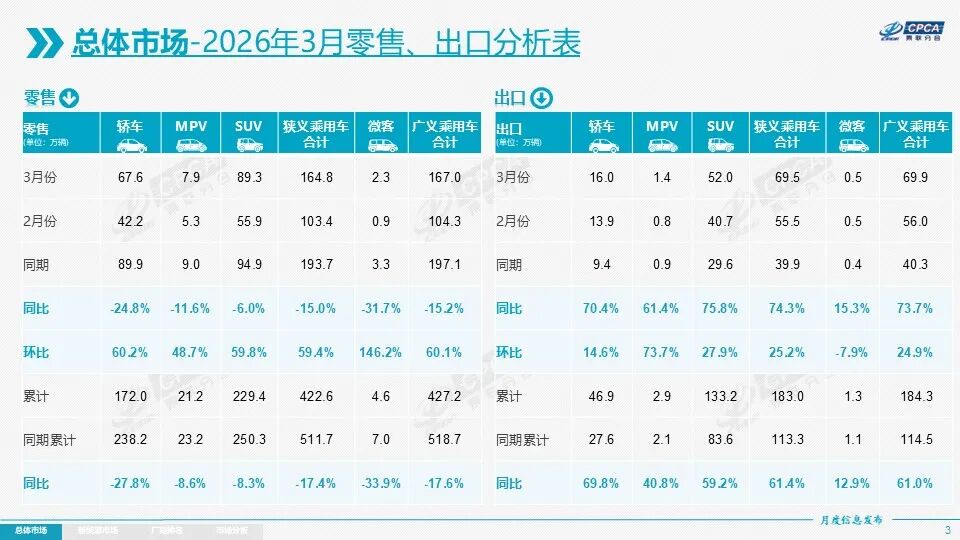
Nationwide, retail sales of passenger vehicles reached 1.648 million units, down 15.0% year-on-year but up 59.4% month-on-month. Among these, new energy passenger vehicle sales hit 848,000 units, down 14.4% year-on-year but up 82.6% month-on-month. The corresponding market penetration rate just exceeded the 50% mark.
In contrast, if one were to pinpoint the most remarkable segment in March, it would undoubtedly be the overseas expansion of new energy passenger vehicles.
With a total of 349,000 units exported, marking a 139.9% year-on-year increase and a 29.6% month-on-month rise, these vehicles accounted for 50.2% of passenger vehicle exports, up 13.7 percentage points year-on-year.
Undoubtedly, these figures speak volumes—Chinese electric vehicles are indeed flying off the shelves in overseas markets. Over the past week, I believe everyone has come across various related news stories.
Take BYD as an example. At one of its dealerships in Australia, a star salesperson sold over 100 new vehicles in March alone, with all the showroom display models completely sold out.
There are even reports suggesting that due to the strong overseas demand, BYD has directly raised its export sales target for the year from 1.3 million units to 1.5 million units.
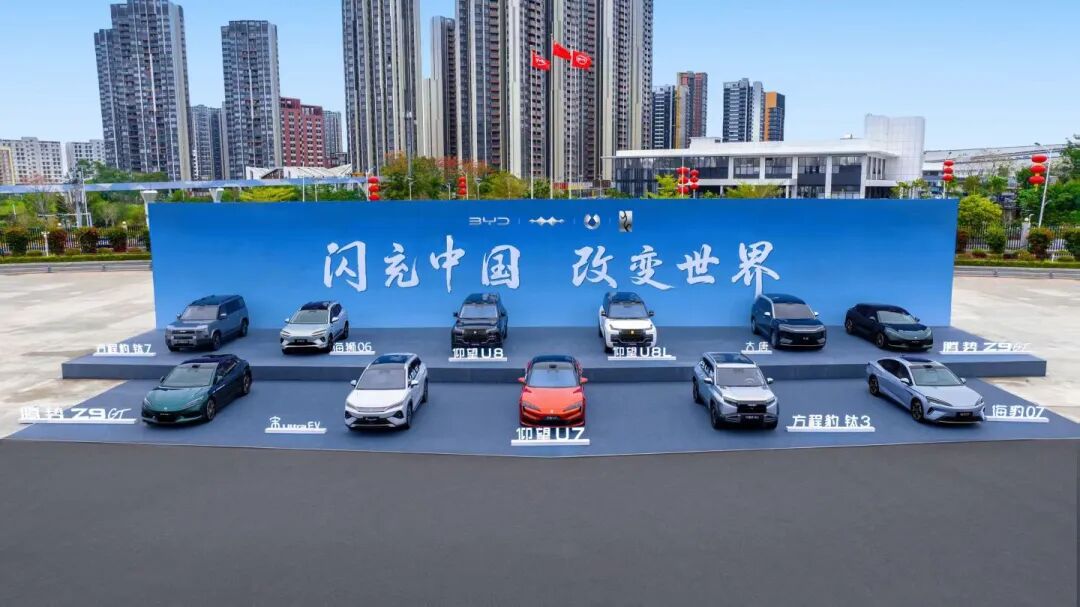
It is reported that in addition to Australia, countries such as Thailand, Singapore, the Philippines, and Indonesia have witnessed a surge in orders for electric vehicles from nearly 10 domestic brands, including BYD, Changan, Chery, XPENG, GAC, and Leapmotor. Some dealerships have seen order volumes in the past two weeks equal to a month's sales in the past.
Taking Italy as another case, Leapmotor, with 5,513 registered vehicles, clinched the top spot in pure electric vehicle sales, holding a 44.6% market share in the local pure electric retail passenger vehicle market.
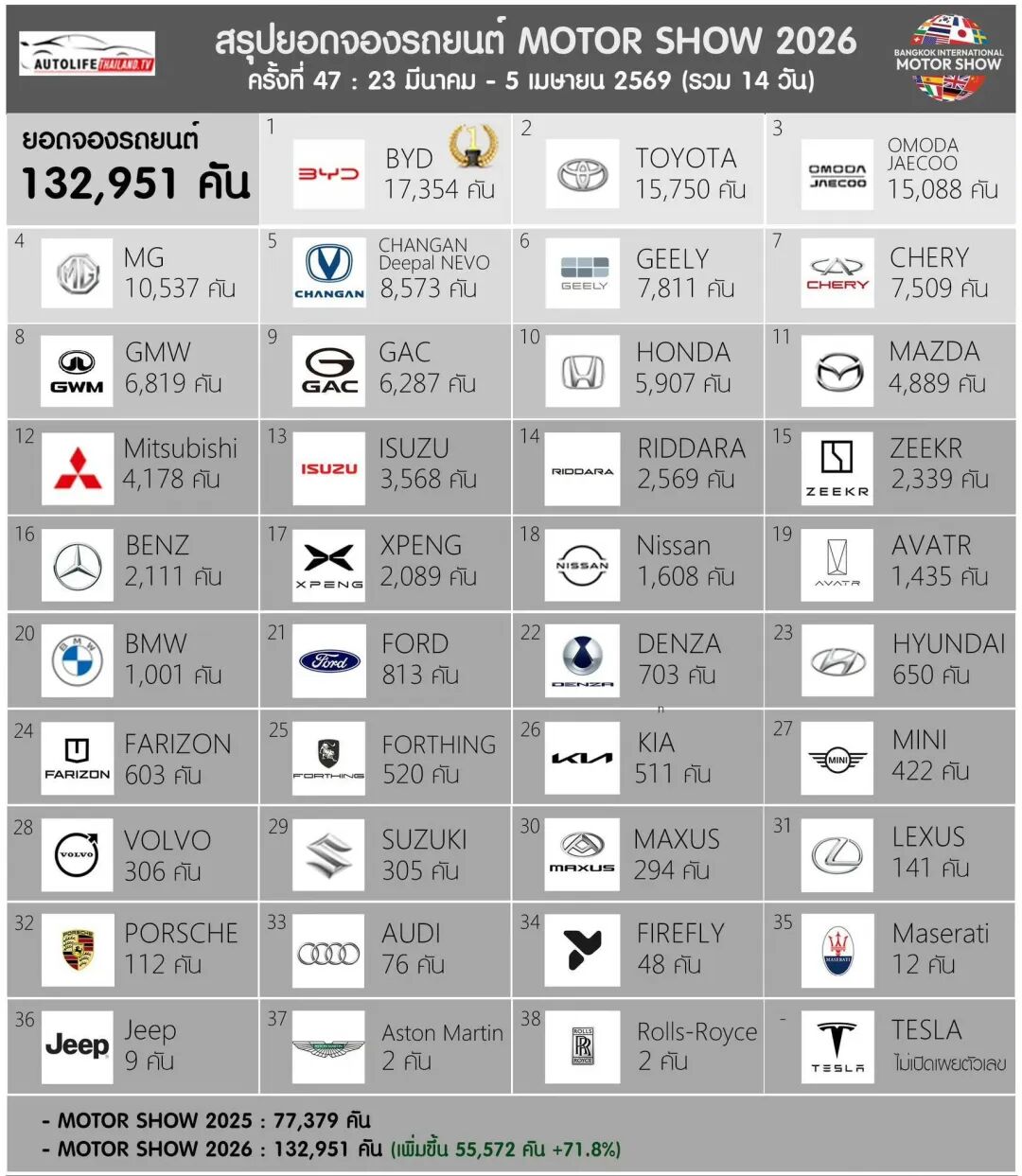
At the recently concluded Bangkok International Auto Show in Thailand, cumulative new vehicle orders reached 132,000 units, a staggering 71.8% year-on-year increase from 77,379 units in 2025, with a net increase of over 55,000 units.
Chinese automakers secured over 90,000 orders, accounting for 67% of the total and dominating 8 out of the top 10 brand rankings. In contrast, Japanese automakers, long deeply rooted in Southeast Asia, only received 36,000 orders, accounting for just 27% of the total.
The total number of orders for Chinese automakers is nearly three times that of Japanese automakers. Behind this overwhelming performance, electric vehicles have played an indispensable role.
In the first quarter, focusing on the European market, the Chinese electric vehicle fleet also accelerated its expansion.
In the core 14 countries, including the UK, Norway, the Netherlands, Spain, Sweden, Denmark, Germany, Italy, Switzerland, Ireland, Finland, Austria, Portugal, and France, sales of new energy passenger vehicles exceeded 65,000 units, marking a 109% year-on-year increase, with the market share rising from 6.8% last year to 14.9%.
If we include the four Chinese-controlled brands—Volvo, Polestar, Smart, and Lotus—the sales of Chinese new energy passenger vehicles in the European market in the first quarter exceeded 95,000 units, with the market share increasing from 13% last year to 21.6%, capturing more than one-fifth of the European electric vehicle market.
Shifting our gaze back to the overall picture, according to data released by the CPCA, China's total passenger vehicle exports reached 1.26 million units in the first quarter. This figure propels us past Japan for the first time, securing the top spot in global automotive exports.
More critically, exports of new energy passenger vehicles accounted for over 40%, becoming the core engine driving the growth of total exports. Especially against the backdrop of a year-on-year decline in domestic retail sales, overseas markets have become the most robust "power source" for Chinese automakers.
Throughout March, you may have often heard rumors about various domestic automakers planning to continue building factories in Europe, South America, and Southeast Asia. Judging from these signs, they are clearly gearing up for a major push.
This raises a new question: "Why have Chinese electric vehicles suddenly become so popular in overseas markets?"
In fact, the reason is quite simple: oil prices are too high.
Although the Middle East conflicts have somewhat subsided, there are still many uncertainties. The Strait of Hormuz, which controls the lifeblood of international oil prices, experiences daily disruptions and blockades. Against this backdrop, global gasoline vehicle owners are undoubtedly suffering.
The surge in vehicle operating costs due to high oil prices has become a key factor driving them to switch to electric vehicles. After all, who wants to lose money?
Especially in this global economic environment of downgraded consumption, from business elites to ordinary people, everyone is becoming more and more cost-conscious. The significant advantage of electric vehicles in terms of overall costs is becoming increasingly prominent.
Taking Australia, mentioned earlier, as an example, with its vast land and sparse population, household vehicle usage is high, and soaring oil prices have made operating costs spiral out of control.
An ordinary household gasoline vehicle consumes 8 liters of fuel per 100 kilometers, costing approximately 20 Australian dollars per 100 kilometers at current oil prices. In contrast, a BYD pure electric vehicle costs only about 4 Australian dollars per 100 kilometers in electricity, representing a cost difference of fivefold.
Furthermore, it is worth noting that electricity prices in Australia have remained relatively stable, and the penetration rate of household photovoltaic facilities is extremely high. Many users can charge their vehicles for free using solar energy, bringing vehicle operating costs close to zero.
Compared to the immense anxiety caused by soaring oil prices and supply shortages, the low cost and stability of electric vehicles precisely address the consumption pain points of local users.
Many Chinese automakers, including BYD, with their rich lineup of new energy passenger vehicle brands ranging from SUVs to sedans, including MPVs and pickup trucks, have naturally become highly sought after.
Looking back at history, every global-scale oil crisis has had a profound impact on the automotive industry. Previously, Japanese automakers seized fleeting opportunities to grow and expand globally.
Today, a similar scenario is unfolding, with a broader stage awaiting Chinese electric vehicles. The oil price shocks caused by the Middle East geopolitical conflicts have objectively accelerated the popularization of electrification.
The advantages of Chinese electric vehicles in terms of products, technology, costs, and supply chains allow us to reap the greatest benefits. Of course, all of this is the result of long-term strategic investments.
Recently, I came across a somewhat tongue-in-cheek viewpoint: "We should sincerely thank 'The Donald' Trump from across the ocean for his unexpected boost. A sudden war has completely activated Chinese electric vehicles."
At first glance, there is some truth to it, but opportunities are always reserved for those who are prepared.
Editor-in-Chief: Shi Jie Editor: Wang Yue
THE END
-
![]()
AI Stranded at the Dock of the Era
-
![]()
New Progress! OFILM's Acquisition of Minority Stake in OFILM Microelectronics Approved
-
![]()
From Setbacks to a Potential 1.6 Billion Yuan Deal: What Has Seer Technology Achieved?
-
![]()
Why Has a Former Bottom-of-the-Barrel Destination Become a New Hotspot for Chinese Brands Going Global? | Xiaguang FM
-
![]()
The Hidden Battle of 618 Efficiency: Kunshan Asia No.1, AI, and JD.com's Logistics Performance This Year
-
New Energy Vehicle Safety Baseline Further Strengthened: MIIT Initiates 2026 Safety Hazard Inspections
-
![]()
China Office Intelligent Agent Platform Market Research Report 2026
-
![]()
Analysys: China's GEO Service Provider Market to Reach Approximately 1.6 Billion Yuan in Q1 2026, with Top 10 Industry Concentration Below 10%