BMW Publicly Fires Shots! Is BYD's Mega Flash Charging Killing Batteries?
 04/13 2026
 627
627
German Luxury Automaker Questions Megawatt Flash Charging's Impact on Battery Reliability; BYD Fires Back with 'Lifetime Warranty' in High-Stakes EV Showdown
Text / NE-SALON New Energy Club
"It's like stretching a blanket—pull too hard on one side, and the whole thing deforms." On April 1, 2026, BMW's battery chief Markus Falbmer launched a 'blanket theory' attack on BYD. As BYD unveiled its '5-minute recharge' megawatt flash charging technology, the German luxury automaker openly questioned: Is battery lifespan being sacrificed for extreme speed? A survival-of-the-fittest tech war is erupting over a 21-minute charging gap.
01
Public Confrontation: 800V Conservatives vs. 1,500kW Radicals
BMW didn't whisper behind closed doors—it chose open confrontation.
On April 1, 2026, BMW Group's battery production chief Markus Falbmer, in an exclusive interview with Australia's Carsales, sharply criticized BYD's megawatt flash charging: Pursuing ultimate charging speed inevitably compromises battery durability, range, and long-term reliability.
"We could boost charging speed too, but only by degrading other critical battery performance metrics," Falbmer argued. His 'blanket theory' went viral—optimizing one metric forces overall performance compromises.
BMW's Neue Klasse project leader Mike Reichelt added: "We guarantee quality and safety—no compromises."
These remarks ignited industry debate after domestic media coverage around April 7. This isn't technical discussion; it's anxiety projection from a market share defense war.
02
Numerical Showdown: The 21-Minute vs. 5-Minute Lifeline Gap
The numerical divide between the two sides is staggering.
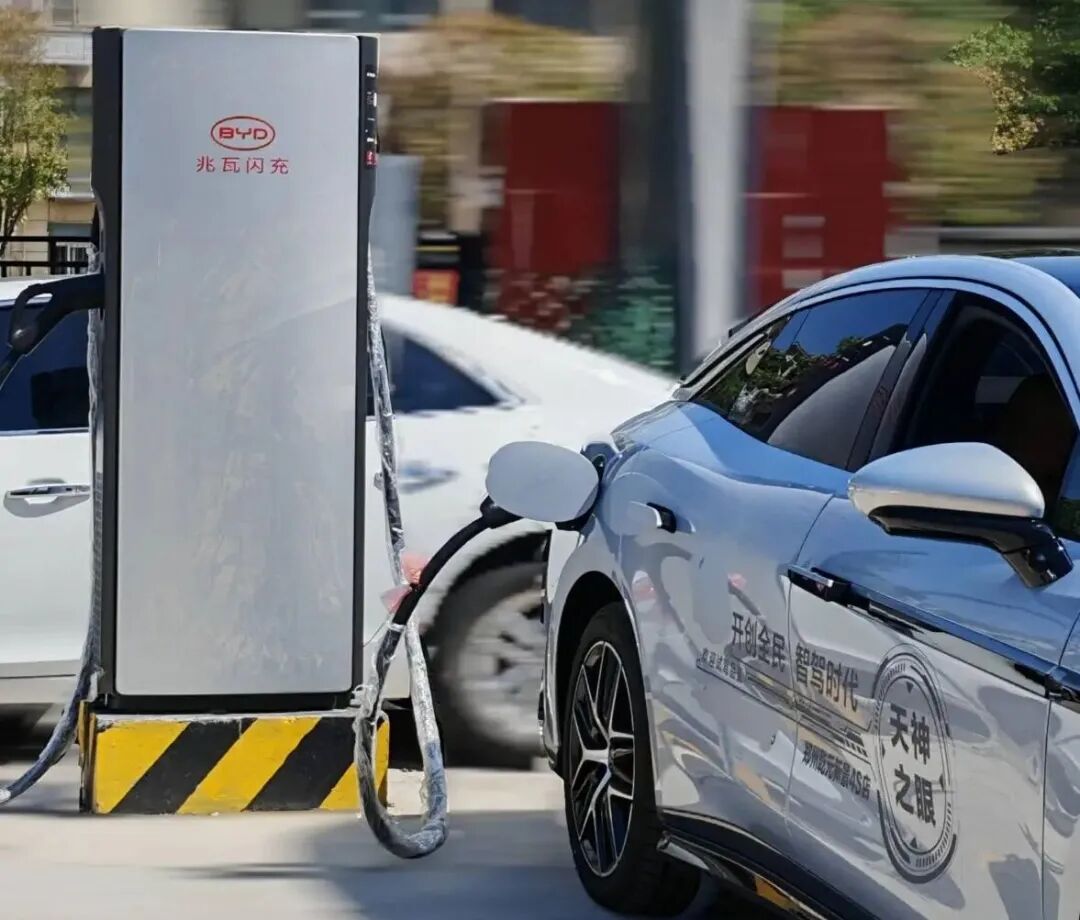
BYD's megawatt flash charging peaks at 1,500kW on a 1,000V platform, delivering 10%-70% SOC in 5 minutes. At normal temperatures, that's ~500km range (CLTC) or ~400km (WLTP) in 5 minutes. Even at -30°C, it takes just 12 minutes.
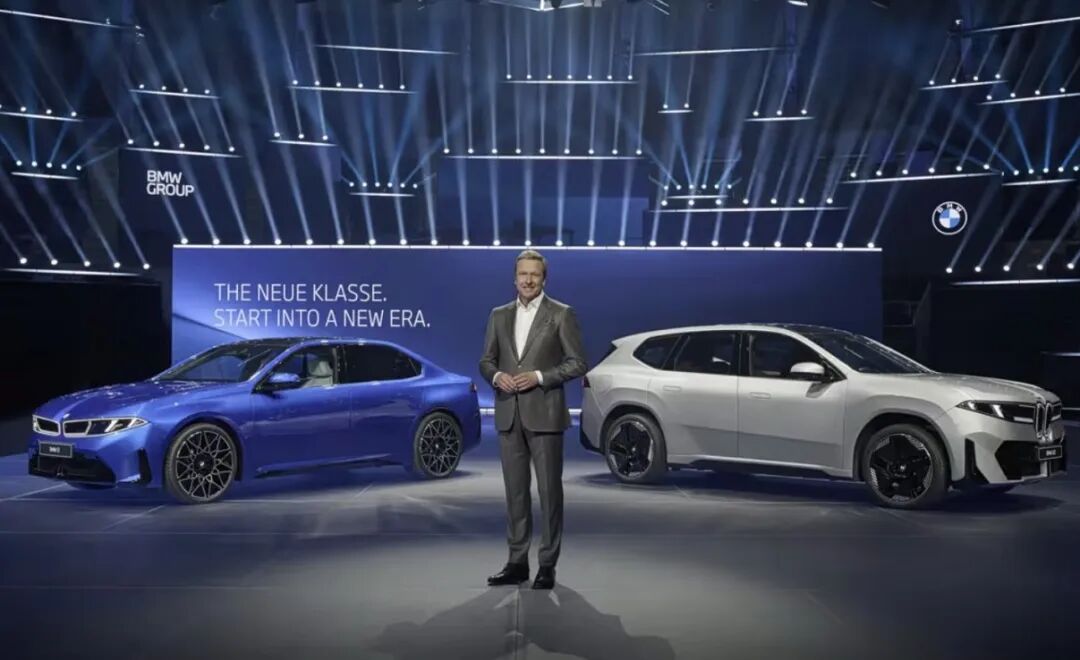
BMW's upcoming Neue Klasse platform uses 800V architecture with 400kW peak power, requiring 21 minutes for 10%-80% charging and ~400km in 10 minutes.
Falbmer calls this the "optimal balance of safety and efficiency." For BYD, it's technological generational superiority.
More critical is the infrastructure arms race. Recent reports reveal BYD registered the "BYD Flash Charge" trademark (Class 37) and plans 20,000 stations in China by end-2026, with 4,239 deployed by March 2026. Each station uses "storage-charging integration" with 338kWh cabinets, costing ~1/5 to 1/6 of NIO's battery swap stations (2-3 million yuan).
As BYD prices its Denza Z9GT at €115,000 (~900,000 yuan) in Europe—nearing BMW's segment—technological authority is replacing cost-effectiveness as China's brand offensive weapon.
03
Lifespan Gamble: 89.2% Capacity Retention vs. 77.5% Warranty
The real battleground is battery longevity.
BYD claims its second-gen Blade Battery (LMFP chemistry, 190-210Wh/kg cell energy density) maintains 89.2% capacity after 500 equivalent 300,000km flash charge cycles—even outperforming slow-charging controls (86.7%).
Based on this, BYD offers the industry's most aggressive warranty: Free replacement if capacity falls below 77.5% within 6 years/150,000km, plus lifetime cell warranty. This improves on Gen 1's 75% threshold by 2.5 percentage points.
Skepticism remains fierce. Guoke New Energy Ventures' founding partner Fang Jianhua notes: "Physical electrode degradation and electrolyte aging can't be fully eliminated by technology. The claim of 'no lifespan impact' needs verification."
Industry analyst Ye Zhengping asserts from basic physics: "Ultra-high current charging inevitably causes irreversible capacity loss. 10C charging's microscopic wear can't theoretically be zero."
The warranty policy is seen as "hedging concerns with promises"—during early flash charging network adoption, limited user frequency minimizes battery damage, making warranty costs far outweighed by sales gains.
This is a trust cost calculation, pitting laboratory optimizations against real-world conditions.
04
Route War: Fast Charging Revolution Reshapes Industry
The tech route battle is reshaping industry dynamics.
Technically, dramatically boosting charging speed typically requires reducing battery energy density while demanding extreme thermal management. BYD's second-gen Blade Battery achieves ~162Wh/kg system energy density—a 15-50% improvement over Gen 1—but 10C+ charging's long-term cell impact lacks large-scale commercial validation.
This controversy reveals industry's core dilemma: Chase ultimate charging speed, or balance long-term reliability, cost control, and infrastructure compatibility? While liquid batteries achieve "gas station-like" recharging via megawatt flash charging, solid-state batteries' development logic faces new scrutiny—despite being touted as safety and energy density solutions, flash charging breakthroughs are altering tech route competition timelines.
Notably, BYD's validation includes extreme tests like 500-cycle flash charging with simultaneous charging-needle penetration and quad-cell thermal runaway, but third-party verification remains limited.

Behind Falbmer's blanket theory lies €2.2 billion in profit pain. BMW delivered 714,530 vehicles in China in 2024, down 13.4% YoY—its steepest global decline. Group pre-tax profit fell 35.8% to €10.971 billion, with China pricing pressure reducing profits by >€2.2 billion—over half the group's profit drop.
When technological conservatism meets sales collapse, questioning rivals becomes the last weapon to defend moats.
Conclusion
The blanket vs. lightning gamble has no right answer—only survival choices.
BMW's caution embodies a century-old luxury brand's survival wisdom; BYD's aggression reflects technological breakthrough necessity. As 1,500kW currents flood batteries, the true test isn't just cell physics but consumer trust thresholds for emerging tech.
Markets need real choices, not single answers. Five-year battery degradation data will ultimately judge this tech route war—the coldest yet fairest verdict. Source: XF
-
![]()
AI Stranded at the Dock of the Era
-
![]()
New Progress! OFILM's Acquisition of Minority Stake in OFILM Microelectronics Approved
-
![]()
From Setbacks to a Potential 1.6 Billion Yuan Deal: What Has Seer Technology Achieved?
-
![]()
Why Has a Former Bottom-of-the-Barrel Destination Become a New Hotspot for Chinese Brands Going Global? | Xiaguang FM
-
![]()
The Hidden Battle of 618 Efficiency: Kunshan Asia No.1, AI, and JD.com's Logistics Performance This Year
-
New Energy Vehicle Safety Baseline Further Strengthened: MIIT Initiates 2026 Safety Hazard Inspections
-
![]()
China Office Intelligent Agent Platform Market Research Report 2026
-
![]()
Analysys: China's GEO Service Provider Market to Reach Approximately 1.6 Billion Yuan in Q1 2026, with Top 10 Industry Concentration Below 10%