In-Depth | Xiaomi Sets Another Record at Nürburgring, but What It Needs Most Isn’t Lap Time—It’s User Confidence
 05/20 2026
 482
482
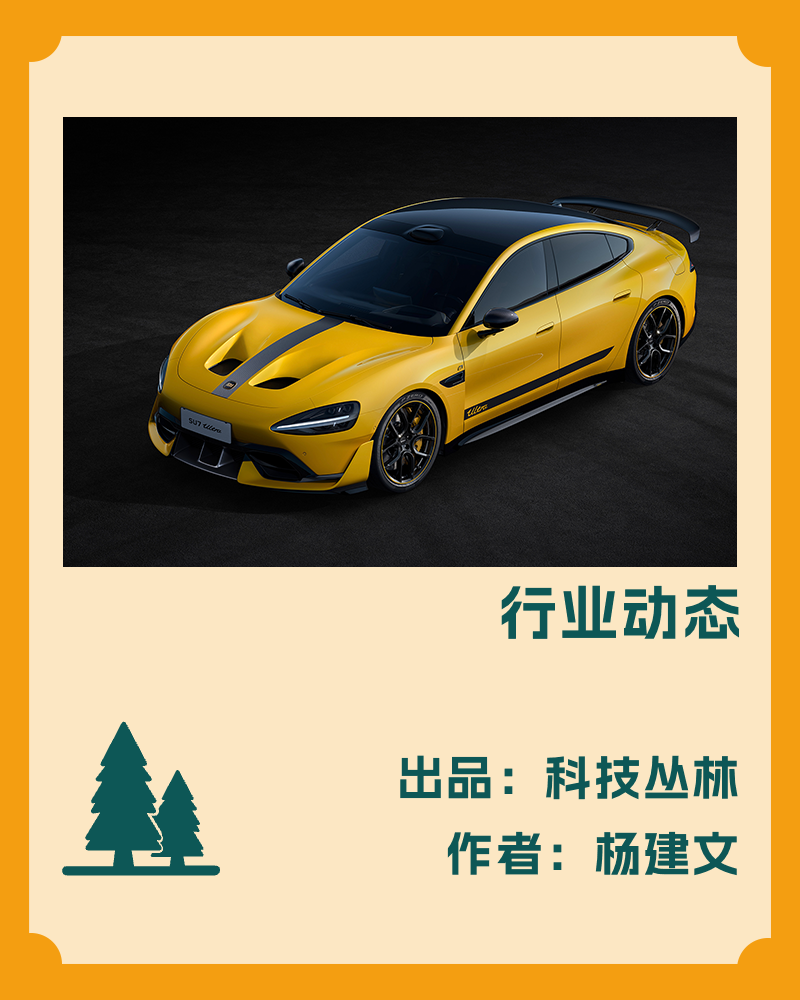
Let’s talk about Xiaomi Auto today.
However, the focus isn’t on the YU7 GT’s lap time but rather on the Xiaomi SU7 Ultra air duct incident (the drilled hood case).
This matter has seen new developments.
We’ve seen two different court rulings.
In February 2026, the Changsha Kaifu District Court ruled that the case did not constitute false advertising, sales fraud, or breach of contract, dismissing all of the car owner’s claims (including double refund of the deposit and triple compensation).
The corresponding basis was that the purchase agreement only specified optional accessories and did not explicitly confirm the air duct function as advertised; Xiaomi’s submitted wind tunnel report showed a slight increase in downforce (a reduction in the front axle lift coefficient by approximately 0.002 and an increase in the drag coefficient by approximately 0.001).
In May 2026, the Jinan Licheng District Court ruled that Xiaomi Auto had engaged in "exaggerated advertising," violating the principle of good faith, and ordered the cancellation of the purchase contract and the refund of the consumer’s 20,000 RMB deposit. However, it dismissed the car owner’s claim for "refund and compensation triple the amount," stating that it did not constitute fraud under the law.
The corresponding basis was that Xiaomi’s advertising language was imprecise, making it liable for contractual negligence; there was no intentional fabrication of facts or deliberate concealment of the truth, so it did not constitute consumer fraud.
Two cases, different outcomes.
However, it should be noted that China operates under a two-instance finality system, and both rulings were from first-instance courts, not the final result.
In Changsha, the car owner has appealed to the Changsha Intermediate People’s Court, and the case has entered the second-instance procedure.
In Jinan, the car owner stated, "I’m very happy and won’t appeal further," while Xiaomi has not explicitly stated whether it will appeal.
Overall, more than a hundred people are still pursuing related lawsuits, and the judicial process for this incident has not yet fully concluded.
The two rulings also provide important references for subsequent cases.
Taking this opportunity, let’s discuss
Now, enjoy.
01
A "Defeat" for the Brand
Two rulings, two interpretations, reflecting the gray areas in legal application regarding the same set of facts.
The Jinan court focused more on the fact that the advertising language "caused consumer misunderstanding," while the Changsha court emphasized that the company had fulfilled its disclosure obligations and that the product was not entirely without function.
This divergence itself illustrates that Xiaomi Auto’s actions fall into a legally "gray area"—pushing the line but not crossing it.
However, for the market and consumers, a legal ruling of "not constituting fraud" is entirely different from the brand perception that "this was the wrong thing to do."
Although there is room for appeal in the second instance, the reality is that even if the final outcome is "not constituting false advertising, sales fraud, or breach of contract,"
it’s still a double loss for Xiaomi.
First, it loses reputation.
Second, it loses user trust.
The current cliff-like drop in SU7 Ultra sales is proof of this.
I truly regret this outcome.
A perfectly good high-end card was played so poorly.
Throughout this incident, Xiaomi Auto’s approach has undoubtedly been a demerit.
It was a textbook-level PR disaster.
First, Lei Jun’s ambiguous and evasive attitude.
After the incident, Lei Jun’s response was to repeatedly modify the descriptions of the air duct on social media, with a core strategy of four words: avoid answering. He neither admitted the issue directly nor provided a convincing explanation to users. More intriguingly, in court, Xiaomi’s legal team directly refuted Lei Jun’s previous statement that "I don’t understand technology," using it as a "viewpoint" to rebut the exaggerated advertising allegations.
This move seemed "clever" but was actually foolish.
Why?
Because Xiaomi Auto’s current visibility and attention largely stem from Lei Jun himself.
He is Xiaomi Auto’s biggest IP and the anchor of user trust.
Denying Lei Jun’s statements in court is tantamount to cutting off the brand’s foundation with a knife.
And Lei Jun himself? He never stepped forward to give users a straightforward and sincere answer.
This absence was interpreted by many users as "evasion" or even "sneakiness."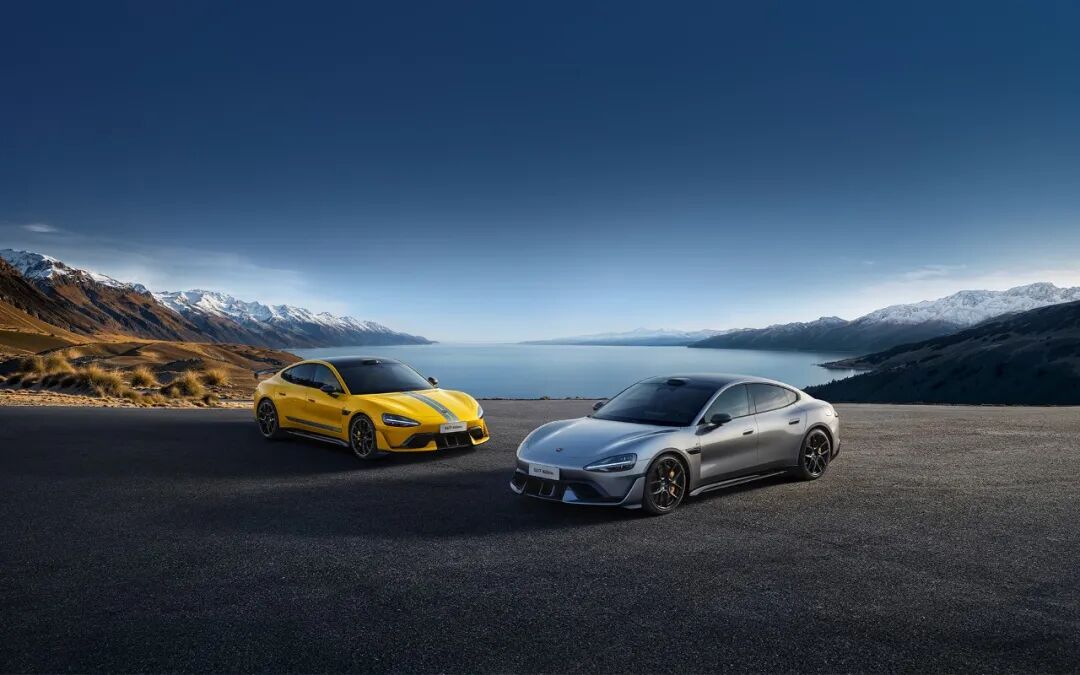
Second, the official apology lacked sincerity.
On May 7, 2025, Xiaomi Auto issued an apology statement, admitting that "information was not expressed clearly enough."
The proposed solution was:
1. For undelivered orders, a limited-time configuration change service would be offered, allowing a switch back to the aluminum front hood.
2. For users who had taken delivery or locked in orders for the carbon fiber dual-air-duct front hood before the end of the limited-time offer (by 23:59:59 on May 10), 20,000 credits would be given as a gesture of sincerity.
20,000 credits equate to 2,000 RMB.
So, what is the price of the SU7 Ultra? It starts at a hefty 529,900 RMB.
Yet, Xiaomi Auto only offered 2,000 RMB as an apology—not even enough to cover the purchase tax on the 42,000 RMB hood.
For users who can afford a car costing over 500,000 RMB, this isn’t compensation—it’s dismissal.
To some extent, it’s an insult.
Do buyers of the SU7 Ultra care about 2,000 RMB?
The least they lack is money.
They buy this car for a sense of identity, a value proposition, and the emotional premium of "I support high-end domestic products."""You’re offering 20,000 credits as "compensation," essentially telling them: your trust is worthless.
So, Xiaomi and Lei Jun didn’t just fail to solve the problem—they created a bigger one.
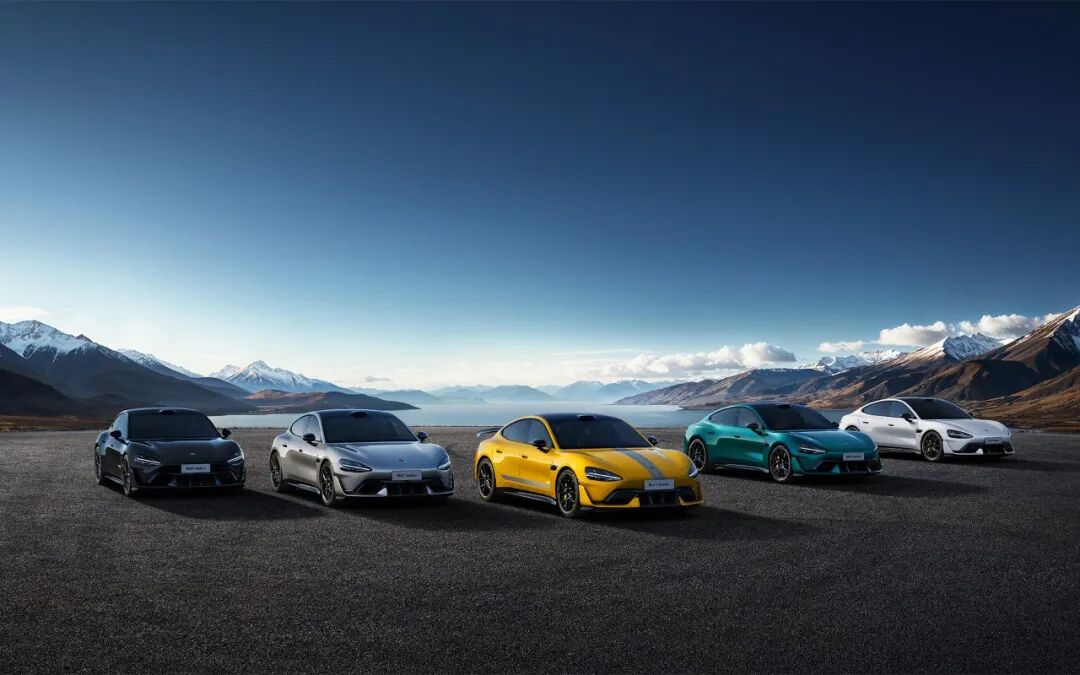
Xiaomi Auto also attempted to make amends.
In October 2025, it announced free aerodynamic upgrades for owners who had opted for the carbon fiber dual-air-duct front hood.
The free upgrade service officially launched in March this year, completely resolve [chèdǐ jiějué] (completely resolving) the air duct controversy. However, it was too late. By then, hardly anyone was buying anymore.
So, what should the correct approach have been?
In fact, Zhang Xue, the founder of five-time champion Zhang Xue Motorcycle, provided the most reasonable solution: "If I were Lei Jun, I would have given users two choices when the drilled hood incident erupted: 1. Refund the price difference for the hood (42,000 RMB for the optional feature); 2. Allow users who hadn’t taken delivery to cancel their orders unconditionally." Zhang Xue said, "If these two things were done well, the points others could use to criticize you would decrease significantly, and it wouldn’t affect you at all because you’re not short on orders.""""Refunding all hoods would cost how much? That money is negligible compared to the impact on reputation."
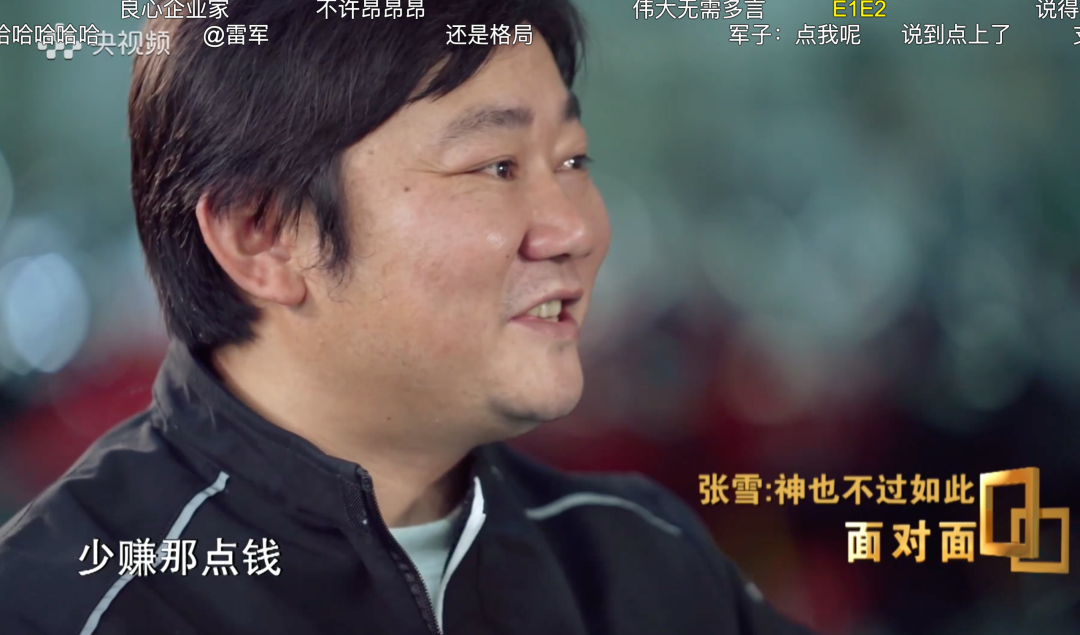 (Image from a CCTV interview screenshot)
Unfortunately, Xiaomi Auto and Lei Jun didn’t see it that way. In reality, the SU7 Ultra itself has no issues with product strength. Its performance on the Nürburgring track proves it has the potential to become a new benchmark for domestic high-performance vehicles.
Its purpose was to help Xiaomi shed its "cost-effectiveness" label, redefine the "new luxury car" standard, and achieve brand elevation and upward breakthroughs.
However, Xiaomi Auto has now pushed away what should have been its loyal, high-value core users.
At the same time, Xiaomi Auto’s gross profit margin has declined:
2025 Q1: 23.2%
2025 Q2: 26.4%
2025 Q3: 25.5%
2025 Q4: 22.7%
Why did Xiaomi Auto’s gross profit margin reach 26.4% in Q2 2025?
Largely because the SU7 Ultra raised the brand’s premium capability.
It acted as a flag, telling the market that "Xiaomi Auto can sell for over 500,000 RMB, and people are buying it."""The subsequent gradual decline in gross profit was also due to the drop in sales proportion after the air duct incident’s impact.
Now, the SU7 Ultra’s monthly sales are in the double digits—a clear failure. This isn’t just a product failure but also a failure of high-end storytelling.
The flag has fallen, and Xiaomi has shattered the high-end premium it had so painstakingly built.
02
YU7 GT: Retracing the Same Path
Now, the YU7 GT has arrived.
On May 19, the YU7 GT set a 7-minute 34.931-second mass production [liàngchǎn] (mass-production) SUV lap record at the Nürburgring Nordschleife (Nürburgring), breaking the fastest SUV lap record.
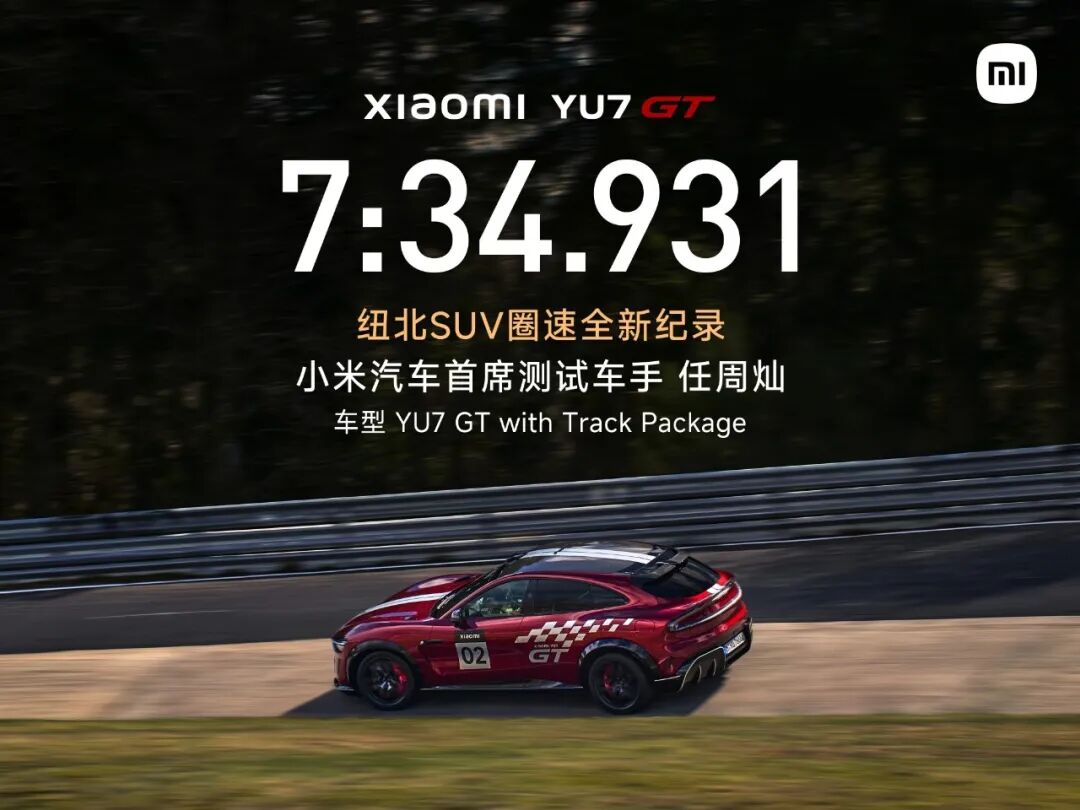
Does this scene seem familiar?
In June 2025, the SU7 Ultra set a 7-minute 4.957-second mass production [liàngchǎn] (mass-production) electric vehicle lap record at the Nürburgring, becoming the fastest mass-production electric vehicle in Nürburgring history at the time (later surpassed by the Porsche Taycan Turbo GT (equipped with the Manthey racing package) with a time of 6 minutes 55.533 seconds).
Xiaomi Auto is using the same core narrative framework for high-end marketing with the YU7 GT.
For the YU7 GT, Xiaomi has clearly positioned it as a high-performance, luxurious, comfortable, and long-range sports car-grade SUV suitable for long-distance travel.
The YU7 GT is likely aimed at the 350,000 RMB or even higher price range, filling the current gap in Xiaomi Auto’s lineup between 330,000–500,000 RMB. It is also a key model for Xiaomi’s second attempt at breaking into the high-end market.
From a product standpoint, the YU7 GT has strong hardware capabilities, backed by track tuning and international top-tier teams, giving it the potential to succeed in the high-end market.
However, for Xiaomi Auto, what it needs most isn’t lap times—it’s user confidence.
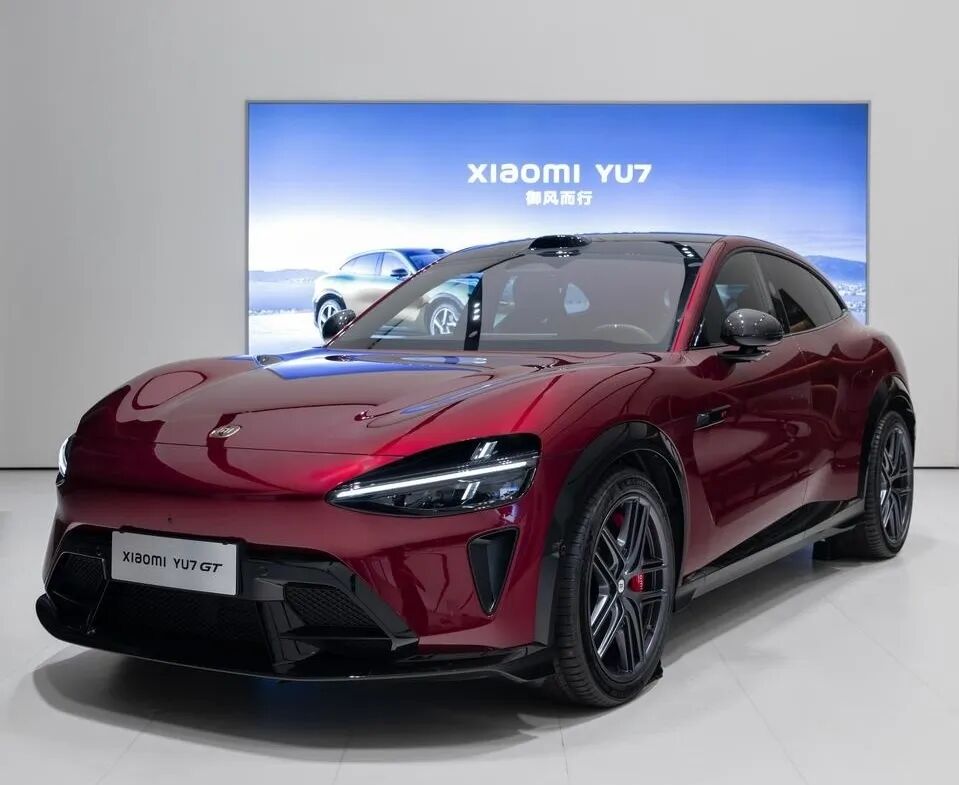
After the SU7 Ultra incident, consumers have become skeptical of Xiaomi’s high-end narrative:
"Can I still trust what you say?"
"How will you handle problems? Will you evade them again? Or dismiss me with 5,000 credits?"""Confidence is more valuable than gold." This is an ironclad rule in the consumer market, especially the high-end segment.
The SU7 Ultra air duct incident has planted a thorn in the hearts of high-end users. Unless this thorn is removed, no matter how well the YU7 GT sells, it will only succeed within the framework of "cost-effectiveness," not "high-end positioning."""03Confidence Is More Valuable Than Gold
Looking back at the entire incident, Xiaomi’s biggest mistake wasn’t the air duct itself—technical controversies can be discussed and explained.
Xiaomi’s biggest mistake was its attitude.
For Xiaomi Auto and Lei Jun, if they truly want to salvage the high-end narrative and regain user confidence, they need to do far more than post a few Weibo updates or organize a few test drives.
I believe in Lei Jun and Xiaomi Auto’s marketing and storytelling abilities—they can certainly stir up user enthusiasm at the YU7 GT launch event.
However, the past traumas still linger; they won’t disappear by deliberately avoiding them, just as scars remain after a wound heals.
So, what should Xiaomi Auto and Lei Jun do?
Actually, they just need to learn from Zhang Xue: treat customers sincerely.
It’s that simple.
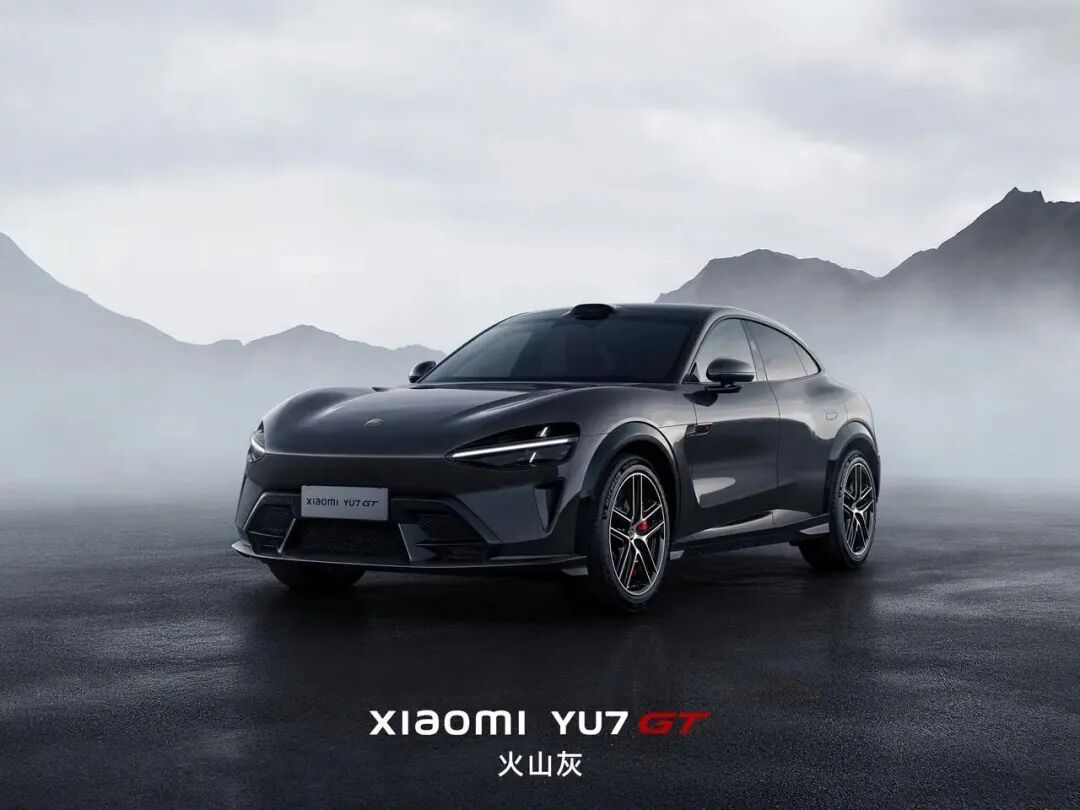
Additionally, marketing should have limits.
In last year’s article,
Xiaomi Auto really needs to re-examine the boundaries of marketing communication. While maintaining sensitivity to traffic, it should establish "red line rules" to prevent overhyping that leads to mismatched expectations.
As the industry enters the second half of intelligence, consumers’ thresholds for technical authenticity are higher and higher [yuèláiyuègāo] (increasingly high). A successful crisis PR might quell public opinion, but building long-term trust requires continuous technological precipitate and reputation accumulation.
Only by treating "user trust" as the cornerstone of brand elevation, not as a consumable, can Xiaomi Auto truly complete the leap from "1 to 10" in the high-end market.
This is for Xiaomi Auto.
The end.
-
![]()
BYD's Grand Tang Steps into the Arena, Unleashing the Most Formidable 'Value Destroyer' in the Full-Size SUV Market
-
![]()
a16z Venture Capital Titan: Are Silicon Valley AI Entrepreneurs Becoming 'Super Influencers'?
-
![]()
The Essence of Coding = Reinforcement Learning + Synthetic Data + Peta-Scale Computing Power?
-
![]()
Four Titans Simultaneously Invest in Independent Variable: Who Will Shape the Grand Model of the Physical World?
-
![]()
Google 2026 I/O Conference Full Recap: Models Remain Important, but Agents Are Taking Over Everything
-
![]()
140 Trillion Tokens Later: China is Building a 'High-Speed Rail for Computing Power'
-
Technology Innovation丨Cerebras Surges from $8.1 Billion to $48.8 Billion, Posing a Strong Challenge to NVIDIA
-
![]()
The 'Impossible Trinity' of Optical Remote Sensing Pushed to Its Limits by Chinese Satellites