BYD's Grand Tang Steps into the Arena, Unleashing the Most Formidable 'Value Destroyer' in the Full-Size SUV Market
 05/20 2026
 334
334
Lead | Introduction
The Grand Tang is poised for its official debut and first deliveries, poised to significantly reshape the full-size SUV landscape. Last month, BYD unveiled global pre-sales for the Grand Tang, pricing it competitively between 250,000 and 320,000 yuan, directly challenging the Seres M9 and Li Auto L9. Featuring second-generation Blade Batteries across all models, it offers an impressive 950-kilometer range and supports 5-minute rapid charging from 10% to 70%. This full-size SUV, with its exceptional specs, delivers a 'luxury car experience' within the 300,000-yuan bracket. Can it disrupt the dominance of the '9-Series Duo' in the luxury segment?
Produced by | This article is produced by: Heyan Yueche Studio
Written by | Writing: Cai Yan
Edited by | Editing: He Zi
1,935 characters
3-minute read
The introduction of the BYD Grand Tang is not merely a price war; it is a concentrated showcase of BYD's vertically integrated technological prowess in the flagship market. It prompts the industry to revisit a fundamental question: What truly defines luxury and premium in full-size SUVs?
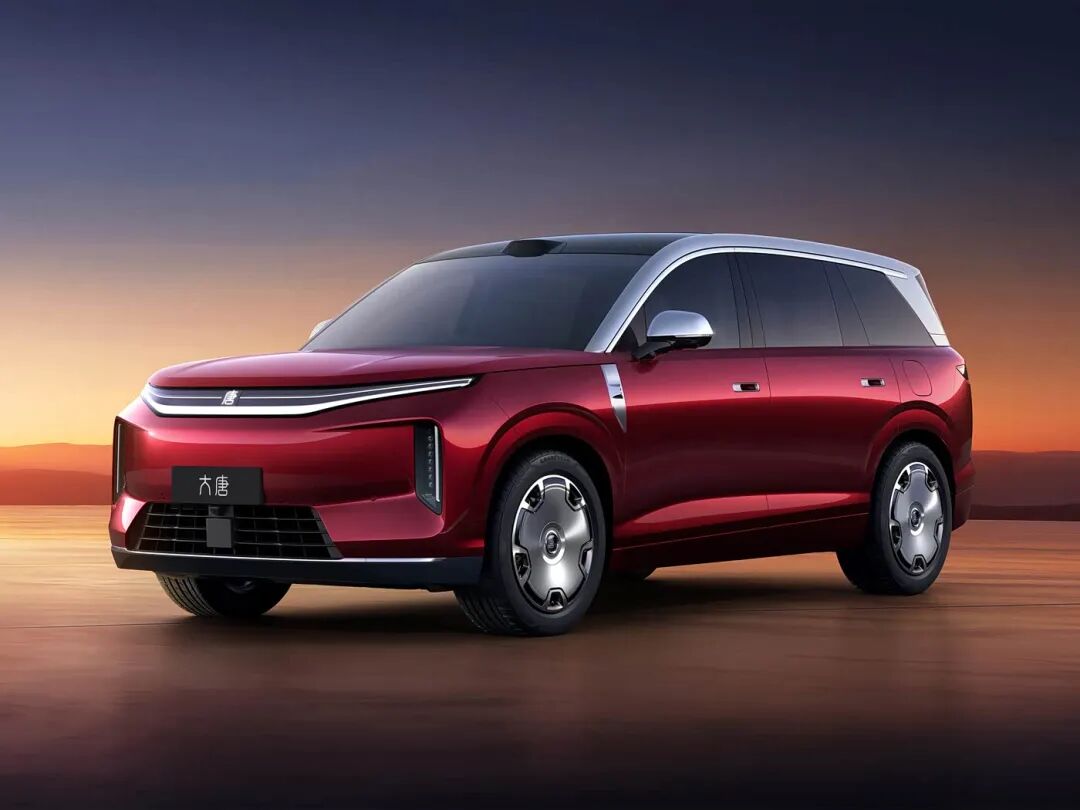
△ BYD's full-size SUV, the Grand Tang, disrupts the 400,000-yuan market segment.
Grand Tang Challenges the '9-Series Duo' with Competitive Pricing
The BYD Grand Tang is priced between 250,000 and 320,000 yuan for its pre-sale models. This range was traditionally aimed at mid-to-large SUVs like the Li Auto L8 and Seres M7. However, the Grand Tang directly enters the full-size segment with its 5,263mm length, 3,130mm wheelbase, and 1,999mm width, matching the dimensions of the Li Auto L9 and Seres M9. According to BYD's official data, over 100,000 orders were secured within two weeks of pre-sales. Achieving such a volume for a full-size electric SUV starting at 250,000 yuan reflects the combined impact of technological advancements and evolving consumer expectations. Beyond size, the Grand Tang's cross-segment competition is evident in its features. The interior boasts a '2+2+3' seven-seat layout, with rear-seat access superior to traditional SUV seat-folding designs. The second row includes dual zero-gravity aviation seats with standard ventilation, heating, and 10-point massage functions. The backrest adjusts up to 146°, supported by a 70° electric leg rest. All models come standard with Yunjian-A dual-chamber air suspension and a 14° rear-wheel steering system, reducing the turning radius to 5.2 meters. This allows a vehicle exceeding 5.2 meters in length to maneuver with the agility of a compact sedan on narrow urban roads and in parking garages. In terms of intelligent driving, the Grand Tang features RoboSense's digital LiDAR across all models and is equipped with the 'Divine Eye B' advanced intelligent driving system. It runs on a 3nm automotive-grade chip, with an AI cockpit integrating mainstream large models like Doubao, Qianwen, and DeepSeek. For power and charging, all models use second-generation Blade Batteries and full-domain 1,000V high-voltage rapid charging. The Grand Tang EV achieves a CLTC pure electric range of up to 950 kilometers, setting a new benchmark for full-size electric SUVs. Under rapid charging, it takes 5 minutes to charge from 10% to 70% and 9 minutes to reach 97%. Even in -30°C extreme cold, charging time increases by only about 3 minutes compared to normal temperatures.
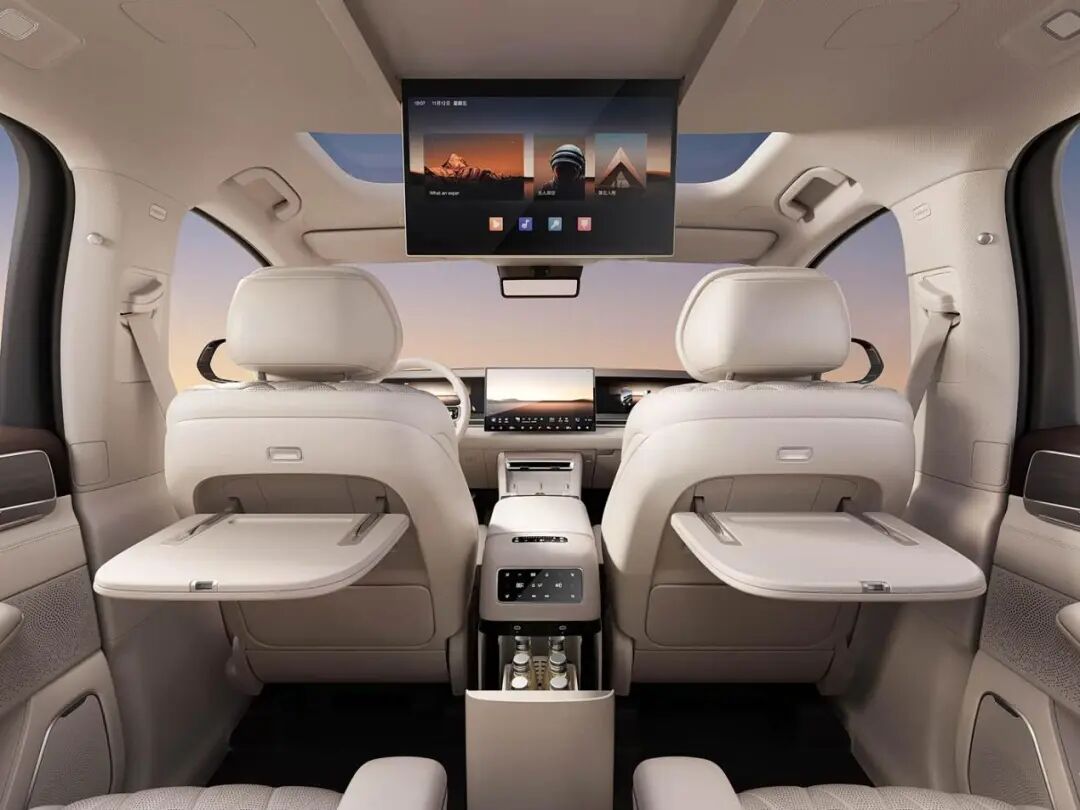
△ As a full-size SUV, the Grand Tang excels in spatial performance.
In direct comparison, the Li Auto L9 Livis starts at 509,800 yuan, while the Seres M9 is priced from 499,800 yuan. Both position themselves as full-size family flagship SUVs, with significantly higher price thresholds than the Grand Tang. In terms of powertrain, the Li Auto L9 Livis is a range-extended model with a CLTC pure electric range of 420 kilometers. The Seres M9 offers both range-extended and pure electric versions, with the latter achieving up to 630 kilometers CLTC range. The Grand Tang EV, a pure electric model, leads with a CLTC range of up to 950 kilometers. While the Grand Tang has yet to fully surpass its competitors in brand prestige, intelligent driving maturity, and luxury details, its 950-kilometer range, 9-minute rapid charging, and comparable dimensions at a significantly lower price create a differentiated market entry. The 100,000 pre-sale orders indicate that users originally budgeting up to 300,000 yuan now have access to full-size SUVs. This price advantage stems from BYD's vertically integrated supply chain and economies of scale, which are difficult to replicate in the short term. The Grand Tang's order performance signals a shift in the full-size SUV market's value benchmark from brand prestige to technological accessibility.
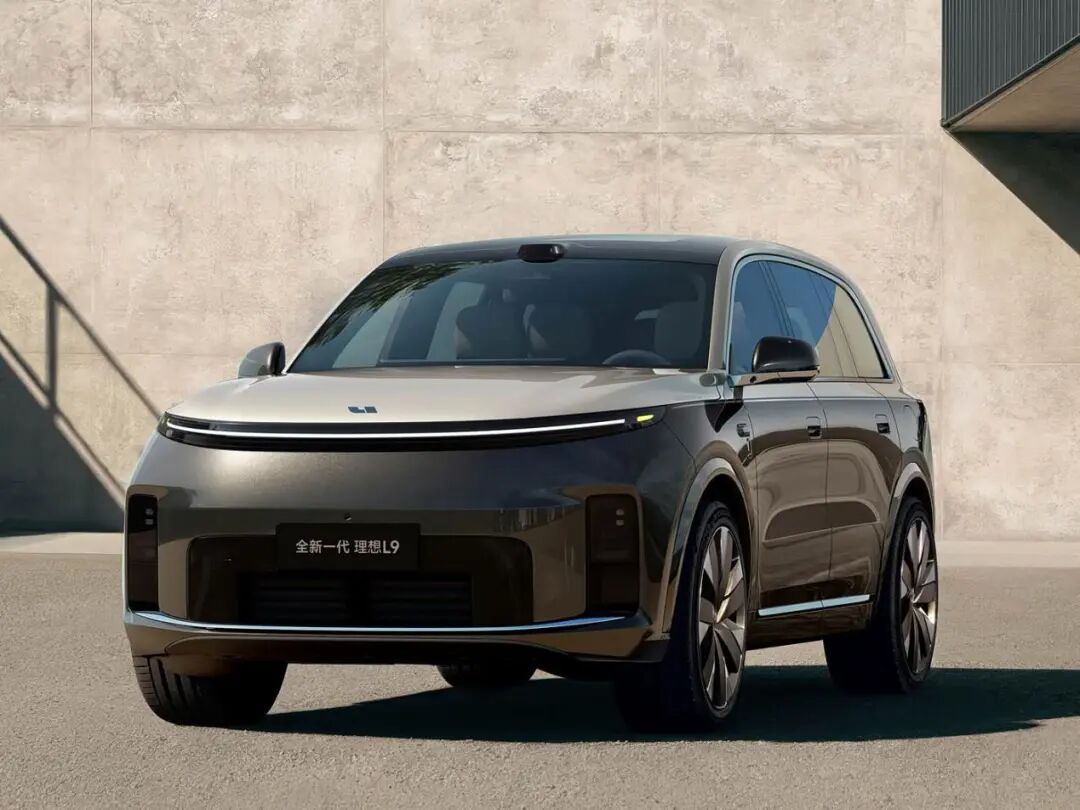
△ BYD's Grand Tang issues a challenge to the Li Auto L9 Livis.
Completing the Flagship Portfolio
For BYD, the Grand Tang represents far more than a high-volume model. It is the Dynasty Series' first D-segment full-size flagship SUV, filling a long-standing product gap in the 250,000-yuan-plus market. The Dynasty Series now spans from the 100,000-yuan Qin and 150,000-300,000-yuan Han and Tang models up to the 250,000-320,000-yuan price band, forming a complete product echelon (gradient) from entry-level to flagship. This matrix optimization not only improves internal structure but also directly impacts external competition. The 400,000-600,000-yuan full-size luxury SUV market is currently witnessing intense rivalry for dominance. Since its launch, the Seres M9 has delivered over 280,000 units, remaining the top-selling luxury model above 500,000 yuan for 21 consecutive months. In the 500,000-yuan-plus new energy market, it commands a dominant share, with '7 out of every 10 units sold being a Seres M9.' The all-new Li Auto L9 Livis, priced from 509,800 yuan, is seen as Li Auto's crucial move to revitalize flagship sales. Beyond the '9-Series Duo,' new entrants like the Zeekr 9X, NIO ES9, and Lynk & Co 900 are joining the fray, making this segment more crowded than ever.
The Grand Tang's timing and pricing strategy target cracks in the existing market structure. On one hand, the 400,000-yuan-plus luxury SUV market has long been dominated by brand prestige, but by Q1 2026, Chinese brands' market share exceeded 60%, with technological capabilities shaking up traditional pricing systems. On the other hand, while the Seres M9 and Li Auto L9 Livis focus on the 500,000-yuan price band, the Grand Tang undercuts them with a full-size offering priced between 250,000 and 320,000 yuan, significantly lowering the barrier for price-sensitive premium upgrade buyers. As Lu Tian, general manager of the Dynasty Series Sales Division, stated, 'The Grand Tang is the Dynasty Series' most premium line.' It carries the strategic mission of propelling the Dynasty Series upward. More importantly, when a full-size SUV offers a 950-kilometer range, 9-minute rapid charging, dual-chamber air suspension, and rear-wheel steering, its ripple effect extends beyond sales figures—it is redefining the equation between 'value' and 'price' in the full-size SUV market.
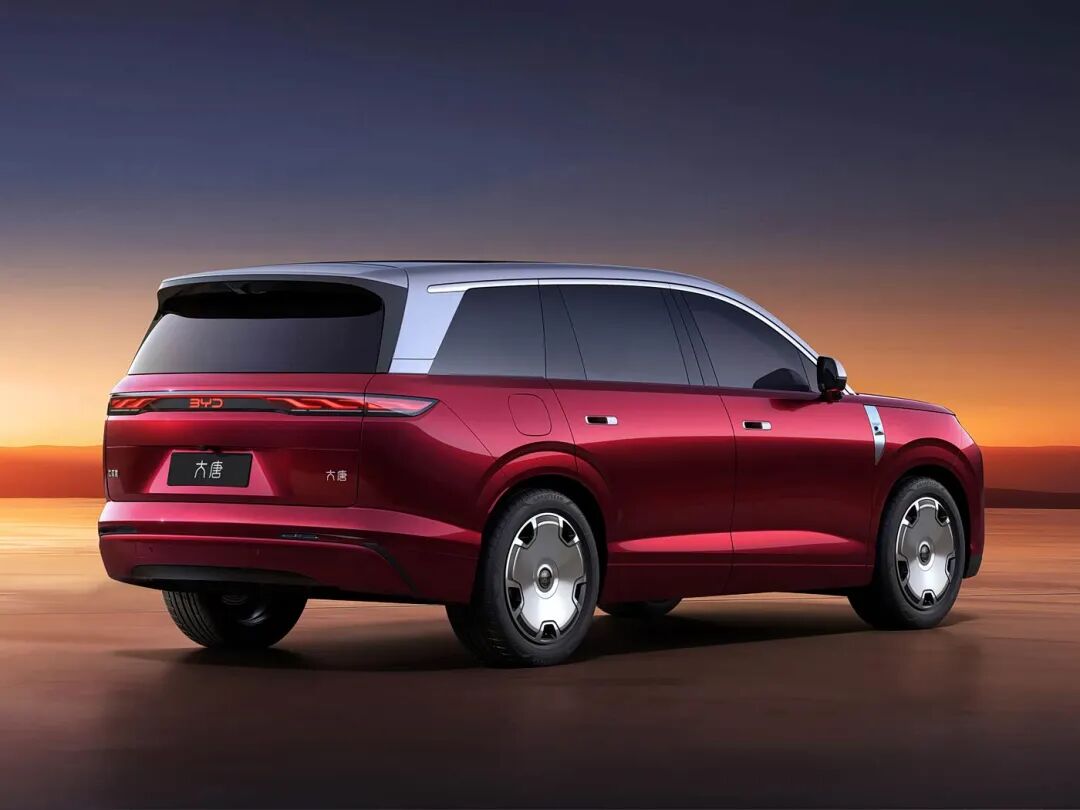
△ The Grand Tang is a crucial piece in filling BYD's high-end portfolio.
Commentary
The Grand Tang's arrival signifies a shift in full-size SUV competition from brand prestige to technological accessibility. As rapid charging times approach those of refueling and range anxiety thresholds are breached, consumer preferences have evolved. For BYD, this represents the dual fulfillment of scale and innovation. For the industry, it is a systemic collision that cannot be ignored.
(This article is original to Heyan Yueche and may not be reproduced without authorization.)
-
Baseus Caught in the 'Middle Zone': Struggles Against OEM and Unbranded Competitors
-
![]()
Global Top 100, China Top 66: The 'Power Ranking' of Humanoid Robots
-
![]()
Meta Takes the Lead in Defining the AI Glasses Ecosystem Amid Android XR Competition
-
![]()
The Silent Ice: The Covert AI Battle Among Alibaba, Douyin, and JD.com in the 618 Shopping Festival
-
![]()
Has Google Sealed the Fate of Websites?
-
![]()
Can the Token Packages from the Three Major Operators Be Trusted?
-
Are Token Packages Offered by the Three Major Telecom Operators Trustworthy?
-
![]()
Divide and Conquer: Audi Takes Its Most Audacious Step Yet!