Is Musk Just Making Another Grand Statement? Or Have We Underestimated the Progress of Autonomous Driving?
 05/20 2026
 364
364
Produced by | DifferentView Finance
Author | Xuanye Baixue
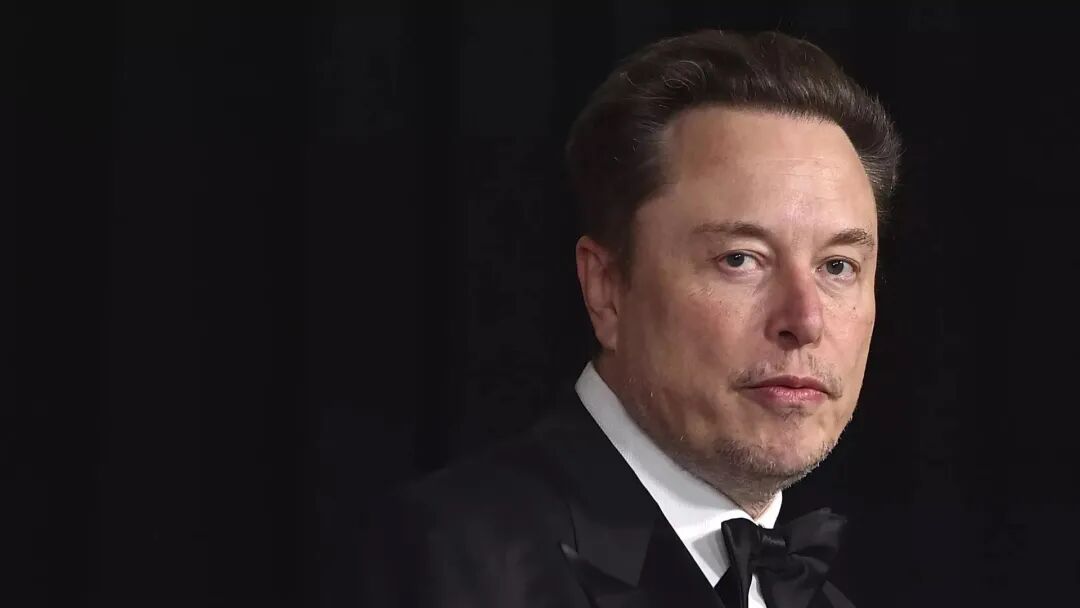
On May 18, Tesla CEO Elon Musk made a bold forecast at the Smart Mobility Summit in Tel Aviv: Within the next five to ten years, 90% of driving will be handled by AI, and manual driving will become a 'relatively niche activity.'
From 'fully autonomous driving within two years' to '90% of driving miles covered by AI in a decade,' Elon Musk's predictions regarding autonomous driving have nearly always sparked debate over the past ten years.
Supporters argue that he simply has a clearer vision of the future, while critics dismiss his remarks as typical Silicon Valley-style overhyped marketing. The irony is that while people have repeatedly treated 'the wolf is coming' as a joke, autonomous driving has quietly become a reality.
01
Is the Wolf Truly Here, or Is It Just a False Alarm?
Fully driverless Robotaxis are already navigating U.S. streets, while in China, autonomous vehicles are beginning to operate regularly on urban roads and within industrial settings.
Autonomous driving is no longer a concept confined to PowerPoint presentations but a transportation revolution in progress. This raises a nuanced and complex question: Is Musk merely boasting repeatedly, or have we consistently underestimated the true pace of this revolution?
Public trust in Musk has already been significantly eroded.
In 2016, he claimed that fully autonomous driving would be achieved within two years. In 2019, he promised to deploy 1 million Robotaxis by 2020. In 2020, he stated that Full Self-Driving (FSD) was nearly complete. In 2024, he declared that unsupervised driving would arrive soon. Each announcement sparked market enthusiasm, only to fade quietly amid delays.
'Musk Time' has even become an internet meme, tinged with sarcasm.
Why is he always so optimistic? Partly due to Silicon Valley's startup mentality: the need to constantly project a vision of the future to attract talent and capital. AI technology does indeed exhibit exponential growth, and Musk himself is accustomed to describing the endgame first and then working backward to achieve it.
These factors collectively contribute to his consistently bold narrative. However, the core issue may be that he perceives autonomous driving too much like software iteration while severely underestimating the complexity of the real world. It is essentially a profound reconstruction of the physical world and social systems, not merely a technological breakthrough.
Nevertheless, autonomous driving is no longer a distant prospect.
In the U.S., Waymo has achieved commercial operations in cities such as Phoenix and San Francisco, where passengers can directly hail a driverless Robotaxi for their entire journey. Tesla has also initiated limited Robotaxi pilot programs.
Chinese company Baidu Apollo Go already provides large-scale driverless services in multiple cities, with 3.2 million fully driverless trips in the first quarter of 2026 and a total autonomous driving mileage exceeding 330 million kilometers, including 220 million kilometers in fully driverless mode.
Pony.ai and WeRide are also advancing commercialization in Guangzhou, Shenzhen, Beijing, and other locations, where ordinary people can now hail autonomous vehicles for daily travel. Autonomous driving is transitioning from lab demonstrations to real-world applications.
02
Don’t Get Too Excited Just Yet—It’s Not Yet 'All-Powerful'
Of course, this does not mean autonomous driving is already 'fully mature.' Currently, most Robotaxis still operate within restricted areas, weather conditions, road conditions, and rely on remote operation systems. They are still far from true 'unconditional driverless operation nationwide.'
More notably, the first large-scale deployments are occurring not in private cars but in industrial and closed environments.
In open-pit mines, autonomous mining trucks operate efficiently. In busy ports, driverless container trucks achieve 24-hour continuous operations. Logistics in industrial parks and some mainline freight operations are also beginning large-scale deployments.
These scenarios have clear rules and fewer interruptions, making them easier to conquer than open urban roads. They have already formed real business closed loops, proving that autonomous driving is not only feasible under specific conditions but also economically valuable.
Meanwhile, even without achieving true L4 full autonomy, existing technologies are quietly transforming the driving experience. Features like highway NOA, automatic parking, and urban assistive driving are rapidly being integrated into more mass-produced vehicle models.
Strictly speaking, most of these systems still belong to L2 or L2+ assisted driving, not true 'driverless' operation—drivers still bear responsibility and must remain capable of taking over. But they are already beginning to gradually assume some driving tasks.
Autonomous driving is not arriving in an explosive manner but is slowly eroding human-driven miles through forms like L2, L2+, and localized L4. Most people may not have noticed yet, but it is already quietly penetrating into daily transportation.
However, the 'last 10%' is far more challenging than imagined.
03
The Hardest Part Isn’t Technology—It’s People
The most daunting challenge for autonomous driving is not normal road conditions but the endless long-tail scenarios in the real world: extreme weather like heavy rain, snowstorms, and fog; temporary road construction, fallen trees; traffic police gestures, school bus stoppages, sudden accidents; and various abnormal behaviors on rural roads without markings.
AI can achieve near-perfect performance in simulated environments but struggles to anticipate all exceptions in advance.
Deeper constraints arise from social systems. How should accident liability be divided? How should insurance systems adapt? How should regulatory approvals and urban road access rules be formulated? A single fatal accident could trigger a public outcry sufficient to slow down the entire industry for years.
These are not purely technical issues but systemic challenges involving law, insurance, regulation, and public expectations.
Additionally, autonomous driving faces a frequently overlooked practical issue: economics.
Operating Robotaxis is not inexpensive. Besides the vehicles themselves, companies must bear substantial costs for high-definition maps, remote safety operators, data centers, vehicle maintenance, insurance, cleaning, sensor redundancy, and more.
Autonomous driving companies are generally still in a high-investment phase, and even with available technology, true large-scale profitability remains distant.
Moreover, the replacement cycle in the physical world is extremely slow. The average age of cars in the U.S. exceeds 12 years. Even if all new cars achieved full autonomy tomorrow, it would take decades to replace the existing fleet. Autonomous driving is not an APP upgrade but a lengthy iteration of physical infrastructure.
04
When AI Drives Better Than You, What’s Left for Humans?
As technology advances, a deeper question emerges: If AI ultimately reduces accident rates far below human levels, why should humans still drive themselves?
Could human driving be seen as an unnecessary 'dangerous behavior' and face restrictions? Might manual driving, like horseback riding, steam train operation, or manual transmission cars, gradually recede into a niche hobby and status symbol?
What autonomous driving truly changes may not be the vehicles themselves but the control relationship between humans and machines. When machines become more reliable and safer than us, will we still be willing—or allowed—to entrust our lives to our own hands?
Musk may once again overestimate the speed of autonomous driving’s arrival, but that does not mean the entire direction is wrong. Nearly all major technological revolutions in history have followed the same pattern: overestimated in the short term, underestimated in the long term.
While people are still debating 'the wolf is coming,' AI has quietly entered roads, ports, mines, and logistics systems. It is not arriving with a bang but with slow yet unstoppable steps, gradually reshaping our physical world.
Perhaps one day soon, we will suddenly realize: We haven’t truly held a steering wheel in a long time.
And that day may arrive sooner than we imagine.
Do you think Musk’s latest prediction is accurate? Welcome to share your thoughts in the comments section.
-
![]()
AMD's AI Developer Day: Computing Power Competition Enters the Era of Local Agents
-
Masayoshi Son Bets $60 Billion on OpenAI, SoftBank Panics Inside
-
![]()
Insta360's Profit Puzzle: Liu Jingkang Unveils the Strategy
-
Baseus Caught in the 'Middle Zone': Struggles Against OEM and Unbranded Competitors
-
![]()
Global Top 100, China Top 66: The 'Power Ranking' of Humanoid Robots
-
![]()
Meta Takes the Lead in Defining the AI Glasses Ecosystem Amid Android XR Competition
-
![]()
The Silent Ice: The Covert AI Battle Among Alibaba, Douyin, and JD.com in the 618 Shopping Festival
-
![]()
Has Google Sealed the Fate of Websites?